
Buying a Home in Lake Balboa as an Investor

Lake Balboa 91406 and 91411 have quietly become one of the more interesting investor markets in the central San Fernando Valley — not because the neighborhood generates headlines or appears in investment real estate podcasts, but because the fundamentals that matter to serious residential investors are genuinely strong: a price point that allows entry with real return potential, a housing stock that produces predictable renovation scopes, a rental demand base anchored in the central Valley's employment and transportation connectivity, and an ADU opportunity set that California's permissive ADU legislation has made executable on most Lake Balboa standard lots.
The investors who do well in Lake Balboa are not the ones chasing the most dramatic returns or the most exciting narratives. They are the ones who understand the specific mechanics of this market — the acquisition price discipline, the renovation scope that fits the Lake Balboa comp ceiling, the rental rate reality in this specific sub-market, and the holding strategy that matches their specific financial goals. This article gives every investor evaluating Lake Balboa the complete picture — the investment case, the specific strategies that work here, the financial analysis at real numbers, and the honest assessment of what Lake Balboa delivers and what it doesn't.
1. 📊 The Lake Balboa Investment Case — Why This Market Now
The investment case for Lake Balboa 91406 and 91411 is built on four specific fundamentals that combine to produce a residential investment profile worth serious analysis in 2026.
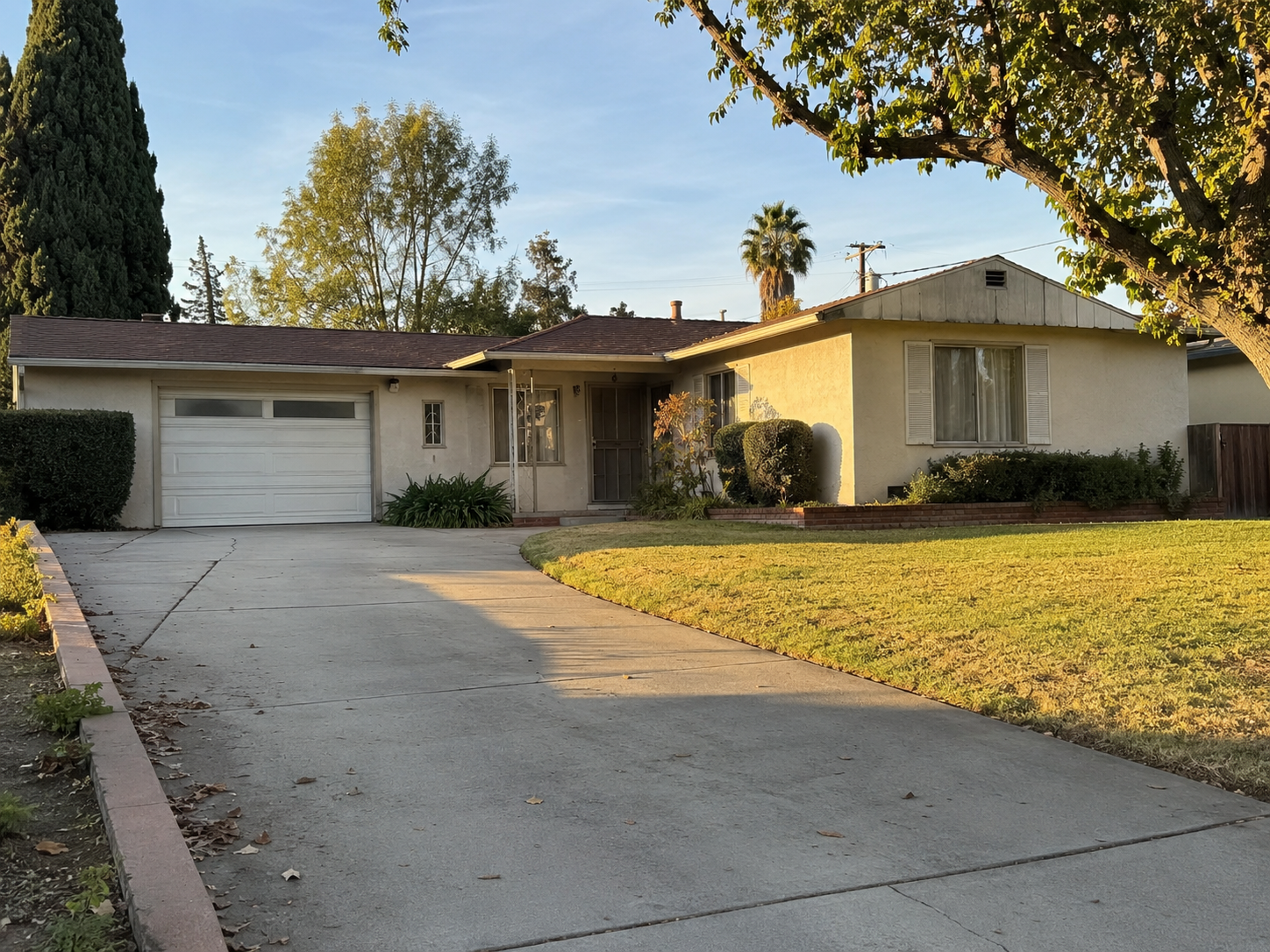 Lake Balboa 91406 original-condition inventory — the product type that BRRRR investors specifically target. The predictable 1950s–1970s housing stock produces renovation scopes that experienced operators can estimate accurately, execute efficiently, and refine on successive projects in the same neighborhood.
Fundamental 1 — Accessible entry price with meaningful comp ceiling:
The $650K–$920K Lake Balboa price band is the sweet spot for residential investors who need a real asset with real equity upside but who can't absorb the $1.2M–$2.5M entry that Studio City 91604, Encino 91316, or Tarzana 91356 require. At Lake Balboa price points:
- → The down payment requirement (20–25% for investor financing) is $130,000–$230,000 — accessible for investors who have been building capital but haven't reached the entry threshold of premium SFV markets
- → The renovation budget that produces comp ceiling recovery ($35,000–$65,000 for a focused BRRRR scope) is executable with standard SFV contractor pricing without the design-forward premium that Studio City 91604 renovation requires
- → The post-renovation appraised value ($820K–$940K for a well-executed Lake Balboa renovation in the Balboa Park-adjacent sub-neighborhoods) supports BRRRR refinancing math that more expensive markets don't
Fundamental 2 — Original-condition inventory availability:
Lake Balboa 91406 contains a meaningful supply of original or minimally updated 1950s–1970s single-family homes whose owners have built significant equity but who have deferred capital improvement for years or decades. This inventory is the raw material of BRRRR investing — homes that produce predictable renovation scopes, that can be acquired below the renovated comp ceiling, and that are available with sufficient frequency to allow investors to execute multiple acquisitions in the same market.
The Lake Balboa investor who has completed one renovation in 91406 has the contractor relationships, the vendor pricing, the inspection knowledge, and the sub-neighborhood comp fluency to execute the next acquisition faster and more efficiently than the first. The learning curve compounds positively with repetition.
Fundamental 3 — ADU opportunity:
California's ADU reform legislation has made Lake Balboa one of the most ADU-viable markets in the central Valley — because the standard 6,500–8,500 sq ft lot sizes that define most of 91406 support detached or attached ADU construction under current rules. An ADU producing $1,700–$2,400/month in rent on a Lake Balboa property transforms the investment's cash flow profile:
- → A Lake Balboa single-family home without ADU: monthly rent approximately $3,200–$3,800
- → The same home with a 1-bedroom ADU: total monthly rent approximately $5,000–$6,100
- → Net cash flow improvement from ADU: approximately $1,700–$2,400/month — enough to move a negative-cash-flow Lake Balboa investment into break-even or positive territory at current financing costs
Fundamental 4 — Persistent rental demand:
Lake Balboa's central Valley location produces rental demand from multiple employment corridors simultaneously:
- → 🏢 Van Nuys employment: The Van Nuys 91401/91405/91406 commercial and light industrial employment base produces working-family rental demand in immediate proximity to Lake Balboa
- → 🏭 Warner Center/Woodland Hills 91367: Corporate and commercial employment in the western Valley's primary business hub — accessible from Lake Balboa in 15–20 minutes
- → 🎬 Burbank entertainment corridor: CBS, Disney, Warner Bros., NBCUniversal — accessible from Lake Balboa in 20–30 minutes, producing entertainment industry below-the-line housing demand in the central Valley
- → 🌿 Sepulveda Basin access: The Balboa Park and Sepulveda Basin Recreation Area proximity produces a rental premium in the Balboa Park-adjacent Lake Balboa sub-neighborhoods — renters specifically paying for the park adjacency in a way that produces lease pricing above the broader 91406 average
2. 🔨 The BRRRR Strategy in Lake Balboa — The Complete Mechanics
BRRRR — Buy, Renovate, Rent, Refinance, Repeat — is the investment strategy that most consistently produces strong risk-adjusted returns in Lake Balboa 91406, and the one that Roman's renovation experience across the SFV has informed the most directly. This section covers the complete mechanics of executing BRRRR in Lake Balboa specifically.
The Lake Balboa BRRRR cycle — a complete example:
Step 1 — Buy:
Target: original-condition Lake Balboa 91406, 3-bedroom, 1,400–1,700 sq ft, 7,000–8,500 sq ft lot, standard sub-neighborhood with renovated comp ceiling of $840K–$880K.
Acquisition price discipline: the BRRRR math requires purchasing at a price where acquisition + renovation cost is at or below 75% of the post-renovation appraised value. At a $840K renovated comp ceiling:
- → 75% of $840K = $630,000 maximum all-in position (acquisition + renovation)
- → Renovation scope estimate: $52,000
- → Maximum acquisition price: $630,000 - $52,000 = $578,000
This is the number that experienced Lake Balboa BRRRR investors are targeting — and it requires patience and precision, because sellers of original-condition Lake Balboa homes frequently start at $680K–$720K and expect negotiation to land in the $640K–$660K range. The investor who needs $578,000 is buying the home that:
- → Has been on market 35–60+ days
- → Has structural or deferred maintenance that requires disclosure and that most retail buyers discount as problematic
- → Is an estate sale or distressed situation where the seller's priority is transaction certainty and speed rather than price maximization
- → Has been to escrow and fallen out once or twice — accumulating buyer skepticism and seller motivation simultaneously
Finding these acquisitions requires consistent market monitoring, pre-approval at the investor financing level, and the ability to close quickly on cash or hard money before refinancing.
Step 2 — Renovate:
The Lake Balboa BRRRR renovation scope is purposeful and disciplined — not the design-forward renovation that Studio City 91604 buyers require, but the quality-focused renovation that produces appraisal support at the renovated comp ceiling without overspending:
- → ✓ Interior repaint (full professional): $8,500–$11,000
- → ✓ LVP flooring throughout (6"+ width, 20-mil wear): $10,000–$16,000
- → ✓ Kitchen cosmetics (cabinet repaint, hardware, faucet, backsplash): $7,500–$12,000
- → ✓ Primary bath refresh (vanity, fixtures, tile cosmetics): $6,500–$10,000
- → ✓ Secondary bath cosmetics: $2,500–$4,500
- → ✓ Curb appeal (door repaint, landscaping, pressure-wash): $4,500–$7,500
- → ✓ HVAC service/replacement (as needed — critical for rental occupancy and appraisal): $0–$12,000
- → ✓ Roof assessment/repair (as needed): $0–$8,000 for repair; $12,000–$18,000 for full replacement if required
Total focused BRRRR renovation scope: $40,000–$81,000 — the range reflecting whether major system replacements (HVAC, roof) are required based on the pre-purchase inspection findings.
The renovation timeline: 8–12 weeks from contractor start to renter-move-in-ready. The BRRRR investor who has a contractor relationship in Lake Balboa and a project management system moves at the faster end of this range.
Step 3 — Rent:
Post-renovation Lake Balboa rental rates (3-bedroom, 1,400–1,700 sq ft, renovated condition, 91406):
- → Without ADU: $3,200–$3,850/month — the renovated single-family rental rate in the current central Valley market
- → With 1-bedroom ADU: $3,200–$3,850 (main house) + $1,750–$2,250 (ADU) = $4,950–$6,100 total
Tenant profile for renovated Lake Balboa single-family: working families, dual-income households, central Valley employer employees who want family-appropriate housing with outdoor space. Lake Balboa renovated rentals see lower turnover than comparable Van Nuys or Reseda 91335 rentals — the Balboa Park adjacency and the neighborhood's family residential character produce longer tenancies.
Step 4 — Refinance:
The BRRRR refinancing step is where the capital recycling that makes the strategy repeatable occurs. After renovation and lease-up (typically 6 months seasoning required by most conventional lenders):
- → Post-renovation appraised value: $840,000 (at renovated comp ceiling)
- → Cash-out refinance at 75% LTV: $630,000 loan
- → All-in position (acquisition $578,000 + renovation $52,000): $630,000
- → Capital recovered at refinance: $630,000 - $630,000 = $0 capital remaining invested
This is the ideal BRRRR outcome: the refinance recovers all invested capital, leaving the investor with a debt-free-from-original-capital rental property. In practice, the math rarely rounds to exactly $0 — most Lake Balboa BRRRR executions recover 80–95% of invested capital at the refinance, leaving a modest residual investment in the property.
Step 5 — Repeat:
The recovered capital from the refinance funds the next Lake Balboa acquisition — allowing the investor to scale their portfolio without continuously injecting new equity beyond what each property's own refinancing recovers.
3. 🏘️ The ADU Strategy — Lake Balboa's Most Significant Value-Add Opportunity
The ADU (Accessory Dwelling Unit) opportunity in Lake Balboa 91406 is the most significant value-add available to residential investors in this market — and the one that has been least fully deployed relative to its potential, partly because the construction cost ($150,000–$220,000 for a permitted detached ADU) requires capital that investors have often deployed elsewhere, and partly because the permitting process in the City of Los Angeles requires navigating a bureaucratic timeline that deters less patient operators.
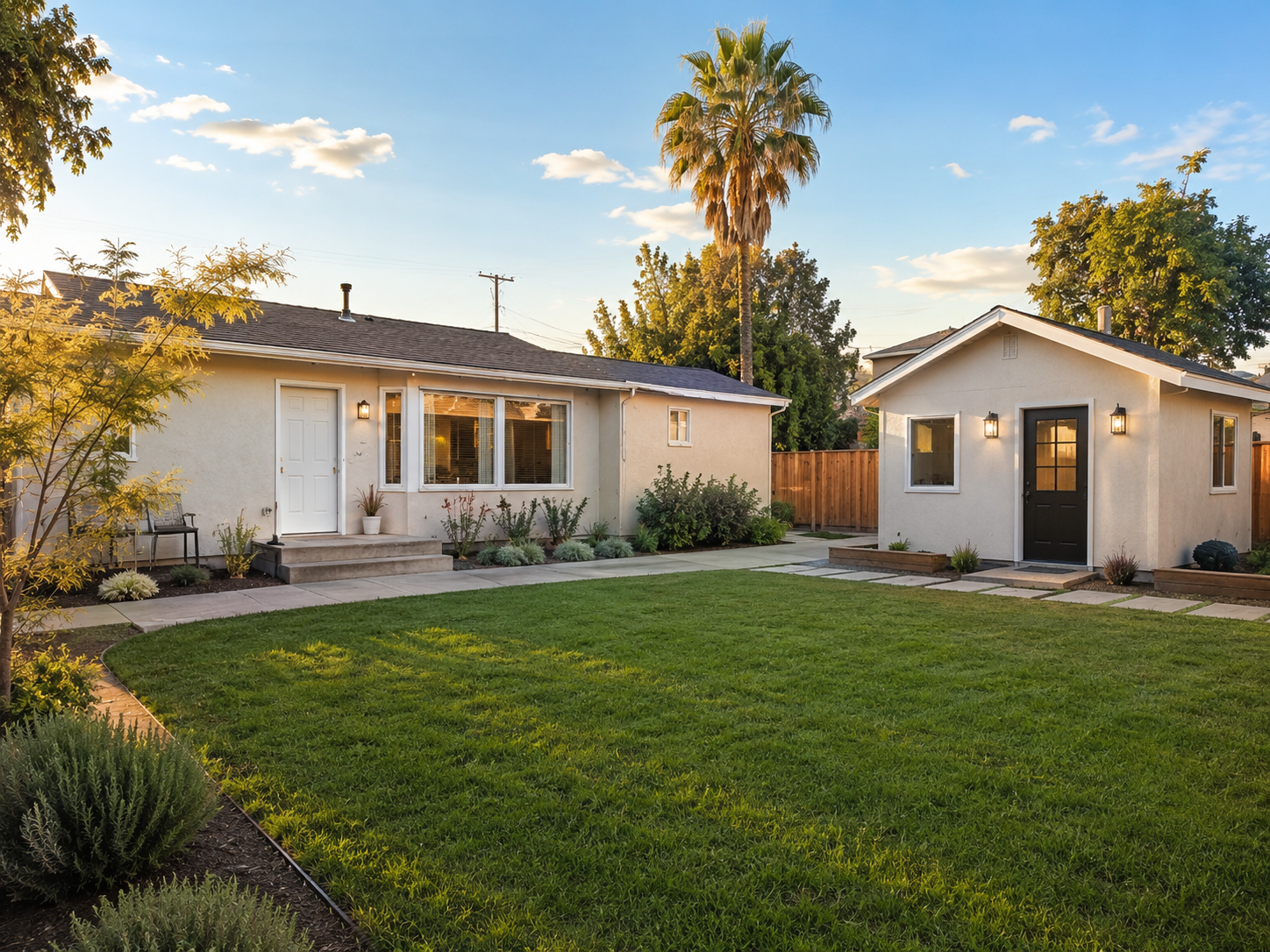 Lake Balboa 91406 ADU-equipped investment property — the combination of renovated main house plus permitted ADU unit transforms the monthly cash flow profile of a Lake Balboa investment from negative or break-even to meaningful positive, producing a rental income stream that justifies the ADU construction cost through rental yield rather than appraised value alone.
The ADU math in Lake Balboa:
Construction cost: $150,000–$220,000 for a permitted detached ADU in Lake Balboa, depending on size (500–1,000 sq ft), design, and site conditions. Garage conversion ADUs run $80,000–$130,000 — lower cost but eliminates covered parking that some Lake Balboa tenants specifically require.
ADU rental income: $1,700–$2,400/month for a 1-bedroom ADU in Lake Balboa 91406 — dependent on size, finish quality, and Balboa Park proximity.
Return analysis:
- → ADU cost: $175,000 (midpoint estimate, detached)
- → ADU annual rental income: $22,800/year ($1,900/month)
- → Gross yield on ADU construction cost: 13.0% annually
- → Payback period: approximately 7.7 years from ADU rental income alone
The appraisal value contribution:
A permitted ADU adds $80,000–$140,000 to Lake Balboa appraised value in most comparable sales — a value addition that is below the construction cost on a pure appraisal basis. The ADU investment case is driven by rental yield, not by immediate appraisal recovery. Investors who build Lake Balboa ADUs specifically for appraisal value recovery will be disappointed; investors who build them for the rental income stream they produce over a 10–20 year hold will be satisfied.
ADU permit process in Lake Balboa:
Lake Balboa 91406 properties within the City of Los Angeles jurisdiction are subject to City of LA ADU permitting rules — one of the most permissive ADU regulatory environments in California. Key considerations:
- → ✓ Eligibility: Most Lake Balboa 91406 lots of 6,500 sq ft or larger support at least one ADU under current City of LA rules — verify lot size, setbacks, and any existing structures that affect ADU placement
- → ✓ Permit timeline: City of LA ADU permits typically process in 6–12 weeks for standard detached ADU designs through the regular permitting process; pre-approved ADU plans (available through City of LA standard plan programs) can accelerate to 4–8 weeks
- → ✓ Owner-occupancy requirement: Current City of LA ADU rules do not require owner-occupancy of the primary residence for investor-owned ADU properties — verify current rules directly with the City of LA Building and Safety Department as regulations occasionally update
- → ⚠️ Verify City of LA vs. unincorporated LA County jurisdiction: Some Lake Balboa addresses are in unincorporated LA County rather than the City of LA — ADU rules differ between jurisdictions. Confirm which jurisdiction your specific Lake Balboa address falls under before beginning any ADU planning.
4. 💰 The Lake Balboa Investment Financial Model — Real Numbers for 2026
Every investment conversation eventually comes down to numbers. This section builds the complete financial model for a Lake Balboa 91406 investment at current market conditions — acquisition, renovation, financing, rental income, expenses, and annual return — with the honest assumptions that produce useful planning rather than optimistic projections.
The base case Lake Balboa investment (BRRRR, no ADU):
Acquisition:
- → Purchase price: $640,000 (target acquisition for BRRRR discipline)
- → Down payment (25% investor financing): $160,000
- → Closing costs: $10,000
- → Total acquisition cash deployed: $170,000
Renovation:
- → Focused BRRRR scope (paint, flooring, kitchen cosmetics, bath refresh, curb appeal): $48,000
- → Contingency (10%): $4,800
- → Total renovation: $52,800
Total all-in cash deployed: $222,800
Post-renovation:
- → Post-renovation appraised value: $840,000
- → Cash-out refinance at 75% LTV: $630,000 loan
- → Capital recovered at refinance: $630,000 - $532,000 (prior loan at 25% down on $640K) = wait — let's use correct structure for hard money / cash purchase scenario:
Cash purchase BRRRR (cleaner mechanics):
- → Cash purchase at $640,000
- → Renovation: $52,800
- → Total all-in: $692,800
- → Post-renovation appraisal: $840,000
- → Refinance at 75% LTV: $630,000 loan at 7.25% (investor rate, 30-year)
- → Capital recovered: $630,000 - $692,800 = -$62,800 (residual invested capital)
- → Monthly P&I on $630,000 loan at 7.25%: $4,297
- → Monthly rental income (3-bedroom renovated, no ADU): $3,500
- → Monthly shortfall before expenses: -$797
Monthly expenses:
- → Property taxes (1.20% on $840,000): $840/month
- → Insurance: $150/month
- → Property management (8% of gross rent): $280/month
- → Maintenance reserve (1% annually): $700/month
- → Total monthly expenses: $1,970
Monthly cash flow: $3,500 (rent) - $4,297 (P&I) - $1,970 (expenses) = -$2,767/month
The honest cash flow assessment:
At current rates (7.25% investor financing), a Lake Balboa single-family rental without ADU produces negative monthly cash flow of approximately $2,500–$3,000/month at typical acquisition and refinance terms. This is not unusual for Los Angeles residential investment at current rates — the investment returns at this level are driven by appreciation and equity buildup, not by monthly cash flow.
The annual return with appreciation:
- → Monthly negative cash flow: -$2,767 × 12 = -$33,204 annual cash drain
- → Annual appreciation at 4% on $840,000: +$33,600
- → Net annual P&L before tax effects: approximately +$396
- → Equity buildup from principal paydown: approximately $12,000/year
- → Total annual wealth building: approximately $12,396
Without ADU, Lake Balboa investment returns in 2026 are driven primarily by appreciation and principal paydown — not by cash flow. Investors who need cash flow to sustain the investment should either pursue the ADU strategy or wait for rates to moderate before the Lake Balboa single-family investment produces the cash flow that makes the holding period comfortable.
The ADU-equipped Lake Balboa investment:
Adding a 1-bedroom ADU at $175,000 construction cost (funded from refinance proceeds or additional equity):
- → Additional ADU rental income: $1,900/month
- → ADU construction cost at refinance LTV impact: increases the loan amount if refinanced post-ADU, or funded separately
- → Revised monthly cash flow: -$2,767 + $1,900 = -$867/month
The ADU moves the Lake Balboa investment from -$2,767/month to -$867/month — a $1,900/month improvement that moves it from a significant cash drain to a manageable one. If the ADU appraises at $120,000 additional value, the refinanced loan at 75% LTV on $960,000 (original value + ADU value) = $720,000 loan, reducing P&I and improving cash flow further.
The rate sensitivity:
If investor rates moderate from 7.25% to 6.25% (a 100 basis point improvement):
- → Monthly P&I on $630,000 at 6.25%: $3,881 (versus $4,297 at 7.25%)
- → Monthly cash flow improvement: $416/month
- → Without ADU cash flow at 6.25%: -$2,351/month
- → With ADU at 6.25%: -$451/month — approaching break-even
Rate moderation from 7.25% to 6.25% combined with ADU income moves the Lake Balboa investment to near-break-even monthly — the inflection point where the cash flow argument for holding becomes significantly more comfortable.
5. 🔮 The Lake Balboa Investment Sub-Neighborhood Analysis — Where to Buy
Not all of Lake Balboa 91406 produces equivalent investment returns. The sub-neighborhood selection determines the acquisition price, the renovation ceiling, the rental rate, and the appreciation trajectory — and investing in the wrong Lake Balboa sub-neighborhood at the wrong price produces outcomes meaningfully worse than the base case analysis above.
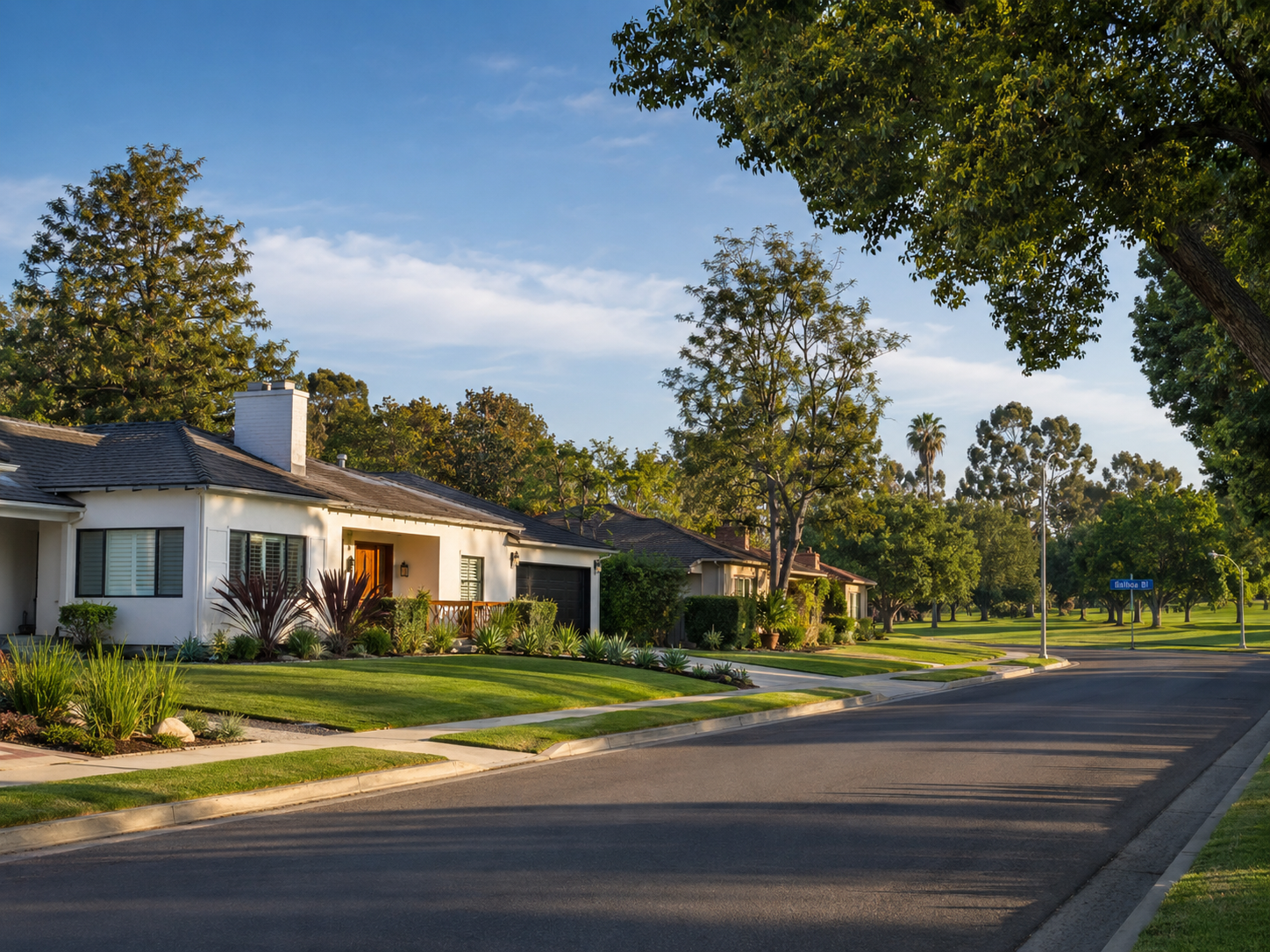 The Balboa Park-adjacent Lake Balboa sub-neighborhoods — the streets where the Sepulveda Basin Recreation Area proximity produces the strongest rental demand, the highest renovation comp ceilings, and the most favorable long-term appreciation trajectory within 91406. Sub-neighborhood selection is the single most important variable in Lake Balboa investment performance.
Sub-neighborhood investment analysis:
Balboa Park-adjacent streets (nearest the Sepulveda Basin Recreation Area) — Best investor sub-market:
- → 📊 Acquisition range (original condition): $680,000–$790,000
- → 📈 Renovated comp ceiling: $860,000–$940,000
- → 💰 Rental rate (3BR renovated, no ADU): $3,500–$3,900/month
- → 💰 ADU rental premium: +$1,800–$2,400/month
- → 📍 Investment case: The park proximity produces the strongest rental demand, lowest vacancy, and most consistent tenant quality in Lake Balboa. BRRRR investors who can acquire in this sub-neighborhood at correct prices achieve the best overall returns within 91406.
- → ⚠️ Acquisition discipline challenge: Competition from retail buyers (families specifically seeking Balboa Park proximity) is highest in this sub-neighborhood — finding original-condition acquisitions at BRRRR-compatible prices requires patience and often focuses on extended DOM and estate situations.
Core Lake Balboa 91406 residential streets — The volume investor market:
- → 📊 Acquisition range (original condition): $640,000–$740,000
- → 📈 Renovated comp ceiling: $800,000–$870,000
- → 💰 Rental rate (3BR renovated, no ADU): $3,200–$3,600/month
- → 📍 Investment case: Higher acquisition frequency due to more available original-condition inventory; more negotiating room than Balboa Park-adjacent; renovation scope and ceiling are predictable and well-established from prior investor transactions. Most Lake Balboa BRRRR activity occurs in this sub-market.
Transition streets approaching Van Nuys 91401/91405 — Lower entry, lower ceiling:
- → 📊 Acquisition range: $620,000–$700,000
- → 📈 Renovated comp ceiling: $740,000–$810,000
- → 💰 Rental rate (3BR renovated): $2,900–$3,300/month
- → ⚠️ Investment case: Narrowest comp gap in Lake Balboa — the $90,000–$130,000 spread between acquisition and ceiling leaves the thinnest margin for renovation cost and contingency. ADU strategy is most important in this sub-market to improve cash flow; BRRRR returns require the tightest acquisition price discipline.
Lake Balboa 91411 (western, Sherman Oaks-adjacent) — Premium sub-market:
- → 📊 Acquisition range: $700,000–$840,000
- → 📈 Renovated comp ceiling: $840,000–$940,000+
- → 💰 Rental rate (3BR renovated): $3,400–$4,000/month
- → 📍 Investment case: The Sherman Oaks 91411/91403 adjacency produces the highest rental rates and comp ceiling within the Lake Balboa investment market. Higher acquisition prices require excellent price discipline; fewer original-condition acquisitions available at BRRRR-compatible prices.
🚫 What NOT to Overdo
Don't assume the Lake Balboa BRRRR works at any acquisition price. The single most common Lake Balboa investor mistake is paying $680,000–$720,000 for an original-condition property when the BRRRR math requires $580,000–$620,000 to produce the 75% LTV refinance that recovers invested capital. The investor who pays $695,000 for a home with an $840,000 renovated ceiling and a $52,000 renovation scope has an all-in position of $747,000 — above the 75% LTV threshold of $630,000. The refinance doesn't return all capital; the investor stays in the deal at $117,000 residual, changing the return profile completely. Acquisition price discipline is not optional — it is the variable that determines whether BRRRR produces repeatable returns or capital gets stuck.
Don't build a Lake Balboa ADU and expect the construction cost to be fully recovered at appraisal. The ADU investment case in Lake Balboa is a rental yield case, not an immediate appraisal recovery case. A $175,000 ADU that produces $1,900/month in rent delivers a 13% annual rental yield on the construction cost — an excellent investment on a cash flow basis over a 7–10 year hold. That same $175,000 ADU may add $90,000–$120,000 to the appraised value — below the construction cost. Investors who expect ADU cost recovery through appraisal and then refinancing will be disappointed; investors who expect it through rental income over time will be satisfied.
Don't renovate a Lake Balboa investment property to Studio City or Encino standards. The renovation that produces appraisal support at the Lake Balboa comp ceiling is a focused, quality-appropriate scope — not a design-forward renovation with custom cabinetry, natural stone, and specialty lighting. The LVP flooring, painted cabinets, updated fixtures, and fresh neutral paint that recover value at the $840,000 Lake Balboa ceiling cost $45,000–$60,000. The same result in custom materials would cost $90,000–$130,000 and would not produce a proportionally higher Lake Balboa appraisal because the comp ceiling doesn't support it. Match the renovation quality to the market, not to the investor's personal taste.
Don't underestimate vacancy and management costs in your Lake Balboa pro forma. Many Lake Balboa investor pro formas model 100% occupancy and self-management — producing return projections that look attractive on paper and that real-world operations consistently underperform. Budget 5% vacancy factor and 8–10% property management cost in every pro forma. The investor who self-manages may outperform these assumptions; the investor who builds them in and beats them has more options than the investor who built an optimistic pro forma and discovers vacancy reality at month six.
Don't close on a Lake Balboa investment without a pre-purchase renovation scope and cost estimate. The investor who closes on a Lake Balboa property and then discovers that the renovation required is $85,000 rather than the $45,000 they assumed has changed their all-in position, their BRRRR math, and potentially their return profile from positive to negative before any work begins. Get a contractor walk-through and cost estimate before removing inspection contingencies on every Lake Balboa acquisition. Roman's renovation experience in this market means every investor we work with gets a realistic cost assessment before they're committed — not after.
🏠 Real-World Scenario — Lake Balboa 91406
An investor with prior BRRRR experience in Reseda 91335 was evaluating Lake Balboa 91406 for his second acquisition — specifically targeting the Balboa Park-adjacent sub-neighborhood where his rental demand research indicated the strongest tenant quality and lowest vacancy relative to broader 91406.
Target parameters: original-condition 3-bedroom, maximum acquisition price of $625,000, renovation ceiling at $55,000, post-renovation appraisal target of $865,000.
We monitored the Lake Balboa 91406 market for 11 weeks. Two acquisitions met his price criteria — both with extended DOM and motivated sellers. The first was an estate sale at $648,000 list that we offered $609,000 on; seller countered at $632,000, and we walked at $619,000 (above his discipline ceiling). The second was a 44-day DOM listing originally at $689,000 that had reduced twice to $649,000. We offered $612,000 with a 15-day inspection period and a 21-day close. After one counter at $625,000, we accepted at $619,000 — within his acquisition discipline ceiling.
Renovation scope identified by pre-purchase inspection: paint ($9,500), LVP flooring ($12,800), kitchen cosmetics ($8,200), bath refresh primary ($7,500), secondary bath cosmetics ($2,800), curb appeal ($5,500), HVAC service (unit was 8 years old and operating; service + cleaning $650). Total renovation: $46,950. Total all-in: $665,950.
Post-renovation appraisal: $871,000. Cash-out refinance at 75% LTV: $653,250. Capital remaining invested post-refinance: $665,950 - $653,250 = $12,700 residual.
Monthly rental: $3,725 (Balboa Park-adjacent premium). Monthly P&I ($653,250 at 7.25%): $4,457. Monthly expenses: $1,820. Monthly cash flow: -$2,552.
Annual wealth building: (-$2,552 × 12 = -$30,624 cash drain) + ($871,000 × 4% appreciation = +$34,840) + (principal paydown approximately $11,200) = +$15,416 annual net wealth building on $12,700 residual investment = 121% annual return on residual capital.
The investor who absorbed the monthly cash drain from operating reserves had $12,700 in residual capital working at 121% annual return in terms of total wealth building. He began ADU permitting process two months after stabilizing tenancy — the ADU addition will move his monthly cash flow from -$2,552 to approximately -$600/month while adding approximately $110,000 to appraised value and $1,900/month in additional rental income.
🏠 Real-World Scenario — Lake Balboa 91406
A first-time investor with a $200,000 budget and no prior real estate investment experience was evaluating Lake Balboa 91406 versus keeping her capital in index funds. She had attended one real estate investment seminar and had heard BRRRR described as "basically free" — the expectation that the refinance would return all her capital and the investment would cost her nothing out of pocket.
We had an honest conversation about what the Lake Balboa BRRRR actually produces at current rates and prices.
The honest picture: the cash-out refinance at 75% LTV would return approximately 85–92% of invested capital in a well-executed Lake Balboa BRRRR (not 100%, as the seminar had suggested), leaving a residual investment of approximately $15,000–$30,000 in the property. The monthly cash flow without ADU would be approximately -$2,400 to -$2,800 — a real cash drain from operating reserves that she needed to be prepared to sustain for 2–3 years until the ADU income or rate relief moderated it. The wealth building through appreciation and principal paydown was real — approximately $12,000–$16,000/year in a 4% appreciation environment.
Her choice framework: Lake Balboa BRRRR would produce better long-term wealth building than index funds (historically and based on current projections), but required monthly cash outflows that her $200,000 budget needed to sustain. If she put the full $200,000 in as a cash-purchase starting point (before refinancing), she would need approximately $50,000–$70,000 in readily accessible reserves to sustain the monthly cash drain during the renovation and lease-up period and the first year of operations.
With $200,000 total available, she had $130,000–$150,000 for the purchase (down payment on conventional investor financing or partial cash) and $50,000–$70,000 for renovation and cash flow reserve — a tight structure that would work only if the acquisition came in at or below $600,000.
She decided to wait 18 months, continuing to save, before pursuing the Lake Balboa investment with a more comfortable capital position. The honest pre-investment conversation — which acknowledged that the investment was real and attractive but that her current capital position required additional runway before the cash flow tolerance was sustainable — was more valuable to her than a pro forma that made the numbers look easier than they were.
❓ FAQ
Is Lake Balboa a good place to invest in real estate? For investors with clear strategy, accurate acquisition price discipline, and realistic cash flow expectations — yes. Lake Balboa 91406 and 91411 offer a central Valley residential investment with accessible entry prices ($650K–$920K), predictable renovation scopes, persistent rental demand, and a meaningful ADU opportunity set. The investment does not produce strong monthly cash flow at current rates without ADU income — wealth building comes primarily from appreciation and principal paydown. Investors who need immediate cash flow should add the ADU component or wait for rate improvement. Investors with a 5–10 year horizon and operating reserve capital will find Lake Balboa a consistently performing residential investment.
What is the rental income on a Lake Balboa investment property? Rental rates for renovated Lake Balboa single-family homes in 91406: ✓ 3-bedroom, 1,400–1,700 sq ft, no ADU: $3,200–$3,900/month depending on sub-neighborhood (Balboa Park-adjacent commands premium). ✓ With 1-bedroom ADU: $4,950–$6,100 total monthly income. ✓ Smaller 2-bedroom: $2,700–$3,200/month. These are 2026 market rates — verify current rental comps through active listing research on Zillow and Apartments.com for your specific Lake Balboa sub-neighborhood before building assumptions into any investment pro forma.
Does the BRRRR strategy work in Lake Balboa? Yes — with acquisition price discipline. The BRRRR math requires acquisition plus renovation cost to be at or below 75% of post-renovation appraised value for the cash-out refinance to recover all or most invested capital. At a $840,000 renovated comp ceiling, the maximum all-in position is $630,000. With a $52,000 renovation scope, the maximum acquisition price is $578,000. Finding Lake Balboa acquisitions at this price requires targeting extended DOM listings, estate sales, and situations where seller motivation prioritizes speed or certainty over maximum price. The investors who execute BRRRR successfully in Lake Balboa are patient acquirers with pre-established contractor relationships and the capital to wait for correctly priced acquisitions.
What is the best investment strategy in Lake Balboa? The BRRRR strategy combined with ADU addition is the highest-returning Lake Balboa investment approach for operators who can execute both. The BRRRR alone produces strong total return on residual capital through appreciation and equity buildup, with negative cash flow at current rates. The ADU addition moves cash flow from deeply negative to approximately break-even, dramatically improving the holding period sustainability. For investors without ADU execution capability or budget, buy-and-hold with appreciation thesis (accepting the negative cash flow during the rate cycle) is the more passive alternative that still produces meaningful long-term wealth building.
How do I find original-condition homes to invest in Lake Balboa? The Lake Balboa investor acquisition channels: ✓ Active MLS monitoring for listings with 30+ days of DOM that have not yet reduced to the correct investor price — the sweet spot where seller motivation is building and the price adjustment that makes BRRRR math work is approaching. ✓ Estate sale and probate properties — estates frequently prioritize transaction certainty and clean timelines over price maximization, creating acquisition opportunities below market value. ✓ Direct mail campaigns to long-term Lake Balboa owners (20+ years of ownership) who may have accumulated equity but who haven't engaged with the market — a marketing channel that investor networks use to source off-market acquisitions. ✓ Agent relationships — working with a Lake Balboa-knowledgeable agent who monitors pre-market and coming-soon listings creates access to opportunities before full MLS competition.
What permits do I need to build an ADU in Lake Balboa? Lake Balboa 91406 properties within City of Los Angeles jurisdiction require City of LA Building and Safety ADU permits. The City of LA has streamlined ADU permitting through the Standard Plan Program for pre-approved ADU designs. The process involves: architectural plans (pre-approved or custom), structural engineering calculations, plan check submission, permit issuance (typically 6–12 weeks standard process), construction, inspections, and certificate of occupancy. Verify whether your specific Lake Balboa address is within City of LA jurisdiction or unincorporated LA County — the ADU rules differ between jurisdictions. Work with an architect experienced in City of LA ADU permitting for the most efficient process.
🎯 Bottom Line
Lake Balboa 91406 and 91411 offer a genuine residential investment opportunity for operators who approach the market with accurate acquisition discipline, realistic return expectations, and a multi-year holding horizon. The BRRRR strategy produces strong total return on residual capital through appreciation and equity buildup — not through immediate cash flow, which remains negative at current rates without ADU income. The ADU addition transforms the cash flow profile materially, and for investors with the capital and execution capability to include the ADU component, Lake Balboa becomes one of the more compelling residential investment markets in the central SFV.
The investors who perform best here are the patient ones — those who wait for acquisitions at BRRRR-discipline prices rather than paying retail for original-condition inventory, who execute focused renovation scopes matched to the Lake Balboa comp ceiling rather than over-renovating for personal preference, and who understand that the holding period cash drain is the price of admission to an asset that builds wealth through appreciation and equity at rates that liquid alternatives have historically not matched over equivalent hold periods.
At Parkway Estate Properties, Roman's renovation experience across the SFV — including the central Valley markets where renovation scope discipline matters most — means every investor conversation we have in Lake Balboa starts with the honest numbers: real acquisition targets, real renovation costs from current contractors, real rental rates from active market research, and real BRRRR refinancing projections that don't assume perfect execution at every step. Liana's buyer representation experience across Lake Balboa 91406/91411, Northridge 91324/91325, Reseda 91335, and Van Nuys means we bring both the investment analysis and the transaction execution to every investor engagement.
📩 Want to Analyze a Specific Lake Balboa Investment Opportunity?
Bring us the address and we'll run the complete acquisition analysis — comp ceiling, renovation scope estimate, BRRRR refinancing projection, ADU feasibility, and pro forma cash flow — before you're in contract.
Contact Liana Shersher at Parkway Estate Properties: 📧 liana@parkwayestate.com · 📞 (818) 208-5881 · 🌐 parkwayestate.com 15021 Ventura Blvd., Ste. 510, Sherman Oaks, CA 91403
About the Authors
Liana Shersher Liana Shersher is a licensed real estate agent with Parkway Estate Properties Inc. and an Accredited Buyer's Representative (ABR) serving the San Fernando Valley — with a focus on Sherman Oaks, Encino, Tarzana, Woodland Hills, and Northridge (DRE# 02164224). Liana guides first-time homebuyers through every step of the purchase, from the first showing to the keys in hand, and represents move-up and repeat buyers across the Valley. For sellers, she builds the pricing and marketing strategy that positions a home to sell for top dollar, fast. Buyers and sellers work with Liana for clear communication, sharp local knowledge, and an agent who treats their own goals like her own.
Roman Shersher Roman Shersher is the broker-owner of Parkway Estate Properties Inc. and a real estate investor with 18 years of experience in the San Fernando Valley (DRE# 01855095). Roman has personally led or co-led renovations on dozens of properties across the Valley, including recent projects in Northridge (91324) and Woodland Hills (91364). That hands-on renovation and investment experience shapes every pricing conversation and days-on-market strategy at Parkway — sellers get a realistic read on what improvements actually return at resale, and buyers get an expert eye on a home's true condition and upside.
Parkway Estate Properties, Inc. 15021 Ventura Blvd., Ste. 510, Sherman Oaks, CA 91403 · (818) 208-5881 · parkwayestate.com · Broker License #: 01873092 Equal Housing Opportunity. Information herein is general and not legal, tax, or financial advice. Consult qualified professionals for your specific situation.
Categories
Recent Posts








Broker | Realtor ® License ID: 01873092
+1(818) 208-5881 | info@parkwayestate.com