
Buying a Home in Studio City as an Investor — A Complete Guide

Studio City 91604 and 91602 is the most premium and most thesis-specific investment market in the PEP SFV coverage area — and the investor who enters this market without understanding the specific investment thesis that makes Studio City work is the most likely to be disappointed by the numbers.
The honest truth about Studio City investment at 7.75%+ investment loan rates and $1.4M–$2.5M acquisition prices: it is not a cash-flow-positive market. The Studio City investor who expects a Reseda 91335-style BRRRR+ADU model producing 5.95% annual returns on remaining equity will find Studio City's numbers deeply discouraging by comparison. The monthly cash flow deficit on a Studio City rental property at current acquisition prices and rates is real, persistent, and not easily offset by rental income at any specification level.
What Studio City investment IS — for the investor with the right capital position, the right timeline, and the right thesis — is the most appreciation-reliable premium SFV investment available, driven by three structural demand factors that non-premium adjacent markets don't replicate: the Carpenter Elementary premium that creates address-specific value irreplaceable by location or renovation alone, the entertainment industry tenant premium that supports rental rates at the highest per-square-foot level in the SFV, and the spec-builder teardown-rebuild opportunity that is the only Studio City investment vehicle capable of producing meaningful near-term returns rather than a decade-long appreciation hold.
1. 🏗️ The Spec-Builder Teardown-Rebuild Thesis — Studio City's Highest-Return Investment
The spec-builder teardown-rebuild is the dominant investment activity in Studio City 91604/91602 — the acquisition of original-condition homes at the as-is comp floor, demolition, and construction of a new studio-specification home for resale at the renovated new-construction ceiling. It is the highest-return Studio City investment thesis and the most capital-intensive, most expertise-dependent, and most risk-exposed.
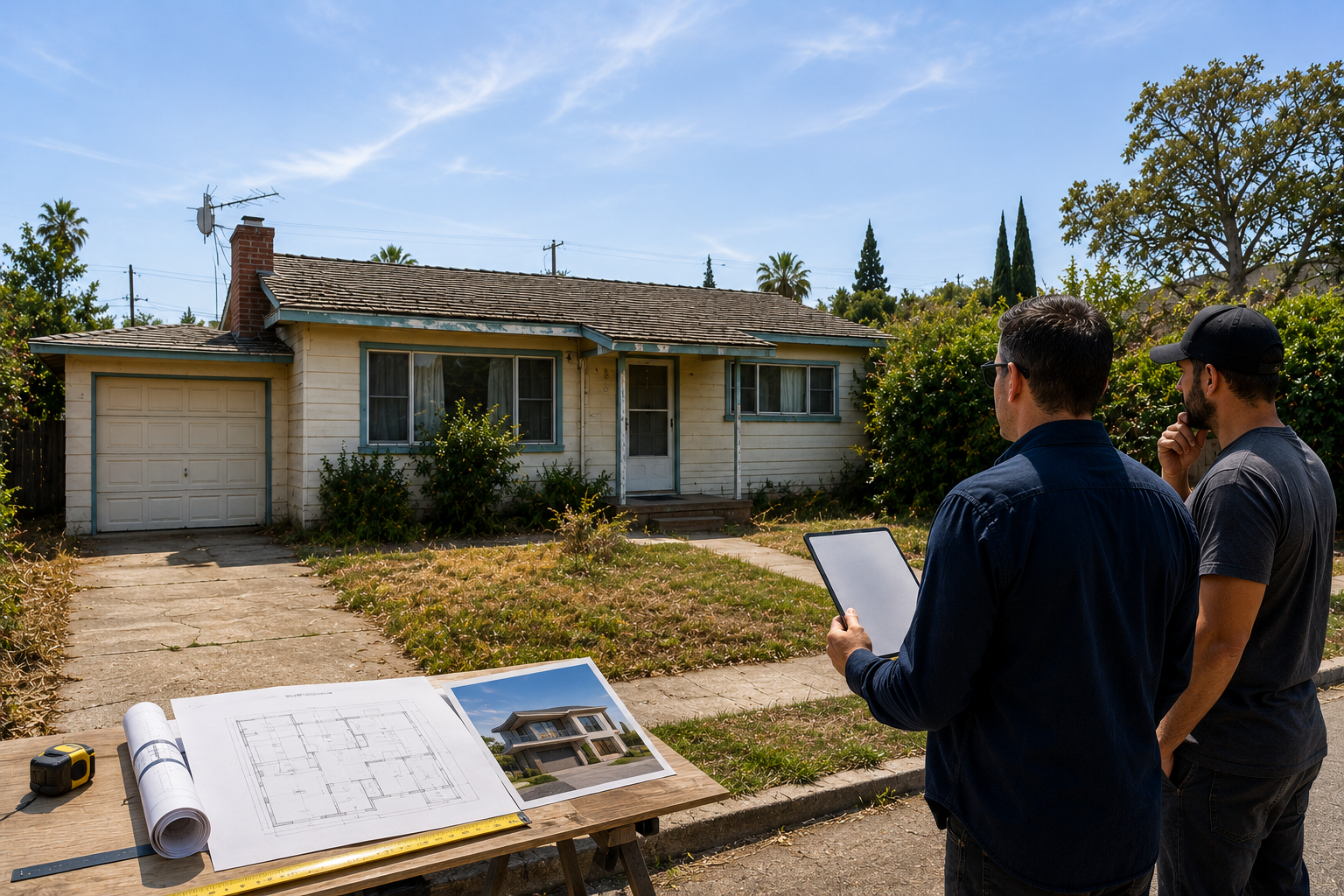 The Studio City spec-builder acquisition target — the original-condition 1950s or 1960s north-of-Ventura home on a lot with the square footage and setback configurations that support a maximized new construction footprint. The investor who correctly identifies the teardown opportunity — the lot that produces the right post-demolition build envelope — and executes the studio-specification new construction at the correct timeline and cost captures the most significant per-transaction gross margin available in any SFV investment market.
The spec-builder financial model:
At north-of-Ventura 91604 (the most active spec-builder sub-market):
Acquisition:
- → Original-condition teardown acquisition: $1.15M–$1.45M
- → The spec-builder pays a modest premium above the pure as-is comp floor because the lot configuration (square footage, setbacks, lot dimensions) specifically enables maximum build envelope — the premium for the right lot shape rather than just the right lot size
Construction:
- → Demolition: $18,000–$28,000
- → New construction (2,400–2,900 sq ft at studio specification): $850,000–$1,350,000 all-in depending on specification level and contractor execution
- → The studio specification at the north-of-Ventura ceiling: wide-plank white oak, custom cabinetry, Wolf/Sub-Zero, Calacatta-look quartzite, spa primary bath, dedicated home office, smart home integration — the specification the entertainment industry buyer expects at the $2.0M–$2.5M north-of-Ventura new construction ceiling
- → Carrying costs (16–24 months from acquisition through close): $120,000–$240,000 at the construction loan rate
Total all-in:
- → $1.15M acquisition + $25,000 demolition + $1,100,000 construction + $180,000 carrying = $2,455,000 all-in
Revenue:
- → North-of-Ventura new construction resale at 2,800 sq ft studio spec: $2.8M–$3.1M depending on specification quality and market timing
- → Gross margin at $2.9M close: $2,900,000 - $2,455,000 = $445,000 gross margin before commission and closing costs
- → Net after 5% commission/closing: approximately $300,000 net
- → Return on total capital deployed: approximately 12–14% on the all-in cost (pre-financing cost)
The south-of-Ventura Carpenter-catchment spec-builder:
The highest-margin spec-builder opportunity in Studio City — but also the highest acquisition cost and the most specification-demanding:
- → Acquisition: $1.8M–$2.3M for a verified Carpenter-catchment teardown
- → Construction: $1.2M–$1.8M for the Carpenter-catchment specification level (Wolf/Sub-Zero, natural stone throughout, outdoor living at the scale the south-of-Ventura buyer expects)
- → Total all-in: $3.5M–$4.8M
- → Resale at south-of-Ventura Carpenter new construction ceiling: $4.5M–$6.5M depending on lot quality, view, and specification
- → Gross margin potential: $800,000–$1,500,000 — the largest absolute gross margin available in the PEP SFV investment series
The spec-builder risk framework:
- → ⚠️ Construction cost overrun risk: Studio City's premium specification creates the highest per-square-foot construction cost in the PEP coverage area — budget overruns of 15–25% above the initial contractor estimate are common. The spec-builder who budgets contingency at 20% of construction cost mitigates but does not eliminate this risk.
- → ⚠️ Market timing risk: A 16–24 month construction timeline creates exposure to the market cycle — the spec-builder who begins construction at spring 2026 prices sells in spring 2027 or 2028 into an unknown market. The south-of-Ventura spec-builder specifically carries this risk at the largest transaction size.
- → ⚠️ Specification risk: The entertainment industry buyer's specification standard shifts with design trends — the spec-builder who follows last year's design language rather than the current season's specification risks the "dated" perception that compresses the resale price even before the general market direction is a concern.
- → ✅ The mitigation: The spec-builder who works with an experienced Studio City-market contractor and a design team specifically calibrated to the current entertainment industry buyer's specification preference reduces all three risks — and Roman Shersher's renovation experience across dozens of SFV properties provides the construction-side intelligence that distinguishes the correctly executed Studio City spec-build from the costly one.
2. 🏠 The Long-Hold Appreciation Investment — Carpenter Premium and Studio City Structural Demand
The long-hold appreciation investment in Studio City is the most appropriate thesis for the capital-patient investor who values the market's structural demand drivers over near-term cash flow and who specifically understands the Carpenter Elementary premium as an appreciation protection mechanism that adjacent markets don't provide.
The appreciation track record:
- → 📊 Studio City 91604 5-year appreciation (2020–2026): approximately 30–38% net from the 2020 baseline — one of the strongest in the PEP SFV coverage area
- → 📊 2022–2023 correction depth: 7–10% from peak — shallower than the average SFV correction, reflecting the structural demand drivers (Carpenter premium, entertainment industry concentration) that provide the downside protection
- → 📊 2024–2026 recovery: approximately 85–92% recovery from the correction trough — approaching but not yet at peak for most sub-markets
- → 📈 Forward appreciation projection: 4.0–5.5% annual at the south-of-Ventura Carpenter tier; 3.5–4.5% at the north-of-Ventura tier — driven by the Carpenter Elementary enrollment demand that is non-cyclical (the enrollment urgency that families face is date-driven by their children's ages, not by market cycle preferences)
The Carpenter premium as an appreciation accelerator:
The verified Carpenter Elementary catchment address's price premium over comparable non-Carpenter south-of-Ventura inventory ($140,000–$280,000 at the $1.9M–$2.8M tier) is the specific appreciation driver that makes south-of-Ventura Carpenter-catchment investment specifically more attractive than the equivalent non-school-premium investment:
- → ✅ Non-cyclical demand: The Carpenter-motivated buyer is purchasing on a school enrollment timeline — their child's age, not the market cycle, determines when they must purchase. This non-cyclical demand floor produces shallower corrections and faster recoveries than cyclical demand-driven markets.
- → ✅ Premium durability: The Carpenter premium has expanded rather than contracted over the past decade as the school's California Dashboard performance has maintained its top-tier rating while the broader LAUSD school landscape has produced more mixed results — increasing the relative premium for the specific school's catchment.
- → ✅ Supply constraint: The Carpenter catchment is address-fixed — no new supply enters the catchment boundary. As the total Carpenter-catchment inventory is limited, demand competition for the available supply specifically supports the premium against inflation.
The long-hold cash flow reality:
The honest negative cash flow picture at the long-hold appreciation investment tier:
At $1.7M north-of-Ventura 91604 purchase (25% down = $425,000 down, $1,275,000 investment loan at 7.75%):
- → Monthly P&I: $9,133
- → Property taxes (1.22%): $1,729/month
- → Insurance: $175/month
- → HOA (if applicable): $0 (most 91604 SFH)
- → Total PITI: $11,037/month
- → Rental income (renovated north-of-Ventura 91604): $6,500–$7,500/month (generous estimate)
- → Monthly cash flow: -$3,537 to -$4,537/month
The investor who holds a north-of-Ventura Studio City rental for 10 years at -$4,000/month carries approximately $480,000 in cumulative negative cash flow — plus the down payment ($425,000) and renovation costs. Total capital invested: approximately $1,050,000.
At 4% annual appreciation over 10 years, the $1.7M purchase becomes approximately $2.52M market value. The equity position at year 10 (after 10 years of principal paydown at approximately $115,000 cumulative): approximately $1.42M in equity.
Return on total invested capital: $1,420,000 equity / $1,050,000 invested = 135% return on invested capital over 10 years — approximately 8.9% annual return on a simple non-compounded basis. This is a positive investment outcome that fully justifies the negative cash flow carry — but only for the investor with the capital reserves and the holding conviction to sustain the cash flow deficit throughout.
3. 🎭 The Entertainment Industry Rental Premium — Studio City's Tenant Market
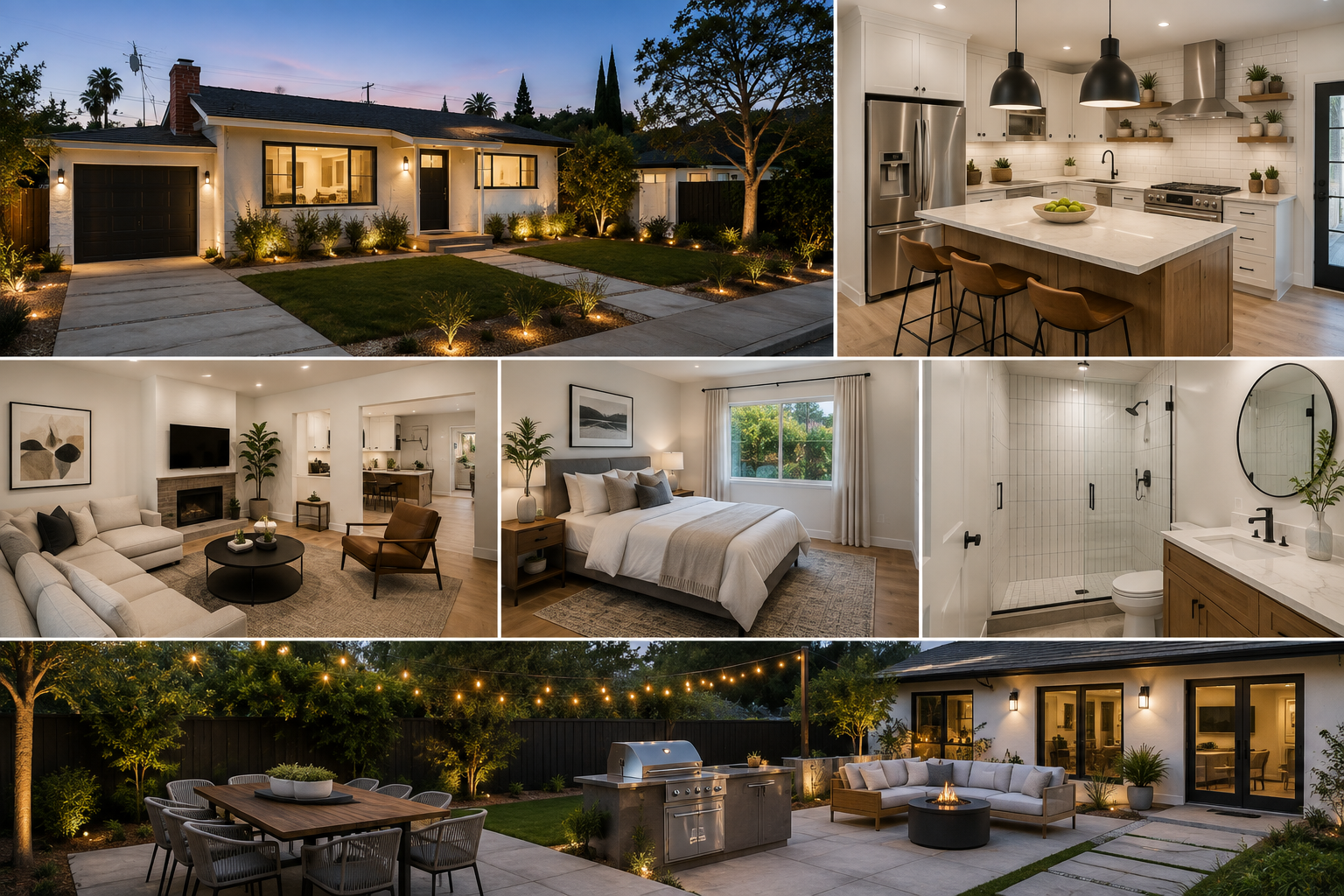 Studio City's entertainment industry professional renter is the most specific and most premium tenant pool in the PEP SFV coverage area — producing rental rates that partially offset (but do not eliminate) the cash flow deficit that Studio City investment properties carry at current acquisition prices and rates.
Who the Studio City renter is:
The Studio City rental market is dominated by the entertainment industry professional at the working level — the writer, director, actor between projects, production coordinator, and the entertainment support professional whose income is sufficient for Studio City rents and whose lifestyle is specifically organized around the neighborhood's entertainment industry social culture.
- → ✅ Rent payment reliability: Entertainment industry professionals — even those with variable project-based income — typically maintain strong rental payment records because their industry income, when present, is significantly above the rent threshold and their professional reputation is linked to their personal credit and financial reliability
- → ✅ The high-specification tenant: The Studio City entertainment industry renter specifically pays the premium for the correctly specified home — the open concept kitchen, the dedicated home office, the outdoor entertaining space, and the location that places them within the Studio City entertainment community social network
- → ✅ The Tujunga Village access premium: The renter who specifically values walking access to Tujunga Village pays a premium for the north-of-Ventura addresses most proximate to the corridor — the walkability premium that the investor should specifically target for maximum rental rate access
The Studio City rental rate landscape:
- → 💰 North-of-Ventura 91604, 3-bedroom renovated: $6,200–$7,800/month
- → 💰 North-of-Ventura 91602, 3-bedroom renovated: $5,800–$7,200/month
- → 💰 South-of-Ventura 91604, 4-bedroom renovated (non-Carpenter): $7,500–$9,500/month
- → 💰 South-of-Ventura 91604, 4-bedroom renovated (Carpenter catchment): $8,500–$11,500/month — the Carpenter school premium extends into the rental market for the renter planning a future purchase in the catchment or who values the school access for their current children
The rental specification requirement:
The entertainment industry renter's specification expectation is the same as the buyer's — the home that rents at the Studio City premium must meet the entertainment industry tenant's visual and functional standard:
- → ✅ Required for premium rental: Open concept living, designer kitchen (custom cabinetry, stone countertops, premium appliances), primary bath at the spa-adjacent standard, high-speed internet infrastructure (the working entertainment professional's most non-negotiable feature), dedicated home office or flex space, outdoor entertaining
- → ❌ What does not rent at the premium: The original-condition or partially updated Studio City home — the entertainment industry tenant will pass on any home below their specification standard and pay the full premium for the home that meets it. There is no "adequate" tier at the Studio City rental premium — only "meets the standard" or "doesn't"
4. 📊 The Studio City Investor's Due Diligence Framework
The Studio City investor's pre-acquisition due diligence is the most specific and most consequential in the PEP investment coverage area — because the acquisition price, the construction risk (for the spec-builder), and the long-hold cash flow commitment each require specific intelligence before any investment is made.
The Carpenter catchment verification:
Every south-of-Ventura Studio City investor who is purchasing for the Carpenter premium — whether for the spec-builder resale or the long-hold appreciation thesis — must verify Carpenter Elementary catchment status at lausd.net/schoolfinder for the specific address before any offer:
- → ✅ The verification protocol: Enter the specific parcel address (not the sub-neighborhood, not the adjacent address) at lausd.net/schoolfinder and confirm the elementary school assignment
- → ✅ The Carpenter premium confirmation: If Carpenter Elementary appears: the Carpenter premium applies. Price to the Carpenter comp set.
- → ❌ The non-Carpenter south-of-Ventura trap: A south-of-Ventura address that is NOT in verified Carpenter catchment will not command the Carpenter premium — regardless of how close it is geographically to the Carpenter catchment boundary. The non-Carpenter south-of-Ventura investor who prices the resale to the Carpenter ceiling produces the most specific and most costly spec-builder error in the Studio City market.
The rental market due diligence:
- → ✅ Comparable rental research: Pull the current rental comps for the specific sub-neighborhood, bedroom count, and specification level — not the Studio City zip code average, but the 91604/91602 sub-neighborhood specific rental data
- → ✅ Occupancy verification: The Studio City rental market has strong demand — verify with a local property manager what the current vacancy rate is for the target specification and sub-neighborhood before finalizing the rental income assumption in any investment model
- → ✅ Renovation cost verification: Before any acquisition at the rental specification investment thesis, obtain contractor bids for the specific renovation scope that reaches the rental premium standard — the gap between the investor's estimated renovation cost and the actual contractor bid is frequently 20–35% in the Studio City premium specification market
The spec-builder feasibility checklist:
- → ✅ Lot dimensions: The lot must support the build envelope that produces the specification-complete new construction — standard 6,000–8,000 sq ft lots support 2,400–2,900 sq ft new construction at north-of-Ventura; the lot dimensions (width, depth, setback configurations) must be verified with the contractor before acquisition
- → ✅ HPOZ (Historic Preservation Overlay Zone) check: Some Studio City 91604 sub-neighborhoods have HPOZ designations that restrict or complicate teardown and new construction. Verify at the City of Los Angeles Department of City Planning (planning.lacity.org) for any target teardown acquisition.
- → ✅ Seller disclosure review: The seller's permit history, known structural issues, and any code violations or unpermitted improvements should be fully reviewed before the spec-builder acquisition — an undisclosed permit issue discovered post-acquisition adds 3–8 weeks to the demolition permit timeline and is not priced into the acquisition cost.
5. 🎯 The Studio City Investor Profile — Who This Market Is and Is Not For
The Studio City investment market's premium price tier and negative cash flow requirement produces the most specific investor profile requirement in the PEP investment coverage area — and the investor who self-selects honestly against this profile makes better decisions than the investor who discovers the fit problem post-acquisition.
The Studio City investment IS for:
- → ✅ The high-net-worth appreciation investor: The investor with $500,000–$1,500,000 in available capital (beyond the down payment), a 10–15 year hold commitment, and the conviction that Studio City's structural demand drivers (Carpenter premium, entertainment industry concentration, limited supply) sustain above-average appreciation through market cycles
- → ✅ The experienced spec-builder: The contractor, developer, or architect-adjacent investor with hands-on construction project management experience, established Studio City-market contractor relationships, and the $3.5M–$7M capital position to fund the all-in spec-builder cycle without distress financing
- → ✅ The entertainment industry insider investor: The entertainment professional who understands the studio city rental market from personal experience, has a network of potential tenants in the entertainment community, and whose own income can sustain the rental property's negative cash flow without requiring the rental income for personal financial stability
- → ✅ The portfolio investor with cash flow from other assets: The investor whose other portfolio assets produce cash flow that offsets the Studio City property's monthly deficit — who holds Studio City specifically for appreciation and views the negative cash flow as a manageable portfolio cost rather than a financial hardship
The Studio City investment is NOT for:
- → ❌ The cash-flow-positive investor: If positive monthly cash flow from inception is a requirement, Studio City is specifically the wrong market at current acquisition prices and rates. Reseda 91335, Lake Balboa 91406/91411, and Northridge 91324/91325 serve the cash-flow-positive investment thesis in the PEP coverage area — not Studio City.
- → ❌ The BRRRR investor: The Reseda and Lake Balboa BRRRR model relies on acquisition prices, renovation costs, and post-renovation appraised values that allow 75% LTV cash-out refinancing to recycle capital efficiently. Studio City's acquisition prices and the gap between as-is and renovated values don't produce the same capital recycling efficiency — the Studio City "BRRRR" leaves significantly more capital in the deal than the Reseda model.
- → ❌ The first-time investor with limited reserves: The Studio City investment requires the financial stability to sustain $4,000–$8,000/month in negative cash flow for 5–15 years while simultaneously managing the operational responsibilities of a premium rental property. The first-time investor with limited reserves faces the double risk of the cash flow burden and the learning curve without the capital cushion to navigate both.
- → ❌ The short-hold (under 5 years) investor: Studio City's transaction costs (commission, transfer taxes, closing costs) consume approximately 8–10% of the sale price on each transaction. A 3-year hold requires approximately 12–14% cumulative appreciation to break even on transaction costs alone — achievable at Studio City's historical rates but requiring market timing precision that is not reliably available.
🚫 What NOT to Overdo
Don't confuse Studio City's premium market positioning with positive cash flow. The most persistent misconception among first-time Studio City investors is that a premium market with above-average rents produces positive cash flow at acquisition. It does not — the $6,500–$7,800/month rental income on a north-of-Ventura Studio City 91604 property does not cover the $11,037/month PITI on a $1.7M investment acquisition. The premium is in the appreciation trajectory and the rental rate, not in the cash flow relationship to the acquisition cost. The investor who budgets for positive cash flow and discovers negative cash flow post-acquisition has made a fundamental modeling error that compounds over the hold period.
Don't acquire a teardown without a Carpenter catchment verification for any south-of-Ventura spec-builder thesis. As established throughout the Studio City seller content library, the Carpenter Elementary premium is address-specific — not sub-neighborhood-specific, not proximity-based. The spec-builder who acquires a south-of-Ventura teardown at the original-condition Carpenter premium price, demolishes, builds at the Carpenter specification level, and then discovers at resale that the specific address is non-Carpenter-catchment has made the most expensive address research failure in the PEP investment series. Verify at lausd.net/schoolfinder before any acquisition where the Carpenter premium is part of the return model.
Don't estimate Studio City construction costs at per-square-foot rates from the Reseda or Northridge markets. Studio City's premium specification — the custom cabinetry, natural stone, Wolf/Sub-Zero, and the architectural design language that the entertainment industry buyer expects — costs meaningfully more per square foot than the focused cosmetic renovation that the Reseda BRRRR model produces. A $200/sq ft estimate that is appropriate for a Northridge renovation scope is a $350–$450/sq ft project at the Studio City studio-specification level. Obtain Studio City-specific contractor bids before finalizing any spec-builder financial model.
Don't underestimate the HPOZ restriction risk for teardown acquisitions. The Historic Preservation Overlay Zone designations that apply to some Studio City 91604 sub-neighborhoods can restrict or prevent teardown and new construction — the spec-builder who acquires a property in an HPOZ zone without this research has potentially acquired a home they cannot demolish, converting a spec-builder investment into an involuntary renovation investment at a price that doesn't support the renovation ROI. Check HPOZ status at planning.lacity.org for every teardown acquisition candidate.
Don't hold a Studio City rental property through multiple renovation cycles at the original specification. The entertainment industry tenant's specification standard evolves — the "renovated" kitchen that commanded the rental premium in 2019 at IKEA cabinetry and granite countertops does not command the same premium in 2026 against the market's custom cabinetry and quartzite standard. The Studio City rental investor who doesn't periodically refresh the specification standard to the current market reference loses rental income ground progressively. Budget a renovation refresh cycle every 7–10 years to maintain the premium rental rate.
🏠 Real-World Scenario — Studio City 91604
A spec-builder investor — a contractor with 15 years of SFV residential construction experience, income from his construction business at $420,000/year — acquired an original-condition north-of-Ventura Studio City 91604 1,680 sq ft home for $1.28M in February. The lot: 6,800 sq ft, regular dimensions, confirmed no HPOZ restriction.
The build plan:
Demolition: $22,000. New construction: 2,750 sq ft contemporary, custom Shaker cabinetry, Calacatta-look quartzite, Wolf range, 48-inch range hood, wide-plank white oak throughout, spa primary bath, dedicated home office, smart home integration, ADU carriage house (additional 450 sq ft for rental or additional resale value). Total construction budget: $1,180,000. Carrying costs (construction loan at 10% on draws, 18-month build): $156,000.
Total all-in: $2,636,000
The Carpenter catchment check: The specific address was NOT in Carpenter Elementary catchment (north-of-Ventura addresses generally are not — Carpenter catchment is south-of-Ventura). The resale price target was the north-of-Ventura new construction ceiling, not the Carpenter premium ceiling. Correct.
The resale:
Launched spring (March 15, following 16-month build). Spring conditions: well-received — 11 showings in week one, 3 offers by day 10. Accepted at $3.05M. Net after 5% commission/closing ($152,500): approximately $2,897,500.
Net margin: $2,897,500 - $2,636,000 all-in = $261,500 net profit on approximately $640,000 in equity capital deployed (25% of acquisition + renovation cost overrun management).
Return on equity: $261,500 / $640,000 = 40.9% return on equity over 18 months = approximately 27% annualized.
The result was strong — but the investor's assessment: "The construction timing worked. If I'd launched in September instead of March, I'd have lost $80,000–$120,000 in close price due to the summer DOM accumulation. The market timing on the resale is as important as the acquisition and construction execution."
🏠 Real-World Scenario — Studio City 91602
A long-hold appreciation investor — a physician with a 10-year horizon, income $890,000/year, seeking a Studio City rental property as an appreciation vehicle rather than a cash flow investment — purchased a north-of-Ventura Studio City 91602 renovated 3-bedroom at $1.55M in October. Purchase structure: 30% down ($465,000), $1,085,000 investment loan at 7.75%.
The cash flow reality:
Monthly PITI: $9,389 (P&I $7,773 + taxes $1,576 + insurance $140). Rental income target: $6,800/month for the renovated north-of-Ventura 91602 3-bedroom. Monthly deficit: $2,589/month.
The physician's assessment: "I earn $74,000/month. The $2,589 monthly deficit is 3.5% of my monthly income. This is not a financial hardship — it is a portfolio allocation decision."
The 10-year model:
Capital deployed at purchase: $465,000 down + $120,000 renovation refresh planned at year 7 = $585,000 total. Cumulative deficit carry (10 years × $2,589/month): $310,680. Total invested: approximately $895,680.
Market value at year 10 (4.2% annual appreciation): approximately $2.33M. Remaining loan balance: approximately $905,000. Equity: approximately $1,425,000.
Return on invested capital: $1,425,000 / $895,680 = 159% return over 10 years = approximately 10.0% annualized.
The physician's 3-year assessment: "The property has appreciated approximately $142,000 from the purchase price in 3 years. The renter — a screenwriter — is an ideal tenant who pays on time and maintains the home at my specification. The cash flow deficit is exactly what I modeled. I am on track."
❓ FAQ
Is Studio City a good place to invest in real estate? Studio City 91604/91602 is an excellent appreciation investment for the right investor profile — specifically the high-net-worth capital-patient investor with 10–15 year hold conviction, the experienced spec-builder with $3.5M–$7M in deployment capital, or the entertainment-industry-connected investor who can access the premium tenant pool. It is NOT a cash-flow-positive investment market at current acquisition prices and rates — expect $3,500–$8,500/month in negative cash flow on typical investment purchases. The investment thesis is appreciation (30–38% net from the 2020 baseline) and equity building, not income.
What is the rental income potential in Studio City? Studio City 91604/91602 rental rates for correctly specified properties: ✓ North-of-Ventura 3-bedroom renovated: $6,200–$7,800/month. ✓ South-of-Ventura 4-bedroom renovated (non-Carpenter): $7,500–$9,500/month. ✓ South-of-Ventura 4-bedroom renovated (Carpenter catchment): $8,500–$11,500/month. These rental rates require the entertainment industry tenant's specification standard — custom kitchen, premium appliances, spa bath, dedicated office, outdoor space. Original-condition or partially updated properties do not command the premium rental rate.
What is the spec-builder opportunity in Studio City? The spec-builder teardown-rebuild is the most active investment strategy in Studio City — acquiring original-condition homes, demolishing, and building studio-specification new construction for resale at a significant premium. North-of-Ventura spec-builder: approximately $300,000–$450,000 net profit per completed project, 40–60% return on equity capital over an 18–24 month project cycle. South-of-Ventura Carpenter-catchment spec-builder: $800,000–$1,500,000+ gross margin potential on the completed project. Requires: $3.5M–$7M all-in capital, experienced contractor relationships, HPOZ verification, and Carpenter catchment confirmation for south-of-Ventura projects.
What should I look for when buying an investment property in Studio City? The most critical due diligence items for Studio City investment: ✓ Carpenter Elementary catchment verification at lausd.net/schoolfinder for any south-of-Ventura acquisition. ✓ HPOZ (Historic Preservation Overlay Zone) check at planning.lacity.org for any teardown candidate. ✓ Lot dimensions and build envelope analysis (for spec-builders) before finalizing acquisition. ✓ Current rental market verification with a Studio City property manager for rental yield assumptions. ✓ Full permit history pull at LADBS (ladbs.org) for any acquisition with unpermitted improvement concerns. ✓ Studio City-specific contractor bids (not adjacent market cost estimates) for any renovation or construction scope.
How does Studio City investment compare to Reseda or Northridge? Reseda 91335 and Northridge 91324/91325 are specifically cash-flow-positive (or near-neutral) investment markets at current rates — the BRRRR+ADU model in Reseda produces approximately 5.95% annual return on remaining equity with meaningful cash recycling. Studio City is specifically NOT cash-flow-positive — it produces -$3,500 to -$8,500/month in negative cash flow at typical acquisition prices and rates. The comparison is not which market is "better" but which thesis matches the investor's capital position and investment objective: cash flow and capital recycling (Reseda/Northridge), or appreciation and equity building with negative carry (Studio City). The investor who needs positive cash flow invests in Reseda; the investor with capital reserves and appreciation conviction invests in Studio City.
🎯 Bottom Line
Studio City 91604 and 91602 investment requires the most specific thesis alignment and the most capital patience of any investment market in the PEP SFV coverage area — and produces the most compelling appreciation returns for the investor who has both. The spec-builder who executes the teardown-rebuild with Studio City contractor expertise and the spring resale timing captures 30–60% returns on equity capital over 18–24 month cycles. The long-hold appreciation investor who sustains the negative carry over a 10–15 year hold accumulates the Carpenter premium appreciation and the entertainment industry demand floor equity that produces 8–10% annualized returns on total invested capital.
The investor who enters Studio City expecting cash flow, expecting the Reseda BRRRR model to apply, or without the capital reserves to sustain the negative carry will find Studio City's numbers disappointing and will make better decisions by specifically choosing Reseda, Lake Balboa, or Northridge instead — all of which serve the cash-flow-motivated investor more specifically and more honestly than Studio City does.
At Parkway Estate Properties, Liana's buyer representation across Studio City 91604/91602, Sherman Oaks 91403/91423, Encino 91316/91436, Tarzana 91356, and Northridge 91324/91325, combined with Roman's hands-on renovation and spec-builder experience across dozens of SFV investment properties, means every Studio City investor conversation is grounded in the honest cash flow model, the correct Carpenter catchment verification, the HPOZ research, and the spec-builder feasibility assessment that produces the right Studio City investment decision for each specific investor's capital position and thesis.
📩 Want a Personalized Studio City Investment Analysis?
Tell us your capital position, your investment timeline, your cash flow requirements, and your thesis — spec-builder, long-hold appreciation, or entertainment industry rental — and we'll give you the honest Studio City investment assessment alongside the specific acquisition targets, construction feasibility evaluation, and net proceeds modeling that makes the decision specific rather than general.
Contact Liana Shersher at Parkway Estate Properties: 📧 liana@parkwayestate.com · 📞 (818) 208-5881 · 🌐 parkwayestate.com 15021 Ventura Blvd., Ste. 510, Sherman Oaks, CA 91403
About the Authors
Liana Shersher is a licensed real estate agent with Parkway Estate Properties Inc. and an Accredited Buyer's Representative (ABR) serving the San Fernando Valley — with a focus on Sherman Oaks, Encino, Tarzana, Woodland Hills, and Northridge (DRE# 02164224). Liana guides first-time homebuyers through every step of the purchase, from the first showing to the keys in hand, and represents move-up and repeat buyers across the Valley. For sellers, she builds the pricing and marketing strategy that positions a home to sell for top dollar, fast. Buyers and sellers work with Liana for clear communication, sharp local knowledge, and an agent who treats their goals like her own.
Roman Shersher is the broker-owner of Parkway Estate Properties Inc. and a real estate investor with 18 years of experience in the San Fernando Valley (DRE# 01855095). Roman has personally led or co-led renovations on dozens of properties across the Valley, including recent projects in Northridge (91324) and Woodland Hills (91364). That hands-on renovation and investment experience shapes every pricing conversation and days-on-market strategy at Parkway — sellers get a realistic read on what improvements actually return at resale, and buyers get an expert eye on a home's true condition and upside.
Parkway Estate Properties, Inc. · 15021 Ventura Blvd., Ste. 510, Sherman Oaks, CA 91403 · (818) 208-5881 · parkwayestate.com · Broker License #: 01873092 Equal Housing Opportunity. Information herein is general and not legal, tax, or financial advice. Consult qualified professionals for your specific situation.
Categories
Recent Posts









Broker | Realtor ® License ID: 01873092
+1(818) 208-5881 | info@parkwayestate.com