
When Is the Best Time to Sell a Home in Granada Hills?

The best time to sell a home in Granada Hills 91344 is dictated by two forces that no other PEP SFV seller market combines in the same specific way — and understanding both forces before setting a listing date is the seller intelligence that produces the strongest net proceeds and the shortest DOM in this market.
The first force is the GHCHS enrollment urgency window. Granada Hills Charter High School's enrollment calendar creates a February 15–April 15 primary activation window during which the school-motivated buyer — the household with a child within 1–4 years of high school enrollment who needs to establish GHCHS-catchment residency — is simultaneously the most motivated, the most decisive, and the most willing to transact at or above the comp ceiling. This enrollment-urgency buyer doesn't need the full spring buyer pool's leisurely decision timeline — they have a deadline imposed by their child's age, and that deadline specifically produces the Granada Hills spring market's most compressed DOM and most competitive offer dynamics.
The second force is the outdoor lifestyle showing window. Granada Hills's defining buyer motivation — the O'Melveny Park hiking access, the Angeles National Forest proximity, the settled north Valley outdoor character — is specifically and uniquely undemonstrable at the July and August showing. The buyer who tours a Granada Hills home in August at 2:00 PM walks into a 104°F backyard, looks at the O'Melveny chaparral slopes shimmering in the heat, and cannot experience the outdoor lifestyle that they're purchasing for. This mismatch between the showing experience and the lifestyle motivation produces the summer's weakest Granada Hills market conditions — not just because the buyer pool thins (as in all SFV markets) but because the outdoor lifestyle that is specifically more central to the Granada Hills purchase motivation than to any other PEP market is literally unavailable to demonstrate in the summer midday.
These two forces together produce the most specific and most consequential seasonal timing pattern in the PEP seller coverage area — one that rewards the seller who understands both and launches in the windows where each force is working in their favor.
1. 📅 The GHCHS Enrollment Window — Granada Hills's Unique Spring Catalyst
As established throughout the Granada Hills seller content library, the Granada Hills Charter High School enrollment urgency window is the most specific Granada Hills seller timing advantage in the PEP SFV coverage area — and it operates differently from a standard school-motivated spring market.
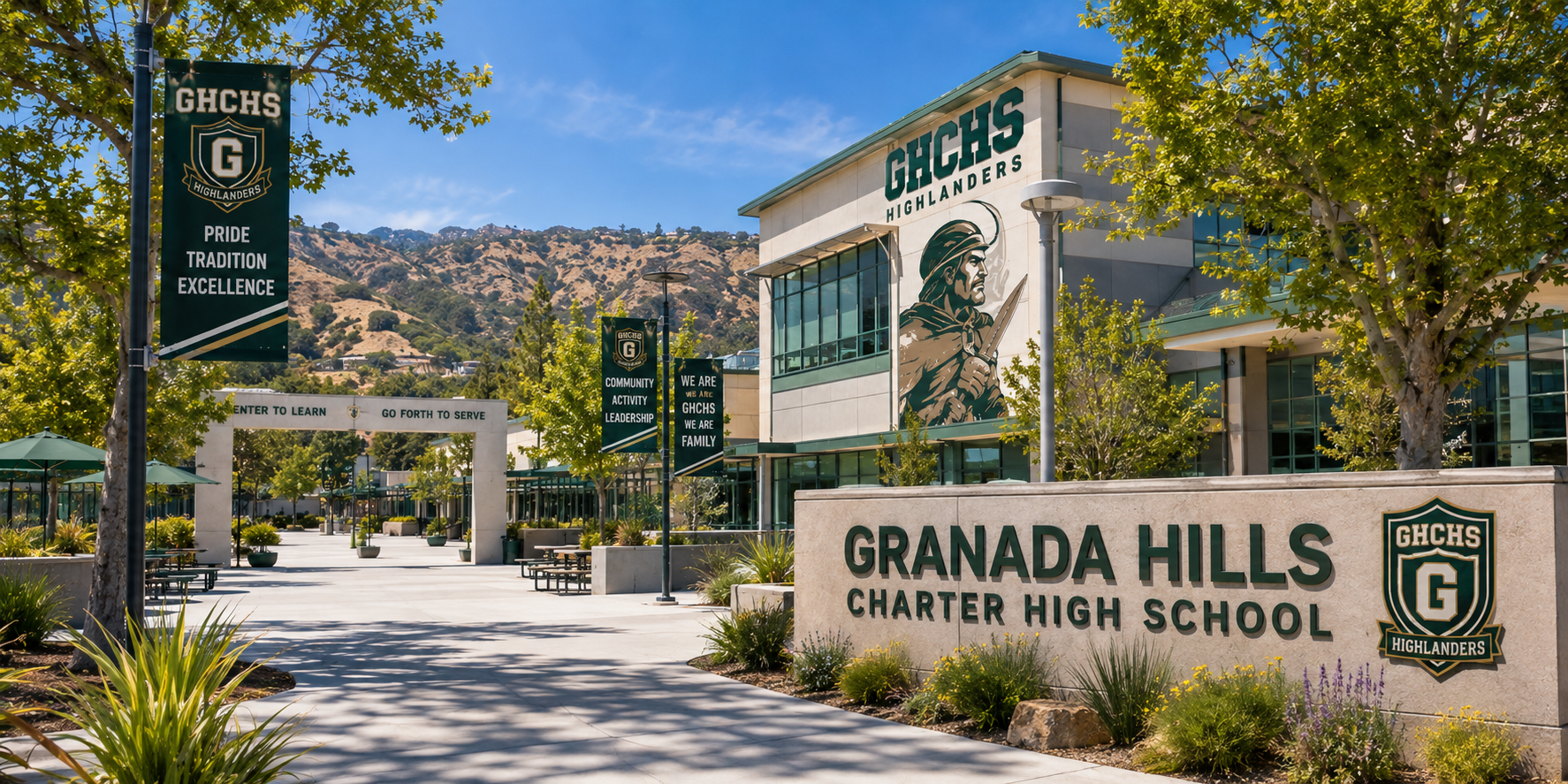 The Granada Hills GHCHS enrollment urgency window launch — the February 15–April 15 primary seller window where the school-motivated buyer's deadline-driven motivation produces the most compressed DOM and most competitive offer dynamics of the year. Unlike the general spring market where buyers choose their own timeline, the GHCHS enrollment buyer's timeline is imposed by their child's age and the school's enrollment calendar — producing specifically faster offers and less price deliberation than any other Granada Hills buyer pool.
How the GHCHS enrollment calendar creates the seller's primary window:
GHCHS enrollment requires residency in verified catchment at the time of application — meaning the family whose child will enter 9th grade the following September must establish GHCHS-catchment residency before the enrollment deadline. The enrollment calendar typically requires:
- → 📋 Spring application window: GHCHS enrollment applications open in late winter to early spring for the following September
- → 📋 Residency verification requirement: The family must demonstrate verified catchment residency at the time of enrollment — typically requiring a purchased or rented property within the catchment boundary
- → 📋 The close-before-enrollment timeline: The family purchasing to access GHCHS for a September start must close escrow early enough to establish residency before the enrollment deadline — typically February through April closes for September enrollment
The buyer motivation this creates:
- → ✅ Deadline-imposed urgency: The GHCHS buyer's decision timeline is not self-selected — it is imposed by their child's school year. The family whose child turns 14 in July and needs to enroll in GHCHS for the September following their 14th birthday has a specific and non-negotiable enrollment timing requirement that drives purchase urgency.
- → ✅ Less price deliberation: The enrollment-deadline buyer who finds a correctly priced GHCHS-catchment home in February or March makes an offer in 1–2 showings rather than the 4–6 showings that the non-deadline buyer typically requires. The enrollment deadline removes the "I want to think about it" deliberation period.
- → ✅ More competitive dynamics: When multiple enrollment-motivated buyers are simultaneously targeting the limited GHCHS-catchment inventory in February–March, the multiple-offer dynamics that produce above-ceiling closes are most likely — because competing buyers know the same enrollment deadline is driving all of their competitors.
The GHCHS window DOM benchmarks:
- → 📊 February 15–March 31 (primary GHCHS window): 15–28 days for correctly priced GHCHS-catchment improved and renovated listings
- → 📊 April 1–April 15 (secondary GHCHS window): 22–38 days — the enrollment urgency begins to moderate as the immediate deadline approaches and the family whose child needed the September enrollment has already purchased
- → 📊 April 15–June 14 (post-GHCHS window): 28–50 days — the transition from enrollment-urgency to the general spring-lifestyle buyer pool
The GHCHS premium in the spring window:
The 10–20% price premium that verified GHCHS-catchment listings command above comparable non-catchment Granada Hills inventory is most specifically realized in the February 15–April 15 window — because the premium is enrollment-deadline driven and therefore most acute when the deadline is closest:
- → 💰 GHCHS-catchment improved 4-bedroom (spring window): $1.05M–$1.28M
- → 💰 Non-catchment comparable improved 4-bedroom (spring window): $930,000–$1.12M
- → Spring window GHCHS premium: approximately $110,000–$160,000 above comparable non-catchment
2. 🌿 The Outdoor Lifestyle Window — Why Spring and Fall Are Granada Hills's Demonstrable Seasons
Granada Hills's outdoor lifestyle is the most central purchase motivation of any PEP SFV coverage market — and it is the most specifically tied to seasonal showing conditions in a way that makes the spring and fall windows uniquely valuable for the Granada Hills seller in ways they aren't for sellers in market-adjacent cities.
The showing experience that demonstrates the Granada Hills lifestyle:
The Granada Hills buyer who makes the purchase decision specifically motivated by O'Melveny Park access, the Angeles National Forest proximity, and the north Valley outdoor character is purchasing a lifestyle experience that they need to be able to visualize from the showing. In spring (March–May) and fall (October–November):
- → ✅ The O'Melveny backdrop: The chaparral slopes visible from many northern Granada Hills 91344 backyards are green (spring) or golden-brown with fall color at elevation (fall) — the most attractive and most outdoor-lifestyle-communicating visual condition for the listing photography and for the actual showing
- → ✅ The backyard temperature: 68–82°F in spring and 65–80°F in fall — the temperature at which the buyer can stand in the backyard during the showing and specifically imagine the outdoor entertaining, the Saturday morning patio coffee before the O'Melveny hike, and the evening outdoor lifestyle that motivates the Granada Hills purchase
- → ✅ The showing availability: The buyer who is actively searching in March or October can schedule showings at 10:00 AM, 2:00 PM, and 5:00 PM — the full showing window. In July, the listing agent can realistically only offer morning showings before 10:00 AM and evening showings after 6:30 PM if the outdoor lifestyle is to be experienced positively.
The summer showing problem unique to Granada Hills:
The Granada Hills seller who lists in July faces a showing challenge that is more specific than the general SFV summer buyer pool thinning:
- → ❌ The 2:00 PM backyard problem: A buyer who schedules a 2:00 PM July showing of a Granada Hills home walks into a 104°F backyard and sees O'Melveny's chaparral slopes shimmering in the heat haze. They are physically uncomfortable. The outdoor lifestyle that the listing describes — the morning hikes, the evening entertaining, the north Valley outdoor character — is actively disproved by the showing experience they're having.
- → ❌ The lifestyle motivation mismatch: The Granada Hills buyer specifically wants to see what they're buying — the outdoor lifestyle. In summer, they cannot see it. They're asked to trust that the listing description of the lifestyle is accurate while their body tells them the outdoor environment is hostile.
- → ✅ The contrast: The spring buyer who stands in the same backyard at 70°F, looks at the green O'Melveny slopes, and hears the seller describe the Saturday morning hike routine can specifically visualize the lifestyle they're purchasing. The lifestyle and the showing experience are aligned.
The fall window's specific outdoor-lifestyle advantage:
The October–November fall window produces what many Granada Hills sellers describe as the most favorable outdoor lifestyle showing conditions of the year — the cooling relief from summer's constraint, the fall chaparral landscape, and the O'Melveny trail system at its most inviting all occur simultaneously with the fall secondary buyer pool's re-engagement:
- → ✅ The October showing temperature: 68–80°F — the most favorable backyard showing condition of any Granada Hills sale window
- → ✅ The O'Melveny fall visual: The O'Melveny chaparral's golden-brown fall color against the blue north Valley sky produces the most photographically compelling listing photography condition of the year — the hero shot that communicates the outdoor lifestyle most powerfully
- → ✅ The fall buyer urgency: The buyer who didn't purchase in spring and spent summer researching returns in October with the dual urgency of the approaching winter weather window and the next GHCHS enrollment cycle beginning to approach
3. 📊 The Quarterly Timing Breakdown — When Exactly to Launch in 2026
With the GHCHS enrollment window and the outdoor lifestyle window mapped, the Granada Hills seller can build a quarterly timing strategy that maximizes both forces working simultaneously.
Q1 — The Primary Window (January 15–April 15):
January 15–February 14 — Pre-Spring Activation:
- → 📊 Market conditions: Winter buyer pool beginning to activate; inventory thin; the early-activating GHCHS-motivated buyer who has been tracking the market since fall returns with renewed urgency
- → 💡 Seller opportunity: The January launch captures the pre-spring buyer before spring inventory competition peaks. A correctly priced GHCHS-catchment listing that launches January 20 specifically competes with fewer comparable listings than the same listing launched March 1.
- → ✅ For the seller who can launch early: January 20–February 14 is the most inventory-competitive-advantage window of the year — thin supply, returning buyer demand, and the forward-looking GHCHS family whose planning horizon is already at the next enrollment cycle
February 15–March 31 — The Primary GHCHS Window:
- → 📊 Market conditions: Peak enrollment-urgency buyer pool activation; maximum GHCHS-motivated buyer concentration; full spring buyer pool simultaneously activating
- → 💡 The ideal Granada Hills launch window: February 15 through the end of March is when both the GHCHS urgency and the outdoor lifestyle demonstrability are simultaneously maximized. The enrollment-deadline buyer is most active; the weather allows the outdoor lifestyle showing; and the spring inventory build hasn't yet exhausted the buyer pool's attention across too many competing listings.
- → 📊 DOM target: 15–28 days for correctly priced GHCHS-catchment improved and renovated listings
- → ✅ For sellers targeting this window: Preparation must begin by November 1 for a February 15 launch — accounting for the 12–16 week renovation or improvement scope if the property requires cosmetic updates to reach the GHCHS-catchment spring ceiling
April 1–April 30 — Late Spring:
- → 📊 Market conditions: Still strong buyer pool but the most enrollment-urgency-critical purchases have been completed; transitioning toward the general spring lifestyle buyer
- → 💡 Still a strong window — but differentiate: The April listing competes with more spring inventory than the February–March launch. Correctly priced and well-prepared listings still generate 18–35 day DOM, but the "I have a school deadline" urgency that accelerates the February-March close is beginning to moderate.
Q2 — The Transition (May 1–June 14):
- → 📊 Market conditions: Spring buyer pool exhausting; summer approaching; the GHCHS urgency window has closed for this cycle; outdoor lifestyle demonstrability still present but narrowing as temperatures rise
- → 💡 The optimal May seller: The May launch is appropriate for the property whose preparation timeline didn't allow a February–March launch. Still strong conditions — DOM of 22–42 days — but the enrollment-urgency premium has passed.
- → ⚠️ June 15 decision point: Any listing not under contract by June 15 enters summer conditions. The seller who is not under contract by June 15 should evaluate whether to accept summer conditions (with the seller-paid buydown deployed and price modestly below the spring ceiling) or temporarily withdraw and re-launch in October.
Q3 — The Summer Navigation (June 15–September 15):
- → 📊 Market conditions: The most challenging Granada Hills selling season — the outdoor lifestyle showing problem described in Section 2 compounds the general SFV summer buyer pool thinning
- → 💡 Summer strategy if must list: Price 3–5% below the spring comp ceiling; include the seller-paid buydown from day one; schedule showings exclusively at 7:30–9:30 AM (before heat) and 6:30–8:00 PM (after cooling); specifically market the seasonal outdoor lifestyle contrast in listing language ("The Angeles National Forest and O'Melveny Park are 5 minutes from this home — the outdoor lifestyle that this neighborhood produces is best experienced in spring and fall, and is why Granada Hills consistently holds its value through market cycles")
- → 📊 DOM target in summer (with strategic deployment): 40–65 days
- → 📊 DOM without strategic deployment: 60–90+ days
Q4 — The Fall Secondary Window (October 1–November 10):
- → 📊 Market conditions: The most underutilized and most underappreciated Granada Hills seller window — the outdoor lifestyle demonstrability at its autumn best, the post-summer buyer re-engagement, the next GHCHS enrollment cycle's advance planners beginning to activate
- → 💡 The fall window's unique quality: The October showing at 70°F with the O'Melveny fall chaparral visible from the backyard is the specific showing experience that most powerfully demonstrates the Granada Hills lifestyle — and in fall, there is less competition from sellers than in spring because most Granada Hills sellers target the spring window and don't think to list in October.
- → 📊 DOM target (October 1–November 10): 20–42 days for correctly priced improved and renovated listings
- → ⚠️ The November 10 cutoff: The fall window closes approximately November 10 — the GHCHS advance-planner buyer and the lifestyle buyer both begin shifting toward holiday dormancy. Listings not under contract by November 10 face December and January's thin buyer market.
4. 🗓️ The Preparation Timeline — Working Backward from Your Target Launch
Granada Hills sellers who target the February 15 primary window face the most specific and most consequential preparation timeline challenge of any PEP coverage market — because the 12–16 week renovation or improvement scope that reaches the GHCHS-catchment spring ceiling must begin in October or November to be complete before February photography.
The February 15 spring launch preparation sequence:
→ October 15: Listing agreement signed. Pre-listing inspection completed ($500–$750). Contractor engaged. → October 15–November 1: Pre-listing inspection findings reviewed; deferred maintenance remediation scoped; HVAC serviced or replaced if needed (the HVAC age finding that the February buyer will specifically flag in the inspection if not addressed proactively) → November 1–January 15: Renovation scope executed — kitchen update (if applicable), primary bath refresh, flooring (LVP installation after kitchen/bath complete), interior repaint → January 15–February 1: Exterior work — curb appeal refresh, drought-tolerant landscaping touch-up, exterior paint (the O'Melveny backdrop-compatible curb appeal that the February photography specifically needs to capture) → February 1–February 10: Staging. Professional photography session (morning shoot to capture the O'Melveny slopes and the north Valley light at its most favorable). → February 15: MLS launch. Pre-launch marketing to GHCHS-network agents (the buyer's agents who have previously represented GHCHS-motivated buyers in 91344 specifically) activated in the prior week.
The October 1 fall launch preparation sequence:
→ June 1: Pre-listing inspection completed. Contractor engaged. → June 15–August 31: Renovation scope executed (the summer construction timeline that avoids the peak buyer season — the house is "under renovation" during the period when it's hardest to sell anyway) → September 1–15: Interior repaint. Curb appeal refresh. → September 15–30: Staging. Photography session (the September-October fall chaparral backdrop specifically captured in the listing photography). → October 1: MLS launch.
The preparation investment thresholds for Granada Hills price tiers:
GHCHS-catchment improved condition target ($1.05M–$1.28M ceiling):
- → ✅ Correct scope: Kitchen update (if below standard), primary bath refresh, LVP flooring, interior repaint, curb appeal — approximately $68,000–$105,000 for the complete scope that reaches the GHCHS spring ceiling
- → ❌ Partial scope trap: The seller who updates the kitchen but leaves the flooring dated and the primary bath original is in the same "no-man's-land" that the Sherman Oaks partial renovation trap article describes — above the original-condition floor, below the renovated ceiling, with neither buyer pool fully engaged
Non-GHCHS-catchment improved condition target ($930,000–$1.12M ceiling):
- → ✅ Correct scope: Same improvement categories at slightly lower specification — the non-catchment buyer is less specifically school-motivated and more generally lifestyle-motivated, making the outdoor lifestyle staging and photography more important relative to the specification level
- → ✅ The outdoor lifestyle marketing emphasis: For non-catchment listings, specifically marketing the O'Melveny Park proximity, the Angeles National Forest access, and the neighborhood outdoor lifestyle character in the listing description and in the photography is the most valuable differentiation available — reaching the buyer who is motivated by lifestyle rather than the school premium
5. 💡 The Seller-Paid Buydown — When It's Needed in Granada Hills
 The seller-paid 2-1 buydown is a meaningful strategic tool for the Granada Hills seller in specific windows — less central to the Granada Hills spring GHCHS window (where the enrollment urgency does the activating) and more critical in the summer and fall windows.
The buydown's role by Granada Hills window:
February 15–April 15 (primary GHCHS window):
- → ✅ Buydown is a differentiator, not a necessity: The enrollment-urgency buyer is specifically deadline-motivated — the payment calculation is secondary to meeting the enrollment deadline. A correctly priced GHCHS listing in February typically doesn't need the buydown to generate offers because the deadline-urgency is doing the motivating.
- → ✅ Include if: The listing is priced at the top of the GHCHS-catchment comp range, or if competing GHCHS listings are offering the buydown. As a differentiator in a competitive spring market, the $14,000–$18,000 buydown converts the hesitating buyer into an offer.
June 15–September 15 (summer):
- → ✅ Buydown is essential from day one: The summer Granada Hills listing faces both the general SFV summer buyer pool thinning AND the outdoor lifestyle showing problem. The seller-paid buydown is the financial tool that partially compensates for the timing disadvantage — activating the buyer whose payment hesitation is the only remaining barrier after the lifestyle concern has been addressed by morning-only showings.
October 1–November 10 (fall secondary):
- → ✅ Buydown is proactively offered: The fall buyer who didn't purchase in spring typically has accumulated research and is ready to move but may be marginally more payment-sensitive than the spring enrollment-urgency buyer. The proactive buydown offer signals seller transaction-facilitation intent and removes the payment calculation barrier for the buyer who is otherwise ready.
The Granada Hills buydown calculation:
At $1.10M GHCHS-catchment improved 4-bedroom (20% down, $880,000 conforming-to-jumbo loan at 7.25%):
- → Monthly P&I without buydown: $6,006
- → Year-one monthly P&I at 5.25% (2-1 buydown): $4,860
- → Year-one monthly savings: $1,146/month
- → Total buyer savings over 24 months: $20,592
- → Seller buydown cost: approximately $15,000–$17,500
The $15,000–$17,500 buydown that produces $20,592 in buyer savings is specifically more effective per dollar than a $15,000 price reduction ($102/month savings at 7.25%) — approximately 11x more effective at reducing the buyer's first-year monthly obligation.
🚫 What NOT to Overdo
Don't launch a GHCHS-catchment Granada Hills listing in February without the pre-listing inspection completed and the deferred maintenance resolved. The GHCHS enrollment-urgency buyer who makes a quick offer in February — motivated by the enrollment deadline rather than the leisurely deliberation of a non-deadline buyer — still conducts a thorough inspection during the contingency period. The seller who skips the pre-listing inspection and launches quickly to capture the February window often discovers mid-February-escrow that the HVAC condition, the roofing age, or the electrical panel type produces a repair credit demand or buyer renegotiation that the $500 pre-listing inspection would have identified and resolved proactively. The enrollment-urgency buyer is motivated to close quickly — but they will use discovered condition issues as renegotiation leverage, and the leverage transfer in February is the same as in any other month.
Don't schedule Granada Hills summer showings at 2:00 PM and expect the outdoor-lifestyle buyer to be activated. The seller whose listing agent schedules summer showings during the midday heat window has created the specific showing experience problem described throughout this article — the buyer who walks into a 104°F backyard and looks at the shimmering O'Melveny slopes cannot visualize the lifestyle they're purchasing. If summer listing is necessary, specifically restrict showings to 7:30–9:30 AM and 6:30–8:00 PM windows and market this explicitly in the showing instructions. The showing quality in the right temperature window is dramatically better than in the wrong one.
Don't assume the November 10 fall cutoff doesn't apply to Granada Hills. The fall window in Granada Hills closes at approximately November 10 for the same reasons it closes in every other PEP coverage market — the buyer who hasn't closed by November 10 typically delays until January at the earliest. But Granada Hills has an additional fall window consideration: the GHCHS advance-planner family whose child is 2–3 years from high school enrollment is already beginning to track GHCHS catchment inventory in October and November. The seller who is not under contract by November 10 may consider a strategic November–January withdrawal (rather than a stale December listing) and a February 1 fresh launch — entering the next enrollment urgency cycle with a reset DOM rather than a 90-day DOM history.
Don't price a non-GHCHS-catchment Granada Hills listing at the GHCHS-catchment ceiling. The price gap between verified GHCHS-catchment and comparable non-catchment Granada Hills inventory is $110,000–$160,000 in the spring window — a real and specific premium that the enrollment-urgency buyer specifically pays for verified catchment access. The non-catchment seller who prices to the catchment ceiling generates zero showings from the enrollment-urgency buyer (who has filtered non-catchment out of their search) and zero showings from the non-catchment lifestyle buyer (who sees the non-catchment listing priced above the catchment ceiling and correctly identifies the overpricing). Apply the non-catchment comp set, which is a genuinely different and genuinely lower ceiling than the GHCHS-catchment comp set.
Don't use the GHCHS enrollment urgency window to list an unprepared or original-condition home at the improved-condition ceiling. The enrollment-urgency buyer is specifically deadline-motivated — but they are not naive. The GHCHS family that is making one of the most financially significant purchases of their lives specifically because of the school access is not going to pay the improved-condition ceiling for an original-condition home because the enrollment deadline is approaching. They will make an offer — at the original-condition comp floor, using the enrollment-deadline pressure as their leverage rather than the seller's. Price to the correct condition tier regardless of the timing window.
🏠 Real-World Scenario — Granada Hills 91344
A long-term Granada Hills 91344 owner — a verified GHCHS-catchment home, renovated kitchen and primary bath (completed in 2023), LVP flooring throughout, original secondary baths, no mortgage — wanted to sell in 2026 and initially planned a summer launch because "summer is when we're ready to move."
The timing education:
We mapped the GHCHS enrollment window (February 15–April 15) against the summer launch plan. The analysis:
Summer launch (July 15):
- → Expected DOM: 52–72 days
- → Expected close price: $1.08M (3% below the spring GHCHS comp ceiling of $1.11M, reflecting summer buyer pool and outdoor lifestyle showing problem)
- → Buyer pool: general lifestyle buyers without enrollment urgency; reduced showing traffic due to outdoor showing limitation
- → Carrying costs (55 days average DOM at $0 mortgage): minimal — approximately $1,800 in taxes and insurance
Spring launch (February 15 — 7 months earlier):
- → Preparation needed: secondary bath refresh ($16,500 each, two baths = $33,000), exterior curb appeal ($11,500) — scope completable in 14 weeks beginning November 1
- → Expected DOM: 19–28 days
- → Expected close price: $1.14M — at or slightly above the spring GHCHS ceiling reflecting the enrollment-urgency competitive dynamics
- → Buyer pool: enrollment-urgency GHCHS families plus general spring lifestyle buyers
Net proceeds comparison:
Summer: $1.08M - $54,000 commission/closing - $1,800 carrying = approximately $1,024,200 net
Spring (with preparation): $1.14M - $57,000 commission/closing - $33,000 preparation - $4,200 preparation carrying = approximately $1,045,800 net
Net improvement from spring launch: $21,600 better — on a $33,000 preparation investment, the spring launch produced both the preparation ROI and $21,600 more net than the summer alternative. The seller's response: "I had no idea the enrollment window produced that much of a price premium. I thought spring was just 'better' in a general way. The $60,000 in expected sale price difference between summer and spring is real money."
They launched February 15. Three offers by day 16. Accepted at $1.145M on day 21. Net approximately $1,048,000 — $24,000 above the summer launch projection.
🏠 Real-World Scenario — Granada Hills 91344
A Granada Hills 91344 seller in a non-GHCHS-catchment sub-neighborhood — a renovated 3-bedroom targeting the lifestyle buyer rather than the enrollment-urgency buyer — was evaluating the spring versus fall window.
The analysis:
Non-GHCHS spring window (March 15 launch):
- → Expected buyer pool: lifestyle buyers, move-up families, remote work households — no enrollment urgency component
- → Competing with: GHCHS-catchment spring listings that dominate the spring narrative and may leave the non-catchment listing underemphasized
- → Expected DOM: 24–40 days
- → Expected close price: $978,000 (non-catchment renovated 3-bedroom spring ceiling)
Fall window (October 1 launch):
- → Expected buyer pool: lifestyle buyers returning from summer, the outdoor-lifestyle-motivated household specifically activating in the fall when the O'Melveny and Angeles National Forest access is at its most demonstrable — the buyer who specifically chose October to look at outdoor-lifestyle neighborhoods
- → Photography advantage: The fall O'Melveny chaparral backdrop, the 70°F backyard showing temperature, the morning light on the mountain views — the specific showing conditions that make the outdoor lifestyle the most demonstrable and the most motivating
- → Expected DOM: 22–38 days — comparable to spring but without the catchment-listing competition
- → Expected close price: $975,000–$985,000 — within 0.5% of the spring expectation but with potentially less showing noise from GHCHS catchment sellers dominating the spring narrative
Decision: The seller chose the October launch specifically because the outdoor-lifestyle buyer is the motivated purchaser for a non-catchment Granada Hills listing, and October is when that buyer is specifically most active and the listing is most capable of demonstrating the lifestyle that motivates the purchase.
October 1 launch at $979,000. Fall photography specifically showcasing the O'Melveny backdrop, the outdoor living space at its October best, and the neighborhood mountain character. First week: 8 showings. Three highly motivated lifestyle buyers. Accepted at $982,000 on day 14.
The seller's assessment: "I thought spring was automatically better. But for my non-catchment listing, the fall window meant the buyers who were touring were specifically motivated by the outdoor lifestyle — the same things that made me fall in love with this neighborhood. The spring browsers weren't all outdoor-lifestyle buyers. The October buyers were. And the photography from that fall shoot was the best listing photography I've ever seen for a north Valley home."
❓ FAQ
When is the best time to sell a home in Granada Hills? The best time to sell a home in Granada Hills 91344 is February 15–April 15 for verified GHCHS-catchment listings — the Granada Hills Charter High School enrollment urgency window when the school-motivated buyer's deadline-driven motivation produces the most compressed DOM (15–28 days) and most competitive offer dynamics of the year. For non-GHCHS-catchment listings, October 1–November 10 is specifically compelling because the outdoor lifestyle that motivates the Granada Hills purchase (O'Melveny Park, Angeles National Forest access) is maximally demonstrable at fall showing temperatures and the fall chaparral landscape is at its most photogenic. Both windows outperform the summer (June 15–September 15) window, when the outdoor lifestyle showing problem and the general SFV buyer pool thinning combine to produce 40–72 day DOM.
Does GHCHS catchment affect the best time to sell in Granada Hills? Yes — significantly. Verified GHCHS-catchment listings have the most specifically beneficial spring window of any Granada Hills property because the enrollment-urgency buyer who must establish GHCHS residency before the September school year specifically targets the February 15–April 15 closing window. The enrollment urgency produces offers in 1–2 showings rather than the 4–6 showings that non-deadline buyers require, and the competing enrollment-urgency buyers create competitive offer dynamics that drive close prices to the GHCHS-catchment ceiling. Non-GHCHS-catchment listings benefit less specifically from the spring enrollment window and may perform comparably in the fall window when lifestyle buyers are specifically active.
How does the summer heat affect home sales in Granada Hills? The summer heat affects Granada Hills home sales specifically more than adjacent SFV markets because the outdoor lifestyle that motivates the Granada Hills purchase — hiking, the Angeles National Forest access, the O'Melveny outdoor character — cannot be favorably experienced at summer midday showing temperatures of 97–107°F. The buyer who tours a Granada Hills home at 2:00 PM in July walks into a 104°F backyard and cannot visualize the outdoor lifestyle they're purchasing for. This showing-experience mismatch compounds the general SFV summer buyer pool thinning, producing Granada Hills-specific summer DOM of 52–90+ days versus the spring's 15–38 days. If summer listing is necessary, restrict showings to the 7:30–9:30 AM and 6:30–8:00 PM temperature windows and market the seasonal outdoor lifestyle contrast explicitly.
What preparation timeline do I need for a February Granada Hills listing? For a February 15 spring launch in Granada Hills 91344: begin preparation by October 15. The preparation sequence is: inspection and contractor engagement (October 15–November 1), renovation scope execution including kitchen, bath, flooring as needed (November 1–January 15), curb appeal refresh (January 15–February 1), staging and professional photography (February 1–10), MLS launch (February 15). The full renovation scope that reaches the GHCHS-catchment improved condition ceiling requires 12–16 weeks — which is why October 15 is the latest date that allows a February 15 launch without compressing the preparation timeline.
Is the fall a good time to sell in Granada Hills? Yes — specifically for non-GHCHS-catchment listings and for sellers who couldn't prepare in time for the spring launch. The October 1–November 10 fall window in Granada Hills has a specific advantage over fall in other SFV markets: the outdoor lifestyle that motivates the Granada Hills purchase is at its most demonstrable in October, when showing temperatures of 68–78°F allow the buyer to stand in the backyard and specifically imagine the outdoor lifestyle they're purchasing. The fall O'Melveny chaparral backdrop and the mountain morning light also produce the most photographically compelling listing conditions of the year. DOM of 22–42 days is achievable for correctly priced improved and renovated fall listings.
Should I wait for spring or sell now in Granada Hills? For most Granada Hills sellers, the spring GHCHS enrollment window (February 15–April 15) produces the strongest net proceeds and shortest DOM — making it worth waiting if the current timing is outside this window. The exception: the seller whose property is original condition and targets the investor acquisition window (January is favorable for original-condition listings as preparation-opportunity buyers are specifically active). For renovated and improved condition listings, the February 15–April 15 primary window and the October 1–November 10 fall secondary window consistently outperform summer and winter launches by enough margin that strategic patience — with the preparation completed during the wait — produces better outcomes than rushing to market outside these windows.
🎯 Bottom Line
The best time to sell a home in Granada Hills 91344 is the window where both of the neighborhood's defining market forces are simultaneously active: the GHCHS enrollment urgency window (February 15–April 15) when the school-motivated buyer's deadline-driven motivation produces the most compressed DOM and most competitive dynamics, AND the outdoor lifestyle demonstrability window (spring and fall) when the 68–82°F showing temperatures allow the buyer to specifically experience the outdoor lifestyle that the Granada Hills purchase is motivated by.
When those two forces align — the February 15–April 15 spring launch for GHCHS-catchment listings — the Granada Hills seller has the most specific and most powerful seasonal selling advantage in the PEP coverage area. The enrollment-urgency buyer who makes an offer after 2 showings rather than 6, the fall buyer who stands in the 72°F October backyard and sees the O'Melveny chaparral slopes in the morning light, and the correctly prepared listing that reaches the GHCHS comp ceiling in the peak window together produce the net proceeds outcome that the Granada Hills seller who understands this market's timing forces achieves consistently.
At Parkway Estate Properties, Liana's seller representation across Granada Hills 91344, Northridge 91324/91325, Porter Ranch 91326, Chatsworth 91311, and Sherman Oaks 91403/91423, combined with Roman's renovation and investment property experience across the north Valley, means every Granada Hills timing conversation is grounded in the GHCHS enrollment window intelligence, the outdoor lifestyle showing seasonality, the preparation timeline working backward from the target launch, and the seller-paid buydown deployment strategy that together produce the maximum net proceeds for each specific Granada Hills seller.
📩 Want a Personalized Granada Hills Timing and Preparation Analysis?
We'll assess your specific Granada Hills address's GHCHS catchment status, your property's condition tier relative to the spring ceiling, the preparation scope and timeline to reach the ceiling, and the optimal launch window — before any listing agreement is signed.
Contact Liana Shersher at Parkway Estate Properties: 📧 liana@parkwayestate.com · 📞 (818) 208-5881 · 🌐 parkwayestate.com 15021 Ventura Blvd., Ste. 510, Sherman Oaks, CA 91403
About the Authors
Liana Shersher is a licensed real estate agent with Parkway Estate Properties Inc. and an Accredited Buyer's Representative (ABR) serving the San Fernando Valley — with a focus on Sherman Oaks, Encino, Tarzana, Woodland Hills, and Northridge (DRE# 02164224). Liana guides first-time homebuyers through every step of the purchase, from the first showing to the keys in hand, and represents move-up and repeat buyers across the Valley. For sellers, she builds the pricing and marketing strategy that positions a home to sell for top dollar, fast. Buyers and sellers work with Liana for clear communication, sharp local knowledge, and an agent who treats their goals like her own.
Roman Shersher is the broker-owner of Parkway Estate Properties Inc. and a real estate investor with 18 years of experience in the San Fernando Valley (DRE# 01855095). Roman has personally led or co-led renovations on dozens of properties across the Valley, including recent projects in Northridge (91324) and Woodland Hills (91364). That hands-on renovation and investment experience shapes every pricing conversation and days-on-market strategy at Parkway — sellers get a realistic read on what improvements actually return at resale, and buyers get an expert eye on a home's true condition and upside.
Parkway Estate Properties, Inc. · 15021 Ventura Blvd., Ste. 510, Sherman Oaks, CA 91403 · (818) 208-5881 · parkwayestate.com · Broker License #: 01873092 Equal Housing Opportunity. Information herein is general and not legal, tax, or financial advice. Consult qualified professionals for your specific situation.
Categories
Recent Posts









Broker | Realtor ® License ID: 01873092
+1(818) 208-5881 | info@parkwayestate.com