
Buying a Home in Tarzana as an Investor
Tarzana 91356 is not a BRRRR market in the sense that Lake Balboa 91406 or Reseda 91335 are — the acquisition prices are too high, the renovation margins too compressed, and the cap rates too thin for the buy-renovate-refinance-repeat cycle to produce the same capital efficiency it generates at $650,000–$780,000 acquisition prices. What Tarzana is, at $850,000–$1.4M, is a specific and underappreciated long-hold appreciation and rental income market with three characteristics that most comparable-price SFV markets lack: a durable, school-quality-anchored rental demand pool from El Camino Real Charter High School that produces rental tenants with specific geographic motivation; a spec-builder teardown-rebuild path that creates value-add acquisition opportunities not available in purely resale-only markets; and the western Valley lifestyle proposition — Ventura Boulevard access, Warner Center proximity, the specific amenity profile — that attracts professional household tenants who stay longer, pay on time, and treat properties better than the average SFV rental tenant at comparable price points.
This article gives Tarzana investors the complete picture: the honest cash flow model at current rates, the rental demand analysis, the acquisition strategies, the value-add opportunities available in this specific market, and the investment thesis that makes Tarzana 91356 worth evaluating against the more obvious central Valley BRRRR markets.
1. 📊 The Tarzana Investment Thesis — Why This Market, Why Now
Every investment thesis begins with the question: what specific, durable advantage does this market have that produces better long-term investor outcomes than the alternatives? In Tarzana 91356, the answer is three-layered — and each layer reinforces the others.
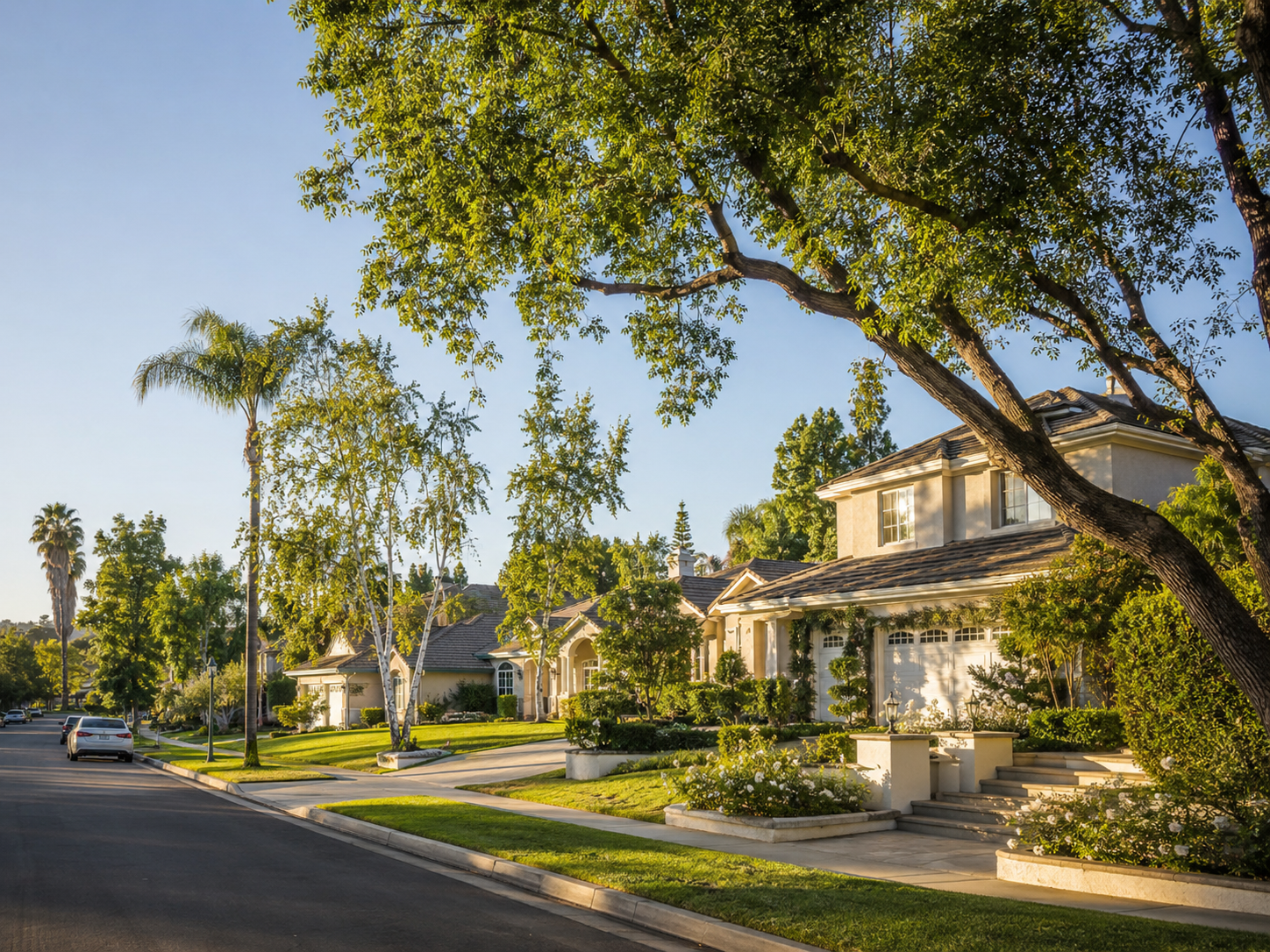 Tarzana 91356 — the western Valley investment market where school-quality-anchored rental demand, spec-builder value-add opportunity, and the ECR Charter enrollment premium combine to produce a long-hold investment thesis that most comparable-price SFV alternatives don't replicate. The investor who enters here is not buying a cash-flowing asset at current rates — they are building equity in a market with specific, durable demand drivers.
Layer 1 — El Camino Real Charter School rental demand durability:
El Camino Real Charter High School's enrollment requirement — families must establish 91356 residency to qualify for enrollment — creates a category of renter that no other market in the PEP coverage area has at this specific scale: the family that rents in Tarzana specifically and primarily to maintain ECR enrollment eligibility. This renter:
- → ✅ Pays above-market rent to maintain residency: The ECR enrollment right has a specific, calculable value to families who have specifically relocated to 91356 for the school. Private high school tuition of $30,000–$45,000/year — the alternative if ECR enrollment fails — is a real comparison point that makes paying $200–$400/month above the generic market rate for a Tarzana rental economically rational for these families.
- → ✅ Stays for the enrollment period: Families who rent in Tarzana for ECR access typically stay for the enrollment year or longer — reducing the vacancy and turnover costs that are the primary profitability destroyer in single-family rental portfolios. A family renting to maintain their 9th-grader's ECR enrollment is not casually searching for a marginally cheaper rental.
- → ✅ Treats the property as a primary family residence: The ECR tenant is a working family household in the $120,000–$200,000+ income range — not the transient tenant profile that produces higher maintenance, higher damage, and lower property care. These tenants maintain properties because they are living their actual family life in them, not cycling through rentals.
Layer 2 — The western Valley professional household rental premium:
Beyond the ECR-specific demand, Tarzana's Ventura Boulevard lifestyle access, Warner Center employment proximity, and the western Valley amenity profile attract professional household tenants — entertainment industry professionals, healthcare professionals at the Woodland Hills 91367 medical corridor, and finance and tech professionals — whose rental behavior differs from the broader market:
- → ✅ Higher income qualification: Professional household tenants at the Tarzana rental rate tier qualify at income levels of $150,000–$220,000+ — significantly reducing collection risk
- → ✅ Longer tenure: Professional households establishing themselves in the western Valley for career reasons tend to rent for 2–4 years before purchasing — meaningfully longer than the 12–18 month average tenure that most SFV single-family rental portfolios experience
- → ✅ Lower maintenance burden: Professional households in the $4,500–$5,500/month rental tier generally maintain properties at a higher standard than lower-tier renters — reducing the turnover maintenance costs that disproportionately affect SFV single-family rental returns
Layer 3 — Appreciation durability in a school-quality-anchored market:
Tarzana's 30–38% cumulative net appreciation from 2020 to mid-2026 reflects a market with a specific, structural demand floor — the school-quality premium that makes 91356 specifically sought after regardless of broader rate cycles. As documented in the home price trends article, Tarzana's correction during the 2022–2023 rate cycle was more moderate than comparable western Valley markets without ECR's enrollment motivation. The school-quality demand floor that moderated the correction is the same floor that supports the appreciation trajectory over a 7–15 year hold period.
2. 💰 The Honest Cash Flow Model — What Tarzana Investment Actually Produces
The most important service an honest Tarzana investment guide can provide is the specific cash flow numbers that allow investors to evaluate this market with clear eyes. At current rates, Tarzana is not a cash-flow-positive market for leveraged investors — and investors who enter with incorrect cash flow expectations consistently make acquisition decisions that their actual monthly obligations can't sustain.
The Tarzana single-family investment cash flow model:
Scenario A — $950,000 acquisition, standard single-family, 3-bedroom:
Assumptions: 25% down ($237,500), $712,500 loan at 7.25%, standard Tarzana 91356 rental rate, no ADU.
- → 💳 Monthly P&I: $4,861
- → 🏛️ Property taxes (1.2% effective): $950
- → 🏠 Insurance: $145
- → 🔧 Property management (8% of rent): $350 (at $4,375 rent)
- → 🏡 Maintenance reserve (1% annually): $792
- → 💧 Vacancy reserve (8% of annual rent): $350
- → Total monthly expenses: $7,448
- → 💰 Rental income (3-bedroom, standard condition): $4,375/month
- → 📉 Monthly cash flow: -$3,073/month
Scenario B — $1,050,000 acquisition, renovated 3-bedroom:
- → 💳 Monthly P&I (25% down, $787,500 loan): $5,374
- → 🏛️ Property taxes: $1,050
- → 🏠 Insurance: $155
- → 🔧 Property management (8%): $384 (at $4,800 rent)
- → 🏡 Maintenance reserve: $875
- → 💧 Vacancy reserve: $384
- → Total monthly expenses: $8,222
- → 💰 Rental income (3-bedroom, renovated, ECR-premium sub-neighborhood): $4,800–$5,200/month
- → 📉 Monthly cash flow: -$3,022 to -$2,622/month
Scenario C — $1,100,000 acquisition, renovated 4-bedroom:
- → 💳 Monthly P&I (25% down, $825,000 loan): $5,630
- → 🏛️ Property taxes: $1,100
- → 🏠 Insurance: $165
- → 🔧 Property management (8%): $464 (at $5,800 rent)
- → 🏡 Maintenance reserve: $917
- → 💧 Vacancy reserve: $464
- → Total monthly expenses: $8,740
- → 💰 Rental income (4-bedroom, renovated): $5,400–$5,800/month
- → 📉 Monthly cash flow: -$3,340 to -$2,940/month
The ADU transformation:
The addition of a permitted ADU — a 1-bedroom detached unit at approximately $155,000–$195,000 construction cost — adds $1,850–$2,400/month in rental income. At the midpoint of $2,100/month:
- → Scenario A with ADU: -$3,073 + $2,100 = -$973/month
- → Scenario B with ADU: -$2,822 + $2,100 = -$722/month
- → Scenario C with ADU: -$3,140 + $2,100 = -$1,040/month
The honest total return model:
Despite negative monthly cash flow, the total return calculation includes:
- → 📈 Annual appreciation (3.5–4.5% on asset value): $33,250–$49,500/year on a $950,000 asset
- → 💰 Annual principal paydown: Approximately $14,400–$16,800/year in year 1–5 at these loan amounts
- → 📊 Total annual wealth building (appreciation + principal paydown): Approximately $47,650–$66,300/year
- → 📉 Net of negative cash flow ($36,876/year at Scenario A): Total annual return approximately $10,774–$29,424/year on $237,500 deployed equity
The investment calculus:
A $237,500 equity deployment producing $10,774–$29,424 in annual wealth building represents a 4.5–12.4% annual return on invested equity — without accounting for leverage amplification of the appreciation component. This is a real return on a real investment. It requires the investor to sustain $3,000+/month in negative cash flow while the equity builds — which is only appropriate for investors who have specifically modeled and budgeted this requirement, not investors who entered expecting the rental income to cover the mortgage.
3. 🏗️ The Spec-Builder Path — Tarzana's Highest-Margin Investor Opportunity
The teardown-rebuild investment path — described in the new construction vs. resale article as the dominant form of new construction in Tarzana — is the highest-margin investor activity available in 91356 and the investment strategy most specific to this market's particular character.
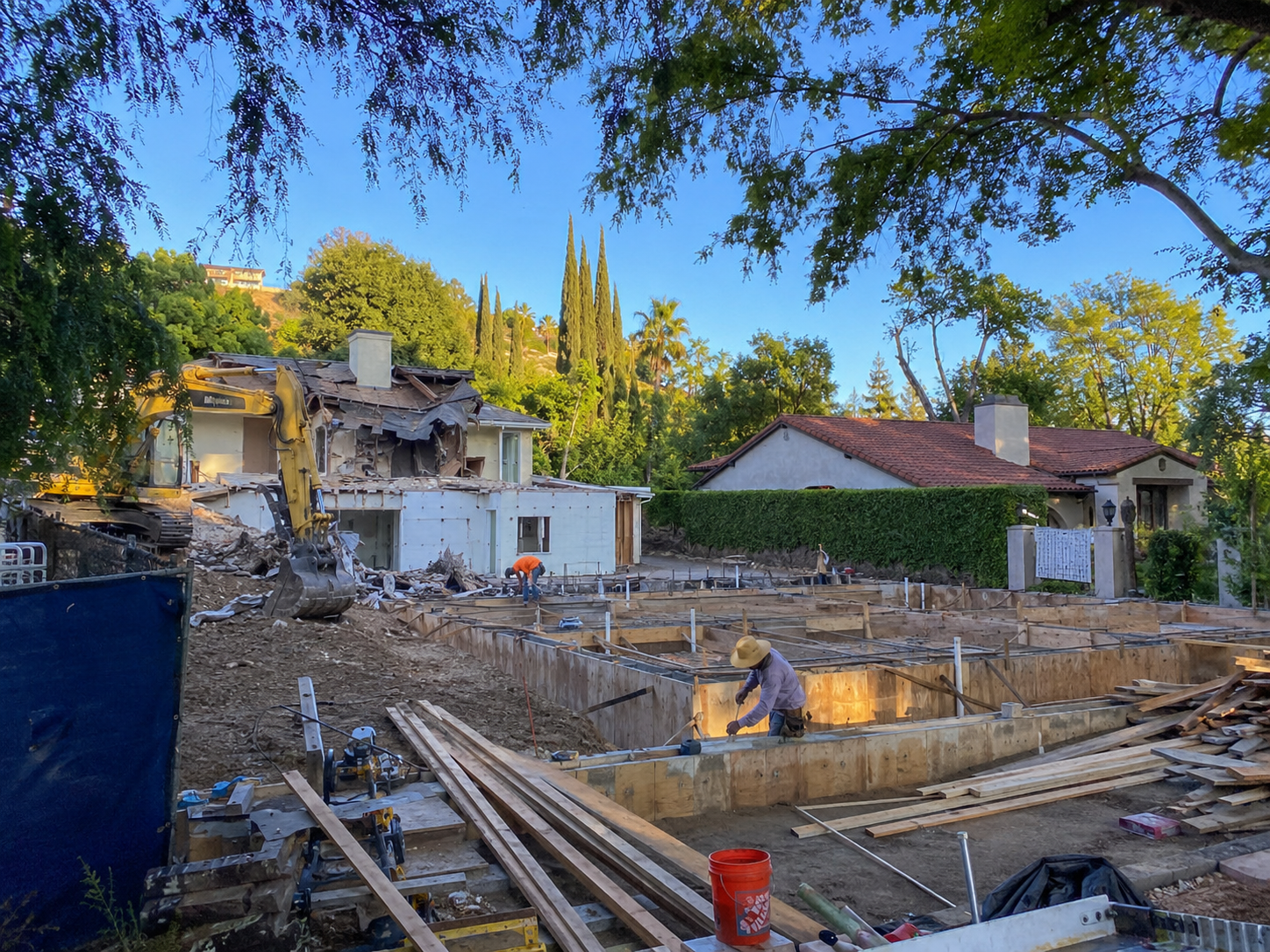 The Tarzana spec-builder investment path — acquiring original-condition 1960s–1970s homes at $960,000–$1,150,000, demolishing the existing structure, and building contemporary single-family homes worth $1.35M–$1.75M. The margin produced by this path is the highest available to investors in the Tarzana market and is driven by the specific premium that Studio City-specification finishes and contemporary floor plans command from the western Valley buyer pool at this price tier.
The spec-builder investment math:
A representative Tarzana spec-builder transaction:
- → 🏠 Acquisition price (original condition 3-bedroom, standard lot): $975,000
- → 🔨 Demolition and construction cost (3-bedroom, 2,000 sq ft contemporary to Studio City specification): $420,000–$480,000
- → 📋 Permits, architecture, engineering, and carrying costs (8 months at hard money rates): $85,000–$110,000
- → 💰 Total all-in cost: $1,480,000–$1,565,000
- → 📊 Completed home value (renovated comp ceiling for spec-builder new construction in Tarzana): $1.55M–$1.75M
- → 📈 Gross margin: $0–$270,000 depending on execution quality, finish specification, and market timing
- → 📈 Net margin after selling costs (agent commission, closing costs): Approximately -$40,000 to +$180,000
The spec-builder margin reality:
At current Tarzana acquisition prices and construction costs, the spec-builder margin in 91356 is tighter than it was in 2020–2022 when acquisition costs were meaningfully lower. Investors who model the spec-builder path in Tarzana in 2026 need to be precise:
- → ✅ Positive margin scenarios: Acquisition at $950,000 or below, construction cost discipline at $420,000 or below, finish specification that reaches $1.65M–$1.75M comp ceiling, and market timing that produces a Q2 or Q4 launch into the ECR-active buyer pool
- → ⚠️ Breakeven or negative scenarios: Acquisition above $1.0M, construction cost overruns, or a market launch into the summer suppression window. The spec-builder margin in Tarzana is real but requires all variables to align — it is not the automatic value creation that lower-price markets with wider margins produce
Who the spec-builder path is right for:
- → ✅ Experienced operators with established contractor relationships who execute renovations at the Tarzana/western Valley finish specification
- → ✅ Investors with access to construction financing at competitive rates — not consumer hard money at 12%+, which eats the margin entirely
- → ✅ Investors with the patience and project management capability to manage a 10–14 month development timeline from acquisition to close
- → ❌ First-time investors without construction experience — the spec-builder path has more execution risk than the buy-and-hold path and requires precisely the contractor relationships and finish quality judgment that the new construction vs. resale article described as the difference between a Studio City-specification renovation and a working-family market renovation
4. 🏡 The Buy-and-Hold Strategy — The Core Tarzana Investment
For most Tarzana investors — particularly those without spec-builder experience — the core investment strategy is buy-and-hold: acquire a well-located 91356 single-family home in the $900,000–$1.15M range, prepare it for premium rental, target the ECR-motivated and professional household tenant pool, and hold for 7–15 years through the appreciation cycle.
Optimizing the Tarzana buy-and-hold investment:
Sub-neighborhood selection:
The ECR Charter school premium that drives the specific Tarzana rental demand is concentrated in sub-neighborhoods that are verifiably within the ECR enrollment zone. Not all Tarzana 91356 addresses are within the ECR catchment — verify through lausd.net/schoolfinder for any specific target address.
The sub-neighborhoods that produce the strongest ECR-motivated rental demand:
- → ✅ Core Tarzana residential streets within the verified ECR catchment: The highest rental demand, the most reliable ECR tenant pipeline, and the strongest rental rate premium over non-catchment alternatives
- → ✅ Sub-neighborhoods approaching Ventura Boulevard: The dual advantage of ECR catchment access and Ventura Boulevard walkability that the professional household tenant specifically values
- → ⚠️ Approaching the Reseda 91335 boundary: Less certain ECR catchment eligibility; lower rental rate premium; the investor-specific verification requirement described below
Property selection for rental optimization:
- → 🛏️ 4-bedroom configuration: The ECR-motivated family tenant almost universally has 2+ children — the 4-bedroom home serves this tenant better than a 3-bedroom and commands $800–$1,200/month premium in rental rate
- → 📐 Standard to above-standard lot: Private backyard for family use; the ECR tenant is a family household, and functional outdoor space is a primary rental criterion
- → 🔧 Updated systems: HVAC replacement within 5 years, roof with 5+ years remaining life — the tenant at $5,000–$5,800/month expects functional, well-maintained systems and will escalate maintenance requests that an under-maintained property generates
- → 🍳 Cosmetically updated kitchen and baths: Not the Studio City specification, but the Tarzana rental tenant expects functional, updated finishes — dated original 1970s kitchens produce lower rental rates and longer vacancy periods. A $35,000–$55,000 pre-rental cosmetic update consistently produces $400–$700/month in additional rental income.
Tenant targeting and screening:
The Tarzana rental premium is produced by targeting the specific tenant profiles that specifically value 91356 residency:
- → 🏫 ECR Charter enrollment families: These tenants actively search for 91356 rentals, often 6–12 months before the school year begins. They qualify at income levels of $150,000–$200,000+, stay for the enrollment period, and treat the property as their family's primary residence.
- → 🏥 Healthcare professionals at Woodland Hills 91367 medical corridor: Physicians, nurses, and allied health professionals at Kaiser Permanente Woodland Hills, West Hills Hospital, and the broader Warner Center healthcare cluster who want western Valley residential quality near their workplace.
- → 🎬 Entertainment industry production professionals: Writers, directors, and producers in the mid-level production tier who want the western Valley's lifestyle proximity to the 101 corridor and the Ventura Boulevard community.
5. 📋 The Due Diligence Framework for Tarzana Investment Acquisition
Tarzana investment due diligence has specific elements that general SFV investment guides don't address — the ECR catchment verification, the spec-builder permit history review, and the rental market analysis specific to the 91356 sub-neighborhood that determines whether the investment pencils at the acquisition price.
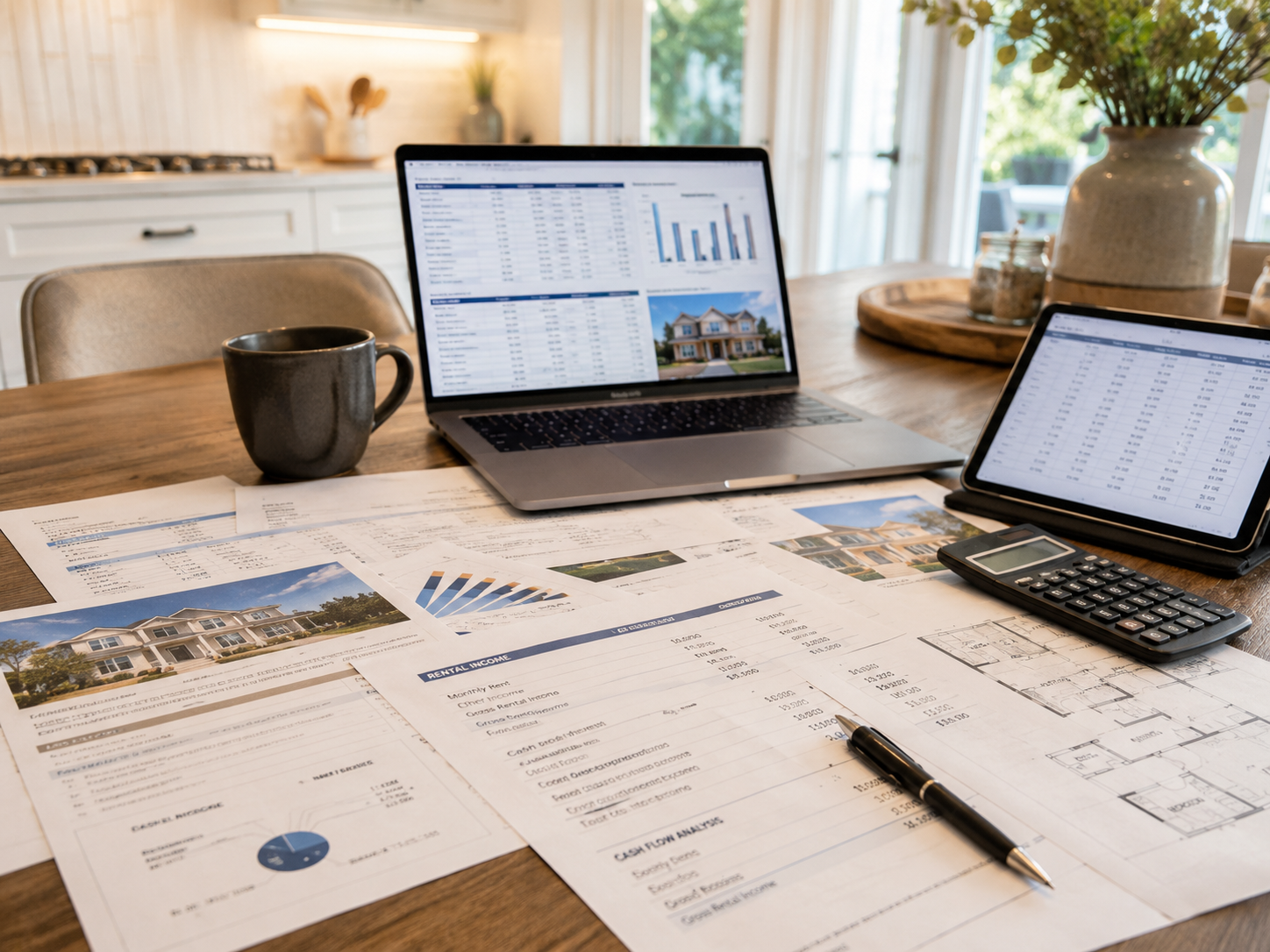 The Tarzana investment due diligence process — the specific analysis that determines whether the acquisition price, the rental rate potential, the ECR catchment eligibility, and the hold period return produce the investment case the investor needs. At $900,000–$1.15M acquisition prices, precise modeling before commitment is the difference between a well-structured Tarzana investment and an over-leveraged hold.
The Tarzana investment due diligence checklist:
ECR catchment verification:
- → ✅ Verify the specific address through lausd.net/schoolfinder — ECR catchment is address-specific, not neighborhood-wide
- → ✅ For addresses within 2 blocks of the catchment boundary, confirm directly with El Camino Real Charter's enrollment office
- → ✅ The rental rate premium for ECR-catchment addresses over non-catchment Tarzana addresses: approximately $300–$600/month — a meaningful annual income differential of $3,600–$7,200 that directly affects the hold period return
Rental rate market analysis:
- → ✅ Pull current active rentals in Tarzana 91356 at the target bedroom count and condition level — not in adjacent markets, specifically in 91356
- → ✅ Verify the ECR-premium rental rate for catchment addresses versus non-catchment comparable homes
- → ✅ Build the rental rate into the financial model conservatively — use the current market rate less 5–8% vacancy assumption, not the optimistic ceiling rate
Physical due diligence:
- → ✅ Full inspection with specific attention to HVAC age and condition, roofing, electrical panel, and foundation — the four primary cost items in Tarzana's 1960s–1970s housing stock
- → ✅ For spec-builder acquisition targets: verify the existing structure is demolition-eligible (no historic designation, no deed restrictions, no HOA limitations), and confirm the lot dimensions support the contemplated new construction footprint
- → ✅ ADU feasibility assessment: verify lot size, existing structures, setbacks, and City of Los Angeles ADU ordinance applicability for the specific address
Financing structure:
- → ✅ Investment property financing at current rates: conventional investment property loans carry an additional 0.5–0.75% rate premium over owner-occupied rates — budget 7.75%–8.0% for the investment property loan at current market conditions, not the owner-occupied rate
- → ✅ Verify the down payment requirement: investment property conventional loans require 20–25% down; some lenders require 25% for single-family investment properties at these loan amounts
- → ✅ Model the carrying cost during vacancy: the 91356 single-family investment property should have 3–6 months of PITI in reserves to cover vacancy periods without financial stress
🚫 What NOT to Overdo
Don't apply Lake Balboa BRRRR math to Tarzana acquisitions. The BRRRR strategy that produces meaningful capital recycling in Lake Balboa at $680,000–$780,000 acquisition prices does not produce equivalent results in Tarzana at $900,000–$1.1M acquisition prices. The renovation cost is comparable ($40,000–$70,000 for a focused cosmetic scope); the 75% LTV cash-out refinance in Tarzana returns capital at a higher absolute amount but with a proportionally smaller renovation-to-equity conversion. Investors who have successfully executed BRRRR strategies in Lake Balboa or Reseda should run Tarzana-specific math rather than assuming the same model applies.
Don't underestimate the monthly negative cash flow commitment. The $2,600–$3,500/month negative cash flow that leveraged Tarzana investment produces at current rates is a real, monthly, multi-year commitment. Investors who enter without specifically budgeting this requirement — who assume the rental income will cover the mortgage and are surprised by the shortfall — consistently make forced exit decisions at the wrong time in the appreciation cycle. Model the negative cash flow explicitly, verify that your household income or investment reserves can sustain it for 5–7 years, and only proceed if the answer is yes.
Don't purchase outside the verified ECR catchment expecting the ECR rental premium. The $300–$600/month ECR rental rate premium is produced by tenants who specifically need 91356 enrollment residency. An address that is in Tarzana 91356 but outside the ECR catchment does not attract this specific tenant pool and does not produce the ECR premium. Investors who purchase non-catchment addresses at catchment prices — assuming the entire zip code carries the school premium — will discover the difference in rental rate and tenant quality at lease-up, when the financial model has already been committed.
Don't build the ADU into the acquisition underwriting before the ADU is permitted and funded. The ADU income addition ($1,850–$2,400/month) is the most powerful Tarzana cash flow improvement available — but it requires a permitted construction process that takes 6–14 months from permit application to certificate of occupancy, and a construction cost of $155,000–$195,000 that must be funded independently of the acquisition. Investors who underwrite the acquisition assuming ADU income from day one will hold a negative cash flow property for 12–18 months before the ADU income materializes. Model the ADU as a Phase 2 improvement, not a Day 1 income assumption.
Don't ignore the spec-builder path because the margin looks tight at current prices. The spec-builder teardown-rebuild path in Tarzana produces its strongest margins for investors who identify the right acquisition — the $940,000–$960,000 original-condition home on a standard lot with demolition eligibility. These acquisitions exist and appear in the market regularly; they require faster decision-making and stronger construction expertise than the buy-and-hold path, but they produce the highest absolute return available to Tarzana investors who execute them correctly.
🏠 Real-World Scenario — Tarzana 91356
An investor — a single-family rental portfolio operator with four properties in Reseda 91335 and Lake Balboa 91406 — evaluated Tarzana 91356 for portfolio expansion. His Reseda and Lake Balboa properties were generating mild negative cash flow at current rates (approximately -$1,200 to -$1,800/month each) but had appreciated meaningfully since his 2019–2021 acquisitions. He was comfortable with the negative cash flow model and specifically wanted a western Valley expansion that would produce stronger rental rate growth and tenant quality than his central Valley properties.
His Reseda properties rented at $3,100–$3,400/month for 3-bedroom homes. His Lake Balboa properties rented at $3,200–$3,600/month. He had heard that Tarzana rented at meaningfully higher rates and specifically wanted to understand the ECR rental premium.
We ran the comparison. A Tarzana 91356 ECR-catchment 3-bedroom in renovated condition: current rental market rate $4,700–$5,100/month — approximately $1,300–$1,700/month above his best Reseda property and $1,100–$1,500 above his best Lake Balboa property. At 12 months, the Tarzana rental income advantage: approximately $13,200–$20,400/year versus his existing portfolio's best performers.
The acquisition cost differential: Tarzana at $1,050,000 versus his prior Reseda acquisitions at $720,000–$780,000 and Lake Balboa acquisitions at $740,000–$800,000. The negative cash flow at Tarzana: approximately -$3,200/month versus his central Valley portfolio's -$1,400–$1,800/month. The incremental negative cash flow for the upgrade: approximately $1,400–$1,800/month more than a comparable central Valley acquisition.
His evaluation: the $1,300–$1,700/month rental income premium almost exactly offsets the additional $1,400–$1,800/month in negative cash flow. The net monthly position was essentially equivalent to his central Valley properties. The difference: the Tarzana property was appreciating within a school-quality-anchored western Valley market whose demand floor is more durable than the central Valley alternatives — and the ECR tenant quality profile was meaningfully stronger.
He acquired a Tarzana 91356 ECR-catchment 4-bedroom at $1,075,000. Cosmetic preparation: $42,000 (kitchen cosmetics, fresh paint, flooring update, curb appeal). Leased in 18 days at $5,400/month to a family with a 9th-grader at ECR. Monthly cash flow: -$2,940. Annual wealth building (appreciation + principal paydown): approximately $52,000–$65,000. Annual return on $268,750 deployed equity: approximately 9.1–13.2%.
His assessment after 18 months: the Tarzana tenant pays on time, communicates respectfully, has requested two maintenance items (refrigerator replacement and a dripping faucet), and has already asked whether the lease can be renewed for a second year to maintain the ECR enrollment for their younger child starting 9th grade next fall. The tenant retention he is projecting eliminates one full vacancy cycle — saving approximately $10,800 in lost rental income and turnover costs — over the next 24 months.
🏠 Real-World Scenario — Tarzana 91356
A different investor — a physician with no prior real estate investment experience, $380,000 in savings, and a specific interest in Tarzana because her children had attended ECR — approached us specifically about the spec-builder path. She had read about spec-builder returns in Tarzana and wanted to execute one herself.
We walked through the honest spec-builder assessment for a first-time real estate investor.
The spec-builder path in Tarzana requires: finding and acquiring an original-condition home suitable for teardown at $950,000–$1.0M; managing the demolition permit, hazardous material abatement, architectural design, structural engineering, and construction permit process (4–6 months minimum); selecting and managing a contractor with the specific finish quality capability for the Tarzana/western Valley specification; managing a 10–14 month construction process from demolition to certificate of occupancy; and then marketing and selling the completed home in the correct seasonal window.
At her $380,000 in savings with 25% down ($250,000) on a $1,000,000 acquisition:
- → Acquisition: $1,000,000 (25% down = $250,000, $750,000 construction loan required)
- → Remaining capital after down payment: $130,000
- → Construction cost estimate: $450,000–$500,000 (including permits, architecture, contingency)
- → Carrying cost (12 months at 8.5% construction loan): $63,750–$70,000
- → Total additional capital required beyond down payment: $513,750–$570,000
- → Capital available: $130,000
The capital gap — $383,750–$440,000 more than her available savings — was unbridgeable without construction financing at the full project scope. Construction lenders would finance the construction cost but require her to have the acquisition funded separately and demonstrated reserves.
The spec-builder path was not viable for her specific financial position without an equity partner or significantly more capital.
We redirected to the buy-and-hold path. At $380,000: $280,000 down on a $1,120,000 acquisition (25%), retaining $100,000 in reserves. A renovated 4-bedroom ECR-catchment Tarzana home. Monthly cash flow at $5,600/month rental income: approximately -$2,700/month. Monthly reserve available from her physician income to sustain the negative cash flow: approximately $8,500/month discretionary income after all personal expenses. The buy-and-hold math worked comfortably.
She purchased a renovated 4-bedroom ECR-catchment home at $1.09M. Her $100,000 post-close reserve covered 37 months of the monthly shortfall — effectively a 3-year runway of zero rental income before her reserves were exhausted. With actual rental income of $5,600/month, her real cash reserve depletion rate: approximately $2,700/month — a 37-month runway extending to a 99+ month runway.
The spec-builder path that was impossible became the buy-and-hold path that was straightforward. The investment the physician wanted (Tarzana real estate) was achievable through the strategy appropriate to her specific capital position.
❓ FAQ
Is Tarzana a good place to invest in real estate? Yes — for investors whose specific situation aligns with Tarzana's investment thesis. ✓ Tarzana is the correct investment for: patient capital seeking long-hold appreciation in a school-quality-anchored western Valley market, investors who can sustain negative monthly cash flow while equity builds, spec-builder operators with the construction expertise and capital to execute teardown-rebuild investments, and portfolio investors seeking higher rental rate and tenant quality tiers than central Valley markets produce. ✓ Tarzana is the wrong investment for: investors who need positive monthly cash flow from day one, investors applying BRRRR capital recycling models calibrated to $650,000–$800,000 markets, and first-time investors without the reserves to sustain 3–5 years of negative cash flow during the early hold period.
What is the cap rate for investment properties in Tarzana? At current market conditions, Tarzana 91356 single-family investment properties produce cap rates of approximately 3.0%–4.2% — below the cost of debt at current rates, which is why leveraged investments produce negative monthly cash flow. This cap rate reflects Tarzana's position as an appreciation-driven market rather than a cash-flow market. Investors evaluating Tarzana against their required cap rate should use a total return model (cap rate plus appreciation) rather than cap rate alone — the annual total return including appreciation runs approximately 7–13% on invested equity at current market conditions.
What rent can I charge for an investment property in Tarzana? Current Tarzana 91356 single-family rental rates: ✓ 3-bedroom, standard condition: $4,100–$4,600/month. ✓ 3-bedroom, renovated, ECR-catchment: $4,600–$5,200/month. ✓ 4-bedroom, renovated, ECR-catchment: $5,200–$6,000/month. ✓ 4-bedroom plus ADU, ECR-catchment: $5,200–$6,000/month primary plus $1,850–$2,400/month ADU = $7,050–$8,400/month total. These are current market estimates — verify with active 91356 rental listings before any acquisition commitment.
Should I invest in Tarzana or Reseda? The correct market depends on your specific investment thesis. ✓ Reseda 91335 at $700,000–$875,000: Lower acquisition price, more viable BRRRR capital recycling, lower rental rates ($2,900–$3,600/month), comparable negative cash flow percentage. Better for investors who need capital recycling efficiency or who are at a lower capital tier. ✓ Tarzana 91356 at $900,000–$1.15M: Higher acquisition price, stronger ECR-motivated rental demand, premium rental rates ($4,200–$5,800/month), stronger tenant quality, more durable appreciation support. Better for investors with larger capital commitment who specifically want the school-quality-anchored demand floor and the professional tenant pool. Both can be correct — the decision is which thesis matches the investor's capital position and investment objectives.
Does an ADU make sense for a Tarzana investment property? Yes — for investors with a long-hold horizon and the capital to fund ADU construction separately from the acquisition. The ADU adds $1,850–$2,400/month in rental income on a construction cost of $155,000–$195,000 — a 13–16% annual yield on the construction cost and the single most powerful cash flow improvement available in the Tarzana portfolio. The ADU takes 8–14 months from permit application to occupancy under City of Los Angeles ADU rules and should be planned as a Phase 2 improvement, not an acquisition-day assumption. Verify the specific lot dimensions and setback requirements for any target address before modeling ADU income.
What is the best type of property to buy as an investment in Tarzana? A 4-bedroom, 2-bathroom, renovated single-family home in a verified ECR Charter catchment sub-neighborhood, on a lot of 7,500–9,500 sq ft with ADU potential, in the $1.0M–$1.15M acquisition range. This configuration: ✓ Maximizes the ECR tenant pool (families with 2+ children in the high school age range). ✓ Produces the highest achievable Tarzana rental rate ($5,200–$5,800/month). ✓ Provides the ADU upside that meaningfully improves the cash flow profile over time. ✓ Sits in the acquisition range where appreciation support is strongest relative to acquisition cost. The cosmetically updated kitchen and baths are important for this tenant tier — budget $35,000–$55,000 for pre-rental updates if the home is in original condition.
🎯 Bottom Line
Tarzana 91356 is a compelling long-hold investment market for investors who enter with clear eyes about what it is and what it isn't. It is a school-quality-anchored western Valley appreciation market with a specific, durable rental demand driver in the ECR Charter enrollment premium — not a cash-flow-positive BRRRR market, not a cap-rate investment, and not a short-hold speculation. The investors who build wealth in Tarzana are those who acquire well-located ECR-catchment properties at correct prices, target the specific tenant profiles that produce premium rents and long tenure, sustain the negative monthly cash flow while equity compounds through appreciation and principal paydown, and hold patiently through the full appreciation cycle.
The spec-builder path produces Tarzana's highest absolute margins for experienced operators with the capital, construction expertise, and market timing discipline to execute it correctly. The buy-and-hold path produces consistent, predictable wealth building for investors at every capital tier from $250,000 to $400,000+ in available equity — calibrated to what the market actually delivers rather than what generic investment guides promise.
At Parkway Estate Properties, Liana and Roman's combined experience across Tarzana 91356 buyer representation, investment property sales, and hands-on renovation portfolio means every Tarzana investor conversation we have is grounded in the real numbers — not the optimistic projections that the rental income covers the mortgage, but the honest model that shows exactly what the negative cash flow requirement is, what the total return trajectory looks like, and what the investment produces over a 7–15 year hold.
📩 Want an Investment Analysis for a Specific Tarzana Property You're Evaluating?
We'll run the ECR catchment verification, the sub-neighborhood rental rate analysis, the complete cash flow model at your specific acquisition price and financing structure, and the total return projection — so you're making the Tarzana investment decision with the actual numbers in front of you.
Contact Liana Shersher at Parkway Estate Properties: 📧 liana@parkwayestate.com · 📞 (818) 208-5881 · 🌐 parkwayestate.com 15021 Ventura Blvd., Ste. 510, Sherman Oaks, CA 91403
About the Authors
Liana Shersher is a licensed real estate agent with Parkway Estate Properties Inc. and an Accredited Buyer's Representative (ABR) serving the San Fernando Valley — with a focus on Sherman Oaks, Encino, Tarzana, Woodland Hills, and Northridge (DRE# 02164224). Liana guides first-time homebuyers through every step of the purchase, from the first showing to the keys in hand, and represents move-up and repeat buyers across the Valley. For sellers, she builds the pricing and marketing strategy that positions a home to sell for top dollar, fast. Buyers and sellers work with Liana for clear communication, sharp local knowledge, and an agent who treats their goals like her own.
Roman Shersher is the broker-owner of Parkway Estate Properties Inc. and a real estate investor with 18 years of experience in the San Fernando Valley (DRE# 01855095). Roman has personally led or co-led renovations on dozens of properties across the Valley, including recent projects in Northridge (91324) and Woodland Hills (91364). That hands-on renovation and investment experience shapes every pricing conversation and days-on-market strategy at Parkway — sellers get a realistic read on what improvements actually return at resale, and buyers get an expert eye on a home's true condition and upside.
Parkway Estate Properties, Inc. · 15021 Ventura Blvd., Ste. 510, Sherman Oaks, CA 91403 · (818) 208-5881 · parkwayestate.com · Broker License #: 01873092 Equal Housing Opportunity. Information herein is general and not legal, tax, or financial advice. Consult qualified professionals for your specific situation.
Categories
Recent Posts








Broker | Realtor ® License ID: 01873092
+1(818) 208-5881 | info@parkwayestate.com