
How Much Income Do I Need to Buy a Home in Tarzana?
Tarzana sits in the part of the San Fernando Valley where the income requirement for homeownership is genuinely demanding — not because the neighborhood is out of reach for professional SFV households, but because the $850K–$1.4M price band that defines most Tarzana 91356 transactions requires combined household incomes that most online mortgage calculators dramatically understate when they ignore property taxes, insurance, maintenance, and Valley summer utilities.
Buyers who calculate their Tarzana income requirement based on mortgage payment alone — using a simple payment calculator and multiplying by a debt-to-income ratio — consistently arrive at a number that is $25,000–$45,000 below their actual required income once the full monthly carrying cost stack is assembled. This article assembles that stack accurately, provides the income ranges at every Tarzana price point, and explains the seller-paid rate buydown impact that is actively changing the income threshold for Tarzana buyers in 2026.
1. 📊 The Income Calculation Framework — How Lenders Think About Tarzana Buyer Qualification
The lender's qualification framework and your actual sustainable income requirement are two different numbers — and both matter. Understanding how lenders calculate borrowing capacity in Tarzana is the foundation of every accurate income assessment.
 Income qualification for a Tarzana 91356 home purchase requires two parallel calculations — the lender's DTI framework that determines whether you qualify, and the full monthly carrying cost analysis that determines whether ownership is financially sustainable at your specific income level. Both calculations are necessary; most buyers do only one.
The lender's Debt-to-Income ratio framework:
Lenders approve Tarzana buyers based on Debt-to-Income ratio — the percentage of gross monthly income consumed by monthly debt obligations.
- → 📋 Front-end DTI (housing ratio): Monthly housing payment (P&I + property taxes + insurance + HOA if applicable) ÷ gross monthly income. Most conventional lenders target 28–31%.
- → 📋 Back-end DTI (total debt ratio): All monthly debt obligations (housing + car loans + student loans + credit card minimums + other installment debt) ÷ gross monthly income. Most conventional lenders target 43–45% maximum.
The Tarzana income math at each price point:
At 7.0% interest rate with 20% down payment, the pure front-end DTI qualification income (assuming no other debt):
$900K purchase:
- → Loan amount: $720,000
- → Monthly P&I: $4,792
- → Monthly property taxes (1.20% rate): $900
- → Monthly insurance: $150–$200
- → Total housing payment: $5,842–$5,892
- → Required gross income at 28% front-end: $210,000–$212,000
- → At 31% front-end: $189,000–$191,000
$1.0M purchase:
- → Loan amount: $800,000
- → Monthly P&I: $5,326
- → Monthly property taxes: $1,000
- → Monthly insurance: $165–$215
- → Total housing payment: $6,491–$6,541
- → Required gross income at 28% front-end: $233,000–$235,000
- → At 31% front-end: $210,000–$212,000
$1.1M purchase:
- → Loan amount: $880,000
- → Monthly P&I: $5,858
- → Monthly property taxes: $1,100
- → Monthly insurance: $175–$230
- → Total housing payment: $7,133–$7,188
- → Required gross income at 28% front-end: $305,000–$308,000
- → At 31% front-end: $276,000–$278,000
$1.25M purchase:
- → Loan amount: $1,000,000
- → Monthly P&I: $6,653
- → Monthly property taxes: $1,250
- → Monthly insurance: $195–$255
- → Total housing payment: $8,098–$8,158
- → Required gross income at 28% front-end: $346,000–$350,000
- → At 31% front-end: $313,000–$315,000
Why the Quick Answer ranges are lower than pure front-end DTI math:
The Quick Answer ranges reflect the real-world Tarzana buyer profile — most buyers carry additional monthly debt obligations (car payments, student loans, credit card minimums) that reduce housing payment room within the back-end DTI ceiling. The ranges are calibrated to the typical Tarzana buyer debt profile with $500–$900/month in additional non-housing debt — the most common situation for move-up buyers from Reseda 91335 and Canoga Park 91304 and for first-time buyers at the upper edge of their range.
A buyer with zero additional debt qualifies at the upper end of the front-end DTI calculation above. A buyer with $800/month in car payments and student loan minimums qualifies at income levels $20,000–$35,000 higher than the front-end calculation suggests, because the back-end ceiling is what actually constrains them.
2. 💵 The Full Monthly Carrying Cost — What Tarzana Ownership Actually Costs
The mortgage payment is the largest component of monthly housing cost — but it is not the only component. Tarzana buyers who calculate their income requirement based solely on principal and interest consistently discover after closing that their actual monthly obligation is $800–$1,500 more than they budgeted.
The complete monthly carrying cost stack for a $1.0M Tarzana 91356 home (20% down, 7.0%):
- → 🏦 Principal and interest ($800K loan): $5,326/month
- → 🏛️ Property taxes (1.20% effective rate on $1.0M): $1,000/month
- → 🏠 Homeowner's insurance: $165–$215/month
- → 🔧 Maintenance reserve (1% annually): $833/month — Tarzana homes built in the 1960s–1970s carry real deferred maintenance risk. HVAC, roof, plumbing, and electrical issues are predictable in this vintage and need to be budgeted before they surface, not after.
- → 💡 Utilities — Valley summer heat factor: $350–$550/month — Tarzana summer temperatures regularly reach 90–100°F from July through September. Air conditioning running at this capacity produces electricity bills meaningfully higher than coastal equivalents. Buyers relocating from the Westside consistently underestimate this.
- → 🏘️ HOA (if applicable): $0 for most Tarzana 91356 single-family detached homes; $150–$350/month for planned unit developments or common-interest communities within 91356.
Total realistic monthly carrying cost for a $1.0M Tarzana home: approximately $7,674–$7,924/month
The gap between mortgage-only ($5,326) and full stack ($7,800): $2,474/month — approximately $29,700/year. This is the number that produces financial stress when it isn't modeled before purchase.
The California take-home reality:
A household earning $210,000 gross in California takes home approximately $13,000–$14,000/month after state and federal taxes — not $17,500. At $7,800/month in total housing costs, that household is allocating 56–60% of take-home to housing — functional but tight, leaving limited room for retirement savings, childcare, travel, and the unexpected expenses that homeownership reliably produces.
The comfortable income threshold for a $1.0M Tarzana purchase is closer to $225,000–$240,000 gross — where total carrying costs represent approximately 40–45% of take-home rather than 56–60%.
3. 💡 The Seller-Paid Rate Buydown — How It Changes the Tarzana Income Equation
The seller-paid rate buydown is the affordability tool that most consistently makes a difference for Tarzana buyers who are at or near their income ceiling for a target price point. In Tarzana 91356's $850K–$1.3M buyer pool — where move-up buyers and first-time buyers are operating close to their qualification limits — the monthly payment relief a buydown delivers is the difference between "this doesn't work" and "this works."
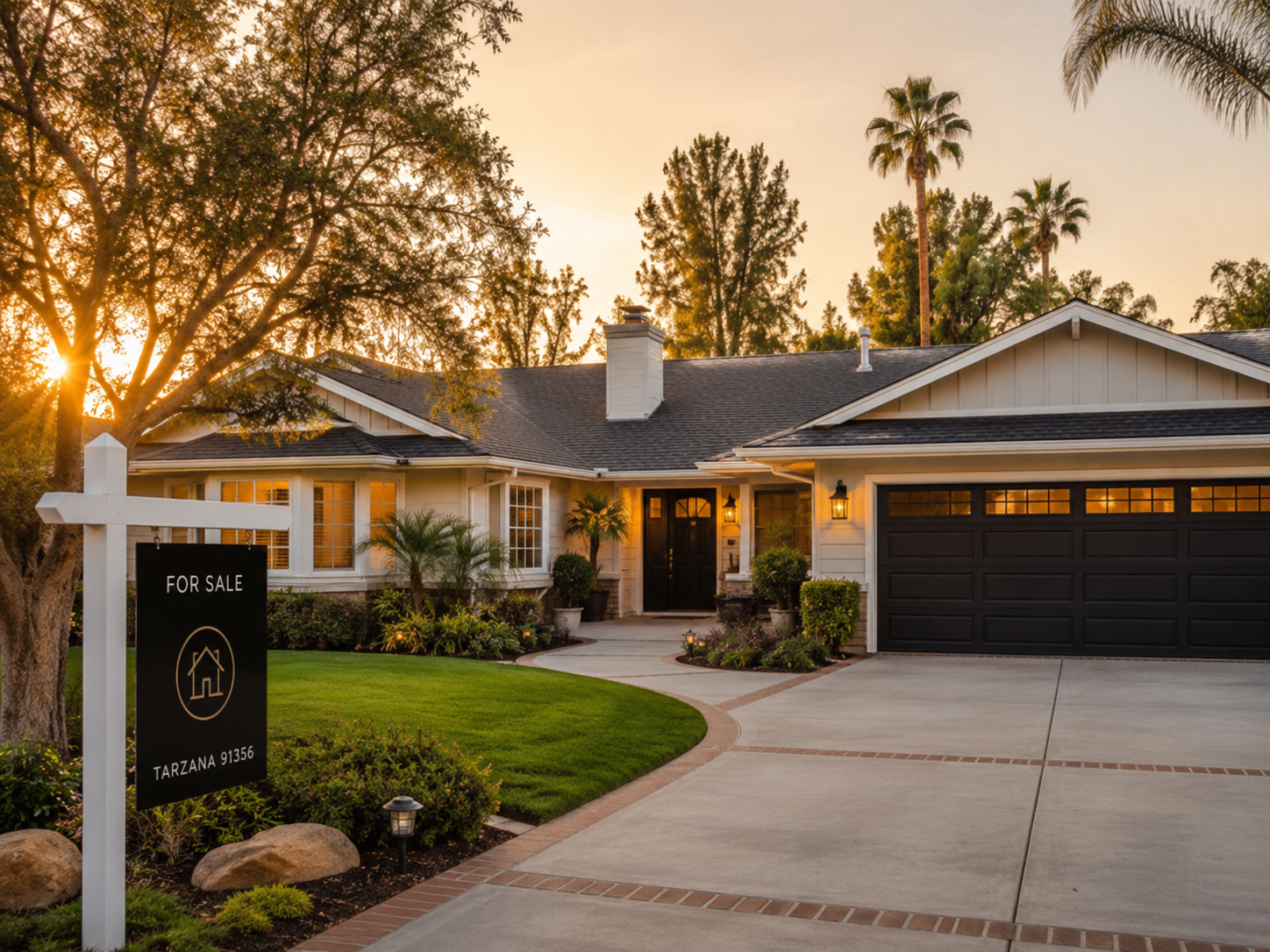 The seller-paid rate buydown in Tarzana 91356 is most impactful for buyers whose income is near the qualification ceiling for their target price point — the $700–$1,100/month in year-one payment relief it delivers frequently moves these buyers from technically ineligible to comfortably qualifying, or from stretched to sustainable.
How a 2-1 buydown changes the Tarzana income math on a $1.0M purchase:
Without buydown (7.0% note rate, $800K loan):
- → Monthly P&I: $5,326
- → Total monthly housing cost: approximately $7,491
- → Required gross annual income at 28% front-end DTI: approximately $321,000
- → Required gross annual income at 31% front-end: approximately $290,000
With seller-paid 2-1 buydown (5.0% effective rate in year one):
- → Monthly P&I Year 1: approximately $4,295
- → Total monthly housing cost Year 1: approximately $6,460
- → Required gross annual income at 28% DTI (year-one payment): approximately $277,000
- → Required gross annual income at 31% DTI: approximately $250,000
- → Income threshold reduction in year one: approximately $40,000–$44,000
With 2-1 buydown (6.0% effective rate in year two):
- → Monthly P&I Year 2: approximately $4,797
- → Total monthly housing cost Year 2: approximately $6,962
- → Required income at 28% DTI: approximately $298,000
- → Income threshold reduction vs. no buydown: approximately $23,000
The practical Tarzana buydown scenario:
A buyer household earning $205,000/year — below the standard $210,000–$233,000 threshold for a $1.0M Tarzana home at 7.0% — may qualify for that same home with a seller-paid 2-1 buydown if their lender qualifies at the year-one buydown rate. Not all lenders treat buydowns this way — confirm buydown qualification treatment with your specific lender before counting on this.
Even where the lender qualifies at the note rate rather than the buydown rate, the $1,031/month in year-one payment savings (from $5,326 to $4,295 P&I) gives buyers who are technically qualifying but genuinely stretching a meaningfully more sustainable first two years of ownership — reducing the financial pressure during the highest-risk ownership period.
Requesting a buydown in your Tarzana offer:
Your offer letter includes: "Seller to contribute $[calculated buydown cost] toward buyer's closing costs and/or loan buydown costs." Your buyer's agent — not you — structures this language correctly and presents it to the listing agent in the context of an overall offer that is attractive to the seller. In Tarzana's current market, where sellers with 20–30 days of DOM are actively looking for the right structure to generate an offer, a well-structured offer with a buydown request is frequently accepted in situations where a raw price reduction request would not be.
4. 🏦 Down Payment and Total Cash Requirements — The Full Picture
Income qualification and down payment qualification are parallel requirements — both need to be resolved independently before a Tarzana buyer is genuinely ready to engage the market.
Down payment scenarios in Tarzana 91356:
20% down (the standard for competitive Tarzana situations):
- → $900K purchase: $180,000 down
- → $1.0M purchase: $200,000 down
- → $1.1M purchase: $220,000 down
- → $1.25M purchase: $250,000 down
- → $1.4M purchase: $280,000 down
10% down (workable in less competitive or extended DOM situations): Adds PMI of approximately $280–$480/month until 20% equity is reached — a real addition to the monthly carrying cost stack. Best deployed in Tarzana sub-neighborhoods or time windows with longer average DOM where the seller's competitive urgency is reduced.
Total cash required to close — the complete number:
For a $1.0M Tarzana 91356 purchase with 20% down:
- → Down payment: $200,000
- → Closing costs (2–2.5%): $20,000–$25,000
- → Reserves (6 months of full carrying cost): $46,000–$48,000
- → Supplemental tax buffer: $6,000–$10,000
- → Total cash required: approximately $272,000–$283,000
The supplemental tax buffer is the post-closing surprise that most Tarzana buyers don't anticipate. When a Tarzana home is sold, the county reassesses the property to the purchase price — and the difference between the prior owner's assessed value and your purchase price is taxable through a supplemental bill that arrives 3–6 months after close. On a $1.0M purchase where the prior assessed value was $650,000, the supplemental tax at 1.20% effective rate on the $350,000 assessment gap: approximately $4,200, prorated for the remaining months of the fiscal year. Budget this separately and keep it liquid.
5. 📍 Income Requirements by Tarzana Sub-Neighborhood and Price Tier
Tarzana 91356 contains sub-neighborhoods with different price ceilings and buyer profiles — and the income threshold varies accordingly.
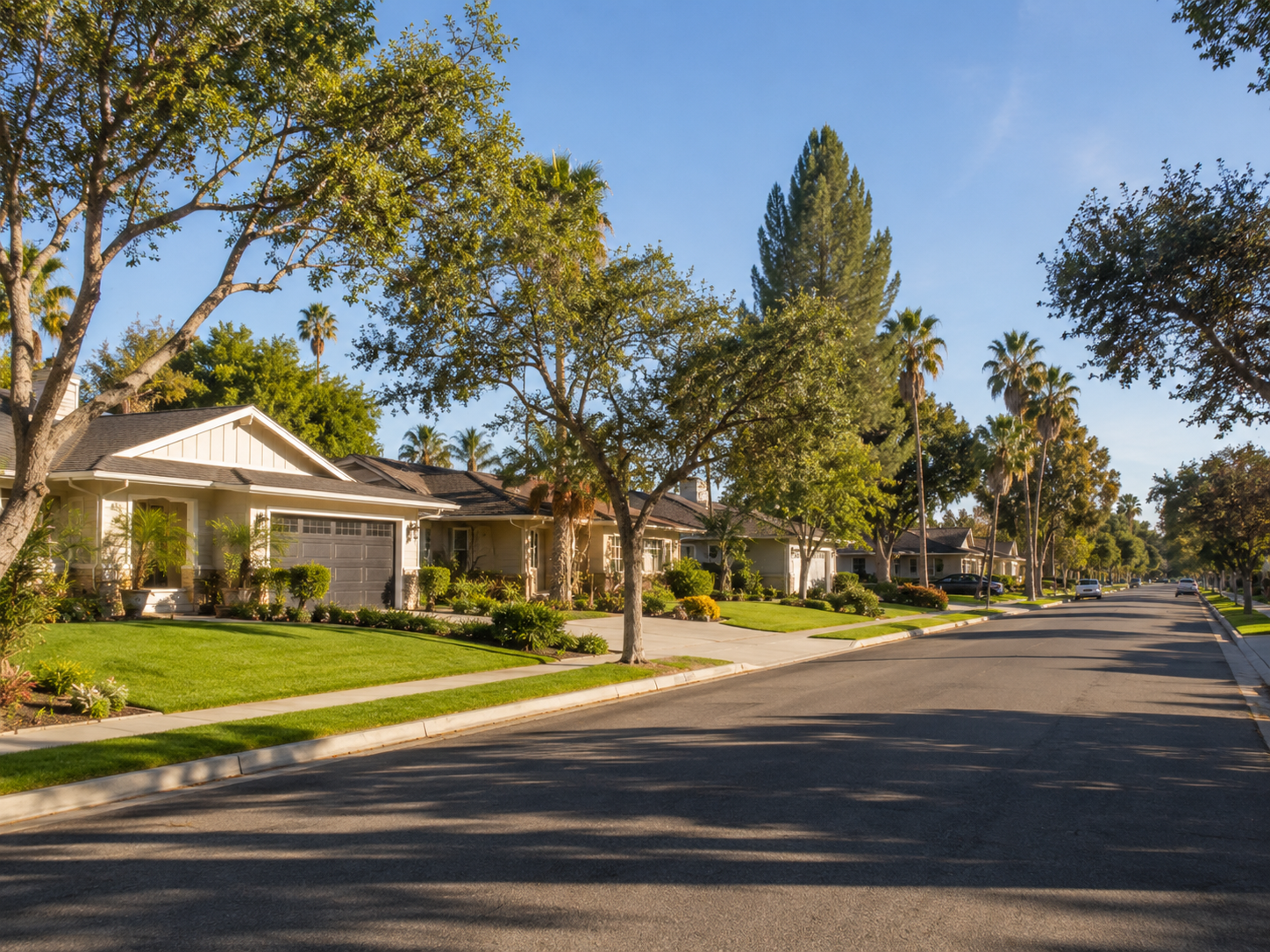 Tarzana 91356's residential sub-neighborhoods span from the $850K–$1.0M entry-level streets approaching Reseda 91335 to the $1.2M–$1.5M+ premium Tarzana streets approaching Encino 91316 — the income threshold varies significantly across these sub-neighborhoods and requires address-level calibration rather than zip code averaging.
Tarzana 91356 — Entry-level sub-neighborhoods ($850K–$1.0M):
The entry-level Tarzana sub-neighborhoods — streets approaching the Reseda 91335 and Canoga Park 91304 boundaries, smaller lots, 1960s–1970s vintage homes — represent Tarzana's most accessible first-purchase and move-up tier.
- → 📊 Typical buyer: Move-up buyers from Reseda 91335 and Canoga Park 91304 with $100,000–$160,000 in prior equity; first-time buyers at maximum income qualification
- → 💰 Required gross income (20% down): approximately $172,000–$210,000
- → 💡 With seller-paid buydown: Threshold reduces approximately $25,000–$35,000 in year one for qualifying lenders
- → 💵 Total cash to close: approximately $155,000–$205,000
- → 🔄 Current dynamics: Active competition in spring — be pre-approved, offer-ready, and realistic about conditions
Tarzana 91356 — Mid-market streets ($1.0M–$1.2M):
The core Tarzana buyer range — 3–4 bedroom homes on standard to above-standard lots, partially to comprehensively updated condition, the full move-up family profile most strongly represented.
- → 📊 Typical buyer: Dual-income professional households; move-up buyers from Sherman Oaks 91403 who want more space at lower price; Westside relocators at the entry of the Tarzana value proposition
- → 💰 Required gross income (20% down): approximately $191,000–$245,000
- → 💡 With seller-paid buydown: Reduces threshold approximately $25,000–$40,000 in year one
- → 💵 Total cash to close: approximately $215,000–$260,000
- → 🔄 Current dynamics: Most active total buyer pool; multiple offers on well-prepared correctly priced listings in spring; negotiating room on 25+ day DOM listings in summer and fall
Tarzana 91356 — Premium streets approaching Encino 91316 ($1.2M–$1.5M):
The premium Tarzana sub-neighborhoods — south-facing streets with larger lots, more architectural character, proximity to the Encino 91316 boundary — attract the most affluent Tarzana buyer profile.
- → 📊 Typical buyer: High-income dual-income households; buyers who specifically want Tarzana's relative value versus Encino 91316 south-of-Ventura; established professionals who have outgrown the core Tarzana price point
- → 💰 Required gross income (20% down): approximately $238,000–$305,000
- → 💵 Total cash to close: approximately $265,000–$335,000
- → 🔄 Current dynamics: More inventory and more negotiating room; 25–45 day DOM on correctly priced listings; buyers have evaluation time before structuring offers
🚫 What NOT to Overdo
Don't set your Tarzana search ceiling at your lender's maximum pre-approval amount. Lenders approve based on institutional risk thresholds — not on what produces a sustainable financial life. A $1.2M pre-approval for a household earning $210,000 is technically achievable and produces a monthly carrying cost stack of approximately $9,400/month — representing 67–72% of California after-tax take-home at that income level. That is house-poor territory. Set your search ceiling where total carrying costs represent no more than 40–45% of take-home, and treat the pre-approval ceiling as a technical limit rather than a planning target.
Don't underestimate Tarzana utilities. Buyers relocating from coastal neighborhoods consistently underestimate Valley summer electricity consumption. Tarzana summer temperatures running 90–100°F from July through September produce electricity bills of $350–$550/month during the peak air conditioning period — $100–$200/month higher than the same household's prior coastal equivalent. Build this into your annual budget before setting your price ceiling, not as a mid-summer surprise.
Don't buy in Tarzana without a 6-month maintenance reserve. Tarzana's 1960s–1970s housing stock delivers beautiful, spacious homes with predictable deferred maintenance patterns — HVAC systems at or near end of life, roofs requiring replacement, plumbing updates needed. The combination of HVAC replacement ($8,000–$14,000) and roof replacement ($12,000–$22,000) can arrive in the same ownership year. Buyers who drain all available cash into the down payment and have no post-closing reserves face compounding financial stress at the first maintenance event. The 6-month reserve is structural protection, not optional cushioning.
Don't count on rental income from a Tarzana room or ADU to qualify. Some Tarzana buyers near the income threshold consider renting a room or building an ADU post-close to offset carrying costs. Future rental income from a room or ADU that doesn't yet exist does not count toward conventional loan qualification — most conventional lenders require a 2-year documented rental history on tax returns to count rental income in calculations. Confirm your lender's rental income treatment specifically before incorporating it into your qualification strategy.
Don't assume the Tarzana income requirement is the same as Woodland Hills 91364. Tarzana 91356 and Woodland Hills 91364/91367 are adjacent — but Woodland Hills' price band is typically $50,000–$150,000 higher at comparable quality levels, and the income thresholds differ accordingly. A buyer whose income qualifies them comfortably for $1.0M in Tarzana 91356 may be stretching uncomfortably at $1.1M in Woodland Hills 91364. Know which market your income actually supports and search there specifically.
🏠 Real-World Scenario — Tarzana 91356
A nurse and a teacher — combined gross income of $188,000/year — were targeting Tarzana 91356 in the $950K–$1.0M range. They had $195,000 in savings from prior rental savings and a family gift contribution. Their additional monthly debt: $620/month in car payments, $380/month in student loan minimums — $1,000/month total.
When we ran their back-end DTI at $1.0M with 20% down, their back-end at the full note rate was 47% — above most conventional lender thresholds with the additional debt load. Their comfortable ceiling was $890,000–$920,000.
We refocused the search on the entry-level Tarzana 91356 sub-neighborhoods in the $875K–$920K range. We identified a well-maintained 3-bedroom home at $895,000 with 22 days of DOM. We structured an offer at $875,000 with a seller-paid 2-1 buydown of $12,800. The buydown reduced their year-one effective rate from 7.0% to 5.0% — bringing monthly P&I from $4,673 to $3,765, taking their total carrying cost from $7,100 to $6,192/month.
At $6,192/month total carrying cost against their $188,000 gross income — approximately $11,400/month net take-home after California taxes — housing represented 54% of take-home. Tight but workable, especially with the year-one buydown relief. Offer accepted at $879,000 with the $12,800 buydown. They closed in Tarzana 91356 — a home that was at their sustainable ceiling, purchased with the buydown tool that made the monthly math work in year one while they built toward the year-three full payment with planned salary increases.
🏠 Real-World Scenario — Tarzana 91356
A software engineer relocating from San Francisco had a gross income of $245,000/year — their household income for the first year in Los Angeles, having accepted a remote position that allowed the move. They had $320,000 in liquid savings and were targeting Tarzana 91356 in the $1.1M–$1.25M range for a 4-bedroom home with a backyard for their two young children.
The income math at $1.25M with 20% down was manageable — their back-end DTI with a small car payment was approximately 37%, within conventional lender thresholds. The concern: they were new to Southern California, had no sense of what Tarzana carrying costs actually felt like, and were making a first-year income commitment on a remote position that had not yet been tested in its full-time form.
We built the complete carrying cost model:
- → P&I ($1.0M loan, 7.0%): $6,653/month
- → Property taxes (1.20% on $1.25M): $1,250/month
- → Insurance: $210/month
- → Maintenance reserve: $1,042/month
- → Utilities (including Valley summer AC): $480/month
- → Total monthly carrying cost: $9,635/month
Against their $245,000 gross ($14,800/month net California take-home), housing at $9,635/month represented 65% of take-home. Above the 40–45% comfortable ceiling we recommend — workable with discipline but leaving limited room for childcare ($2,500–$3,500/month for two children), retirement contributions, and the unexpected expenses that first-year homeownership reliably produces.
We recommended a $1.1M ceiling rather than $1.25M — where the carrying cost stack ran approximately $8,600/month (58% of take-home) rather than $9,635 (65%). Still tight, but with meaningfully more room for life expenses.
They bought in Tarzana 91356 at $1.08M — a 4-bedroom on a 10,500 sq ft lot with a large backyard, comprehensively renovated kitchen, and a pool. 15 months post-close: their remote income has proven stable, one promotion has occurred, and they describe the carrying cost as "tight but not stressful." The $170,000 they didn't spend at $1.25M is in reserves and retirement accounts. The Tarzana 91356 purchase served their actual financial life rather than their maximum qualification number.
❓ FAQ
What income do I need to buy a home in Tarzana, CA? Income requirements vary by price point and debt load. Directional ranges for 20% down at approximately 7.0% rate: ✓ $850K–$900K: approximately $165,000–$196,000 gross household income. ✓ $950K–$1.0M: approximately $182,000–$218,000. ✓ $1.0M–$1.1M: approximately $200,000–$240,000. ✓ $1.1M–$1.25M: approximately $220,000–$272,000. ✓ $1.25M–$1.4M: approximately $250,000–$305,000. These are guideline ranges — actual qualification depends on your specific debt obligations, credit score, and loan product. Run your specific scenario with a local lender before setting your search ceiling.
Can I buy in Tarzana on a single income? ✓ At the entry price points — yes. A single income of $165,000–$185,000 with minimal additional debt can qualify for the $850K–$920K Tarzana 91356 entry-level range with 20% down. A single income of $200,000–$220,000 reaches the $975K–$1.05M range. Above $1.1M, most single-income Tarzana buyers require either significantly above-average income ($250,000+), a large down payment (25%+), or a seller-paid buydown strategy to reach comfortable qualification.
How does Tarzana compare to Northridge for income requirements? Northridge 91324/91325 and Tarzana 91356 are comparable SFV markets but at different price points. Northridge's most active transaction range is $700K–$1.1M; Tarzana's is $850K–$1.4M. The income thresholds are correspondingly higher in Tarzana — a buyer who comfortably qualifies for $900K in Northridge needs approximately $20,000–$35,000 more in household income to reach the same comfort level at $1.0M in Tarzana. For buyers whose income supports Tarzana, the neighborhood delivers larger average lots, a slightly higher price-tier buyer community, and the specific location advantage of being between Encino 91316 and Northridge rather than at Northridge's far end.
Does a seller-paid buydown help with income qualification in Tarzana? It depends on lender treatment. ✓ Lenders who qualify at the buydown rate: a 2-1 buydown can reduce the qualifying income threshold by $25,000–$44,000 at common Tarzana price points — meaningfully expanding access for buyers near the ceiling. ⚠️ Lenders who qualify at the note rate: the buydown improves payment sustainability without changing technical qualification. Confirm your lender's specific buydown qualification treatment before counting on it for qualification purposes. Regardless of qualification treatment, the $700–$1,100/month in year-one payment savings makes ownership materially more sustainable for Tarzana buyers at or near their income ceiling.
What credit score do I need to buy in Tarzana? ✓ Conventional loans: minimum 620, but 720+ produces best rates and cleanest approval. ✓ FHA loans: minimum 580 with 3.5% down (580–619 requires 10% down). Note that FHA loan limits apply — verify the current LA County FHA limit with your lender, as most Tarzana transactions at $900K+ are above FHA limits. ✓ VA loans (eligible veterans): no minimum VA requirement, lenders typically require 620+. Every 20-point credit score improvement in the 640–760 range produces meaningful interest rate reduction at Tarzana loan amounts.
How much cash do I need to buy a $1.0M home in Tarzana? For a $1.0M Tarzana 91356 purchase with 20% down: ✓ Down payment: $200,000. ✓ Closing costs (2–2.5%): $20,000–$25,000. ✓ Post-closing reserves (6 months): $46,000–$48,000. ✓ Supplemental tax buffer: $6,000–$10,000. ✓ Total cash required: approximately $272,000–$283,000. This is the number that surprises most Tarzana buyers who focus only on the down payment — the closing costs, reserves, and supplemental tax buffer add approximately $72,000–$83,000 above the down payment figure.
Is now a good time to buy in Tarzana? For most Tarzana 91356 price points in 2026 — yes, with nuance by tier. The $850K–$1.1M range has largely recovered from the 2022–2023 correction and buyers are purchasing near the current market level. The $1.1M–$1.4M premium tier offers slightly more buyer-favorable conditions — more inventory, more evaluation time, and more negotiating room than the entry and mid-market tiers. Rate environment remains elevated but seller-paid buydown strategy is actively mitigating the impact for well-prepared Tarzana buyers who know how to request and structure it.
🎯 Bottom Line
The income required to buy a home in Tarzana 91356 is higher than most online calculators suggest and lower than most buyers assume when they look at the price point without running the full carrying cost analysis. The $172,000–$305,000 gross household income range that covers Tarzana's $850K–$1.4M price band is genuinely achievable for the SFV's dual-income professional household — but only when the entire carrying cost stack is modeled accurately before setting the search ceiling.
The seller-paid rate buydown is the most practically important affordability tool available to Tarzana buyers in 2026 — because Tarzana's buyer pool is among the most rate-sensitive in the PEP SFV coverage area, sellers in the $900K–$1.3M range are increasingly open to buydown contributions as an alternative to price reductions, and the $700–$1,100/month in year-one payment savings consistently makes the difference between "this doesn't quite work" and "this works."
At Parkway Estate Properties, every Tarzana buyer conversation starts with the complete carrying cost model — not just the mortgage payment — and includes the buydown scenario that shows what the same home costs per month with and without seller contribution. Liana's ABR experience with buyers across Tarzana 91356, Encino 91316/91436, Sherman Oaks 91403/91423, Woodland Hills 91364/91367, and Northridge 91324/91325 means every buyer we work with enters their first offer with accurate financial information rather than assumptions that become surprises after closing.
📩 Want to Know Exactly What Income You Need for Your Target Tarzana Home?
Tell us your price point and we'll model the complete monthly cost stack, the cash-to-close requirement, and the buydown scenarios that might change your threshold — before you've made any commitments.
Contact Liana Shersher at Parkway Estate Properties: 📧 liana@parkwayestate.com · 📞 (818) 208-5881 · 🌐 parkwayestate.com 15021 Ventura Blvd., Ste. 510, Sherman Oaks, CA 91403
About the Authors
Liana Shersher Liana Shersher is a licensed real estate agent with Parkway Estate Properties Inc. and an Accredited Buyer's Representative (ABR) serving the San Fernando Valley — with a focus on Sherman Oaks, Encino, Tarzana, Woodland Hills, and Northridge (DRE# 02164224). Liana guides first-time homebuyers through every step of the purchase, from the first showing to the keys in hand, and represents move-up and repeat buyers across the Valley. For sellers, she builds the pricing and marketing strategy that positions a home to sell for top dollar, fast. Buyers and sellers work with Liana for clear communication, sharp local knowledge, and an agent who treats their goals like her own.
Roman Shersher Roman Shersher is the broker-owner of Parkway Estate Properties Inc. and a real estate investor with 18 years of experience in the San Fernando Valley (DRE# 01855095). Roman has personally led or co-led renovations on dozens of properties across the Valley, including recent projects in Northridge (91324) and Woodland Hills (91364). That hands-on renovation and investment experience shapes every pricing conversation and days-on-market strategy at Parkway — sellers get a realistic read on what improvements actually return at resale, and buyers get an expert eye on a home's true condition and upside.
Parkway Estate Properties, Inc. 15021 Ventura Blvd., Ste. 510, Sherman Oaks, CA 91403 · (818) 208-5881 · parkwayestate.com · Broker License #: 01873092 Equal Housing Opportunity. Information herein is general and not legal, tax, or financial advice. Consult qualified professionals for your specific situation.
Categories
Recent Posts










Broker | Realtor ® License ID: 01873092
+1(818) 208-5881 | info@parkwayestate.com