
Should I Renovate My Home Before Selling in Studio City?

The renovation decision in Studio City is more consequential — and more nuanced — than in any other SFV market in the PEP coverage area. Studio City 91604 and 91602 buyers are, on average, the most visually sophisticated residential buyers in the western Valley: entertainment industry above-the-line, production designers and art directors who evaluate finishes professionally, Westside buyers who have toured Brentwood and Silver Lake and hold those reference points, and the creative-sector households who have specifically chosen Studio City's walkable Ventura Boulevard character over the more suburban alternatives further west.
This buyer sophistication cuts both ways. It means that a well-executed renovation in Studio City returns at the top of the SFV range — buyers in the $1.4M–$2.5M Studio City tier respond strongly to quality finishes and will pay meaningfully above a comparable unrenovated home to avoid the renovation process themselves. It also means that a poorly executed renovation — dated finishes, contractor-grade materials, or a renovation that reads as "flipped quickly" rather than "carefully considered" — is immediately visible to Studio City's buyer pool and discounts more severely than in less visually sophisticated markets.
This article gives Studio City sellers the complete renovation framework — when to renovate, when to sell as-is, what finish quality the market requires, the specific ROI analysis for Studio City price points, and the mistakes that most consistently cost Studio City sellers net proceeds.
1. 📊 The Studio City Comp Ceiling — The Foundation of Every Renovation Decision
Every Studio City renovation conversation begins in the same place: the comp ceiling. The comp ceiling is the maximum price that renovated, comparable homes in your specific Studio City 91604 or 91602 sub-neighborhood have actually closed for in the last 90 days. This number — not your renovation ambition, not comparable homes in Sherman Oaks 91403, not a Westside reference point — determines whether renovation investment produces a positive return or a break-even one.
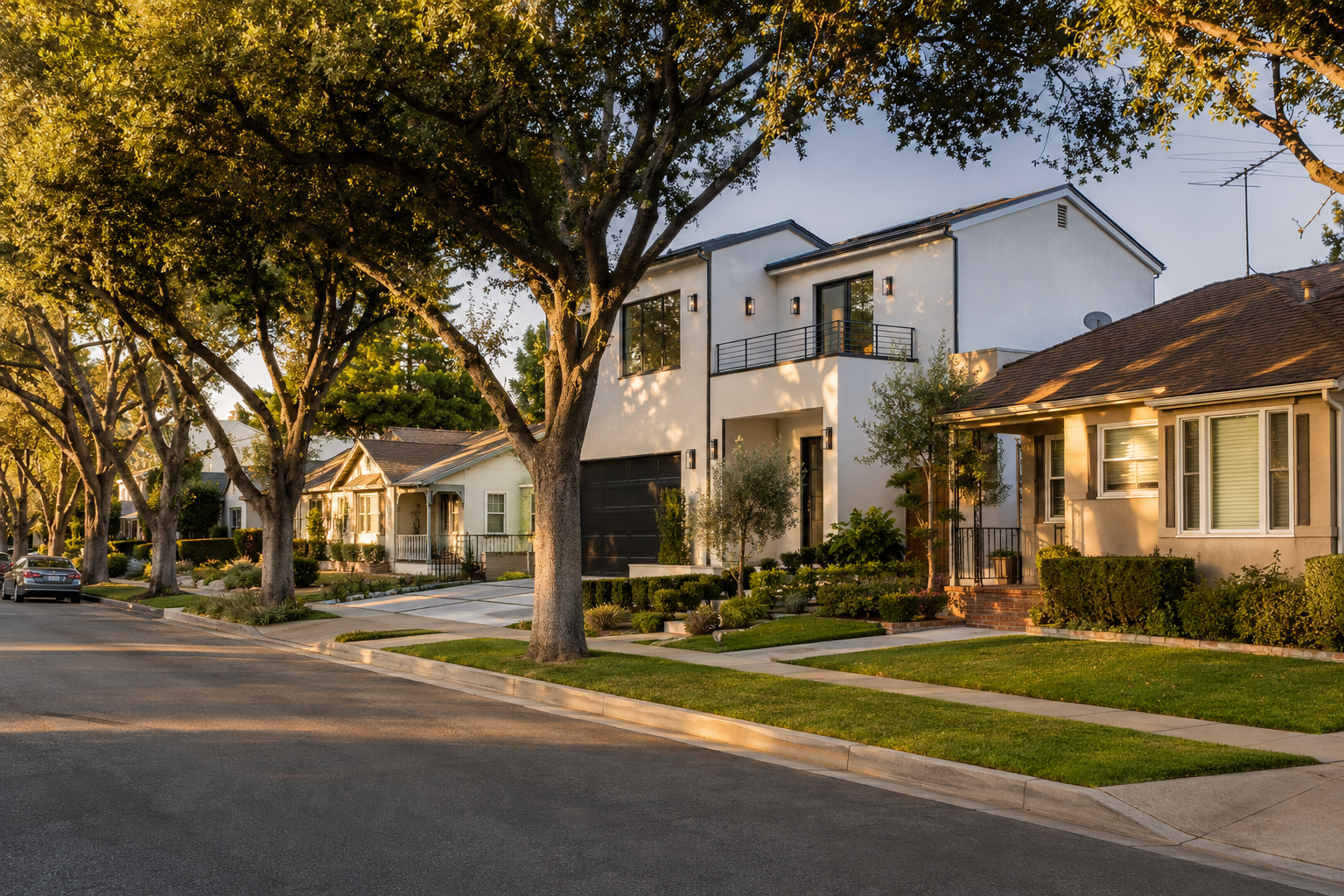 Studio City 91604 renovation ROI begins with the comp ceiling — the actual closed prices of renovated comparable homes in your specific sub-neighborhood within the last 90 days. In a market where the spread between original-condition and fully renovated pricing spans $200,000–$400,000, the comp ceiling analysis is the most important pre-renovation work a Studio City seller can do.
Running the Studio City comp analysis:
- → 📍 Pull renovated closed comps within 0.5 miles, last 90 days: Same bedroom/bathroom count, similar square footage (±200 sq ft), similar lot size, clearly renovated condition (kitchen updated within 5 years, baths updated, current finishes, new or like-new flooring). This is your renovation ceiling.
- → 📍 Pull original-condition comps from the same window: Same parameters but original or dated finishes throughout. This is your as-is baseline value.
- → 📍 Calculate the comp gap: Renovated average minus your as-is baseline. This is the maximum dollar return renovation can deliver.
- → 📍 Estimate your renovation cost: Get two to three bids from licensed contractors with Studio City renovation experience — not general SFV contractors unfamiliar with the finish quality the market requires. In Studio City 91604, a focused scope at the quality level the market requires typically bids at $90,000–$160,000 from appropriate contractors.
- → 📍 Compare: If your renovation cost is meaningfully below the comp gap — proceed. If renovation cost approaches or exceeds the comp gap — sell as-is at a price that accurately reflects condition.
The Studio City sub-neighborhood variation:
Studio City is not one uniform market. The comp ceiling varies significantly across 91604:
- → 🏡 South of Ventura Boulevard (Fryman Canyon area and hillside streets): The premium Studio City sub-neighborhood — larger lots, more architectural character, canyon adjacency. Renovated comp ceiling: $2.1M–$3.5M+ for 3–4 bedroom homes on 8,000–20,000+ sq ft lots. Renovation investment at $130,000–$200,000 can pencil here where comp gaps are largest.
- → 🏘️ North of Ventura Boulevard (core residential streets): The volume Studio City market — smaller lots (4,500–7,500 sq ft), 1950s–1970s bungalows and ranches, the neighborhood character that defines most of 91604 residential transaction volume. Renovated comp ceiling: $1.55M–$2.1M for 3–4 bedroom homes. Focused renovation at $85,000–$130,000 typically pencils here.
- → 🏙️ Ventura Boulevard corridor (walkability premium sub-neighborhoods): Studio City's most walkable addresses — within a few blocks of the Ventura Boulevard dining and lifestyle corridor. Premium of $100,000–$200,000 above comparable non-corridor homes. Renovation ceiling pushed by the walkability premium.
- → 🏔️ Studio City 91602 (Cahuenga Pass area): Smaller zip code, different character — approaches North Hollywood 91601 and Universal City territory. Different buyer profile, different comp ceiling.
2. 🍳 What Studio City Buyers Actually Expect — The Finish Quality Problem
The most important renovation reality for Studio City sellers is the finish quality expectation — and how dramatically it differs from what "renovation" means in Northridge 91324, Canoga Park 91304, or even Woodland Hills 91364. This difference is the single most expensive misunderstanding in Studio City pre-sale renovation.
The Studio City buyer finish expectation:
Studio City buyers at $1.5M–$2.5M are evaluating finishes with the eye of a population that includes production designers, set decorators, interior designers, and Westside buyers who have toured $2M+ homes in Brentwood and Silver Lake. They immediately recognize:
- → ✗ Builder-grade cabinet pulls — the $2 per pull hardware that looks acceptable in a spec development and reads as "budget renovation" to the Studio City buyer
- → ✗ Subway tile used as a design default — appropriate for some markets, reads as "renovation template" in Studio City's more design-forward buyer pool
- → ✗ Contractor-grade quartz in predictable Carrara-look patterns — every Studio City renovation from the last five years has the same white quartz countertop; the buyer who has toured 22 Studio City listings has seen it 22 times
- → ✗ Vinyl plank flooring in the medium-gray color that appeared in every 2019–2022 renovation — instantly dates a renovation to the buyer who knows what they're looking at
- → ✗ LED recessed lighting as the only lighting design — functional, correct, and what every other Studio City renovation has done without any design consideration
What Studio City buyers respond to at the $1.6M–$2.5M comp ceiling:
- → ✅ Kitchen cabinetry with genuine character: Fluted details, integrated panels, matte lacquer in a considered color, or natural wood mixed with painted surfaces — the kitchen that reads as designed rather than specified
- → ✅ Stone that feels selected rather than defaulted: Waterfall edges, bookmatched slabs, unusual veining, or bold pattern choices that communicate design intentionality
- → ✅ Bathroom fixtures with aesthetic position: Exposed brass plumbing, matte black fixtures, or the specific faucet choices that signal the design-forward renovation
- → ✅ Flooring with character and scale: White oak with natural variation, wider-plank boards, or terrazzo in specific applications that feel considered rather than templated
- → ✅ Lighting as design: Pendants, wall sconces, a statement fixture in the dining area — the lighting that reads as a design decision rather than an electrical requirement
The ROI case for quality finishes in Studio City:
This is not aesthetic preference — it is financial analysis. A Studio City kitchen renovation at $38,000 with builder-grade finishes will not recover its full cost at the $1.8M comp ceiling. The same kitchen at $52,000 with design-forward finishes will. The additional $14,000 in renovation cost is not optional decoration — it is the investment that separates a renovation the market rewards from one it discounts.
The specific Studio City finish budget guidance:
- → 💰 Kitchen cabinetry: Allocate 30–35% of kitchen budget minimum — semi-custom or custom cabinets with character details, not stock RTA cabinets regardless of how well they're painted
- → 💰 Stone and surfaces: Real stone where visible — quartzite or marble for the primary kitchen counter if the budget supports it; quartz acceptable if the pattern and edge profile are design-forward
- → 💰 Hardware and fixtures: $15–$45 per pull minimum in the kitchen; specify fixtures not available at standard hardware stores
- → 💰 Flooring: White oak engineered hardwood, minimum 5-inch width, natural or light finish — avoid the pre-finished medium-tone floors that date a renovation instantly in Studio City's market
3. 💵 The ROI Analysis — When Studio City Renovation Pencils and When It Doesn't
With the comp ceiling and the finish quality requirements established, the renovation decision becomes a straightforward financial analysis — one that produces clear answers for most Studio City sellers when the comp data is current and the renovation bids are accurate.
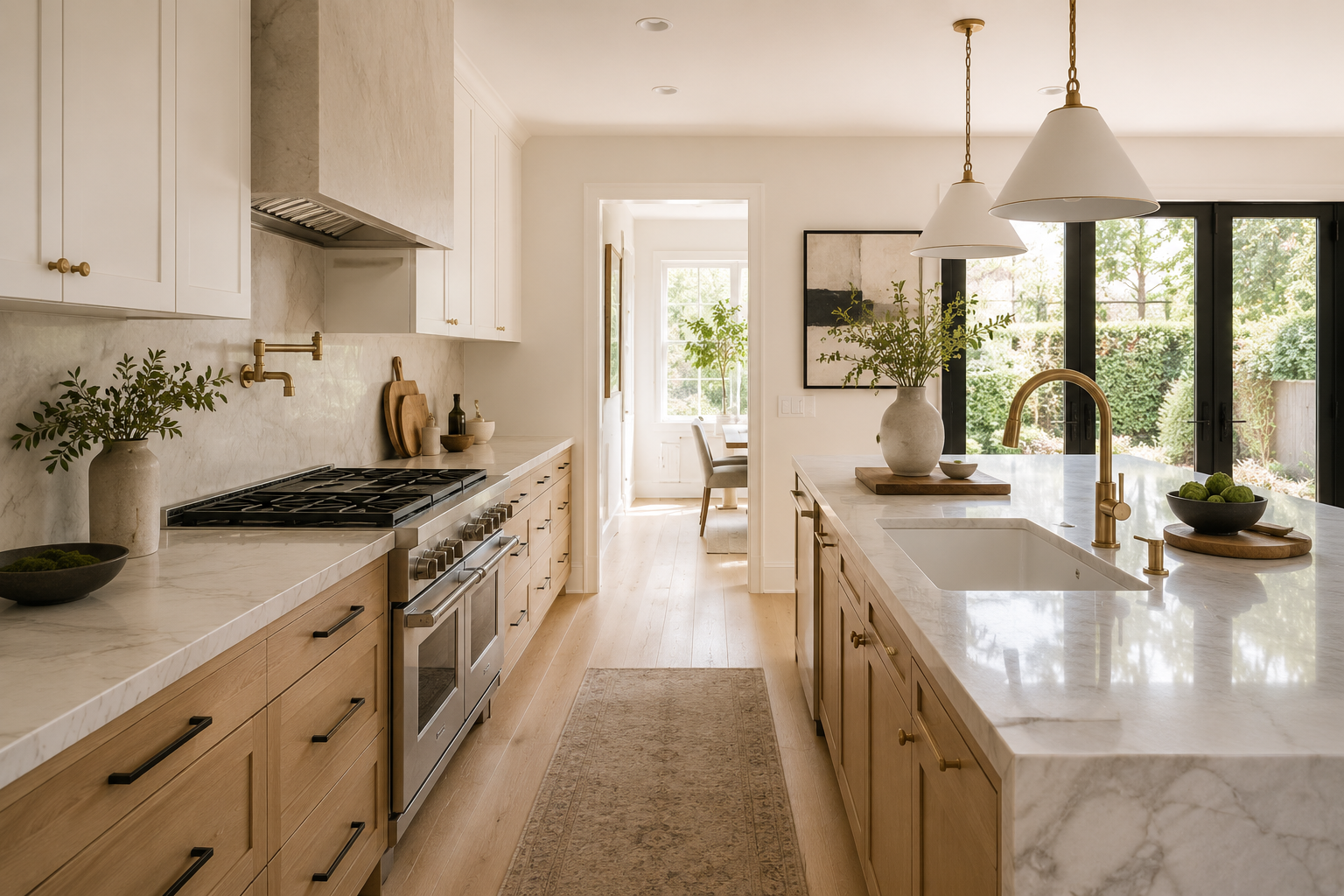 Studio City 91604 renovation at the quality level the market requires — custom cabinetry with genuine design character, considered stone selections, and the specific aesthetic intentionality that separates a renovation Studio City buyers reward at the comp ceiling from one they discount 8–15% as "generic flip."
The Studio City renovation math — three scenarios:
Scenario A — Clear positive ROI (proceed with renovation):
A north-of-Ventura Studio City 91604 home, 3-bedroom, 1,650 sq ft, original 1960s kitchen and bathrooms, as-is value approximately $1.45M.
Renovated comps within 0.5 miles, last 90 days: $1.82M–$1.97M for comparable renovated homes.
Comp gap: approximately $370,000–$520,000 above as-is value.
Renovation scope estimate (design-forward, appropriate Studio City finish level):
- → Kitchen: $62,000
- → Primary bath: $28,000
- → Secondary bath (cosmetic): $8,500
- → White oak flooring throughout: $24,000
- → Interior paint (professional, full neutral refresh): $11,000
- → Exterior curb appeal (landscape refresh, door paint, exterior accent paint): $12,500
- → Total renovation scope: $146,000
Return analysis: Launch at $1.88M (midpoint of renovated comp range). Expected close: $1.88M–$1.93M.
Net improvement from renovation: ($1.88M close) - ($1.45M as-is baseline) - ($146,000 renovation cost) = $284,000 net improvement in proceeds — a 194% gross return on renovation investment.
This is a clear proceed scenario. The comp gap is large enough to absorb the renovation cost and return meaningful incremental proceeds.
Scenario B — Marginal ROI (analyze carefully, may sell as-is):
A south-of-Ventura Studio City 91604 home that was partially renovated in 2016 — kitchen updated but not to current standards, bathrooms original, flooring original. As-is value approximately $1.78M.
Renovated comps: $2.05M–$2.18M for fully renovated comparables.
Comp gap: approximately $270,000–$400,000.
The challenge: the 2016 kitchen renovation means the buyer can see that a renovation was attempted — making the as-is price reflect partial improvement, but the full-renovation comp ceiling requires bringing everything to 2026 standards, not just the bathroom and flooring.
Full renovation scope to reach current comp ceiling: $180,000–$220,000 (kitchen requires full update to current Studio City standard — the 2016 renovation is dated enough that buyers discount it).
Net improvement from full renovation: ($2.1M close) - ($1.78M as-is) - ($200,000 renovation) = $120,000 net improvement — a 60% return on renovation investment.
This is a marginal scenario where the correct answer depends on the seller's timeline, tax situation, and risk tolerance. Selling as-is at an accurately priced $1.73M–$1.78M may be more efficient than absorbing the renovation timeline and risk for $120,000 in incremental improvement.
Scenario C — Negative ROI (sell as-is):
A Studio City 91602 home in the Cahuenga Pass area with deferred structural maintenance — foundation work needed, roof at end of life, plumbing issues. As-is value approximately $1.35M.
Renovated comps: $1.65M–$1.75M for comparable renovated homes.
Comp gap: approximately $300,000–$400,000.
True renovation scope: cosmetic renovation ($120,000) plus deferred maintenance ($75,000–$110,000) = $195,000–$230,000 total.
Net improvement: ($1.7M close) - ($1.35M as-is) - ($215,000 total renovation) = -$15,000 to +$35,000 net improvement — essentially break-even to slightly positive at best, after significant timeline investment and execution risk.
This is a sell-as-is scenario. The deferred maintenance cost eats the renovation return. Price accurately for condition, disclose fully, and sell to the buyer (likely an investor or cash buyer) who will do the work.
4. 📅 The Timeline Reality — Why Studio City Renovation Takes Longer Than Sellers Expect
Studio City sellers consistently underestimate renovation timelines — and the timeline mistake costs more in Studio City than in most SFV markets because carrying costs during a renovation period run $10,000–$18,000/month for a home in the $1.5M–$2.0M range.
The Studio City renovation timeline:
A focused renovation scope at the quality level Studio City requires — kitchen, primary bath, secondary bath cosmetic, flooring, paint, curb appeal — executed by a licensed contractor experienced with design-forward Studio City renovations:
- → 📋 Contractor sourcing and bidding: 2–3 weeks. Do not rush this step. The contractor who produces the finish quality Studio City buyers reward is not the contractor who is available immediately. Quality Studio City renovation contractors have 4–8 week lead times.
- → 🏗️ Active renovation period: 8–12 weeks for the focused scope described above. Kitchen renovation is the pacing constraint — cabinet fabrication, stone countertop fabrication, and tile work sequence in ways that cannot be meaningfully accelerated without quality compromise.
- → 🎨 Finish and photography preparation: 1–2 weeks post-construction completion — paint touch, cleaning, staging, and professional photography.
- → 📸 Pre-marketing and MLS launch: 7–10 days of coming-soon marketing, agent outreach, and social distribution before MLS activation.
Total timeline from renovation decision to MLS launch: 15–22 weeks (4–5.5 months)
Studio City sellers who make the renovation decision in February can launch in June — the tail of the spring window. Sellers who make the renovation decision in March launch in August — the worst seasonal window. The renovation decision timeline is as important as the renovation scope decision.
Carrying costs during renovation:
For a $1.75M Studio City 91604 home with a $750,000 remaining mortgage at a prior locked rate:
- → Mortgage payment: approximately $3,500/month (at prior locked rate)
- → Property taxes: approximately $1,750/month
- → Insurance: approximately $250/month
- → Utilities (minimal during renovation, but ongoing): approximately $200/month
- → Total monthly carrying cost during renovation: approximately $5,700/month
At 16 weeks of renovation: approximately $22,800 in carrying costs.
This carrying cost belongs in the renovation ROI analysis — it reduces the net improvement from renovation by $22,800 before calculating whether the renovation pencils.
5. 🏡 The As-Is Alternative — What Correct As-Is Pricing Produces in Studio City
The as-is sale is not a defeat — for the right Studio City seller in the right situation, it is the optimal financial strategy. The mistake is not choosing as-is; the mistake is choosing as-is and then pricing incorrectly for condition, which produces the worst possible outcome: extended DOM, buyer leverage accumulation, and a price reduction to below where a correctly priced as-is launch would have generated offers.
What correct as-is pricing delivers in Studio City 91604:
A correctly priced as-is Studio City home attracts two buyer profiles that do not require renovation to be motivated:
- → 🔨 The renovation buyer: The buyer who specifically wants to renovate to their own specifications and who sees an as-is Studio City home as the canvas they've been looking for. These buyers are active in Studio City — the neighborhood's design-forward character means buyers who care deeply about finishes often prefer to control the renovation rather than inherit someone else's choices. Price the home correctly for condition and these buyers compete.
- → 💰 The investor / developer: The BRRRR investor or flip investor who is specifically targeting original-condition Studio City inventory. These buyers move quickly, offer cash or near-cash, and value certainty of close over price optimization. In Studio City's $1.4M–$1.7M as-is range, this buyer profile is consistently active.
The as-is pricing discipline:
As-is pricing in Studio City must reflect actual condition — not aspirational pricing that produces extended DOM and buyer negotiating leverage. The formula:
Renovated comp ceiling - renovation cost (what the buyer will pay to renovate) - buyer profit margin (typically 15–20% of renovation cost for effort and risk) = as-is defensible price.
Example: $1.88M renovated comp ceiling - $146,000 buyer renovation cost - $25,000 buyer margin = $1,709,000 as-is defensible price.
A Studio City seller who prices at $1,709,000 as-is and who discloses condition fully will attract both renovation buyers and investors in a transparent transaction. A seller who prices at $1,820,000 as-is hoping buyers will pay close to the renovated comp ceiling will sit on market for 60+ days and ultimately accept $1,680,000 after carrying costs have accumulated and buyer leverage has built.
🚫 What NOT to Overdo
Don't bring Northridge or Tarzana renovation finish standards to a Studio City listing. The cabinet pulls, the countertop pattern, the flooring color, and the backsplash tile that produce full-comp-ceiling recovery in Northridge 91324 or Tarzana 91356 will produce an 8–12% comp ceiling discount in Studio City 91604 — because the buyer pools have completely different baseline expectations. If you're renovating for sale in Studio City, get the finish guidance from a contractor or designer who specifically knows what the Studio City buyer responds to, not from a general SFV renovation contractor whose reference points are lower-priced markets.
Don't start the renovation without signed contractor agreements, material specifications, and a realistic timeline commitment. Studio City renovation contractors in demand have full pipelines — a handshake agreement with a contractor who "will start in a few weeks" is not the same as a signed contract with specific start date, completion date, payment schedule, and material specifications. The Studio City seller who starts renovation with a verbal commitment and discovers 10 weeks into the process that their contractor has overcommitted has a partially renovated home, a carrying cost clock running, and a launch date that has moved into the summer slowdown.
Don't renovate around the home's structural issues. Studio City 91604 contains a meaningful share of older hillside and hillside-adjacent homes with foundation, grading, and geological conditions that cosmetic renovation cannot address. A Studio City home with foundation issues that gets a beautiful kitchen renovation and launches at the full renovated comp ceiling will generate showing traffic and lose offers during inspection — repeatedly — until the structural issues are addressed. Disclose known structural issues before renovation; address them if the ROI supports it; sell as-is if it doesn't. Never renovate cosmetically around known structural problems and hope Studio City's inspection-sophisticated buyer pool doesn't notice.
Don't forget the Studio City ADU opportunity in the renovation scope. Studio City 91604 lots — while smaller on average than Sherman Oaks 91403 or Tarzana 91356 — frequently support ADU addition under California's permissive ADU legislation. A seller whose renovation budget allows for ADU addition should evaluate whether the ADU adds more value at Studio City's comp ceiling than the equivalent investment in primary home renovation. In some Studio City sub-neighborhoods, a permitted detached ADU adds $150,000–$220,000 to the sale price — potentially more than the equivalent amount invested in primary home upgrade.
Don't use the renovation as an opportunity to over-personalize. Studio City's design-forward buyer pool means sellers sometimes interpret "invest in quality finishes" as "express my personal design vision." A renovation that expresses a very specific aesthetic — overly bold tile choices, highly personal color palette, unusual layout modifications — may appeal to the 5% of buyers who share that aesthetic and lose the 95% who don't. The goal is design-forward without being design-specific: choices that read as quality and intentionality without so strongly expressing a particular taste that buyers can't see themselves living in the result.
🏠 Real-World Scenario — Studio City 91604
A seller in Studio City 91604 north of Ventura Boulevard had a 1960s 3-bedroom, 1,700 sq ft home on a 6,500 sq ft lot. Original kitchen, original bathrooms, original flooring — but structurally sound, clean, and genuinely appealing bones. As-is value: approximately $1.51M. Renovated comps in their specific micro-neighborhood: $1.88M–$2.01M for fully renovated comparable homes.
They had received advice from a friend who had recently renovated a Northridge home — cabinet recommendations, countertop advice, flooring suggestions — all appropriate for Northridge's $850K–$1.0M buyer but meaningfully below the finish level Studio City's comp ceiling requires. The friend's renovation budget guidance: $90,000–$100,000.
We brought in a Studio City-experienced renovation contractor for bids and a design consultation with a staging designer who knew the Studio City market. Their assessment: the renovation scope the seller's friend had recommended would produce a result that Studio City buyers would discount by $120,000–$150,000 below the renovated comp ceiling — because the finishes read as "SFV spec renovation" rather than "Studio City design-forward renovation." The budget to achieve the Studio City comp ceiling: $148,000 — the additional $48,000–$58,000 above the friend's estimate representing the finish quality difference between the two markets.
We ran the net proceeds comparison:
Northridge-grade renovation at $95,000: Expected Studio City buyer response: close at approximately $1.74M — the renovated comp ceiling minus the buyer's quality discount. Net proceeds: $1.74M - $95,750 commission (5.5%) - $20,000 closing - $95,000 renovation - $18,000 carrying costs - $600,000 mortgage = approximately $911,250
Studio City-grade renovation at $148,000: Expected close: $1.93M — within the renovated comp range. Net proceeds: $1.93M - $106,150 commission - $22,000 closing - $148,000 renovation - $22,000 carrying costs - $600,000 mortgage = approximately $1,031,850
The additional $53,000 in renovation investment produced approximately $120,600 in additional net proceeds. The Studio City seller chose the design-forward renovation. They closed at $1.94M — slightly above the target. The buyer who purchased specifically cited the kitchen cabinetry and the white oak flooring as primary decision factors.
🏠 Real-World Scenario — Studio City 91604
A different Studio City 91604 seller owned a hillside home south of Ventura in the Fryman Canyon area — a 3-bedroom, 2,100 sq ft on a 10,500 sq ft lot with canyon views. The home had been partially renovated in 2014 — kitchen was done, but to 2014 standards (gray granite, dark wood cabinets, subway tile that was current in 2014 and dated by 2026).
As-is value with the 2014 partial renovation: approximately $1.89M. Fully renovated comp ceiling for their sub-neighborhood: $2.55M–$2.85M.
Scope to reach the 2026 renovated comp ceiling: full kitchen redo (the 2014 renovation needed full replacement), both baths, flooring, paint, and exterior enhancement. Estimated renovation cost at Studio City south-of-Ventura quality level: $218,000.
The comp gap ($2.65M midpoint renovated - $1.89M as-is = $760,000) clearly supported the $218,000 renovation investment. Net improvement from renovation: $760,000 - $218,000 = $542,000 in incremental proceeds. A 249% gross return on renovation investment.
But the seller's timeline was 12 weeks. The renovation, at the quality level required, was an 18–20 week commitment from contractor sourcing to photography-ready finish.
We presented the honest choice: execute the renovation correctly and launch in 20 weeks at $2.65M, or sell as-is at $1.89M with transparent condition disclosure in 8 weeks.
The net proceeds comparison:
Renovated at $218,000, launch at week 20: Close at $2.68M. Commission + closing + renovation + carrying costs (20 weeks at $9,000/month = $45,000) + mortgage payoff ($980,000) = approximately $1,282,000 net proceeds
As-is at $1.89M, launch at week 4: Commission + closing + carrying costs (4 weeks at $9,000/month = $9,000) + mortgage payoff = approximately $730,000 net proceeds
The 16-week difference in launch timing produced $552,000 in additional net proceeds. The seller extended their timeline. They launched at week 21 at $2.72M. Accepted offer at $2.69M. Net proceeds: approximately $1.298M.
The seller who prioritized speed would have left $568,000 on the table. The renovation math in south-of-Ventura Studio City 91604 is not a close call when the comp gap is this large.
❓ FAQ
Does renovating add value to a Studio City home before selling? ✓ Yes — consistently and significantly when the renovation is executed at the finish quality the Studio City buyer pool expects and when the comp gap supports the investment. The average renovated comp premium over original-condition comparables in core Studio City 91604 sub-neighborhoods runs $250,000–$500,000 — the largest condition premium of any market in the PEP SFV coverage area. The renovation must be design-forward at Studio City's quality standard, not SFV-generic, to recover the full comp ceiling.
What renovations add the most value in Studio City? In order of ROI in Studio City 91604: ✓ Kitchen renovation with design-forward finishes ($55,000–$90,000, returns $130,000–$200,000+). ✓ Primary bath renovation with quality fixtures ($25,000–$45,000, returns $60,000–$100,000). ✓ White oak or quality hardwood flooring throughout main living areas ($22,000–$38,000, returns $50,000–$90,000). ✓ Professional interior paint in a considered neutral palette ($12,000–$18,000, returns $30,000–$60,000). ✓ Curb appeal package ($15,000–$25,000, generates showing traffic that makes all other improvements relevant). The Studio City premium over comparable Northridge or Tarzana improvements reflects the finish quality differential required to reach the comp ceiling.
How much should I spend on renovation before selling in Studio City? For most Studio City 91604 north-of-Ventura homes in the $1.5M–$2.1M comp range: $90,000–$150,000 for a focused design-forward renovation scope. For south-of-Ventura and hillside sub-neighborhoods approaching $2.5M+: $150,000–$250,000 may be appropriate where the comp gap supports it. The discipline: renovation spend above $150,000 in any Studio City sub-neighborhood requires specific comp ceiling validation — the market does not uniformly absorb renovation investment above this level.
Should I sell my Studio City home as-is or renovate? The answer depends entirely on your comp gap, your timeline, and your financial position. ✓ Renovate if: comp gap exceeds renovation cost by $150,000+, you have 18–22 weeks of timeline, and you have renovation capital available without borrowing against the home at high rates. ✓ Sell as-is if: comp gap is less than $100,000 above renovation cost, your timeline is under 45 days, the home has structural issues cosmetic renovation won't address, or estate/probate situations require clean liquidation. ✓ Partial renovation (cosmetics only, no structural): appropriate when the focused scope — paint, flooring, cosmetic bath refresh — costs $35,000–$55,000 and delivers comp positioning above the strictly as-is baseline without the full renovation timeline.
How long does a Studio City renovation take before selling? For a full design-forward renovation (kitchen, baths, flooring, paint, curb appeal): 15–22 weeks from renovation decision to MLS launch. The pacing constraints: contractor lead time (4–8 weeks for quality Studio City contractors), cabinet fabrication and delivery (6–10 weeks for semi-custom or custom cabinets), stone countertop fabrication (3–5 weeks), and photography preparation (1–2 weeks post-construction). Sellers who underestimate this timeline consistently launch later than they planned — often into a less favorable seasonal window than they intended.
Does Studio City have a different renovation standard than Sherman Oaks or Woodland Hills? ✓ Yes — significantly. Studio City 91604's buyer pool is the most design-sophisticated in the PEP SFV coverage area. Finishes that recover full comp ceiling value in Sherman Oaks 91403 or Woodland Hills 91364 produce a 8–15% comp ceiling discount in Studio City because the buyer's reference points include Brentwood, Silver Lake, and Los Feliz renovation quality rather than standard SFV spec renovation. Studio City renovation budgets should be calibrated to the Studio City comp ceiling, not borrowed from adjacent markets.
🎯 Bottom Line
The renovation decision in Studio City 91604 and 91602 is not the same decision as in any other market in the PEP SFV coverage area — because the buyer pool's visual sophistication, the finish quality required to reach the comp ceiling, and the absolute dollar stakes at $1.5M–$2.5M+ price points all demand a more careful, more market-specific analysis than generic "should I renovate before selling" guidance provides.
When the comp gap clearly supports renovation — and in many Studio City sub-neighborhoods it does, by $300,000–$600,000 for a $130,000–$200,000 renovation investment — the decision is clear: renovate, and renovate at the quality level the Studio City buyer rewards. When the comp gap is marginal, when the timeline is compressed, or when structural issues exceed cosmetic renovation scope — sell as-is at a price that accurately reflects condition and attracts the renovation buyers who specifically want the canvas.
The Studio City renovation mistakes that most consistently cost sellers net proceeds are the ones of mismatched quality (Northridge-grade finishes in a Studio City-priced home) and misaligned timeline (making the renovation decision in March and discovering in May that the right contractor has a July start date). Get the comp analysis, get the contractor bids from Studio City-experienced operators, run the ROI math with carrying costs included, and make the renovation decision with full information — not with the hope that any renovation will reach the Studio City comp ceiling regardless of finish quality.
At Parkway Estate Properties, Liana's seller representation across Studio City 91604/91602, Sherman Oaks 91403/91423, Encino 91316/91436, and Tarzana 91356 means every renovation recommendation we make is grounded in what the specific buyer pool at the specific price point actually rewards — and Roman's renovation experience across the SFV means every cost estimate we provide reflects current contractor pricing rather than theoretical budgets.
📩 Want to Know Whether Renovation Is Worth It for Your Specific Studio City Home?
We'll run the comp gap analysis for your address, bring in Studio City-appropriate contractor bids, and give you the honest renovation ROI calculation — including carrying costs — before you've committed a dollar to any scope.
Contact Liana Shersher at Parkway Estate Properties: 📧 liana@parkwayestate.com · 📞 (818) 208-5881 · 🌐 parkwayestate.com 15021 Ventura Blvd., Ste. 510, Sherman Oaks, CA 91403
About the Authors
Liana Shersher Liana Shersher is a licensed real estate agent with Parkway Estate Properties Inc. and an Accredited Buyer's Representative (ABR) serving the San Fernando Valley — with a focus on Sherman Oaks, Encino, Tarzana, Woodland Hills, and Northridge (DRE# 02164224). Liana guides first-time homebuyers through every step of the purchase, from the first showing to the keys in hand, and represents move-up and repeat buyers across the Valley. For sellers, she builds the pricing and marketing strategy that positions a home to sell for top dollar, fast. Buyers and sellers work with Liana for clear communication, sharp local knowledge, and an agent who treats their goals like her own.
Roman Shersher Roman Shersher is the broker-owner of Parkway Estate Properties Inc. and a real estate investor with 18 years of experience in the San Fernando Valley (DRE# 01855095). Roman has personally led or co-led renovations on dozens of properties across the Valley, including recent projects in Northridge (91324) and Woodland Hills (91364). That hands-on renovation and investment experience shapes every pricing conversation and days-on-market strategy at Parkway — sellers get a realistic read on what improvements actually return at resale, and buyers get an expert eye on a home's true condition and upside.
Parkway Estate Properties, Inc. 15021 Ventura Blvd., Ste. 510, Sherman Oaks, CA 91403 · (818) 208-5881 · parkwayestate.com · Broker License #: 01873092 Equal Housing Opportunity. Information herein is general and not legal, tax, or financial advice. Consult qualified professionals for your specific situation.
Categories
Recent Posts











Broker | Realtor ® License ID: 01873092
+1(818) 208-5881 | info@parkwayestate.com