
Should I Sell My Studio City Home As-Is or Fix It Up?

The as-is versus fix-it-up decision in Studio City 91604 and 91602 is more consequential — and more nuanced — than the equivalent decision in most SFV markets, for two reasons that are specific to this neighborhood. First, the comp ceiling is significantly higher: a fully renovated Studio City 3-bedroom closes at $1.75M–$2.4M, while the same home in original condition closes at $1.3M–$1.65M — a comp gap of $400,000–$800,000 that makes the renovation ROI case potentially stronger here than almost anywhere in the PEP coverage area. Second, the buyer pool is significantly more discerning: the entertainment industry professional, the Silver Lake transplant, and the design-forward Westside buyer who represents Studio City's primary purchaser has toured extensively, has a precise finish quality baseline, and will not pay the renovated comp ceiling for a home that doesn't meet the specific design standard that ceiling represents.
Both of these factors cut in the same direction: the Studio City renovation, when it is done correctly and to the right specification, returns more than almost any comparable SFV market renovation. And the Studio City renovation, when it is done incorrectly — wrong finish specification, wrong scope, or launched before completion — destroys more value than an as-is sale would have produced.
This article gives Studio City sellers the complete decision framework.
1. 📊 The Studio City Comp Gap Analysis — Why the Stakes Are Higher Here
The financial case for renovation in Studio City begins with the same comp gap methodology described throughout this cluster's articles — but the numbers are dramatically different from what comparable analyses produce in Reseda, Lake Balboa, or even Granada Hills.
 The Studio City comp gap analysis — the specific data pull that reveals whether the $400,000–$700,000 spread between original condition and fully renovated closed sales in 91604 supports a renovation investment at your specific address. The comp gap is the non-negotiable starting point before any Studio City seller commits to improvement scope or as-is pricing.
The Studio City comp gap by sub-neighborhood and price tier:
North of Ventura (core volume tier, 91604):
- → 💰 Original condition 3-bedroom (1,400–1,700 sq ft): $1.32M–$1.58M
- → 💰 Fully renovated equivalent: $1.78M–$2.15M
- → 📊 Comp gap: $400,000–$600,000
- → 💡 Maximum improvement investment that pencils: $180,000–$250,000 (allowing for carrying costs and margin)
North of Ventura (4-bedroom, 1,800–2,200 sq ft):
- → 💰 Original condition: $1.55M–$1.85M
- → 💰 Fully renovated: $2.1M–$2.6M
- → 📊 Comp gap: $500,000–$750,000
- → 💡 Maximum improvement investment: $220,000–$310,000
South of Ventura (canyon-adjacent, larger lots, 91604):
- → 💰 Original condition: $1.85M–$2.4M
- → 💰 Fully renovated: $2.6M–$3.8M+
- → 📊 Comp gap: $600,000–$1,400,000
- → 💡 Maximum improvement investment: $280,000–$550,000+
Studio City 91602 (Cahuenga corridor, North Hollywood-adjacent):
- → 💰 Original condition: $1.1M–$1.45M
- → 💰 Fully renovated: $1.55M–$1.95M
- → 📊 Comp gap: $350,000–$500,000
- → 💡 Maximum improvement investment: $150,000–$210,000
Why the comp gap is so large in Studio City:
Studio City's buyer pool drives the gap. The renovated-condition buyer in Studio City — the entertainment industry professional, the Silver Lake transplant, the design-forward buyer who has toured $2M homes in West Hollywood and Silver Lake and is making a specific Ventura Boulevard lifestyle trade — has an extremely precise finish quality expectation that only a specific renovation specification meets. When a Studio City home meets that specification, it reaches the full renovated ceiling. When it doesn't, it doesn't — which is why the gap between the as-is floor and the renovated ceiling is so large and why the renovation specification must be exactly right.
Running the Studio City comp ceiling analysis:
Pull closed comps in the last 90 days within 0.4 miles, same bedroom count, comparable square footage (±200 sq ft), and specifically filter for clearly renovated condition. The renovated comp in Studio City must be genuinely renovated to the current Studio City buyer's standard — not a 2016 renovation that is now dated, not a partial update with original kitchen, not a comprehensive renovation in the wrong design vocabulary. The specific comp set that establishes your ceiling must reflect what the current buyer will pay for current design execution.
2. 🎨 The Studio City Renovation Specification — Why Getting It Right Matters More Here
The renovation specification for a Studio City pre-sale improvement is the variable that most distinguishes this market from every other in the PEP coverage area. In Reseda or Lake Balboa, a competent cosmetic renovation — painted cabinets, LVP flooring, updated hardware, fresh paint — reaches the local comp ceiling. In Studio City, a competent cosmetic renovation produces a home that a sophisticated buyer pool immediately identifies as "contractor spec" rather than "design quality" — and prices accordingly, which is below the renovated comp ceiling.
The Studio City buyer's finish quality baseline:
The primary Studio City buyer pool has toured extensively — typically 30–60 homes in Silver Lake, Los Feliz, West Hollywood, and the Ventura Boulevard corridor before making an offer. Their finish quality baseline is set by the best-renovated homes in this specific market, which are design-forward, material-conscious, and executed to a specification that communicates intentionality rather than value engineering.
Specific Studio City renovation requirements that reach the ceiling:
🍳 Kitchen — the design-forward standard:
- → ✅ Custom or semi-custom cabinetry: Slab-front or shaker-front cabinetry in white, natural wood, or muted sage/navy — not stock cabinetry, not the Shaker-white-from-Home-Depot approach that reaches the Tarzana or Granada Hills ceiling
- → ✅ Natural stone or premium quartz: Marble-look quartz, genuine Calacatta, or equivalent — not builder-grade white quartz that signals value-spec rather than design quality
- → ✅ Professional-grade appliances: 36-inch range (Wolf, Thermador, or equivalent), integrated refrigeration, professional dishwasher — the appliance specification the Studio City buyer has seen in the Silver Lake homes they've been touring
- → ✅ Open floor plan: The compartmentalized 1960s–1970s Studio City kitchen must open to the living area to reach the renovated ceiling — wall removal, kitchen relocation if necessary, the structural modification that produces the social kitchen configuration Studio City buyers specifically require
- → ✅ Statement lighting: Specification lighting — designer pendants over the island, recessed lighting on dimmers — not the contractor-package lighting fixtures that read as value-spec immediately
🏠 Flooring:
- → ✅ Wide-plank engineered hardwood or high-end LVP: 7-inch minimum width, warm white oak or comparable — the flooring specification that photographs as intentional design rather than standard renovation
- → ❌ Mid-gray LVP: The flooring specification that was current 2019–2022 and now reads as dated to any buyer who has toured extensively
- → ❌ Builder-grade standard LVP: The specification that reaches the Reseda ceiling, not the Studio City ceiling
🚿 Primary bath — the spa standard:
- → ✅ Freestanding soaking tub or large-format walk-in shower: The primary bath specification that Studio City buyers expect at $1.75M+ — not a standard tub-shower combination
- → ✅ Large-format tile: 24×48 or equivalent — the tile specification that communicates premium rather than standard renovation
- → ✅ Floating double vanity: Wall-mounted where possible — the vanity configuration that photographs as design-forward
- → ✅ Frameless glass enclosure: Non-negotiable at this price point — sliding shower doors do not reach the Studio City renovated ceiling
🎨 Interior finish:
- → ✅ Benjamin Moore White Dove, Chantilly Lace, or equivalent warm white throughout: The paint specification that the Studio City buyer pool consistently identifies as intentional rather than generic
- → ✅ Trim detail: Full trim package — base, door casing, window casing — executed to a level that reads as considered design rather than standard contractor finish
- → ✅ Smart home integration: Nest or equivalent thermostat, smart lighting controls in primary spaces, Ring or equivalent security — the technology integration that Studio City buyers expect as standard at this price point
3. ✅ The As-Is Case in Studio City — When It Is the Right Answer
The as-is sale in Studio City 91604 and 91602 is not a distressed outcome — it is a legitimate, well-executed strategy that attracts a specific and genuinely motivated buyer pool whose financial capacity and renovation expertise make them ideal purchasers for the right property. Understanding who this buyer pool is and how to position specifically for them produces significantly better as-is outcomes than the generic "price low and hope someone buys it" approach that many sellers default to.
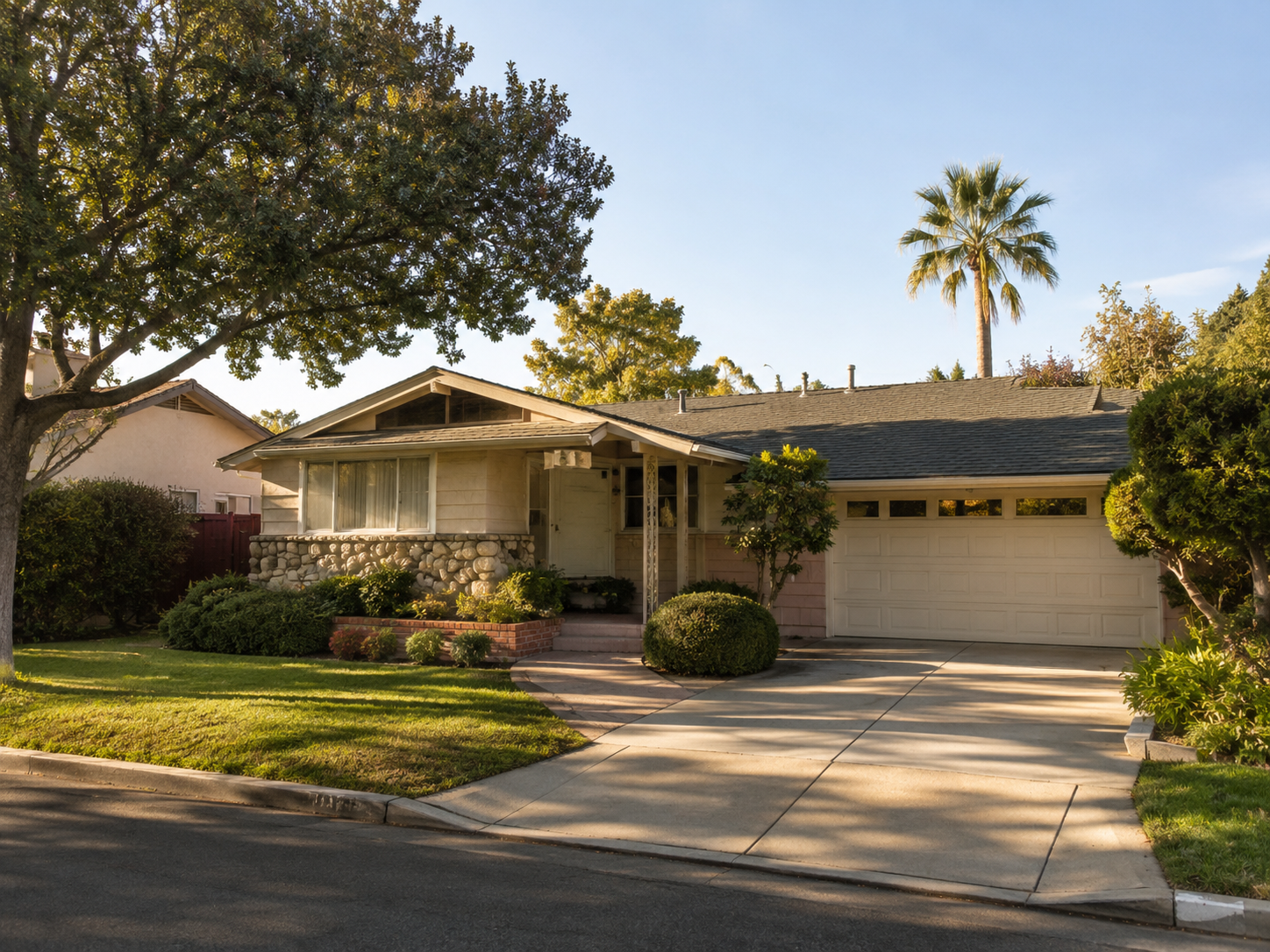 The Studio City as-is product — original condition homes that attract spec builders, cash investors, and renovation-ready buyers who purchase at a discount to the renovated ceiling and execute their own improvement. Correctly priced and correctly marketed to this buyer pool, the Studio City as-is sale produces a clean, fast transaction at a price that reflects the land, structure, and location value without the renovation premium.
The Studio City as-is buyer pool:
- → 🏗️ Spec builders and developers: The same buyers who produce the spec-builder new construction described in the Tarzana new construction vs. resale article operate actively in Studio City — purchasing original-condition homes, executing high-quality renovations to the Studio City buyer standard, and selling at the renovated ceiling at a margin. These buyers are cash or hard-money, move in 10–21 days, and have zero contingencies. They are the most reliable as-is buyer in the Studio City market.
- → 💰 Cash investors with renovation expertise: Individual investors who have completed prior Studio City or Silver Lake renovations, who know the specific finish specification required, and who purchase at a discount to execute their own vision. Less common than spec builders but present and active.
- → 🔨 Renovation-ready owner-occupants: The specific buyer — typically an architect, interior designer, contractor, or other design professional — who wants the blank canvas that an original Studio City home provides and who specifically does not want to pay the renovated ceiling for someone else's design decisions. This buyer will spend the same renovation budget as the spec builder but to their own specification rather than a generic one.
The correct Studio City as-is pricing:
As-is pricing in Studio City must reflect the specific comp gap analysis — not the renovated ceiling discounted arbitrarily, and not the adjacent market's as-is pricing applied without adjustment. The specific as-is position is determined by what the spec builder or developer will pay — which is the renovated comp ceiling minus their anticipated renovation cost minus their required margin.
The spec builder's Studio City as-is offer calculation:
For a north-of-Ventura 3-bedroom with a renovated ceiling of $2.05M:
- → Anticipated renovation cost: $185,000–$240,000
- → Required developer margin (typically 15–20% of purchase + renovation): $220,000–$290,000
- → Carrying costs (3–6 months at hard money rates): $45,000–$85,000
- → Maximum as-is offer from a spec builder: $2.05M - $240,000 renovation - $290,000 margin - $85,000 carrying = approximately $1.435M
This is the ceiling of what a well-informed Studio City as-is buyer will offer — and it is also the as-is pricing floor that a correctly priced Studio City as-is listing should target to attract this buyer pool within the first 2–3 weeks.
When as-is is the correct Studio City strategy:
- → ✅ Compressed timeline: Estate sales, divorce resolutions, relocation requirements, or financial events that require a 30–45 day close rather than a 16–20 week renovation-and-market cycle
- → ✅ Structural deferred maintenance that renovation won't address: Foundation issues, significant water intrusion, unpermitted additions that require resolution — situations where renovation cost exceeds what the comp gap supports
- → ✅ Renovation contractor access is unavailable: Studio City's renovation requires contractor relationships that produce the specific finish quality its buyer pool evaluates. Sellers without these relationships who attempt the renovation independently risk producing the "middle outcome" — a renovation that neither the renovated buyer pool nor the as-is buyer pool will pay full price for
- → ✅ Personal bandwidth doesn't exist: The Studio City renovation at $120,000–$200,000 scope requires 10–14 weeks of active contractor management, decision-making, and oversight. Sellers whose career demands, family situation, or geographic distance make this management genuinely impossible are better served by the as-is sale at a correctly priced level
4. ⚠️ The Middle Outcome — The Worst Studio City Seller Decision
The most costly Studio City seller mistake is neither the as-is sale at a correctly priced level nor the fully executed renovation at the correct specification. It is the renovation that fails to reach the Studio City renovated buyer's standard — the partial renovation, the incorrect specification, or the incomplete renovation launched before all work is finished. This middle outcome consistently produces worse results than either the as-is or fully renovated alternative.
Why the middle outcome is specifically damaging in Studio City:
Studio City's buyer pool is binary in its evaluation. The renovation-ready buyer who has been touring $1.8M–$2.2M homes in 91604 evaluates each home against a precise mental model of what the renovated Studio City ceiling represents. A home that is 80% there — beautiful new kitchen but original primary bath, excellent flooring but painted cabinets that read as budget compromise, new appliances but track lighting rather than designer pendants — doesn't receive 80% of the renovated price. It receives a significant discount because:
- → ❌ The buyer calculates the cost to complete the remaining 20% — and their estimate is always higher than the actual cost because they're pricing retail, not wholesale
- → ❌ The buyer uses the incomplete renovation as leverage — "it's almost there but I need to finish the bath and redo the lighting, so I need $100,000 off" — often extracting more than the remaining work actually costs
- → ❌ The partial renovation has specifically disqualified the as-is buyer pool — spec builders and developers who were prepared to offer $1.42M for the original condition home will not offer $1.42M for a home that has had $80,000 of improvements that don't match their renovation vision
- → ❌ DOM accumulates — the home sits as neither the renovated pool nor the as-is pool is fully motivated, accumulating the stigma that makes subsequent price reductions the only resolution
The specific Studio City partial renovation mistakes:
- → ❌ Renovating the kitchen to specification but leaving original bathrooms: The Studio City buyer at $1.85M expects both. A spectacular kitchen with original 1970s bathrooms produces the specific "what were they thinking" reaction that kills offers at the renovated ceiling.
- → ❌ Installing premium flooring but painting cabinets rather than replacing: The flooring signals premium; the painted cabinets signal budget compromise. The combination reads as "they ran out of money" to a buyer who has been touring homes where everything was executed to the same specification level.
- → ❌ Updating the interior and ignoring the exterior: Studio City's listing photography begins with the exterior. A fully renovated interior with a dated exterior, original front door, and neglected landscaping produces first-click elimination from buyers whose search filter includes any home in the 91604 renovated price tier.
- → ❌ Completing renovation but launching before photography is professional and complete: The single most common execution failure — the renovation is finished but the photographer is scheduled before the staging company arrives, before the final punch-list items are completed, and before the curb appeal package is installed. The first listing photos define the market's first impression; a listing that launches with construction debris still in the driveway and no landscaping installed has burned the first-impression opportunity for the listing's most valuable week.
5. 📅 The Studio City Renovation Timeline — What Sellers Must Plan For
The renovation timeline for a Studio City pre-sale improvement that reaches the buyer's standard is longer than most sellers initially expect — and longer than comparable SFV market renovations at lower price points. The specific finish specification required in Studio City takes more time to source, deliver, and install correctly than builder-grade materials.
Studio City pre-sale renovation in progress — the 10–14 week execution timeline that produces the specific finish quality Studio City's buyer pool evaluates. Custom cabinetry with lead times, large-format tile installation, structural wall modifications for open floor plans, and design-forward finish selection cannot be rushed to the builder-grade timeline that lower-priced SFV market renovations follow.
The Studio City renovation timeline phase by phase:
Phase 1 — Pre-construction (3–5 weeks):
- → 📋 Pre-listing inspection: Order immediately — the inspection findings determine whether structural or mechanical deferred maintenance changes the renovation math before any scope is committed
- → 🎨 Design and material selection: Studio City renovations require material lead times that working-family market renovations don't. Custom cabinetry: 4–8 weeks from order to delivery. Large-format tile: 2–4 weeks for premium selections. Designer lighting fixtures: 2–6 weeks. Begin selection and ordering concurrently with contractor engagement.
- → 📐 Architectural or structural consultation: If the open floor plan requires wall removal — necessary in most original Studio City homes to reach the renovated ceiling — structural consultation and permit application add 3–6 weeks. Submit permits in Phase 1 while design selections are being finalized.
- → 🔨 Contractor engagement: Two to three bids from contractors with verified Studio City or equivalent market renovation history. The contractor who has renovated Tarzana or Granada Hills working-family homes is not the correct contractor for a Studio City pre-sale renovation — their material sourcing, subcontractor relationships, and finish quality calibration are set for a different price point.
Phase 2 — Structural and rough-in (2–3 weeks):
- → Demo of original kitchen, primary bath, and any wall removal for open floor plan
- → Structural work on any load-bearing modifications
- → Electrical rough-in for new lighting plan, appliance circuits, smart home infrastructure
- → Plumbing rough-in for relocated kitchen sink, shower configuration
Phase 3 — Finish installation (4–6 weeks):
- → Custom cabinetry installation (2–3 days install after delivery)
- → Large-format tile installation — primary bath, kitchen backsplash, secondary baths
- → Flooring throughout — wide-plank engineered hardwood or premium LVP
- → Appliance delivery and installation
- → Designer lighting installation
- → Interior paint — full professional repaint after all construction complete
Phase 4 — Completion and launch preparation (2–3 weeks):
- → Punch-list completion
- → Professional staging — Studio City staging at the $1.8M–$2.3M tier requires premium staging furniture; budget $8,000–$18,000 for staging
- → Exterior curb appeal: fresh landscaping, front door paint or replacement, exterior paint if needed, professional exterior lighting
- → Professional photography and 3D tour — one week after staging is complete and all punch-list items are addressed
- → Pre-marketing period: agent network outreach, coming-soon social campaign, 1–2 week pre-MLS period building the showing queue
Total timeline from inspection to MLS launch: 11–17 weeks
Studio City sellers who decide to list "in spring" in February and begin the renovation process in March have missed the spring peak. The preparation timeline for a spring launch must begin in October or November of the prior year — or the seller must accept a summer launch with the seasonal pricing adjustment that summer conditions require.
🚫 What NOT to Overdo
Don't attempt the Studio City renovation with a working-family market contractor at working-family market material specifications. The cosmetic renovation that correctly reaches the Reseda or Lake Balboa comp ceiling — painted cabinets, builder-grade LVP, standard quartz, contractor-package lighting — does not reach the Studio City comp ceiling. A seller who executes a $65,000 Reseda-specification renovation on a Studio City home and lists at the Studio City renovated ceiling will receive the market's response immediately: showings from buyers who look and pass, offers from buyers who discount for the finish quality gap, and a listing that sits at the aspirational price while accumulating DOM. Use contractors and material specifications calibrated to the Studio City buyer's standard — or sell as-is.
Don't open walls without a structural engineer and permits. The open floor plan that is non-negotiable for the Studio City renovated buyer frequently requires removing walls that may be load-bearing in Studio City's 1960s–1970s construction. Unpermitted structural modifications create title and resale problems that the buyer's inspection will discover, and that the buyer's lender will flag. Pull the permit, get the engineer's sign-off, and document the structural work properly — the permit process adds time but eliminates a specific and significant liability.
Don't launch with incomplete renovation visible in the listing photography. The Studio City renovation that is 95% complete when the listing photographer arrives produces photos that read as "renovation project" rather than "move-in ready home" to the buyer pool. The $2,000 staging fee you save by launching before staging is complete, and the $600 photography fee you save by shooting before the final fixtures are installed, produce listing photos that suppress first-week showing traffic in the market's most valuable week. Complete everything before the photographer arrives — without exception.
Don't price the as-is Studio City sale by discounting from the renovated ceiling without understanding the spec builder's math. Sellers who price their as-is Studio City home by taking the renovated ceiling and subtracting a rough renovation estimate consistently either underprice (leaving money on the table by estimating renovation at retail cost when spec builders execute at wholesale) or overprice (not accounting for the developer margin and carrying costs that the spec builder requires). Use the specific calculation described in Section 3 — renovated ceiling minus renovation cost minus developer margin minus carrying costs — to establish the as-is price that spec builder and investor buyers will specifically engage.
Don't renovate the kitchen to a $90,000 specification and leave the primary bath original. The Studio City buyer who tours a home with a spectacular new kitchen and an original 1970s primary bathroom does not split their evaluation — they evaluate the bathroom, they calculate what it will cost to renovate, they add that cost to the purchase price in their mental model, and they offer below the renovated ceiling by more than the actual renovation cost of the bathroom. The Studio City renovation is an all-or-nothing proposition at the rooms that matter — kitchen and primary bath must both reach the specification, or the partial renovation produces the middle outcome.
🏠 Real-World Scenario — Studio City 91604
A seller in Studio City 91604 north of Ventura — a 3-bedroom, 1,580 sq ft on a 6,800 sq ft lot, original 1968 condition — had been told by one agent to "sell as-is at $1.45M, quick close" and by a second agent to "renovate fully and list at $1.95M." The spread between the two recommendations was $500,000.
We ran the comp ceiling analysis. Five filtered comps within 0.4 miles, 3-bedroom, renovated condition, last 90 days: $1.84M, $1.88M, $1.92M, $1.97M, and $2.01M. Average: $1.924M. Renovated ceiling: $2.01M. As-is baseline from original-condition comps: $1.38M–$1.52M. Comp gap: approximately $490,000–$620,000.
We then modeled three paths:
Path 1 — As-is at $1.47M: Correctly positioned for the spec builder buyer pool. Expected timeline: 21–35 days. Net after commission and closing costs: approximately $1.37M.
Path 2 — Full renovation at correct Studio City specification ($168,000 scope): Custom cabinetry, structural wall removal for open floor plan (permit), large-format tile primary bath and kitchen, wide-plank engineered hardwood throughout, professional-grade appliances, designer lighting, full exterior curb appeal package. Timeline: 13 weeks to launch.
Comp gap midpoint ($555,000) - renovation ($168,000) - carrying costs ($38,500 at 13 weeks) = $348,500 net improvement over the as-is.
Launch at $1.959M (just below the $2.01M ceiling to generate competitive showings). Expected close: $1.96M–$1.99M.
Path 3 — Partial renovation at $75,000 (Reseda-specification): Painted cabinets, standard LVP, basic bath update, new appliances, paint, curb appeal. Timeline: 7 weeks.
This path produces a home priced at the full renovated ceiling ($1.95M) that the Studio City buyer pool immediately identifies as under-specification. Expected outcome: 45–70 days DOM, price reduction to $1.78M–$1.82M, closes below as-is-plus-partial-renovation equivalent.
We recommended Path 2 — the full specification renovation. We also specifically addressed the contractor access question: did the seller have relationships with contractors who had executed Studio City-specification renovations? The answer was no.
We provided contractor referrals — two contractors with verified 91604 renovation history whose material sourcing and subcontractor relationships were calibrated to the Studio City specification. The renovation was executed in 11.5 weeks. The listing launched at $1.949M in the spring window.
First week: 14 showings. Three offers by day 11. Best offer: $2.02M — $71,000 above list price in a competitive situation. Close: $2.02M.
Net to seller: $2.02M minus commission, closing costs, renovation ($168,000), and carrying costs ($38,500) = approximately $1.72M net. Versus the as-is path at approximately $1.37M net.
The correctly executed Studio City renovation produced approximately $350,000 in additional net proceeds — exactly what the comp gap analysis projected.
🏠 Real-World Scenario — Studio City 91604
A different Studio City 91604 seller — an estate sale with three adult children as co-executors — had the opposite situation. The home was a 4-bedroom south of Ventura on a 9,200 sq ft lot with a renovated ceiling of approximately $2.85M. Original condition throughout. The co-executors had initially planned to renovate before selling.
The estate's constraints: the renovation would take 14–16 weeks at the scope required to reach the $2.85M ceiling, during which the estate would carry the mortgage ($4,200/month), property taxes ($2,375/month), insurance ($580/month), and utilities ($480/month) — approximately $7,635/month in carrying costs. At 16 weeks: $48,864 in carrying costs.
The renovation scope to reach the $2.85M ceiling south of Ventura, to the specification required by that tier's buyer pool: minimum $240,000–$290,000, with material lead times on custom cabinetry and high-end stone that could extend the timeline.
Three co-executors in different cities, with different professional schedules, attempting to manage a $265,000 renovation project by committee, remotely, with a contractor they'd never worked with — this was the specific situation where renovation execution risk was highest and where the as-is alternative deserved the most serious consideration.
We modeled both paths:
Full renovation: $2.85M ceiling - $265,000 renovation - $48,864 carrying - commission/closing = approximately $2.39M net.
As-is, correctly positioned for the spec builder pool at $2.15M: $2.15M - commission/closing = approximately $2.02M net.
The renovation produced approximately $370,000 more in net proceeds. But the $370,000 required three co-executors to manage a $265,000 renovation project remotely by committee for 16 weeks — a specific, genuine, and in some situations prohibitive organizational burden.
We presented both paths honestly. The co-executors debated for two weeks and ultimately chose the as-is sale — specifically because the family dynamics of remote renovation management were genuinely untenable and the $370,000 additional net proceeds did not justify the 16-week family conflict they anticipated the renovation would generate.
The home listed at $2.22M as-is, generated 8 showings in week one, received two offers — one from a spec builder at $2.08M, one from a design professional owner-occupant at $2.19M. They accepted the owner-occupant offer at $2.19M (the buyer wanted the blank canvas to execute their own vision). Close in 18 days.
Net: approximately $2.05M — approximately $340,000 less than the renovation path would have produced, and approximately $30,000 above the spec builder offer. The co-executors accepted this outcome as the right answer for their specific family and estate situation — and it was. The $340,000 they left on the table paid for the absence of 16 weeks of remote renovation management by committee among siblings with different financial needs and different bandwidth.
The as-is sale was the right answer for this seller. Not because the renovation didn't pencil — it did. Because the renovation was the wrong answer for this specific seller's situation.
❓ FAQ
Should I sell my Studio City home as-is or renovate first? The answer depends on four specific factors: ✓ The comp gap between your as-is value and the fully renovated Studio City ceiling — if it's $400,000+, renovation ROI is compelling. ✓ Your timeline — a correct Studio City renovation takes 11–17 weeks; sellers with compressed timelines should sell as-is. ✓ Your access to contractors who can execute to Studio City's specific finish quality standard — without the right contractor, the partial renovation produces the worst outcome. ✓ Your bandwidth for active renovation management — remote, estate, or bandwidth-constrained sellers are often better served by a correctly priced as-is sale. When all four factors align favorably, renovation produces $250,000–$400,000 in additional net proceeds in most Studio City sub-neighborhoods. When one or more factors doesn't align, as-is is the right answer.
What improvements add the most value in Studio City before selling? In Studio City 91604 and 91602, the improvements that reach the renovated comp ceiling are: ✓ Open floor plan kitchen renovation with custom or semi-custom cabinetry, natural stone or premium quartz, and professional-grade appliances — the single most impactful improvement at this price point. ✓ Primary bath renovation to the spa standard — freestanding tub or large walk-in shower, large-format tile, floating double vanity, frameless glass. ✓ Wide-plank engineered hardwood flooring throughout — the flooring specification that photographs as intentional design. ✓ Full professional repaint in current warm white palette. ✓ Design-forward lighting throughout — designer pendants, recessed on dimmers. ✓ Exterior curb appeal — front door, landscaping, exterior lighting, hardscape. The key: all of these must be executed to the same specification level or the partial completion produces the middle outcome that neither buyer pool fully values.
What is a Studio City home worth in original condition versus renovated? North of Ventura in 91604: original condition 3-bedroom closes at approximately $1.32M–$1.58M; fully renovated equivalent closes at $1.78M–$2.15M. The $400,000–$600,000 spread is the renovation opportunity for sellers with the timeline, contractor access, and capital to execute correctly. South of Ventura on larger lots: the gap widens further — original condition $1.85M–$2.4M versus renovated $2.6M–$3.8M+. Verify for your specific address and sub-neighborhood with a filtered, sub-neighborhood-specific comp pull — Studio City's variation by sub-neighborhood and lot configuration is significant enough that zip code averages produce meaningfully misleading estimates.
How long does it take to renovate a Studio City home before selling? A complete Studio City pre-sale renovation — custom cabinetry, structural wall removal for open floor plan, large-format tile primary bath, wide-plank flooring, designer lighting, professional appliances, full repaint, exterior curb appeal, and professional staging — takes 11–17 weeks from pre-listing inspection to MLS launch. The critical path items that most extend the timeline are custom cabinetry lead times (4–8 weeks from order), permit processing for structural wall removal (3–6 weeks), and the sequencing requirement that paint must complete before flooring, flooring before staging, and staging before photography. Sellers targeting a spring launch must begin the process no later than November of the prior year.
Is Studio City a good market for selling as-is? Yes — provided the as-is sale is correctly priced for the specific buyer pool that purchases original-condition Studio City homes. Spec builders, developers, and renovation-ready owner-occupants actively seek original Studio City inventory — these buyers are cash, fast-closing, and non-contingent. The as-is Studio City sale is not a distressed outcome; it is a clean, efficient transaction that typically closes in 18–35 days at a price reflecting the land value, structural bones, and location premium without the renovation premium. Correctly priced as-is Studio City homes generate competitive attention from this buyer pool. Incorrectly priced as-is homes — attempting to bridge to the renovated ceiling without the renovation — sit until the market correction forces the price to where it should have launched.
What happens if I partially renovate my Studio City home? The partial renovation is the worst Studio City seller outcome — it disqualifies the as-is buyer pool (spec builders who need original condition at as-is pricing to execute their own renovation vision profitably) while failing to fully qualify the renovated buyer pool (design-forward buyers at the renovated ceiling who evaluate against a specific and complete finish quality standard). The result: a listing that sits at an aspirational price, accumulates DOM that signals to every subsequent buyer that "something is wrong," and ultimately closes significantly below where a correctly priced as-is or a fully executed renovation would have produced. Execute completely or sell as-is — the middle is specifically the worst outcome in this market.
🎯 Bottom Line
The as-is versus fix-it-up decision in Studio City 91604 and 91602 has a higher financial stake and a more precise execution requirement than any comparable decision in the PEP SFV coverage area. The comp gap — $400,000–$700,000 between original condition and fully renovated in most 91604 sub-neighborhoods — makes the renovation ROI case compelling when the specific conditions that allow correct execution exist: the timeline, the contractor access, the capital, and the personal bandwidth. When those conditions don't align, the correctly priced as-is sale is the right answer — not a failure, but a well-executed strategic choice that produces a clean transaction for a specific and motivated buyer pool.
What is never the right answer is the middle — the partial renovation that attempts to bridge the gap without fully crossing it, executed to a specification that the Studio City renovated buyer immediately identifies as insufficient for the ceiling price being asked. In this market, the middle produces the worst outcome of any available path.
At Parkway Estate Properties, Liana's seller work in Studio City 91604/91602, Sherman Oaks 91403/91423, Encino 91316/91436, and Tarzana 91356 means every as-is versus renovation recommendation is grounded in the current comp data, an honest evaluation of the seller's specific execution capability, and the contractor relationships that determine whether the renovation path is realistically achievable. The recommendation follows the facts — not a default toward renovation or a default toward as-is.
📩 Want an Honest As-Is vs. Renovation Analysis for Your Specific Studio City Home?
We'll run the sub-neighborhood comp analysis, model both paths with real numbers, and give you the honest recommendation — including whether your specific execution capability supports the renovation path or whether the as-is sale is the right answer for your situation.
Contact Liana Shersher at Parkway Estate Properties: 📧 liana@parkwayestate.com · 📞 (818) 208-5881 · 🌐 parkwayestate.com 15021 Ventura Blvd., Ste. 510, Sherman Oaks, CA 91403
About the Authors
Liana Shersher is a licensed real estate agent with Parkway Estate Properties Inc. and an Accredited Buyer's Representative (ABR) serving the San Fernando Valley — with a focus on Sherman Oaks, Encino, Tarzana, Woodland Hills, and Northridge (DRE# 02164224). Liana guides first-time homebuyers through every step of the purchase, from the first showing to the keys in hand, and represents move-up and repeat buyers across the Valley. For sellers, she builds the pricing and marketing strategy that positions a home to sell for top dollar, fast. Buyers and sellers work with Liana for clear communication, sharp local knowledge, and an agent who treats their goals like her own.
Roman Shersher is the broker-owner of Parkway Estate Properties Inc. and a real estate investor with 18 years of experience in the San Fernando Valley (DRE# 01855095). Roman has personally led or co-led renovations on dozens of properties across the Valley, including recent projects in Northridge (91324) and Woodland Hills (91364). That hands-on renovation and investment experience shapes every pricing conversation and days-on-market strategy at Parkway — sellers get a realistic read on what improvements actually return at resale, and buyers get an expert eye on a home's true condition and upside.
Parkway Estate Properties, Inc. · 15021 Ventura Blvd., Ste. 510, Sherman Oaks, CA 91403 · (818) 208-5881 · parkwayestate.com · Broker License #: 01873092 Equal Housing Opportunity. Information herein is general and not legal, tax, or financial advice. Consult qualified professionals for your specific situation.
Categories
Recent Posts











Broker | Realtor ® License ID: 01873092
+1(818) 208-5881 | info@parkwayestate.com