
What's the Average Days on Market in Granada Hills?

Days on market is the most honest real-time signal the Granada Hills 91344 housing market produces — and the one that most directly tells sellers whether their pricing and preparation strategy is working or isn't. In a neighborhood where the average transaction price runs $875K–$1.3M and where long-term homeowners with 15–30 years of equity are making exit decisions that determine their financial position for the next chapter of their lives, the DOM data deserves more than a casual glance.
This article gives Granada Hills sellers the complete DOM picture — not just what the averages are, but what drives them, how they vary by price tier and season, what Granada Hills-specific factors produce the patterns that differentiate this northern Valley market from Northridge 91324, Chatsworth 91311, and Porter Ranch 91326, and how sellers should use DOM intelligence to position their specific home correctly before it goes on market.
1. 📊 What DOM Actually Measures — And Why Granada Hills Sellers Should Care
Days on market is not just a number that appears on a listing report. It is the cumulative signal of how the buyer market is responding to your home's combination of price, condition, and presentation — and in Granada Hills 91344, where the buyer pool is more sophisticated and the transaction stakes are higher than in lower-priced SFV markets, that signal matters intensely.
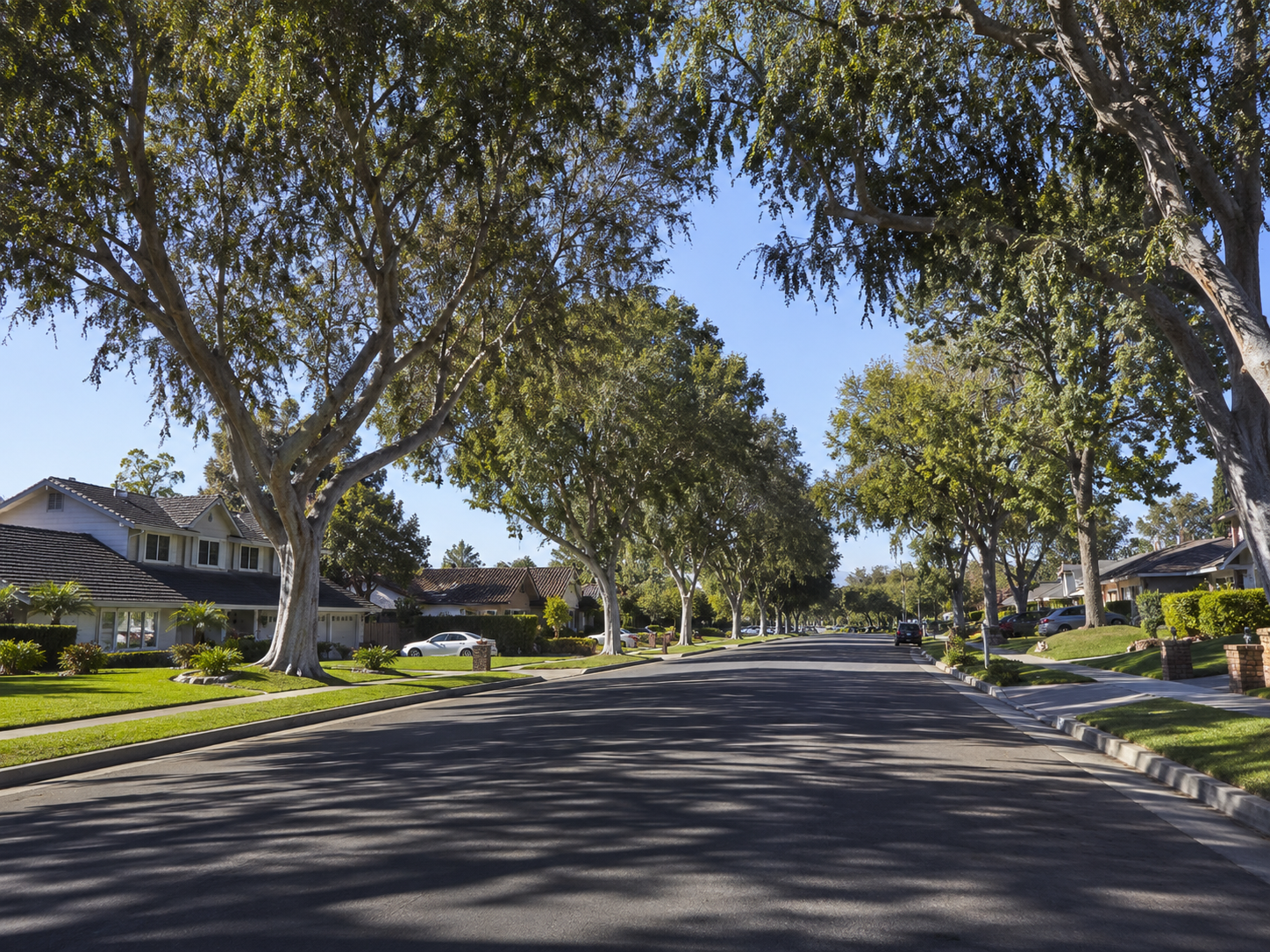 Granada Hills 91344's residential character — larger lots, mature tree canopy, and the northern Valley location that produces the specific buyer profile and DOM patterns that define this market. In a neighborhood where transactions average $875K–$1.3M and where long-term homeowners are making significant financial decisions, understanding what drives DOM is the foundation of a sound selling strategy.
What DOM tells a Granada Hills seller:
- → ✅ Days 1–7: The most valuable week of any listing. Granada Hills buyers who are pre-approved and actively searching respond to new listings within 24–72 hours of MLS activation. If your listing generates 8–15 showings in week one, you are correctly priced and well-presented — the market is engaging. If you generate 0–3 showings in week one, the price or presentation has filtered buyers away before they walk through the door.
- → ⚠️ Days 8–21: The signal window. Showings are continuing but no offer has materialized. This window tells you one of three things: the price is slightly above where buyers will offer, the presentation has a specific issue that showings are revealing but not resolving, or the home requires a condition correction that buyer feedback has identified. This is when showing feedback review is most important — not after day 45.
- → 🔴 Days 22–45: The leverage transfer begins. Granada Hills buyers who have watched a listing sit for 3+ weeks begin calculating their negotiating leverage. The home that was a competitive showing target at day 7 becomes a negotiating opportunity at day 30. Buyers who would have offered at asking in week one will offer 3–5% below asking at week four — not because the home changed but because the DOM accumulation changed their read of seller motivation.
- → 🚨 Days 45+: The DOM stigma window. Granada Hills's buyer pool — family buyers with genuine school timing requirements, move-up buyers from Northridge 91324/91325 and North Hills — actively notices listings with extended DOM. Buyer's agents brief their clients on the market history. The question "why has this been sitting for 60 days?" is the question that every subsequent showing carries, regardless of whether the answer is legitimate or not.
The Granada Hills-specific DOM context:
Granada Hills 91344 operates in a micro-market that has specific characteristics distinguishing it from broader SFV averages:
- → 🏫 Granada Hills Charter High School demand premium: The school's reputation as one of the SFV's strongest public high schools creates a specific buyer urgency pattern — families who need school enrollment established before fall activate in spring with genuine calendar motivation. This urgency compresses DOM in the March–May window more decisively than in markets without a comparable school quality driver.
- → 🏡 Larger-lot character: Granada Hills homes on larger-than-average SFV lots (8,000–14,000+ sq ft common throughout 91344) attract buyers who have specifically decided they want the northern Valley lot size premium — a more deliberate buyer who has narrowed their search to this specific product type. This buyer deliberateness moderates the impulsive offers that smaller-lot markets sometimes generate, producing slightly longer evaluation periods even in competitive conditions.
- → 🌡️ Northern Valley heat: Granada Hills summer temperatures — comparable to Chatsworth 91311 and Porter Ranch 91326 — are among the highest in the SFV, producing a more pronounced summer showing reduction than western Valley markets experience. This makes the summer DOM expansion more significant in 91344 than in Tarzana 91356 or Studio City 91604.
2. 🌸 Spring DOM — Granada Hills at Its Best for Sellers
The spring window in Granada Hills 91344 produces the year's strongest DOM performance — not because Granada Hills is uniquely exceptional in spring but because the specific forces that drive this market converge most powerfully between March and May.
What drives spring DOM compression in Granada Hills 91344:
- → 🏫 Granada Hills Charter enrollment urgency: Granada Hills Charter High School's enrollment calendar creates a specific buyer urgency that is the most powerful DOM driver in the 91344 market. Families who have been accepted to GHCHS for the following fall — or who are positioning to establish residency for applications — have a genuine calendar deadline that converts interest into offers faster than purely discretionary buyers. This school-calendar urgency is most concentrated in the March–May window when fall enrollment decisions are being made.
- → 👨👩👧 Move-up family activation: Granada Hills's primary buyer pool — families moving up from Northridge 91324, North Hills, Reseda 91335, and Canoga Park 91304 — activates in spring with the school-calendar urgency that defines family buyer behavior across the SFV. These buyers have been saving, have established their financing, and are ready to move when the right home appears.
- → 📉 Supply constraint relative to demand: Spring listing inventory in Granada Hills is meaningful but typically insufficient relative to the number of active pre-approved buyers — producing the supply-demand imbalance that generates first-week showings and multiple-offer situations on correctly priced listings.
Spring DOM by price tier in Granada Hills 91344:
- → 🏡 $800K–$1.0M (entry Granada Hills): DOM: 12–22 days for correctly priced, well-prepared homes. This is the tier with the most active buyer competition — move-up family buyers and first-time buyers at maximum qualification converge here. Multiple offers are common in this range in March and April.
- → 🏡 $1.0M–$1.15M (mid-market Granada Hills): DOM: 16–28 days. The core Granada Hills family buyer range — 4-bedroom homes on standard to above-standard lots. Still competitive in spring, with offer-to-close ratios running strong.
- → 🏡 $1.15M–$1.35M (premium Granada Hills): DOM: 22–38 days. The premium tier where the buyer pool thins but the Granada Hills Charter school quality premium is most pronounced — buyers specifically targeting the school at the premium end of the market have the most at stake and are most urgency-driven.
- → 🏡 $1.35M+ (top-of-market Granada Hills): DOM: 35–65 days even in spring. Granada Hills's comp ceiling limits the premium tier buyer pool — buyers at $1.35M+ in Granada Hills 91344 have Chatsworth 91311, Porter Ranch 91326, and entry Calabasas 91302/91372 as alternatives, moderating the urgency that lower price points produce.
The spring preparation timeline for Granada Hills sellers:
The sellers who achieve the shortest spring DOM and strongest spring close prices are those who started preparation no later than January:
- → 📅 December/January: Make the improvement scope decision. Contract with the painter, the flooring installer, the landscaping crew. Order materials.
- → 🔨 January–February: Execute the focused improvement scope — interior paint, flooring update, kitchen cosmetics, curb appeal. A 6–8 week scope completes in time for photography in late February/early March.
- → 📸 Late February/early March: Professional photography, 3D tour, pre-marketing social campaign, agent outreach network activation.
- → 🚀 Mid-March to early April: Active MLS launch with the showing queue that pre-marketing has built.
The Granada Hills seller who decides to list "this spring" in late March and schedules photography for the first week of April has missed the peak spring DOM compression that correctly timed preparation captures.
3. ☀️ Summer DOM — The Granada Hills Heat Factor
Summer in Granada Hills 91344 produces a more pronounced showing reduction than most comparable SFV markets experience — and sellers who don't account for this in their summer strategy consistently produce outcomes that frustrate them when measured against spring expectations that the summer market cannot replicate.
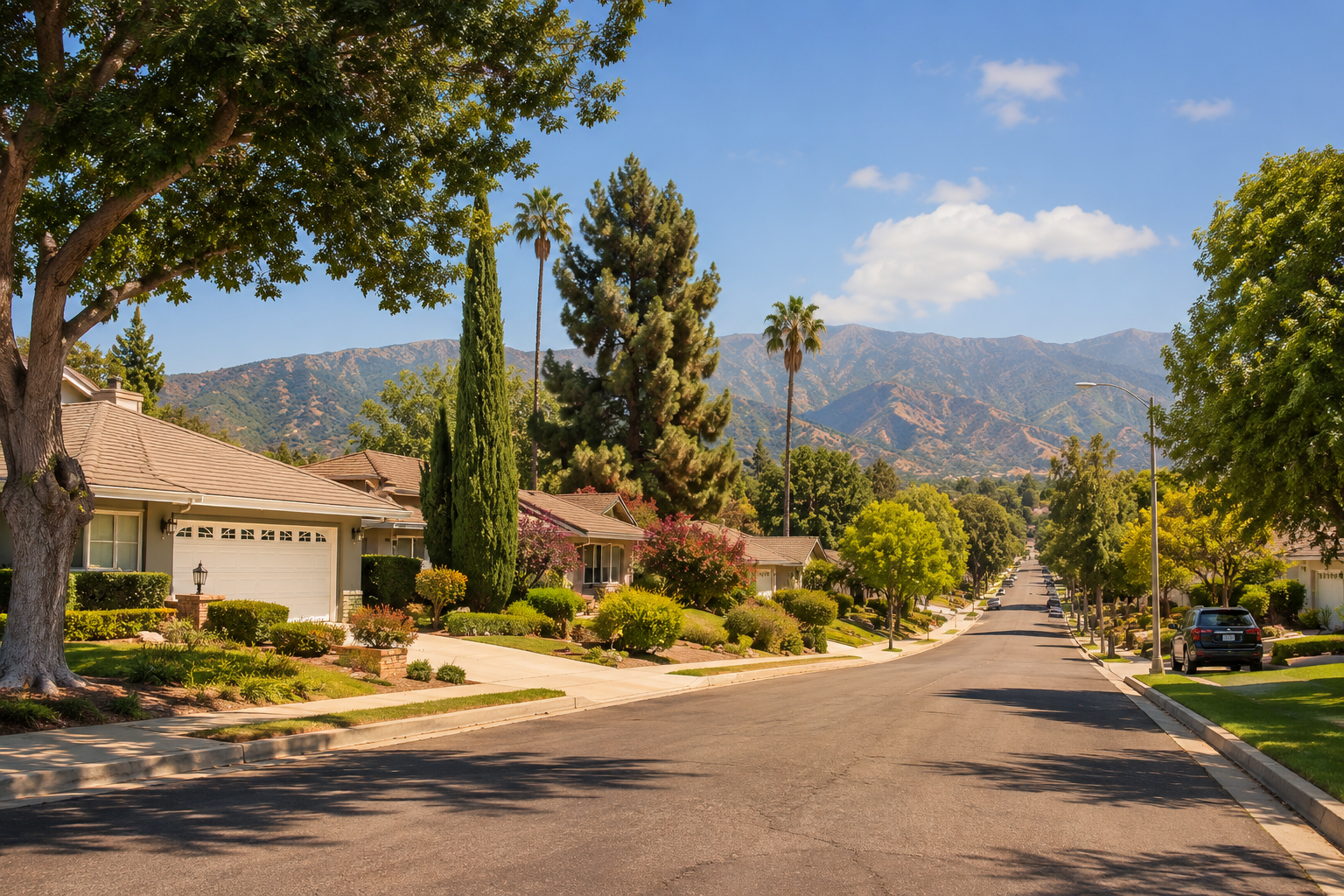 Granada Hills 91344 in summer — the northern Valley heat that regularly reaches 95–105°F in July and August produces a more severe showing reduction than western Valley markets experience, making summer DOM expansion a predictable seasonal reality that seller pricing and strategy must account for.
Why Granada Hills summer DOM is more severe than western Valley markets:
Granada Hills 91344 is among the hotter SFV sub-markets in summer — the northern Valley geography, the distance from marine influence, and the basin topography produce July and August temperatures that regularly reach 95–105°F. This heat:
- → 🌡️ Suppresses weekend showing activity: Granada Hills buyers who would schedule afternoon open house visits in April schedule them for morning only in August — or don't schedule at all for a specific weekend, deferring to a cooler one. Open house attendance drops significantly from spring levels.
- → 🎒 Competes with back-to-school distraction: August in Granada Hills is specifically affected by the Granada Hills Charter and LAUSD back-to-school preparation cycle — families whose attention would otherwise go to home searching are consumed with school orientation, supply shopping, and the schedule organization that the return from summer produces.
- → 💤 Resolves school urgency: The families who needed to establish school enrollment residency by fall have either done so or deferred. Their urgency — the force that most consistently converts Granada Hills showings into offers — is no longer present in the summer market.
Summer DOM reality and seller strategy:
For Granada Hills sellers who must list in summer — or who missed the spring window and are evaluating whether to launch in summer or wait for fall:
- → ✓ Price at midpoint, not top of range: The summer buyer pool is smaller and less urgency-driven. The top-of-range pricing that spring's buyer competition supported is not sustainable in summer. The midpoint of the defensible comp range is the correct summer launch price.
- → ✓ Morning-only showing windows: Schedule showings for 10 AM–1 PM maximum. Afternoon Granada Hills summer heat in unoccupied homes — HVAC running but not at full residential settings — is genuinely uncomfortable for buyers. Morning showings produce better buyer engagement than afternoon appointments that feel like they're competing with the heat.
- → ✓ Proactive seller-paid buydown marketing: Granada Hills summer buyers are making deliberate decisions rather than urgency-driven ones — they are doing their financial math more carefully. A seller-paid 2-1 buydown that reduces year-one effective rate by 2% addresses the payment calculation that deliberate buyers are running and produces more showing engagement than a listing without the buydown signal.
- → ⏰ Set realistic DOM expectations: 35–50 days for a correctly priced, well-prepared summer Granada Hills listing. Planning for this timeline and modeling the carrying cost accordingly is more valuable than hoping for spring outcomes in August conditions.
4. 🍂 Fall DOM — The Granada Hills Opportunity Window
Fall is the most consistently underutilized selling window in Granada Hills 91344 — and the one that produces the most genuine surprise for sellers who expected a soft market and discovered something meaningfully stronger.
What drives fall DOM performance in Granada Hills:
- → 🔁 Re-engaged family buyers: Granada Hills families who searched in spring and didn't find the right home have spent the summer recovering their energy and commitment. By October, they're back in the market — with more urgency than the average fall buyer because they've already been through one search cycle and are motivated to close before a second spring season passes them by.
- → 💰 Year-end financial event motivation: The Granada Hills buyer pool includes a meaningful share of households with year-end financial events — annual bonuses, exercised equity compensation, year-end retirement contribution timing — that produce capital availability in Q4. Buyers whose down payment funds clarify in October are active in October and November in a way they weren't in summer.
- → 📉 Thinner competing inventory: The "spring is the right time to list" conventional wisdom keeps most Granada Hills sellers off the fall market — producing inventory levels that are meaningfully below spring, giving correctly priced fall listings a competitive showing advantage relative to the spring season's crowded inventory environment.
- → 🌡️ Temperature relief: Granada Hills October temperatures — 70–82°F afternoons — are genuinely pleasant for showings and open houses. Buyers who avoided the August heat return to comfortable showing conditions. The neighborhood shows well in fall light.
- → 🏫 GHCHS second-cycle awareness: Some Granada Hills Charter enrollment candidates begin establishing residency in fall for the following year's application cycle — producing a secondary school-motivated buyer pulse in October and November that is smaller than the spring pulse but meaningful in a market where school quality is the primary demand driver.
Fall DOM by price tier:
- → 🏡 $800K–$1.0M: DOM: 18–32 days — approaching spring conditions for correctly priced fall listings with strong preparation
- → 🏡 $1.0M–$1.15M: DOM: 22–40 days — active with motivated buyers; multiple offers less common than spring but possible on the best-prepared listings
- → 🏡 $1.15M–$1.35M: DOM: 30–52 days — the fall window is where premium Granada Hills sellers often find their best negotiating-position buyers — motivated, financially ready, and aware that waiting until spring means competing in a more crowded environment
The fall timing constraint:
The Granada Hills fall window closes sharply. Once November 15 passes, Thanksgiving preparation, holiday mental shutdown, and year-end travel logistics begin suppressing buyer activity quickly. A Granada Hills listing that goes active in early October has 5–6 weeks of genuine fall market momentum. A listing that goes active on November 1 has 2–3 weeks before the holiday compression begins. Fall sellers need to launch in the first week of October with preparation complete — not October 20.
5. 🔑 Using DOM Intelligence to Sell Faster in Granada Hills
The DOM data above is useful as market context. What converts it from context to action is understanding how Granada Hills sellers can apply it to the specific decisions that determine their own DOM outcome — pricing, preparation scope, launch timing, and response to buyer feedback.
 The pre-launch Granada Hills seller strategy conversation — where the comp analysis, the improvement scope, the launch timing, and the pricing discipline come together into the plan that determines DOM outcome. Sellers who complete this work before launch consistently outperform those who make these decisions under the pressure of accumulated DOM.
The Granada Hills DOM acceleration checklist:
✅ Complete the sub-neighborhood comp analysis:
Granada Hills 91344 contains sub-neighborhoods with meaningfully different comp ceilings — the streets closest to the 118 freeway have different pricing than the elevated streets approaching Porter Ranch 91326, and the GHCHS-catchment streets in the central 91344 residential area command premiums over equivalent homes outside the catchment.
Pull closed comps within 0.4 miles, same bedroom count, similar condition, last 90 days. This — not the six-month average, not the zip code average, not the highest sale you've heard of — is your pricing anchor.
✅ Get a pre-listing inspection:
Granada Hills homes built in the 1960s–1970s — a significant share of 91344 residential stock — have predictable deferred maintenance: HVAC at end of life, roof replacement approaching, electrical panel upgrades, plumbing. The seller who discovers these items at day 12 of the buyer's inspection contingency is negotiating from weakness. The seller who ordered a pre-listing inspection and disclosed everything proactively — or addressed the most significant items before listing — is in control.
Pre-listing inspection cost in Granada Hills: $400–$600. Value: eliminates the surprise transaction failures and buyer leverage moments that extended DOM produces.
✅ Execute the focused improvement scope:
The Granada Hills improvement scope that produces maximum DOM acceleration without exceeding the comp ceiling:
- → 🎨 Interior repaint (professional, neutral palette): $8,500–$13,000
- → 🏠 Flooring update (LVP or engineered hardwood throughout main floor): $12,000–$20,000
- → 🍳 Kitchen cosmetics (cabinet repaint, hardware, faucet, backsplash): $8,000–$14,000
- → 🚿 Primary bath refresh (vanity, fixtures, cosmetic update): $7,000–$12,000
- → 🌿 Curb appeal (front door repaint, drought-tolerant landscaping, pressure-wash, exterior paint front elevation): $7,000–$13,000
- → Total focused scope: $42,500–$72,000
This scope is calibrated to Granada Hills's $875K–$1.3M comp ceiling — not the Northridge $700K–$1.0M ceiling that requires smaller scopes, and not the Studio City or Encino premium that justifies larger ones.
✅ Launch at the correct price on the correct date:
The combination of correct sub-neighborhood pricing and well-timed launch (mid-March to early April for spring; first week of October for fall) is the most consistent predictor of short DOM in Granada Hills. Neither factor alone is sufficient — a correctly priced home launched in August will accumulate unnecessary DOM; a spring launch at 8% above defensible comp range will accumulate DOM regardless of timing.
✅ Review showing feedback at day 10, not day 30:
Granada Hills sellers who review their showing feedback at day 10 and make adjustments at day 14 preserve their listing's momentum and market position. Sellers who wait until day 35 to acknowledge what showing feedback has been communicating since day 8 have lost two weeks of carrying costs and three weeks of buyer negotiating leverage that early adjustment would have prevented.
🚫 What NOT to Overdo
Don't use the Granada Hills Charter proximity as a substitute for correct pricing. The GHCHS school quality demand premium is real — addresses within the charter's attendance area command a genuine premium over comparable homes outside it. But this premium is already reflected in the comp ceiling that your specific address supports. A seller who believes the GHCHS premium justifies pricing above the renovated comp ceiling for their specific address will not recover that premium through the school quality argument — they will accumulate DOM as buyers calculate that the premium is already absorbed in the market pricing and that the over-asking price requires justification on other grounds.
Don't compare your Granada Hills DOM to spring listings if you're launching in summer. The most consistent Granada Hills seller expectation management failure is comparing summer DOM performance to spring DOM averages — expecting 15-day results in July because April produced them. The spring and summer Granada Hills markets are genuinely different environments. A 38-day summer DOM on a correctly priced, well-prepared listing is excellent summer performance. A seller who expected 15 days based on spring averages and got 38 has not failed — they have encountered seasonal reality that their pricing strategy should have accounted for.
Don't mistake a price reduction for a DOM reset. A Granada Hills price reduction does not erase accumulated DOM from buyer perception. The buyer's agent who sees a listing has been on market 52 days with a recent price reduction does not interpret this as "fresh listing, new opportunity" — they interpret it as "motivated seller with leverage available." DOM accumulation follows a listing regardless of price reductions; the reset that produces genuine fresh-start buyer engagement requires a listing withdrawal and meaningful gap (typically 30 days minimum) before relisting.
Don't ignore the Porter Ranch 91326 and Chatsworth 91311 competition at Granada Hills's premium tier. At $1.25M–$1.5M, Granada Hills 91344 sellers are not only competing with other 91344 listings — they are competing with premium Chatsworth 91311 and Porter Ranch 91326 inventory that buyers at this price point evaluate simultaneously. Sellers who price premium Granada Hills listings above the competitive set without understanding that buyers are cross-shopping adjacent northern Valley markets will generate DOM while buyers choose the Chatsworth or Porter Ranch alternative that provides better value at the same price point.
🏠 Real-World Scenario — Granada Hills 91344
A seller in Granada Hills 91344 had been on market for 38 days — listed at $1.19M in early April. Their home was a 4-bedroom on a 9,800 sq ft lot, comprehensively renovated in 2020. Renovated comp ceiling for their specific sub-neighborhood: $1.13M–$1.19M. They had launched at the absolute top of the defensible range.
Eight showings in the first two weeks. Zero offers. Five of the eight buyers' agents had sent feedback through the showing service: "Price feels high for the street." Three had not responded.
At day 38, the seller asked us to evaluate. The showing feedback from day 8 had been consistent — the market had been communicating since week two that the $1.19M price exceeded what the specific sub-neighborhood's buyers would offer. The $1.17M price — $20,000 below their launch — was the correct adjustment.
More importantly: the spring DOM window they had been in was closing. By late April, spring buyer urgency was beginning to resolve. The price reduction that should have happened at day 14 was happening at day 38 — leaving them with 3–4 weeks of reduced spring market momentum rather than 8–10 weeks of peak spring activity.
We relaunched at $1.165M. Under contract day 12 post-relaunch. Final close: $1.162M. DOM including initial launch: 52 days. DOM if they had priced at $1.165M on day one: likely 14–18 days. The 34-day difference in DOM cost approximately $10,800 in carrying costs and produced a buyer who offered at a price $3,000 lower than they would have offered in the first-week competition of a correctly priced launch. Total cost of the overpricing decision: approximately $13,800 in combined carrying costs and lower close price.
🏠 Real-World Scenario — Granada Hills 91344
A different Granada Hills 91344 seller had a 3-bedroom home on a 8,500 sq ft lot in original 1970s condition — dated kitchen, original bathrooms, original flooring. As-is value approximately $875,000. They were targeting a late October fall launch.
We ran the preparation timeline analysis. A focused improvement scope — interior paint, LVP flooring, kitchen cosmetics, primary bath refresh, curb appeal — at a well-paced execution produced a photography-ready finish in approximately 7 weeks. Starting in the first week of September produced an October 20 photography date and an October 27 MLS launch — entering the fall window at a point where only 3–4 weeks of genuine fall market activity remained before the Thanksgiving compression.
We recommended starting in the third week of August instead — producing a October 6 photography date and an October 13 launch. The three additional weeks of fall market exposure — when Granada Hills's October buyer re-engagement is at its peak — was worth the slightly compressed August preparation timeline.
They launched October 13 at $1.01M post-improvement. First week: 9 showings. Offer at day 11. Accepted at $1.018M. The seller who started preparation one week earlier than they planned captured the first-week fall momentum rather than the third-week fall wind-down. The October 13 launch produced a $1.018M close. The October 27 launch would have produced approximately 28–35 days of DOM and a likely close at $995,000–$1.005,000 as the Thanksgiving compression began affecting buyer urgency.
❓ FAQ
What is the average days on market in Granada Hills in 2026? Granada Hills 91344 DOM varies significantly by season and price tier. Annual averages are less useful than seasonal tier-specific data: ✓ Spring peak (March–May), correctly priced $800K–$1.15M: 15–28 days. ✓ Summer (June–August): 28–48 days. ✓ Fall (October–November): 22–40 days. ✓ Winter (December–January): 45–75+ days. ✓ Overpriced listings any season: 55–90+ days. Annual blended average across all conditions: approximately 32–42 days — a number that is useful as a general benchmark and misleading as a planning tool without the seasonal and price tier context.
Why does Granada Hills have shorter DOM in spring than in summer? The spring DOM compression in Granada Hills 91344 is driven primarily by Granada Hills Charter High School enrollment urgency — families who need school residency established before fall have a genuine calendar deadline that converts showing interest into offers faster than non-school-calendar buyers. This urgency is most concentrated in March through May, producing first-week offer dynamics that the summer and fall markets don't replicate consistently. The secondary driver is the broader SFV spring buyer activation — move-up families, first-time buyers, and pre-approved buyers who have been waiting for the right home all converge in spring inventory.
How does Granada Hills Charter High School affect home sale timelines? Granada Hills Charter High School is the primary demand driver that produces Granada Hills's spring DOM compression. Families who have children applying to or enrolled in GHCHS — or who are establishing residency to qualify — have genuine calendar urgency tied to the school's enrollment cycle. This produces: ✓ Faster offer generation in spring from school-calendar-motivated buyers. ✓ A secondary fall pulse from families establishing residency for the following year's application cycle. ✓ A specific GHCHS catchment address premium that affects both pricing and buyer competition levels relative to comparable homes outside the catchment. ✓ Longer DOM for premium Granada Hills listings in summer when school urgency has resolved.
What price range sells fastest in Granada Hills? The $850K–$1.1M price band consistently produces the shortest DOM in Granada Hills 91344 across all seasons — this is where the deepest buyer pool (move-up families from Northridge 91324, first-time buyers at maximum qualification, GHCHS school-urgency buyers) converges with sufficient inventory to produce competitive market dynamics. Above $1.2M, Granada Hills DOM extends meaningfully as the buyer pool thins. Below $800K, inventory is limited and investor competition adds a different dynamic. The $850K–$1.1M mid-market is the Granada Hills sweet spot for sellers seeking fastest absorption.
How do I reduce days on market when selling my Granada Hills home? The four most consistently effective DOM reduction actions for Granada Hills sellers: ✓ Price at the correct sub-neighborhood comp ceiling from launch day — not 5–8% above it. Every day of pricing discipline avoided at launch costs more in DOM accumulation and leverage transfer than the price negotiation that correct pricing from day one prevents. ✓ Launch at the right seasonal window — spring (March–May) for maximum buyer urgency; first week of October for fall re-engagement. ✓ Execute the focused improvement scope — paint, flooring, kitchen cosmetics, and curb appeal consistently produce 25–40% more first-week showing requests than comparable listings without the preparation. ✓ Get a pre-listing inspection and disclose proactively — inspection-period transaction failures are a primary source of days-on-market re-listing and the accumulation of stigma DOM that makes the second listing period harder than the first.
Should I wait for spring to list my Granada Hills home? If you have timeline flexibility, spring (March–May) produces the strongest seller conditions in Granada Hills 91344 — the shortest DOM, the strongest close-to-list ratios, and the most frequent multiple-offer dynamics. If you're currently in summer and weighing summer versus fall versus spring: ✓ Don't list in summer unless timeline requires it — wait for the October fall window. ✓ The October fall window is meaningfully better than summer and approaching spring conditions for correctly priced, well-prepared listings. ✓ Spring 2027 is worth waiting for if your home needs improvement scope and the improvement timeline pushes you to a November or later launch anyway. A February improvement start produces an April spring launch. ✓ Never let the "I should have listed in spring" thought push you into a summer launch without the seasonal adjustment in pricing and expectations.
Does an overpriced Granada Hills home eventually sell? Yes — but the journey to that close consistently costs sellers significantly more than correct pricing from launch would have. The overpriced Granada Hills home accumulates: ✓ Carrying costs at $4,500–$8,000/month during the extended DOM period. ✓ Buyer leverage that grows with each passing week of market exposure. ✓ The listing stigma that every buyer's agent communicates to their clients — "why has this been sitting?" ✓ A final close price that is typically 2–5% below where a correctly priced launch would have closed. The net cost of overpricing a Granada Hills home by 6–8% and then correcting to the right price over 60–90 days: typically $15,000–$35,000 in combined carrying costs and lower close price relative to the correctly priced alternative.
🎯 Bottom Line
The average days on market in Granada Hills 91344 is not a single number — it is a range of outcomes that is largely determined by three seller decisions that happen before the home goes on market: the price (correct sub-neighborhood comp ceiling versus aspirational), the preparation (focused improvement scope executed properly versus not), and the timing (spring peak or fall re-engagement window versus summer or winter).
The Granada Hills Charter High School demand premium is the neighborhood's most powerful DOM compression tool — and it works most powerfully when sellers launch in the spring window that the school's enrollment calendar activates. The sellers who understand this and prepare accordingly produce 12–22 day DOM outcomes. The sellers who launch overpriced in August expecting spring results produce 55–75 day DOM outcomes and wonder what went wrong.
At Parkway Estate Properties, every Granada Hills seller conversation begins with the comp analysis, the sub-neighborhood DOM data, and the preparation timeline that translates market intelligence into a specific action plan. Roman's renovation experience across the northern and central Valley means every improvement recommendation is grounded in what Granada Hills's buyer pool actually rewards. And Liana's seller strategy experience across Granada Hills 91344, Northridge 91324/91325, Chatsworth 91311, Porter Ranch 91326, and West Hills 91307 means every pricing decision is informed by the cross-market competitive context that Granada Hills sellers need to understand before they set their list price.
📩 Want to Know What Days on Market You Should Expect for Your Granada Hills Home?
We'll run the sub-neighborhood comp analysis for your specific address, give you the seasonal DOM projection for your likely launch window, and identify the preparation steps that will put you at the short end of that range rather than the long end.
Contact Liana Shersher at Parkway Estate Properties: 📧 liana@parkwayestate.com · 📞 (818) 208-5881 · 🌐 parkwayestate.com 15021 Ventura Blvd., Ste. 510, Sherman Oaks, CA 91403
About the Authors
Liana Shersher Liana Shersher is a licensed real estate agent with Parkway Estate Properties Inc. and an Accredited Buyer's Representative (ABR) serving the San Fernando Valley — with a focus on Sherman Oaks, Encino, Tarzana, Woodland Hills, and Northridge (DRE# 02164224). Liana guides first-time homebuyers through every step of the purchase, from the first showing to the keys in hand, and represents move-up and repeat buyers across the Valley. For sellers, she builds the pricing and marketing strategy that positions a home to sell for top dollar, fast. Buyers and sellers work with Liana for clear communication, sharp local knowledge, and an agent who treats their goals like her own.
Roman Shersher Roman Shersher is the broker-owner of Parkway Estate Properties Inc. and a real estate investor with 18 years of experience in the San Fernando Valley (DRE# 01855095). Roman has personally led or co-led renovations on dozens of properties across the Valley, including recent projects in Northridge (91324) and Woodland Hills (91364). That hands-on renovation and investment experience shapes every pricing conversation and days-on-market strategy at Parkway — sellers get a realistic read on what improvements actually return at resale, and buyers get an expert eye on a home's true condition and upside.
Parkway Estate Properties, Inc. 15021 Ventura Blvd., Ste. 510, Sherman Oaks, CA 91403 · (818) 208-5881 · parkwayestate.com · Broker License #: 01873092 Equal Housing Opportunity. Information herein is general and not legal, tax, or financial advice. Consult qualified professionals for your specific situation.
Categories
Recent Posts











Broker | Realtor ® License ID: 01873092
+1(818) 208-5881 | info@parkwayestate.com