
Buying a Home in Woodland Hills as an Investor

Woodland Hills is not the first neighborhood most San Fernando Valley investors name when they think about residential investment — that conversation usually starts with Reseda 91335, Northridge 91324, or Canoga Park 91304, where entry prices are lower and gross yields are higher on paper. But the investors who have been buying in Woodland Hills 91364 and 91367 for the past decade have built equity positions that the higher-yield markets haven't consistently matched — because Woodland Hills delivers something that raw yield calculations miss: durable appreciation driven by structural demand, constrained supply, and a tenant and buyer pool quality that holds up through market cycles.
This article is for the investor who is evaluating Woodland Hills 91364 and 91367 seriously — not as a yield-chasing play, but as an equity-building, income-producing asset with a specific risk and return profile that deserves a precise analysis rather than a gut feel.
1. 📊 The Woodland Hills Investment Math — What the Numbers Actually Look Like
Every Woodland Hills investment decision starts with an honest look at the income and expense stack — not the rosy version, not the worst-case version, but the realistic version that accounts for vacancy, maintenance, management, and the full carrying cost of ownership at current price points and rates.
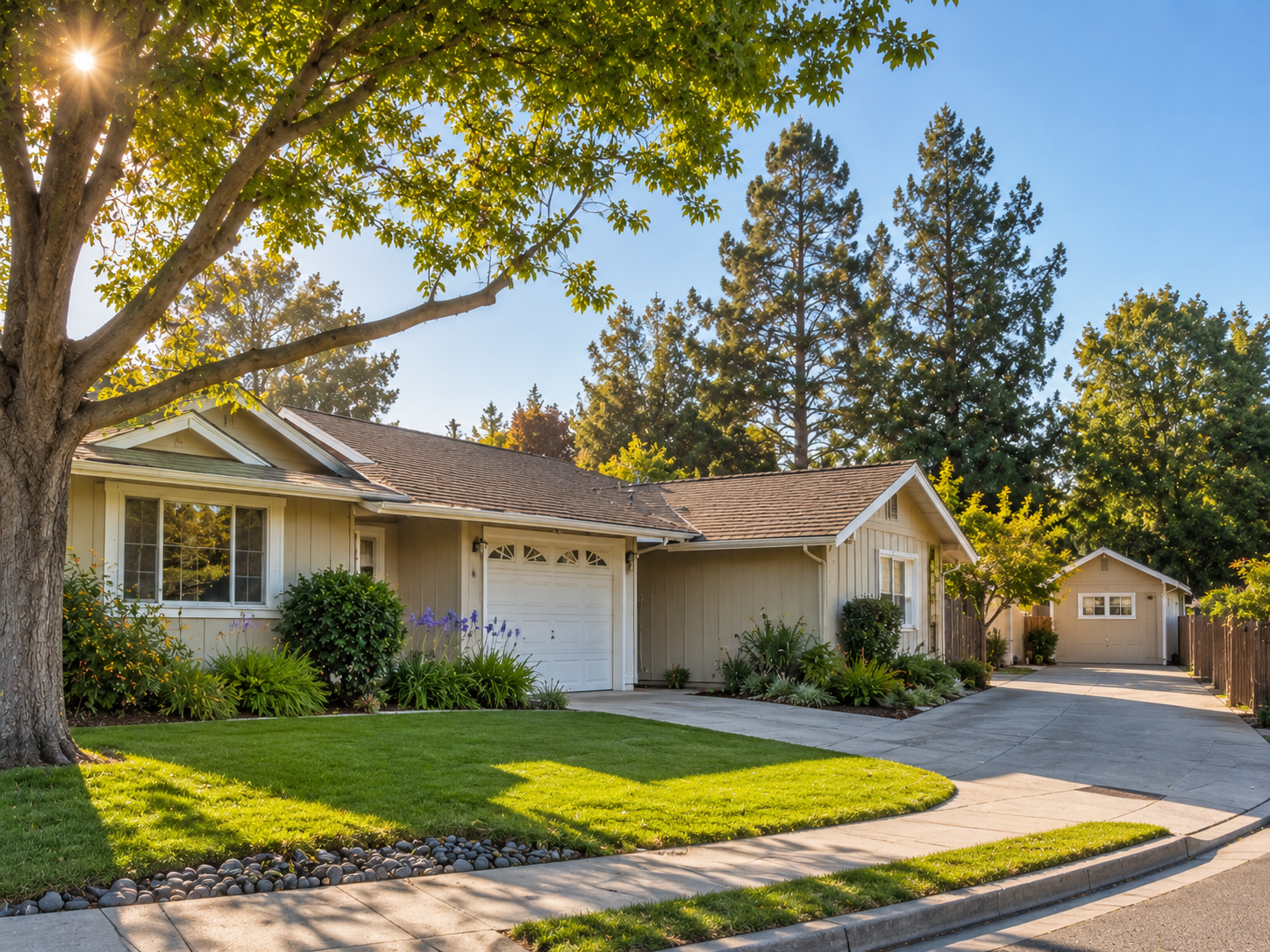 The Woodland Hills 91364 and 91367 investment math requires an honest look at the full income and expense stack — including vacancy, maintenance, and management — before the net operating income and cash-on-cash return picture becomes clear.
Sample investment analysis — $1.05M single-family home, Woodland Hills 91367:
Assumptions: 25% down ($262,500), 7.25% investor rate (typically 0.25–0.5% above owner-occupant rate), 30-year fixed, monthly rent $3,800
Income:
- → 💰 Gross monthly rent: $3,800
- → 📉 Vacancy allowance (5%): -$190
- → 💰 Effective gross income: $3,610/month
Expenses:
- → 🏦 Monthly P&I (7.25%, $787,500 loan): $5,374
- → 🏛️ Property taxes (1.25%): $1,094
- → 🏠 Homeowner's insurance: $175
- → 🔧 Maintenance reserve (1% annually): $875
- → 👤 Property management (8% of collected rent): $289
- → 💡 Landlord-paid utilities (if any): $0 (tenant pays all in standard SFR lease)
- → 📋 Total monthly expenses: $7,807
Monthly cash flow: $3,610 - $7,807 = -$4,197/month negative cash flow
Cash-on-cash return (before appreciation): Negative — this property does not produce positive cash flow at 25% down and current rates.
The appreciation component: At a conservative 4% annual appreciation on $1.05M, year-one equity gain: $42,000. Year-five cumulative equity gain (compound): approximately $228,000. Total five-year return including appreciation, equity paydown, and cash flow cost: approximately $228,000 + $39,000 (equity paydown) - $251,000 (negative cash flow over 5 years) = approximately $16,000 net positive — a modest positive return over 5 years, heavily dependent on appreciation materializing.
The critical takeaway for Woodland Hills investors: This is not a positive cash flow market at standard investment financing. Woodland Hills 91364/91367 is an appreciation play — investors who buy correctly and hold 7–10+ years consistently build strong equity positions. Investors who need immediate positive monthly cash flow without substantial down payment capital (35%+) will be disappointed.
How to improve the Woodland Hills investment math:
- → ✅ Increase down payment to 35–40%: Reduces loan balance and monthly debt service meaningfully. At 35% down on $1.05M ($367,500 down), monthly P&I drops to approximately $4,634 — narrowing the monthly shortfall to approximately $3,457. Still negative but more manageable as a carry cost against appreciation upside.
- → ✅ Add ADU income: An ADU generating $2,400/month in additional rent reduces the net monthly shortfall to approximately $1,797 — a carry cost that most investors with significant equity find acceptable against the appreciation trajectory.
- → ✅ Target the lower end of the Woodland Hills price range: $850K–$950K purchases in Woodland Hills 91367 produce better rent-to-price ratios than $1.1M–$1.4M purchases in 91364 south of Ventura.
- → ✅ Buy below market value: Under-renovated properties purchased at a discount to comp value — the BRRRR strategy discussed in Section 3 — generate better returns than market-price purchases.
2. 🏘️ The ADU Opportunity — Woodland Hills' Strongest Cash Flow Play
The ADU (Accessory Dwelling Unit) opportunity in Woodland Hills 91364 and 91367 is the most significant cash flow improvement available in the neighborhood — and the one that most meaningfully changes the investment math for buyers who approach it correctly.
Why ADUs matter specifically in Woodland Hills:
California's ADU reform legislation — particularly AB 68, SB 13, and subsequent amendments — has dramatically simplified ADU permitting across Los Angeles, and Woodland Hills 91364/91367's lot profile is particularly well-suited to ADU development. The typical Woodland Hills single-family lot of 7,500–14,000 sq ft provides space for detached ADU construction that many denser SFV markets can't support. And Woodland Hills' rental market — driven by entertainment industry workers, healthcare professionals, and families priced out of ownership — produces consistent ADU tenants at strong rent levels.
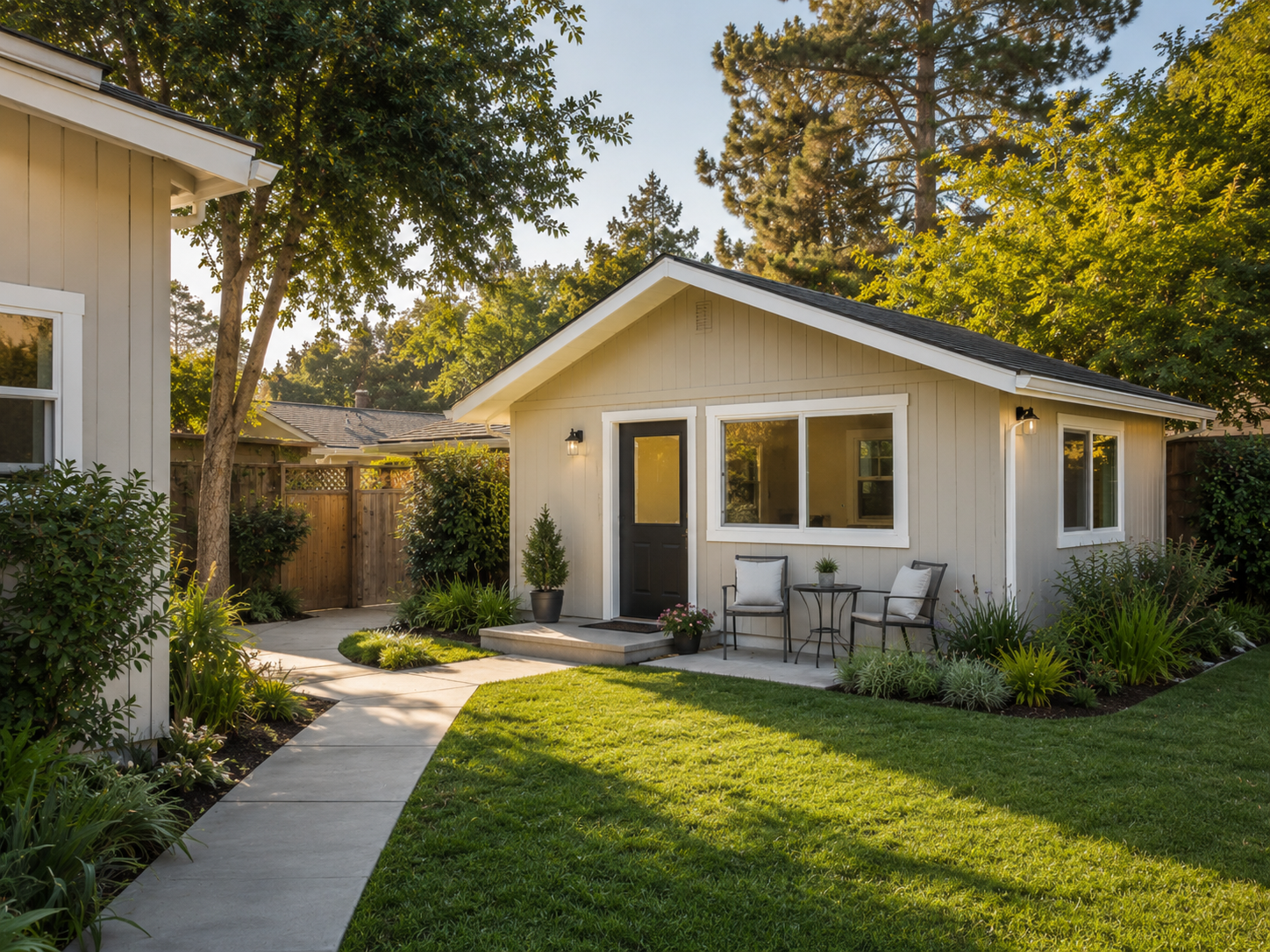 ADU-equipped properties in Woodland Hills 91364 and 91367 represent the strongest cash flow investment available in the neighborhood — ADU rents of $2,200–$3,000/month can transform a negative-cash-flow single-family investment into a near-neutral or positive carry.
ADU rent ranges in Woodland Hills 91364/91367 (2026):
- → 🏠 Studio ADU (400–500 sq ft): $1,800–$2,200/month
- → 🏠 1-bedroom ADU (550–700 sq ft): $2,200–$2,600/month
- → 🏠 2-bedroom ADU (800–1,000 sq ft): $2,600–$3,200/month
- → 🏠 Garage conversion ADU (550–650 sq ft): $1,900–$2,400/month
The investment impact of ADU income:
Adding $2,400/month in ADU rent to the $1.05M Woodland Hills 91367 investment analysis from Section 1:
- → Monthly gross income: $3,800 (main house) + $2,400 (ADU) = $6,200
- → Vacancy allowance (5%): -$310
- → Effective gross income: $5,890
- → Total monthly expenses (unchanged): $7,807
- → Net monthly shortfall: -$1,917/month — a significantly more manageable carry cost
- → At 35% down (reduced P&I), the net shortfall narrows further to approximately -$1,177/month
An investor carrying $1,177/month against an appreciating Woodland Hills asset with a 4–6% annual appreciation trajectory is in a fundamentally different risk/return position than the $4,197/month carry of the single-family-only scenario.
Three ADU entry strategies in Woodland Hills:
- → 🔨 Buy with existing ADU: The cleanest investment entry — existing permitted ADU is already producing income. Expect to pay a premium of $100,000–$180,000 over comparable non-ADU properties depending on ADU quality and income. Verify permits before purchase — unpermitted ADUs carry liability and cannot legally command market-rate rents without lender and insurance complications.
- → 🏗️ Buy ADU-ready, build post-close: Purchase a Woodland Hills 91364/91367 property with clear ADU development potential — lot size over 7,500 sq ft, no setback encroachments, compatible zoning — and build the ADU in the 6–12 months post-purchase. ADU construction costs in the Woodland Hills area run $180,000–$320,000 for a permitted detached structure depending on size and finish level. The investment math must include this construction cost in the total basis.
- → ✨ Buy under-renovated with ADU potential, renovate and add: The BRRRR approach — buy below market value, renovate the main house to rental-ready standard, add a permitted ADU, and refinance based on the improved appraised value. Higher execution complexity, highest potential return.
3. 🔄 The BRRRR Strategy in Woodland Hills — Buy, Renovate, Rent, Refinance, Repeat
The BRRRR strategy (Buy, Renovate, Rent, Refinance, Repeat) is the investment framework that Roman's renovation experience across the San Fernando Valley most directly informs — and it is one of the more viable investor approaches in Woodland Hills 91364/91367 for investors who have renovation capability and patience.
How BRRRR works in the Woodland Hills context:
- → 🏠 Buy: Acquire an under-renovated Woodland Hills 91364/91367 property at a discount to its renovated market value. Target: homes with dated kitchens and bathrooms, deferred maintenance, or estate/probate sales where sellers are motivated by timeline rather than price maximization. Typical discount target: 8–15% below renovated comp value.
- → 🔨 Renovate: Execute a focused renovation — kitchen refresh, primary bath update, paint, flooring, curb appeal — that brings the property to market-competitive rental condition without over-improving for the rental market. Target renovation budget: $55,000–$90,000 for a focused scope. Roman's renovation cost and contractor knowledge across the SFV is directly applicable here.
- → 🏘️ Rent: Place a qualified tenant at market rent. Woodland Hills single-family rental market in 91364/91367 is active and relatively low-vacancy — SFR rentals in move-in-ready condition lease in 15–30 days in most market conditions.
- → 🏦 Refinance: After the renovation is complete and the property is stabilized with a tenant, refinance based on the improved appraised value. If the purchase price + renovation cost is materially below the post-renovation appraised value, the refinance recovers a meaningful portion of the invested capital.
- → 🔁 Repeat: Deploy recovered capital into the next acquisition.
BRRRR example in Woodland Hills 91367:
- → Purchase price (under-renovated): $870,000 (10% below $967,000 renovated comp)
- → Renovation cost: $72,000
- → Total basis: $942,000
- → Post-renovation appraised value: $1,020,000
- → Cash-out refinance at 75% LTV: $765,000
- → Original down payment (25%): $217,500 + renovation costs $72,000 = $289,500 total invested
- → Capital recovered at refinance: $765,000 - $652,500 (original loan) = $112,500 returned
- → Net capital remaining in deal: $289,500 - $112,500 = $177,000
- → Equity at refinance: $1,020,000 - $765,000 = $255,000
- → Return on remaining invested capital: $255,000 / $177,000 = 144% equity multiple on remaining capital
The BRRRR math in Woodland Hills works best when the purchase discount and renovation return combine to create a post-renovation value meaningfully above the total basis. This requires disciplined buying — overpaying for the unrenovated property eliminates the strategy's return advantage.
4. 📍 Best Investment Sub-Neighborhoods in Woodland Hills — Where the Numbers Work Best
Not every part of Woodland Hills 91364 and 91367 offers the same investment profile. Here's how the investment math breaks down by sub-neighborhood in 2026:
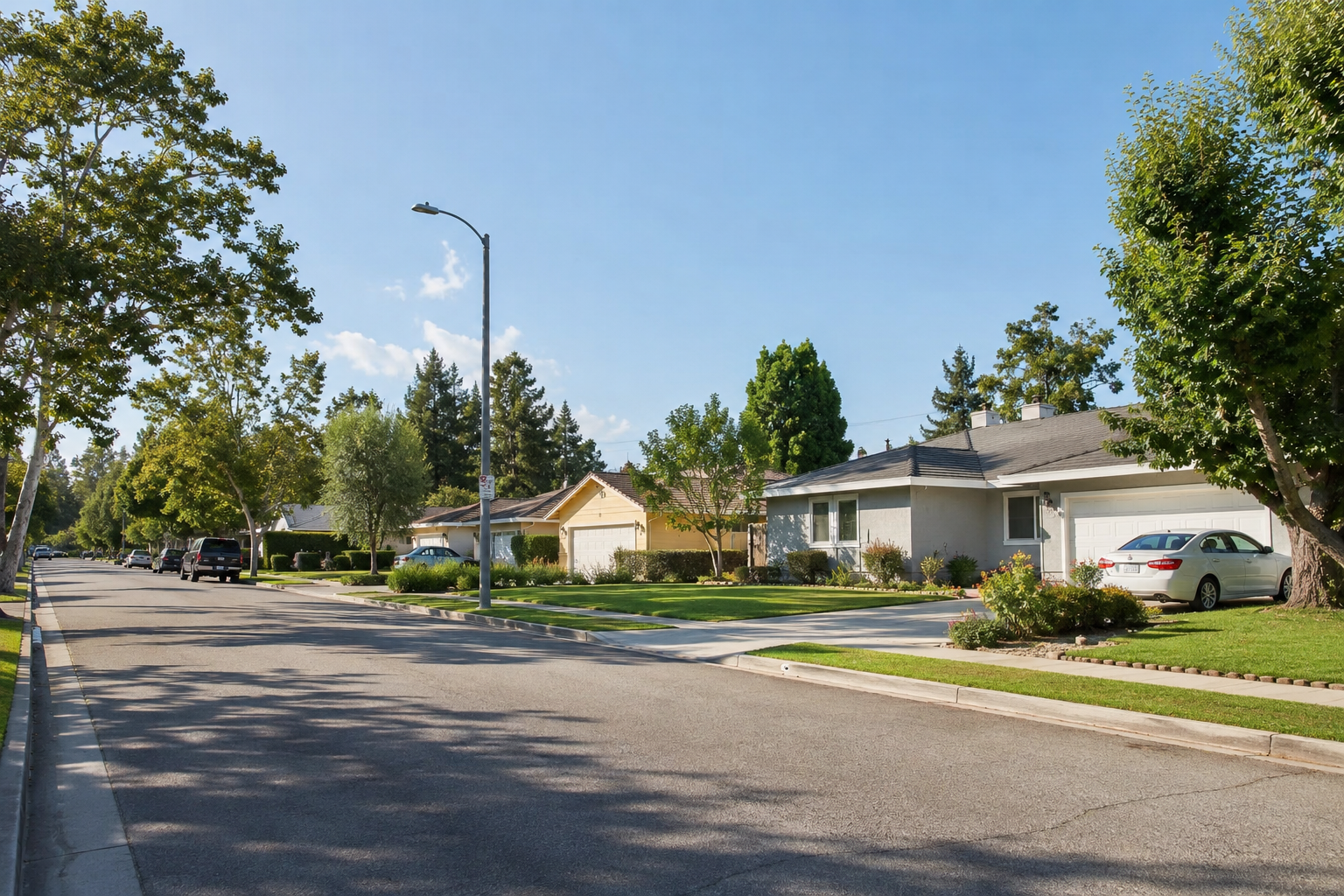 Woodland Hills 91367 and the north-of-Ventura pockets of 91364 offer the most accessible investment entry points in the neighborhood — better rent-to-price ratios than the premium south-of-Ventura sub-neighborhoods and more room for value-add renovation upside.
Woodland Hills 91367 — North-of-Ventura streets ($850K–$1.1M):
- → 📊 Investment profile: Best rent-to-price ratios in Woodland Hills — entry prices are lower, rent levels are comparable to south-of-Ventura at similar home sizes, producing better gross yields
- → 🏠 Typical rent range (3BR SFR): $3,400–$3,900/month
- → 📈 Appreciation trajectory: Steady but slightly below the Walnut Acres and south-of-Ventura premium sub-neighborhoods — less speculative upside but more accessible entry
- → 🔨 BRRRR suitability: High — most under-renovated inventory in Woodland Hills is concentrated here; investor-grade purchase discounts most available in this sub-neighborhood
- → 🏘️ ADU suitability: Strong — lot sizes in the 7,500–10,000 sq ft range support detached ADU construction on most parcels
Woodland Hills 91364 — Mid-neighborhood streets, north of Ventura ($950K–$1.3M):
- → 📊 Investment profile: Moderate rent-to-price ratios — better than the Walnut Acres premium pocket, weaker than 91367. Strong appreciation track record.
- → 🏠 Typical rent range (3BR SFR): $3,700–$4,300/month
- → 📈 Appreciation trajectory: Consistent 4–6% annually over the prior 5-year average — the core of the Woodland Hills appreciation story
- → 🔨 BRRRR suitability: Moderate — less under-renovated inventory than 91367 but still available; renovation returns are strong when purchase discount is achieved
- → 🏘️ ADU suitability: Strong — standard Woodland Hills lot sizes support ADU development throughout this sub-neighborhood
Woodland Hills 91364 — Walnut Acres pocket and south-of-Ventura premium ($1.3M–$1.8M+):
- → 📊 Investment profile: Lowest rent-to-price ratios in Woodland Hills — premium purchase prices are not matched by proportionally higher rents. Best appreciation upside but worst cash flow profile.
- → 🏠 Typical rent range (4BR SFR): $4,500–$5,500/month — strong absolute rents but against $1.4M+ purchase prices, yields are thin
- → 📈 Appreciation trajectory: Strongest in Woodland Hills — but requires patient holding and significant capital
- → 🔨 BRRRR suitability: Lower — less purchase discount available in a premium sub-neighborhood with sophisticated seller base
- → 🏘️ ADU suitability: Excellent — largest lots in Woodland Hills support the most significant ADU structures, producing the highest ADU income potential
Investment verdict by sub-neighborhood: For most investors entering Woodland Hills, the 91367 and north-of-91364 sub-neighborhoods offer the strongest risk-adjusted entry point — better yields, more BRRRR opportunity, and sufficient appreciation trajectory to justify the negative cash flow carry. The Walnut Acres and south-of-Ventura premium pockets are for well-capitalized investors with long hold horizons and specific equity-building strategies.
5. 🔮 The Long-Term Equity Case — Why Patient Woodland Hills Investors Win
The investors who have built the most significant equity in Woodland Hills 91364 and 91367 over the past 10–15 years share one characteristic: they held. They absorbed the years of modest negative cash flow, they refinanced when the appreciation created equity, and they benefited from a structural appreciation driver — constrained supply, persistent demand, and relative value vs. the Westside — that has not materially changed.
The structural demand drivers that support long-term Woodland Hills appreciation:
- → ✅ Topanga State Park adjacency: Woodland Hills 91364's direct access to 36 miles of Topanga State Park hiking trails is a quality-of-life amenity that cannot be replicated or developed away. It is a permanent, non-replicable neighborhood asset that continues to attract a specific buyer and renter profile willing to pay a premium for the access.
- → ✅ The Village at Westfield Topanga: The open-air lifestyle retail and dining center at the heart of Woodland Hills 91364 — Whole Foods, quality restaurants, fitness studios — anchors the neighborhood's lifestyle infrastructure in a way that benefits both rental tenant quality and long-term price appreciation.
- → ✅ Constrained supply: Woodland Hills is a built-out neighborhood with minimal developable land. The inventory that exists is the inventory that will be competing for buyers and tenants for the foreseeable future — which supports price floor stability through market cycles.
- → ✅ Entertainment industry employment proximity: Burbank studios, Warner Bros., Disney, and NBCUniversal are accessible from Woodland Hills 91364/91367 in 20–30 minutes via the 101. This creates a persistent professional renter and buyer pool that doesn't disappear during rate-driven transaction slowdowns.
- → ✅ Relative value vs. the Westside: The price-per-square-foot gap between Woodland Hills 91364 and comparable Westside neighborhoods — Santa Monica, Brentwood, Culver City — has narrowed but not closed. Westside buyers who are priced out continue to evaluate Woodland Hills, maintaining a demand backstop that limits downside price risk.
The 10-year investor scenario:
An investor who purchased a $950,000 Woodland Hills 91367 home in 2016 at a 4.5% rate with 25% down:
- → Down payment: $237,500
- → Monthly negative cash flow (approximate): -$800–$1,200/month (rent vs. carrying cost at 2016 prices and rates)
- → Total 10-year cash flow cost: approximately -$96,000–$144,000
- → Estimated 2026 value at 5% annual appreciation: approximately $1,548,000
- → Estimated loan balance paydown over 10 years: approximately $85,000
- → Total equity in 2026: approximately $1,548,000 - $665,000 (remaining loan) = $883,000
- → Net gain after cash flow cost: approximately $883,000 - $237,500 (original down) - $120,000 (mid-range cash flow cost) = approximately $525,500 net equity created
A $237,500 initial investment producing $525,500 in net equity over 10 years — a return of approximately 221% on original capital, or approximately 12.4% annualized — despite negative monthly cash flow throughout. This is the Woodland Hills patient investor story.
🚫 What NOT to Overdo
Don't buy Woodland Hills investment property expecting immediate positive cash flow without an ADU or exceptional down payment. The rent-to-price ratios in Woodland Hills 91364/91367 at current prices and rates do not produce positive cash flow at standard 25% investment down payments. Investors who enter expecting to supplement income with positive monthly cash flow from day one are structuring the wrong expectation. Woodland Hills investment cash flow is neutral-to-negative without ADU income or 35%+ down payment — the return comes from appreciation and equity paydown over a patient hold period.
Don't overpay for under-renovated Woodland Hills properties on the assumption of renovation returns. The BRRRR strategy works when you buy at a meaningful discount to renovated comp value. Paying 97% of renovated comp value for an unrenovated property and then spending $75,000 on renovation produces a total basis above market value — not a value-add position. Disciplined buying at a genuine discount is the prerequisite for every renovation-based investment strategy in Woodland Hills.
Don't build an ADU without verifying permits and setbacks first. Los Angeles ADU permitting — while significantly simplified — still requires compliance with setback requirements, utility connections, owner-occupancy rules on certain loan types, and HOA restrictions where applicable. An investor who purchases a Woodland Hills 91364 property specifically for ADU development and then discovers a setback issue or utility cost that makes the ADU unfeasible has paid an ADU premium for a property that can't deliver ADU returns. Verify ADU feasibility with a licensed architect or expediter before making any offer contingent on ADU development.
Don't ignore property management costs in your cash flow analysis. Self-managing a Woodland Hills rental from out of the area, or while managing another primary career, consistently produces worse outcomes than using a professional property manager. The 8–10% management fee is a real cost that belongs in every Woodland Hills investment analysis — and the cost of one mismanaged tenant situation (eviction, deferred maintenance, lease violations) typically exceeds several years of management fees.
Don't underestimate California landlord-tenant law complexity. California has among the most tenant-protective landlord-tenant laws in the United States — including AB 1482 rent control provisions that apply to many Woodland Hills properties, just-cause eviction requirements, and specific habitability and disclosure obligations. Investors from other states, or investors managing their first California rental, should work with a California real estate attorney to structure their lease, understand their obligations, and develop a clear tenant screening and management protocol before placing the first tenant.
🏠 Real-World Scenario — Woodland Hills 91367
An investor came to us having identified a Woodland Hills 91367 property — an original-condition 3-bedroom, 2-bath on a 9,400 sq ft lot — listed at $935,000. The home had been on market for 31 days with no offers, priced at the lower end of the sub-neighborhood's range reflecting its original condition.
We ran the investment analysis: as-is rental value approximately $3,650/month; carrying cost at 25% down and 7.25% investor rate approximately $7,300/month; monthly shortfall approximately $3,650. Not a workable standalone investment.
We then assessed the lot for ADU development. The 9,400 sq ft lot had clear setback compliance for a 900 sq ft detached ADU in the rear yard. ADU construction estimate: $215,000 for a permitted 2-bedroom structure. ADU rental value: $2,700/month.
Revised pro forma post-ADU: gross monthly income $6,350, carrying cost $7,990 (including ADU construction in refinanced basis), net monthly shortfall $1,640. The total invested capital — $233,750 down, $215,000 ADU construction, $17,500 closing costs = $466,250 — against a post-ADU appraised value of approximately $1,200,000, producing equity at completion of approximately $733,750.
We negotiated the purchase to $910,000, structured financing for the ADU construction, and the investor closed in Woodland Hills 91367. ADU construction is underway. Projected completion: 10 months post-close. The investment thesis is patient equity with a manageable carry — not immediate yield.
🏠 Real-World Scenario — Woodland Hills 91364
An investor with SFV renovation experience specifically sought BRRRR candidates in Woodland Hills 91364 — targeting under-renovated properties with strong lot size and clear renovation upside. Budget: $1.05M all-in including renovation.
We identified an estate sale property in Woodland Hills 91364 — a 2,650 sq ft, 4-bedroom home on a 10,200 sq ft lot, original condition throughout, listed at $925,000 after 18 days on market. Renovated comps in the same sub-neighborhood: $1.08M–$1.12M for comparable size and lot.
We negotiated to $905,000. Renovation scope: kitchen refresh, primary bath remodel, secondary bath cosmetic update, full interior paint, flooring unification, curb appeal package — total contractor cost $74,000. Post-renovation appraised value: $1,085,000. Total basis: $979,000.
Cash-out refinance at 75% LTV: $813,750. Original financing: 25% down ($226,250) plus renovation ($74,000) plus closing costs ($18,100) = $318,350 total invested. Capital recovered at refinance: $813,750 - $678,750 (original loan) = $135,000 returned. Net capital remaining in deal: $318,350 - $135,000 = $183,350. Equity at stabilization: $1,085,000 - $813,750 = $271,250. The investor placed a tenant at $4,150/month and held the asset with a monthly shortfall of approximately $1,950/month — a carry cost they found acceptable against the $271,250 equity position and Woodland Hills 91364's appreciation trajectory.
❓ FAQ
Is Woodland Hills a good market for real estate investors? ✓ Yes — for the right investor profile. Woodland Hills 91364/91367 is a strong market for equity-building investors with a 7–10+ year hold horizon, sufficient capital to carry neutral-to-negative cash flow, and the renovation capability to access BRRRR or ADU value-add returns. ❌ It is not a strong market for investors who need immediate positive monthly cash flow without significant capital deployment or ADU income. Know your investment profile before evaluating Woodland Hills against higher-yield alternatives like Northridge 91324 or Reseda 91335.
What type of property makes the best investment in Woodland Hills? Single-family homes with ADU potential — particularly in Woodland Hills 91367 and north-of-Ventura 91364 — represent the strongest risk-adjusted investment in the neighborhood. ADU income meaningfully improves the cash flow profile, lot sizes in these sub-neighborhoods support development, and the appreciation trajectory for well-located SFR assets in Woodland Hills is durable. Small multi-family (duplex/triplex) inventory in Woodland Hills is limited but occasionally available and offers better rent-to-price ratios than single-family for investors who can find it.
How much does an ADU add to a Woodland Hills home's value? A permitted, quality-built ADU in Woodland Hills 91364/91367 typically adds $180,000–$280,000 to appraised value depending on size, finish level, and income-capitalization methodology used by the appraiser. Construction costs run $180,000–$320,000 for a detached permitted structure — meaning the value-add is roughly at parity with construction cost, with the ongoing rental income as the return driver rather than a construction profit spread. ADUs are income investments, not equity-creation plays in most Woodland Hills scenarios.
What are the landlord-tenant law considerations for Woodland Hills investors? California AB 1482 rent control provisions apply to many Woodland Hills single-family rentals — specifically those owned by corporations, REITs, or LLCs where the owner is not an individual. Owner-occupied properties with an ADU are typically exempt from AB 1482. Single-family homes owned by individual investors and rented as the sole property may qualify for a single-family exemption with proper notice. California's just-cause eviction requirements apply broadly. Work with a California real estate attorney to structure your specific investment correctly before placing a tenant.
What vacancy rate should I assume for Woodland Hills rental properties? A 5% annual vacancy assumption is standard for well-maintained, professionally managed Woodland Hills single-family rentals — reflecting approximately 18 days of vacancy per year in a typical turn. Premium rentals in excellent condition in sought-after sub-neighborhoods can run at 3–4% vacancy. Properties that are not professionally managed or are below market condition run higher. Use 5% as your baseline and stress-test at 8–10% vacancy for conservative scenario planning.
Should I use an LLC to hold a Woodland Hills investment property? LLC ownership of California real estate has specific implications: it typically removes single-family exemption from AB 1482 rent control, may trigger a due-on-sale clause with the lender (since most residential mortgages don't permit transfer to an entity without lender approval), and adds California franchise tax obligations. The asset protection benefit of LLC ownership is real but must be weighed against these specific California and lender constraints. Consult a California real estate attorney and tax advisor before structuring Woodland Hills investment ownership through an LLC.
How does investing in Woodland Hills compare to investing in Northridge 91324 or Reseda 91335? Northridge 91324/91325 and Reseda 91335 offer lower entry prices and higher gross rental yields — typically 5.5–7.5% gross yield versus 4.5–6.5% in Woodland Hills. Woodland Hills offers stronger appreciation trajectory, higher tenant quality and stability, and a more durable long-term demand driver. The right choice depends on your investment priorities: if cash flow minimization is primary, Northridge and Reseda are more accessible entry points. If long-term equity building with a quality asset is primary, Woodland Hills 91364/91367 consistently outperforms on a 7–10 year total return basis.
🎯 Bottom Line
Buying investment property in Woodland Hills 91364 and 91367 is a patient equity play — not a cash flow machine. The investors who win in this market are the ones who understand that going in: they budget for negative monthly carry, they structure the ADU income that meaningfully reduces that carry, they buy correctly with renovation discipline that preserves margin, and they hold through the appreciation cycles that have consistently rewarded Woodland Hills ownership over 7–10+ year periods.
The ADU opportunity is the most significant cash flow improvement available in the Woodland Hills investment landscape — and it's one that Roman's renovation expertise and Los Angeles construction knowledge directly supports. The BRRRR strategy for under-renovated Woodland Hills inventory is viable when executed with disciplined purchase pricing and focused renovation scope. And the long-term appreciation driver — constrained supply, persistent demand from entertainment industry workers and Westside relocators, and the quality-of-life infrastructure anchored by Topanga State Park and The Village at Westfield Topanga — shows no structural signs of weakening.
At Parkway Estate Properties, we work with investors across Woodland Hills 91364/91367, Northridge 91324/91325, Reseda 91335, Sherman Oaks 91403/91423, and the broader San Fernando Valley. Roman's 18 years of SFV renovation and investment experience means every investor we work with gets an honest renovation cost estimate, a realistic ADU feasibility assessment, and a disciplined purchase analysis before they commit a dollar — not an optimistic pro forma designed to close a transaction.
📩 Evaluating Woodland Hills as an Investment?
Let's run the investment analysis for your specific budget, hold horizon, and return requirements — including ADU scenarios, BRRRR potential, and the honest cash flow picture before you make any decisions.
Contact Liana Shersher at Parkway Estate Properties: 📧 liana@parkwayestate.com · 📞 (818) 208-5881 · 🌐 parkwayestate.com 15021 Ventura Blvd., Ste. 510, Sherman Oaks, CA 91403
About the Authors
Liana Shersher Liana Shersher is a licensed real estate agent with Parkway Estate Properties Inc. and an Accredited Buyer's Representative (ABR) serving the San Fernando Valley — with a focus on Sherman Oaks, Encino, Tarzana, Woodland Hills, and Northridge (DRE# 02164224). Liana guides first-time homebuyers through every step of the purchase, from the first showing to the keys in hand, and represents move-up and repeat buyers across the Valley. For sellers, she builds the pricing and marketing strategy that positions a home to sell for top dollar, fast. Buyers and sellers work with Liana for clear communication, sharp local knowledge, and an agent who treats their goals like her own.
Roman Shersher Roman Shersher is the broker-owner of Parkway Estate Properties Inc. and a real estate investor with 18 years of experience in the San Fernando Valley (DRE# 01855095). Roman has personally led or co-led renovations on dozens of properties across the Valley, including recent projects in Northridge (91324) and Woodland Hills (91364). That hands-on renovation and investment experience shapes every pricing conversation and days-on-market strategy at Parkway — sellers get a realistic read on what improvements actually return at resale, and buyers get an expert eye on a home's true condition and upside.
Parkway Estate Properties, Inc. 15021 Ventura Blvd., Ste. 510, Sherman Oaks, CA 91403 · (818) 208-5881 · parkwayestate.com · Broker License #: 01873092 Equal Housing Opportunity. Information herein is general and not legal, tax, or financial advice. Consult qualified professionals for your specific situation.
Categories
Recent Posts










Broker | Realtor ® License ID: 01873092
+1(818) 208-5881 | info@parkwayestate.com