
Should I Sell My Northridge Home As-Is or Fix It Up?

The as-is versus fix-it-up decision for Northridge 91324 and 91325 sellers is shaped by a market reality that is specific to this price band and this buyer pool: approximately 30–40% of Northridge buyers use FHA financing — the 3.5% down payment loan product that is most accessible to the first-time buyer households that define Northridge's dominant buyer profile — and FHA loans carry specific property condition requirements that as-is Northridge listings must specifically address or risk losing access to a significant share of the buyer pool.
This FHA condition dynamic makes the Northridge as-is versus fix-it-up decision more complex than the same decision in premium markets where conventional and jumbo buyers dominate. The Sherman Oaks seller who lists as-is knows their buyer pool is primarily cash-capable investors and renovation-ready conventional buyers. The Northridge seller who lists as-is without understanding the FHA condition requirements may price to the as-is floor and then discover mid-escrow that the buyer's FHA lender requires specific repairs — producing a renegotiation or cancellation that the seller's pricing had not anticipated.
Understanding this FHA dynamic alongside the standard comp gap analysis, the correct renovation specification for Northridge's price tier, and the specific buyer profiles that each path attracts is the foundation of the Northridge as-is versus fix-it-up decision. This article provides the complete framework.
1. 📊 The Northridge Comp Gap — Sub-Neighborhood Analysis Before Any Decision
The as-is versus fix-it-up decision in Northridge 91324 and 91325 begins with the same sub-neighborhood comp gap analysis that every PEP improvement article has established as the non-negotiable first step — but at Northridge's price band, the comp gap's smaller absolute dollar amounts require more disciplined investment threshold discipline than the larger gaps in Studio City or Sherman Oaks.
 The Northridge pre-decision comp gap analysis — the sub-neighborhood specific data pull that establishes the as-is baseline and the renovated comp ceiling for the specific Northridge 91324 or 91325 home. At Northridge's comp gaps of $120,000–$220,000, the improvement investment threshold is $40,000–$80,000 maximum — the discipline that prevents the over-investment that larger-gap Studio City and Encino renovation budgets sometimes license.
The Northridge comp gap by sub-neighborhood tier:
CSUN-adjacent sub-neighborhoods (91324, western Northridge approaching the campus):
- → 💰 As-is baseline: $720,000–$820,000 for standard 3-bedroom original condition
- → 💰 Renovated comp ceiling: $860,000–$980,000 for comprehensively prepared 3-bedroom
- → 📊 Comp gap: $140,000–$180,000
- → 💡 Maximum improvement investment: $55,000–$75,000 for the scope that reaches this ceiling without exceeding it
Core Northridge sub-neighborhoods (91324, established central Northridge):
- → 💰 As-is baseline: $740,000–$850,000
- → 💰 Renovated comp ceiling: $890,000–$1,020,000
- → 📊 Comp gap: $150,000–$200,000
- → 💡 Maximum improvement investment: $60,000–$85,000
Premium sub-neighborhoods (91325, eastern Northridge approaching Granada Hills 91344):
- → 💰 As-is baseline: $800,000–$920,000
- → 💰 Renovated comp ceiling: $980,000–$1,125,000
- → 📊 Comp gap: $180,000–$220,000
- → 💡 Maximum improvement investment: $72,000–$95,000
Running the comp gap analysis:
Pull closed sales from the past 90 days within 0.4 miles, same bedroom count, same approximate square footage (±150 sq ft), separated by condition tier (original condition versus improved/renovated). The difference between the condition-tier averages is the comp gap. The improvement investment that fits within 45–60% of the comp gap midpoint is the maximum scope that produces meaningful positive ROI after renovation cost and carrying costs.
The as-is consideration within the comp gap:
At Northridge's price band, the as-is sale is specifically competitive in sub-neighborhoods where:
- → The CSUN investor buyer is actively present — the buy-and-hold or BRRRR investor who specifically seeks original-condition Northridge inventory at below-comp-ceiling pricing
- → The comp gap is under $120,000 — at narrow gaps, the renovation cost and carrying cost eat most or all of the comp ceiling recovery, making as-is pricing more efficient
- → The deferred maintenance load exceeds cosmetic scope — when the pre-listing inspection reveals HVAC, roofing, and electrical issues that add $35,000–$55,000 in remediation before any cosmetic work begins, the total investment may exceed the comp gap's support level
2. 🏦 The FHA Condition Dynamic — Northridge's Most Specific As-Is Complication
The FHA financing condition requirement is the Northridge-specific factor that makes the as-is versus fix-it-up decision more nuanced than the same decision in Sherman Oaks, Studio City, or Calabasas — and the factor that most consistently surprises Northridge sellers who have listed as-is without understanding its implications.
What FHA condition requirements mean for Northridge sellers:
FHA loans — the 3.5% down payment mortgage product that a meaningful share of Northridge's first-time buyer population uses — require that the property meet specific minimum property condition standards at the time of appraisal. These are not cosmetic preferences; they are appraisal conditions that the FHA-approved appraiser must flag and that must be resolved before the FHA lender will fund the loan.
The most common FHA condition flags in Northridge's housing stock:
🌡️ HVAC deficiency:
- → FHA appraisers are required to note HVAC systems that are at end of useful life or non-functional. An HVAC system that "works but is 22 years old" may or may not be flagged — it depends on the specific appraiser's assessment of current function. A non-functioning or clearly deteriorated system will be flagged as a required repair.
- → The Northridge implication: HVAC systems at end of life are common in the 1950s–1970s Northridge housing stock. An as-is Northridge seller who has not replaced the HVAC risks a mid-escrow FHA condition flag that requires either seller-funded HVAC replacement (converting the as-is sale into a partial renovation during escrow) or buyer financing restructuring from FHA to conventional (which may exceed the buyer's qualification if they specifically needed FHA's 3.5% down payment).
🏠 Roofing deficiency:
- → FHA appraisers flag roofing with clearly inadequate remaining life (typically under 2–3 years of estimated remaining life) or with visible active leaks. A roof that is old but functional may or may not be flagged — it is condition-specific.
- → The Northridge implication: Roofing at end of useful life is present in a significant share of Northridge's original-condition inventory. The as-is seller who prices without knowing the roof's condition risks the same mid-escrow FHA condition flag as the HVAC scenario.
⚡ Electrical panel:
- → FHA appraisers flag original 60-amp or 100-amp panels that are inadequate for current loads, and specifically flag Federal Pacific Electric (Zinsco) panels that have documented safety concerns.
- → The Northridge implication: Some Northridge 1950s–1960s vintage homes have electrical panels that FHA appraisers specifically flag. The pre-listing inspection identifies this risk before escrow.
🪟 Broken or missing windows, peeling lead paint:
- → FHA requires windows to be functional and intact. Peeling paint in homes built before 1978 (which includes most Northridge original-condition inventory) triggers FHA lead paint testing requirements if the peeling is present.
- → The Northridge implication: Original-condition Northridge homes with obvious deferred exterior maintenance — broken windows, peeling exterior paint — may generate FHA appraisal conditions that require seller remediation mid-escrow.
The FHA condition flag's practical consequences:
When an FHA appraisal flags a condition item, the Northridge seller faces three options:
- Fix the flagged item: The seller agrees to remediate the specific condition at their expense before the close. This converts the as-is sale into a partial repair commitment mid-escrow — often at contractor pricing that is less favorable than pre-listing repair pricing.
- Buyer restructures financing: The FHA buyer attempts to switch to a conventional loan product. At Northridge's price points, many FHA buyers are using FHA specifically because they cannot qualify for conventional financing with a larger down payment — switching may not be possible.
- Deal cancels: The buyer exercises the financing contingency. The seller re-lists with the condition disclosed, now with the knowledge that the FHA appraisal condition must be addressed before the next FHA buyer can close.
The pre-listing inspection as FHA protection:
The pre-listing inspection ($400–$650) that the prep-for-sale article established as non-negotiable serves a specific additional function for Northridge as-is sellers: it identifies the FHA condition flags before listing rather than during escrow. The seller who completes the pre-listing inspection can:
- → ✅ Price with full knowledge of the condition picture — accurately reflecting what an FHA appraisal will find
- → ✅ Choose to remediate specific FHA-flag items before listing (preserving the full FHA buyer pool) at pre-listing contractor pricing
- → ✅ Or choose to price to a cash/conventional buyer pool and market explicitly to non-FHA buyers — a viable strategy if the pricing accurately reflects the condition
3. ✅ When As-Is Is the Right Northridge Decision
The Northridge as-is sale is specifically correct in circumstances that this specific price band and buyer pool produce with some regularity — and understanding them prevents sellers from defaulting to unnecessary renovation when as-is is both faster and produces comparable net proceeds.
The CSUN investor buyer pool:
California State University Northridge's campus directly adjacent to 91324 generates a persistent investor demand for original-condition Northridge homes — the buy-and-hold landlord, the BRRRR investor, the spec-builder evaluating teardown-rebuild potential, and the renovation-ready household purchasing their first home and planning to execute the renovation themselves post-close.
This buyer pool specifically:
- → ✅ Does not need the seller to renovate — they are pricing the home at the as-is level specifically because they plan to renovate or redevelop themselves
- → ✅ Can often close faster — cash investors close in 10–15 days; renovation-ready conventional buyers qualify without the FHA condition constraints
- → ✅ Is more active in Northridge than in most SFV markets — the CSUN adjacency creates consistent investor demand that is more durable than the investor interest in markets without a university anchor
The narrow comp gap scenario:
At Northridge sub-neighborhoods where the comp gap is under $100,000 — typically the most entry-tier CSUN-adjacent sub-neighborhoods or the lowest-condition homes whose original-condition baseline is already approaching the sub-neighborhood's renovated ceiling — the renovation cost and carrying cost equation frequently produces a negative ROI outcome:
- → 📊 Example: Comp gap of $90,000; focused cosmetic scope of $35,000; carrying costs (9 weeks): $7,500; total improvement cost: $42,500; net improvement over as-is: $47,500
- → The $42,500 investment produces $47,500 in additional proceeds — a $5,000 net improvement per dollar invested (11.8% return on the renovation investment). This is technically positive but not compelling relative to the risk, the timeline commitment, and the contractor management burden.
- → At this return level, many Northridge sellers rationally prefer the as-is path — accepting $47,500 less in gross proceeds to avoid the 9-week renovation timeline and the contractor management.
Complex deferred maintenance:
The pre-listing inspection that reveals HVAC replacement ($13,000), roofing replacement ($16,500), and electrical panel upgrade ($5,500) as required repairs has changed the economics fundamentally. Adding these $35,000 in required repairs to the cosmetic scope ($35,000) produces a total investment of $70,000 against a comp gap of $150,000. The net improvement over as-is: $80,000 - $70,000 investment - $14,000 carrying (11 weeks) = -$4,000 net improvement — the renovation path breaks even at best before accounting for contractor scheduling risk and timeline overruns.
In this scenario, the as-is path — correctly pricing to the original-condition floor that reflects the required maintenance disclosure — is the superior net proceeds path. The investor buyer who prices in the deferred maintenance at their own remediation costs will offer less than the renovated comp ceiling, but the net to the seller may be better than executing the full renovation scope.
How to execute the Northridge as-is sale correctly:
- → ✅ Complete the pre-listing inspection first: The as-is sale that is executed without the inspection is the one that encounters the FHA condition flag mid-escrow. Even as-is sellers need the inspection — to price accurately and to disclose correctly.
- → ✅ Price to the original-condition comp floor, not above it: The Northridge as-is pricing mistake is pricing above the original-condition comp floor hoping for a buyer who "sees the potential." The CSUN investor doesn't pay potential premiums — they price systematically from the comp ceiling down by their renovation cost estimate. Price where the motivated as-is buyer engages immediately.
- → ✅ Disclose all known material conditions: Full seller disclosure of the inspection findings — HVAC age, roofing condition, any electrical concerns — is both legally required and strategically superior. The as-is buyer who discovers undisclosed conditions mid-escrow renegotiates from the strongest possible leverage position. The as-is seller who discloses fully attracts buyers who have already priced in the conditions and offers fewer renegotiation opportunities.
- → ✅ Market explicitly to cash and conventional buyers: The as-is Northridge listing should note in the listing remarks that FHA financing will require the buyer to assess condition items with their lender — not a prohibition on FHA buyers but an honest signal that prevents the FHA buyer from touring and writing an offer that an FHA appraisal flag will unwind.
4. 🔨 When Preparation Is the Right Northridge Decision
The circumstances that favor preparation in Northridge align sufficiently frequently that the correctly scoped cosmetic preparation is the right answer for the majority of Northridge sellers whose comp gap supports it, whose timeline allows it, and whose deferred maintenance load doesn't overwhelm it.
The focused Northridge preparation scope:
As established in the Northridge prep-for-sale article, the correct Northridge preparation scope is:
Professional interior repaint ($8,500–$13,000):
- → ✅ The highest return-per-dollar improvement in Northridge at any condition tier
- → ✅ Opens the FHA buyer pool — a freshly painted home signals "move-in ready" to the FHA appraiser who is specifically evaluating condition
- → ✅ Eliminates the peeling paint FHA flag risk for pre-1978 homes
Main-floor LVP flooring ($7,500–$13,500):
- → ✅ The visual continuity improvement that makes Northridge homes photograph larger
- → ✅ Specifically valued by the first-time buyer who has been touring the aged carpet-and-tile patchwork that defines original-condition Northridge inventory
Kitchen cosmetics ($700–$8,500):
- → ✅ Hardware replacement, faucet, and targeted cabinet assessment — the scope that reaches the Northridge buyer's reference standard without exceeding the comp ceiling
- → ✅ Not a full kitchen renovation — the Northridge comp ceiling doesn't return a full kitchen at $25,000–$40,000 the way Tarzana and Sherman Oaks ceilings do
Primary bath targeted refresh ($7,000–$12,000):
- → ✅ Frameless shower enclosure, updated vanity, new fixtures — the bath update that converts the "dated" buyer reaction to the "updated" reaction at the Northridge price tier
Curb appeal package ($4,500–$9,800):
- → ✅ Front door repaint, drought-tolerant landscaping refresh, pressure wash, modern house numbers
- → ✅ The improvement that determines whether the listing generates first-week showing traffic — critical at Northridge's price tier where the buyer pool is making decisions from listing photography
The FHA-specific preparation benefit:
The focused cosmetic preparation that the Northridge prep-for-sale article establishes as the correct scope serves a specific FHA-related function beyond the standard improvement ROI: it addresses the most common FHA appraisal condition triggers that surface in original-condition Northridge inventory.
- → ✅ Interior repaint: Eliminates peeling paint FHA flag for pre-1978 homes where exterior paint touches interior trim
- → ✅ LVP flooring replacement: Addresses cracked, damaged, or severely worn flooring that FHA appraisers sometimes flag as safety concerns in extreme cases
- → ✅ Curb appeal package (exterior paint if needed): Eliminates peeling exterior paint flag — the most commonly triggered FHA cosmetic condition for original-condition Northridge homes
Note: the focused cosmetic scope does not address HVAC, roofing, or electrical panel FHA flags — these require specific mechanical remediation. The decision on whether to remediate these items should be made based on the pre-listing inspection findings and the resulting comp gap math described in Section 1.
The FHA buyer pool opening benefit:
A correctly prepared Northridge listing — paint, flooring, kitchen cosmetics, bath refresh, curb appeal — that has also addressed any FHA-flag mechanical items from the pre-listing inspection opens the full Northridge buyer pool:
- → ✅ First-time FHA buyers: The largest buyer pool in Northridge — 30–40% of active Northridge buyers who need the move-in-ready condition that FHA appraisers require
- → ✅ Move-up conventional buyers: The Reseda 91335, Van Nuys 91401/91405/91406, and Canoga Park 91304 move-up household that is upgrading to Northridge and wants to move in without a renovation project
- → ✅ CSUN-adjacent professional households: The faculty, staff, and healthcare professional purchasing for CSUN or Northridge Hospital Medical Center 91325 proximity who wants a functional home without a project
- → 📊 First-week showing traffic: A correctly prepared Northridge listing in spring conditions generates 8–12 first-week showings from this combined buyer pool — the showing traffic that produces competitive offers. An as-is listing in the same spring conditions generates 3–6 showings from the narrower investor and renovation-ready buyer pool.
5. 🌟 The Northridge-Specific Variables — CSUN, Location, and Timing
Northridge's specific market characteristics produce as-is and renovation considerations that don't apply with the same force in any other PEP seller market.
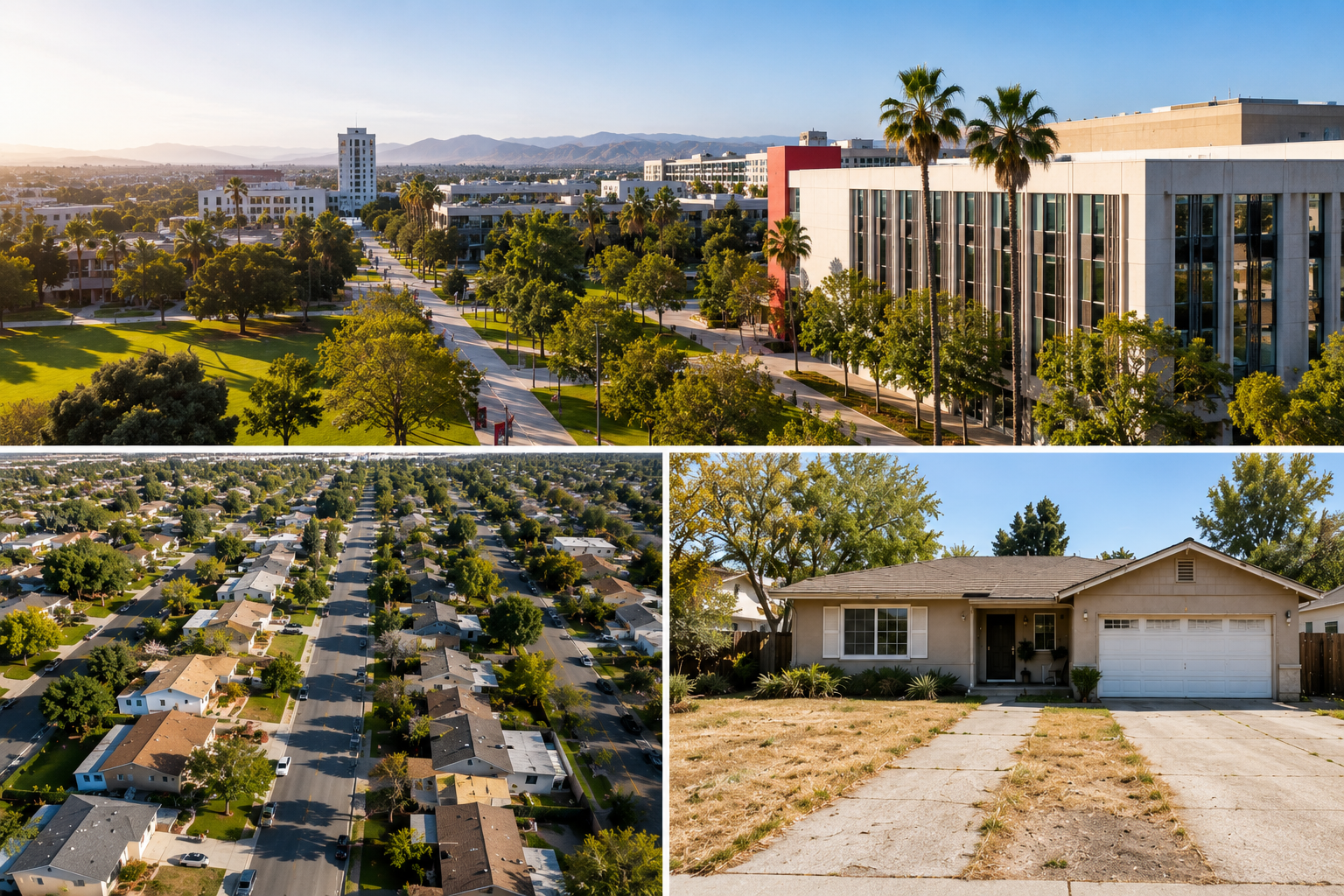 The Northridge as-is versus preparation buyer pool split — the CSUN-adjacent investor and renovation-ready buyer who is specifically activated by the as-is listing at the correct price (left) versus the FHA first-time buyer and move-up conventional buyer who requires the prepared condition that eliminates financing condition flags and produces the competitive first-week offer dynamic (right). The buyer pool the Northridge seller targets determines which path produces the better net proceeds outcome.
The CSUN adjacency factor:
CSUN's 356-acre campus directly adjacent to 91324 produces two specific buyer motivations that affect the as-is versus preparation decision:
The CSUN buy-and-hold investor: Faculty, staff, and off-campus housing investors who specifically seek Northridge 91324 inventory as rental investments serving the CSUN tenant population. This buyer:
- → ✅ Is specifically activated by as-is listing at the correct price
- → ✅ Has renovation contractor relationships and renovation execution capability
- → ✅ Is typically cash or conventional — not FHA-dependent
- → ✅ Makes quick decisions and closes efficiently
- → ✅ Is the specific buyer profile that makes Northridge's as-is path more viable than comparable-quality as-is listings in markets without a university buyer anchor
The CSUN professional buyer: Faculty, research staff, and healthcare professionals affiliated with CSUN or the adjacent Northridge Hospital Medical Center 91325 who are purchasing for personal occupancy. This buyer:
- → ✅ Wants a functional home without a renovation project
- → ✅ May use conventional financing or occasionally FHA
- → ✅ Is specifically activated by the prepared listing
- → ✅ Produces the competitive dynamic that the as-is listing doesn't activate
The timing and seasonal variable:
As the Northridge home prep article and the best time to sell article established, the spring window (March 15–April 15) is Northridge's primary market window. The as-is versus preparation decision interacts with this timing:
Spring as-is launch: The spring buyer pool activation includes both investor buyers and owner-occupant first-time buyers. An as-is spring listing that is correctly priced will generate investor interest in the first 10–15 days; an as-is spring listing that is above the investor acquisition threshold may wait 30–45 days for the correction that brings it to where the investor engages.
Spring prepared launch: The correctly prepared spring listing generates first-week FHA and conventional first-time buyer showing traffic that the as-is listing doesn't. In competitive spring conditions, the prepared listing generates the multiple-offer dynamic that the as-is listing at the same price would not produce — because the as-is listing is not appealing to the FHA buyer pool that is competing for prepared inventory in spring.
The implication: In spring peak conditions, the prepared Northridge listing often produces a better net proceeds outcome than the as-is listing at the same price — because the prepared listing accesses the full buyer pool while the as-is listing accesses the narrower investor pool. The difference may be $20,000–$40,000 in close price from the competitive dynamic that full buyer pool access produces.
🚫 What NOT to Overdo
Don't renovate beyond the Northridge comp ceiling. The most consistent Northridge renovation over-investment error is the full kitchen replacement at $25,000–$40,000 that the Tarzana and Encino improvement articles document as the correct specification for those markets. At Northridge's $750,000–$980,000 renovated comp ceiling, the full custom kitchen exceeds what the comp ceiling returns. Hardware replacement, faucet, and targeted cabinet assessment ($700–$8,500) reach the Northridge buyer's reference standard at a fraction of the full kitchen replacement cost. The Northridge seller who has been inspired by Studio City or Encino renovation stories and applies those specifications to a Northridge home consistently produces a renovation that costs more than the comp ceiling returns.
Don't list as-is without completing the pre-listing inspection and FHA condition flag assessment. The Northridge as-is seller who lists without the inspection risks the mid-escrow FHA condition flag that converts a straightforward sale into an escrow renegotiation. The $500 inspection that happens before listing is the most important single investment in any Northridge as-is strategy — it identifies the FHA flags that must be either remediated or specifically disclosed before the FHA buyer writes an offer.
Don't price the as-is listing above the original-condition comp floor hoping for a "renovation-aware" buyer. The Northridge buyer who has been touring the market at $780,000–$880,000 knows the original-condition comp set precisely. They will not offer above the original-condition comp floor for an as-is property because they recognize that the comp floor already prices in what the home is worth in current condition. Price to the floor and let the motivated buyer pool engage on day 1 rather than accumulating DOM while waiting for the buyer who will pay a premium for condition the market doesn't support.
Don't let the FHA buyer pool's size tempt over-investment in remediation. The FHA buyer pool is real and valuable in Northridge — but the remediation of every potential FHA flag item is not always the correct strategy. The pre-listing inspection, the comp gap analysis, and the FHA condition flag assessment should produce a specific, prioritized remediation decision: which items to fix (those that are both FHA-flag risks and within the comp gap's support), which to leave (those that are minor enough to avoid appraisal flags or that exceed the comp gap's return threshold), and which to price around (those that will be flagged and that the price should reflect as known conditions).
Don't execute a partial renovation — the Northridge version of the Sherman Oaks trap. The Northridge partial renovation is less dramatic than the Sherman Oaks equivalent (smaller comp gap means smaller dollar consequences) but produces the same structural problem: a home priced above the as-is investor floor (eliminating the investor buyer) and below the renovated comp ceiling (falling short of what the first-time owner-occupant buyer needs). Updated kitchen with original bath, new floors with dated paint, curb appeal without interior — all produce the same Northridge DOM accumulation and below-ceiling close that the correct full cosmetic scope or the correct as-is pricing would have avoided.
🏠 Real-World Scenario — Northridge 91324
A Northridge 91324 seller — an estate sale administered by one sibling, 3-bedroom original-condition home, long-term family ownership of 31 years, no mortgage — needed to sell within 60 days of probate court approval. Their initial instinct: list as-is and take whatever the market offered quickly.
Pre-listing inspection findings:
- → HVAC: 19 years old, functional but at end of useful life — not a definitive FHA flag but borderline
- → Roofing: 23 years old, showing granule loss and minor curling — FHA flag likely at appraisal
- → Electrical: 150-amp panel, updated — no FHA flag
- → Interior: original condition throughout — paint worn, carpet aged, kitchen original 1975, bath original 1975
Comp gap analysis: as-is comparable closed sales: $762,000 and $778,000 — as-is floor approximately $770,000. Renovated comparable closed sales: $915,000, $928,000, $935,000 — renovated ceiling approximately $926,000. Comp gap: approximately $156,000.
Path 1 — As-is at $770,000: With the roofing FHA flag likely, we needed to either remediate the roof or price for cash/conventional buyers only and disclose explicitly. We modeled both:
- → As-is at $770,000, FHA-buyer-restricted: investor and conventional buyer pool only. Expected close: $755,000–$775,000. Timeline: 20–30 days with correct pricing. Net without renovation: approximately $705,000.
Path 2 — Roof replacement + focused cosmetic scope, then list at renovated ceiling:
Roofing replacement: $17,500. Focused cosmetic scope (paint $11,000, LVP flooring $9,500, kitchen hardware and faucet $1,200, bath shower enclosure and fixtures $8,500, curb appeal $7,000): $37,200. Total scope including roofing: $54,700. Carrying costs (10 weeks): $6,200. Total investment: $60,900.
Renovation path launch price: $920,000. Expected close: $905,000–$925,000. Net after commission, closing, renovation, carrying: approximately $820,000.
Net improvement over as-is: $115,000 — on a $54,700 investment that produced $115,000 additional net proceeds. The 60-day timeline was achievable: 8 weeks for the scope plus 2 weeks on market.
Path 3 — Roof replacement only ($17,500), list as-is but FHA-eligible:
Roof remediation eliminates the primary FHA flag. As-is price with functional roof: $788,000. Opens the full FHA buyer pool. Expected close: $792,000–$805,000. Carrying costs (5 weeks): $3,100. Net: approximately $727,000.
Net improvement over full as-is: approximately $22,000 for $17,500 investment. Better than as-is but significantly below the full scope outcome.
Decision: With the 60-day timeline available for the focused scope (Path 2 was achievable), the sibling chose Path 2. The roof was replaced as the foundational remediation that both eliminated the FHA flag and extended the home's appeal. The cosmetic scope followed in the subsequent 6 weeks. Launched at $915,000 in spring conditions. First week: 9 showings including 4 FHA-financed first-time buyers. Two offers by day 11. Accepted at $922,000 at day 14.
The estate that had planned to sell as-is for approximately $705,000 netted approximately $822,000 — a $117,000 improvement on a $54,700 investment executed within the probate timeline.
🏠 Real-World Scenario — Northridge 91325
A different Northridge seller — 91325 sub-neighborhood approaching Granada Hills 91344, 4-bedroom improved-condition home (kitchen updated in 2020 with semi-custom cabinets and quartz, flooring replaced in 2019 with LVP throughout, primary bath original) — was evaluating their options at the premium Northridge comp ceiling.
Comp gap analysis: their home's current condition (kitchen updated, flooring updated, original primary bath):
- → Updated-but-incomplete comp (1 comparable): $968,000
- → Fully renovated comp ceiling (3 comparables): $1,055,000, $1,068,000, $1,082,000 — ceiling approximately $1,068,000
- → Gap from current condition to fully renovated: approximately $100,000
The primary bath renovation cost to close this gap: $22,000–$30,000 (frameless shower, updated vanity, new fixtures, large-format tile). Interior repaint: $11,500. Curb appeal: $8,000. Total scope to close the condition gap: approximately $42,000–$50,000.
Net improvement from full scope to renovated ceiling: $100,000 comp gap - $46,000 average scope cost - $9,500 carrying (7 weeks) = $44,500 net improvement.
Compare to launching in current improved-but-incomplete condition at $978,000:
The improved-but-incomplete comp supported approximately $968,000 as a starting point. Close expected at $960,000–$975,000 in spring. Net: approximately $878,000.
Full scope path: launch at $1,060,000. Expected close at $1,052,000–$1,070,000. Net: approximately $965,000 - $46,000 scope - $9,500 carrying = $909,000 approximately.
Net improvement from completing the scope: $909,000 - $878,000 = $31,000 additional net proceeds for a $46,000 investment — a negative return ($46,000 spent for $31,000 return).
The correct decision: do not complete the scope. Launch in the improved-but-incomplete condition at $978,000. The $46,000 investment would produce only $31,000 in additional proceeds — a negative ROI on the incremental scope.
This is the Northridge improvement discipline applied precisely: when the incremental scope from current condition to fully renovated produces negative ROI (investment exceeds the comp ceiling recovery), the correct answer is to launch at the correctly priced current condition rather than over-investing to reach the ceiling.
They launched at $975,000 in spring. First week: 7 showings (the improved condition attracted the FHA buyer pool; the semi-custom kitchen and LVP flooring read as updated at the primary visual contact points). Offer at day 10 at $965,000. Counter at $978,000. Accepted at $972,000 at day 17.
Net: approximately $885,000 — $31,000 less than the full-scope alternative's theoretical net, but $15,000 more than the full scope would have returned after the investment. The seller who understood the ROI math launched in current condition and avoided the over-investment.
❓ FAQ
Should I sell my Northridge home as-is or fix it up? The correct answer is specific to the sub-neighborhood comp gap, the pre-listing inspection findings, and the timeline available. For most Northridge 91324/91325 sellers with 8–11 weeks of timeline and no overwhelming deferred maintenance load: the focused cosmetic scope ($25,000–$55,000) consistently produces $80,000–$140,000 in comp ceiling recovery — making the preparation path the better net proceeds option when the comp gap supports it. For sellers with timeline under 30 days, comp gaps under $100,000, or deferred maintenance that would add $35,000+ to the scope cost: as-is at the correctly priced original-condition comp floor may produce comparable or better net proceeds without the renovation risk.
Does FHA financing affect selling my Northridge home as-is? Yes — significantly. Approximately 30–40% of Northridge buyers use FHA financing, which requires the property to meet FHA minimum property condition standards. As-is Northridge homes with HVAC at end of life, roofing deficiency, peeling exterior paint (pre-1978 homes), or broken windows may receive FHA appraisal condition flags that require seller remediation mid-escrow or cause FHA buyers to withdraw. The pre-listing inspection identifies these FHA condition flags before listing. Sellers can either remediate the specific flags (opening the full FHA buyer pool) or price and market explicitly to cash and conventional buyers while disclosing the condition fully.
What's the fastest way to sell a Northridge home? The fastest Northridge sale is typically the correctly priced as-is sale targeting the CSUN-adjacent investor and renovation-ready conventional buyer pool — closes in 21–30 days without the 8–11 week preparation timeline. However, "fastest" is not always "best net proceeds" — the correctly prepared Northridge listing generates the competitive FHA and first-time buyer offer dynamic that frequently produces $30,000–$80,000 more than the as-is alternative, at the cost of the 8–11 week preparation timeline. The correct choice depends on whether timeline or net proceeds is the primary seller priority.
How much can I save by selling as-is in Northridge? "Save" is the wrong framing — the as-is path eliminates the preparation cost ($25,000–$55,000) and the carrying cost during preparation ($7,000–$12,000), but it also reduces the close price by the comp gap (approximately $120,000–$220,000 from the renovated ceiling). The net of "saving" the preparation cost is typically a $50,000–$150,000 reduction in net proceeds compared to the correctly prepared alternative. As-is is the correct choice when the comp gap math doesn't support the preparation investment, not as a cost-saving strategy.
What FHA repairs are required for Northridge homes? FHA minimum property condition requirements flag: ✓ HVAC systems that are non-functional or clearly at end of life. ✓ Roofing with inadequate remaining life or active leaks. ✓ Electrical panels that are outdated or have known safety concerns (Federal Pacific Electric / Zinsco panels specifically). ✓ Broken or non-functional windows. ✓ Peeling paint in homes built before 1978 (lead paint hazard trigger). ✓ Significant structural or safety deficiencies. Cosmetic issues — dated but functional kitchens, aged but intact flooring, dated paint that isn't peeling — typically do not trigger FHA conditions.
Is now a good time to sell my Northridge home? The Northridge market in 2026 is seller-favorable at the correctly priced volume tier ($750,000–$950,000) during spring and fall windows. The spring window (March–April) produces the strongest first-time buyer activation and the competitive showing traffic that generates best offers. Correctly prepared Northridge listings in the spring window consistently generate 8–12 first-week showings and offers by day 10–18. The as-is Northridge listing in any season generates 3–6 showings from the narrower investor pool with offers typically by day 15–30 at the correctly priced as-is level.
🎯 Bottom Line
The Northridge 91324 and 91325 as-is versus fix-it-up decision is shaped by three Northridge-specific variables that no other PEP seller market combines in exactly the same way: the comp gap's smaller absolute dollar amounts ($120,000–$220,000) that require tighter investment discipline than larger-gap premium markets, the FHA financing buyer pool (30–40% of Northridge buyers) whose condition requirements make the pre-listing inspection and condition flag management specifically critical, and the CSUN investor buyer who makes the as-is path specifically more viable here than in markets without a university anchor.
The Northridge seller who navigates these three variables correctly — running the sub-neighborhood comp gap analysis to establish the investment threshold, completing the pre-listing inspection to identify FHA condition flags before listing, and choosing between the focused cosmetic scope that opens the full buyer pool and the correctly priced as-is that efficiently attracts the investor and renovation-ready buyer — consistently produces better net proceeds than the seller who defaults to either extreme without the analysis that supports it.
At Parkway Estate Properties, Liana's seller representation across Northridge 91324/91325, Sherman Oaks 91403/91423, Tarzana 91356, Granada Hills 91344, and Reseda 91335, combined with Roman's hands-on renovation experience across dozens of SFV properties including Northridge 91324, means every Northridge as-is versus preparation conversation is grounded in the current sub-neighborhood comp data, the FHA condition awareness, and the renovation scope calibration that produces the highest achievable net proceeds for each specific Northridge seller's situation.
📩 Want a Personalized As-Is vs. Preparation Analysis for Your Northridge Home?
We'll run the sub-neighborhood comp gap analysis, identify any FHA condition flags from the pre-listing inspection findings, and give you the honest net proceeds comparison between the as-is and preparation paths — before you've committed to any scope or signed any listing agreement.
Contact Liana Shersher at Parkway Estate Properties: 📧 liana@parkwayestate.com · 📞 (818) 208-5881 · 🌐 parkwayestate.com 15021 Ventura Blvd., Ste. 510, Sherman Oaks, CA 91403
About the Authors
Liana Shersher is a licensed real estate agent with Parkway Estate Properties Inc. and an Accredited Buyer's Representative (ABR) serving the San Fernando Valley — with a focus on Sherman Oaks, Encino, Tarzana, Woodland Hills, and Northridge (DRE# 02164224). Liana guides first-time homebuyers through every step of the purchase, from the first showing to the keys in hand, and represents move-up and repeat buyers across the Valley. For sellers, she builds the pricing and marketing strategy that positions a home to sell for top dollar, fast. Buyers and sellers work with Liana for clear communication, sharp local knowledge, and an agent who treats their goals like her own.
Roman Shersher is the broker-owner of Parkway Estate Properties Inc. and a real estate investor with 18 years of experience in the San Fernando Valley (DRE# 01855095). Roman has personally led or co-led renovations on dozens of properties across the Valley, including recent projects in Northridge (91324) and Woodland Hills (91364). That hands-on renovation and investment experience shapes every pricing conversation and days-on-market strategy at Parkway — sellers get a realistic read on what improvements actually return at resale, and buyers get an expert eye on a home's true condition and upside.
Parkway Estate Properties, Inc. · 15021 Ventura Blvd., Ste. 510, Sherman Oaks, CA 91403 · (818) 208-5881 · parkwayestate.com · Broker License #: 01873092 Equal Housing Opportunity. Information herein is general and not legal, tax, or financial advice. Consult qualified professionals for your specific situation.
Categories
Recent Posts











Broker | Realtor ® License ID: 01873092
+1(818) 208-5881 | info@parkwayestate.com