
Top 10 Things to Know About the Granada Hills Housing Market

Granada Hills 91344 doesn't behave the way most SFV market narratives describe it — because most SFV market narratives aggregate data across zip codes that have fundamentally different buyer pools, different school quality drivers, different lot size profiles, and different price tier dynamics. What's true for Reseda 91335, Canoga Park 91304, or even Northridge 91324 is not necessarily true for Granada Hills, and buyers and sellers who apply the generic SFV market narrative to 91344 decisions consistently misread the specific market conditions that determine their outcomes.
This article gives buyers, sellers, and anyone evaluating the Granada Hills market the ten most important market facts about 91344 in 2026 — each one specific, each one actionable, and each one grounded in the specific forces that drive Granada Hills rather than the SFV-wide averages that obscure them.
1. 🏫 Granada Hills Charter High School Is the Most Durable Demand Driver in the Northern Valley
If there is a single fact that distinguishes the Granada Hills 91344 housing market from every comparable northern Valley alternative — Chatsworth 91311, North Hills, Mission Hills 91345 — it is the Granada Hills Charter High School demand premium. And if there is a single fact about that premium that most buyers and sellers get wrong, it is assuming that it is cyclical — that it weakens with rate increases, softens in down markets, or compresses with general SFV price corrections.
It doesn't. The GHCHS demand premium has been one of the most rate-resistant and cycle-resistant price supports in the northern Valley for over two decades. Families who need GHCHS access have a genuine, non-discretionary housing requirement that elevated rates moderate in timeline but do not eliminate. The family whose child is entering 9th grade in fall 2027 and who needs to establish residency is buying in 2026 regardless of what mortgage rates are — because the alternative to buying is a school enrollment outcome that can't be undone after the fact.
What this means for buyers and sellers:
- → 🏡 For sellers: Correctly priced 91344 homes within the GHCHS attendance zone — particularly those in the $875K–$1.15M volume range — produce more consistent first-week offer activity than comparable northern Valley inventory without the school quality driver. The school urgency is the demand stabilizer that prevents the sort of prolonged DOM that correcting markets produce elsewhere.
- → 🏠 For buyers: The GHCHS premium is real, measurable, and already priced into the comp ceiling. Buyers who expect to negotiate away the school premium on within-catchment listings will consistently lose those listings to buyers who understand the premium's source and don't try to arbitrage it. Use the premium as a value justification for the purchase, not as an area where negotiating room exists.
- → 📊 For market observers: Granada Hills's appreciation consistency relative to comparable northern Valley markets without comparable school quality drivers is the clearest evidence that school quality produces measurable, durable real estate value — not just in the abstract but in the specific closed transaction data that defines comp ceilings.
2. 📐 Lot Sizes Are the Market's Secondary Demand Anchor
Granada Hills 91344's larger-than-average SFV lots — ranging from 8,000 sq ft on standard streets to 20,000+ sq ft on premium northern sub-neighborhood positions — are the second most important structural demand driver in the market, operating alongside GHCHS quality to produce Granada Hills's value proposition at its clearest.
The lot size premium is most visible in the cross-market comparison: a Granada Hills 91344 4-bedroom home on a 12,000 sq ft lot with a pool listed at $1.3M is competing for attention from buyers who have also seen Sherman Oaks 91403 4-bedrooms on 7,500 sq ft lots at $1.35M, Tarzana 91356 4-bedrooms on 9,500 sq ft lots at $1.28M, and Northridge 91324 4-bedrooms on 8,500 sq ft lots at $1.1M.
The Granada Hills home has more lot — and that extra lot produces more pool surround, more privacy landscaping, more usable outdoor space, more children's play area, more parking, and more of the private outdoor living that SFV family buyers are specifically purchasing.
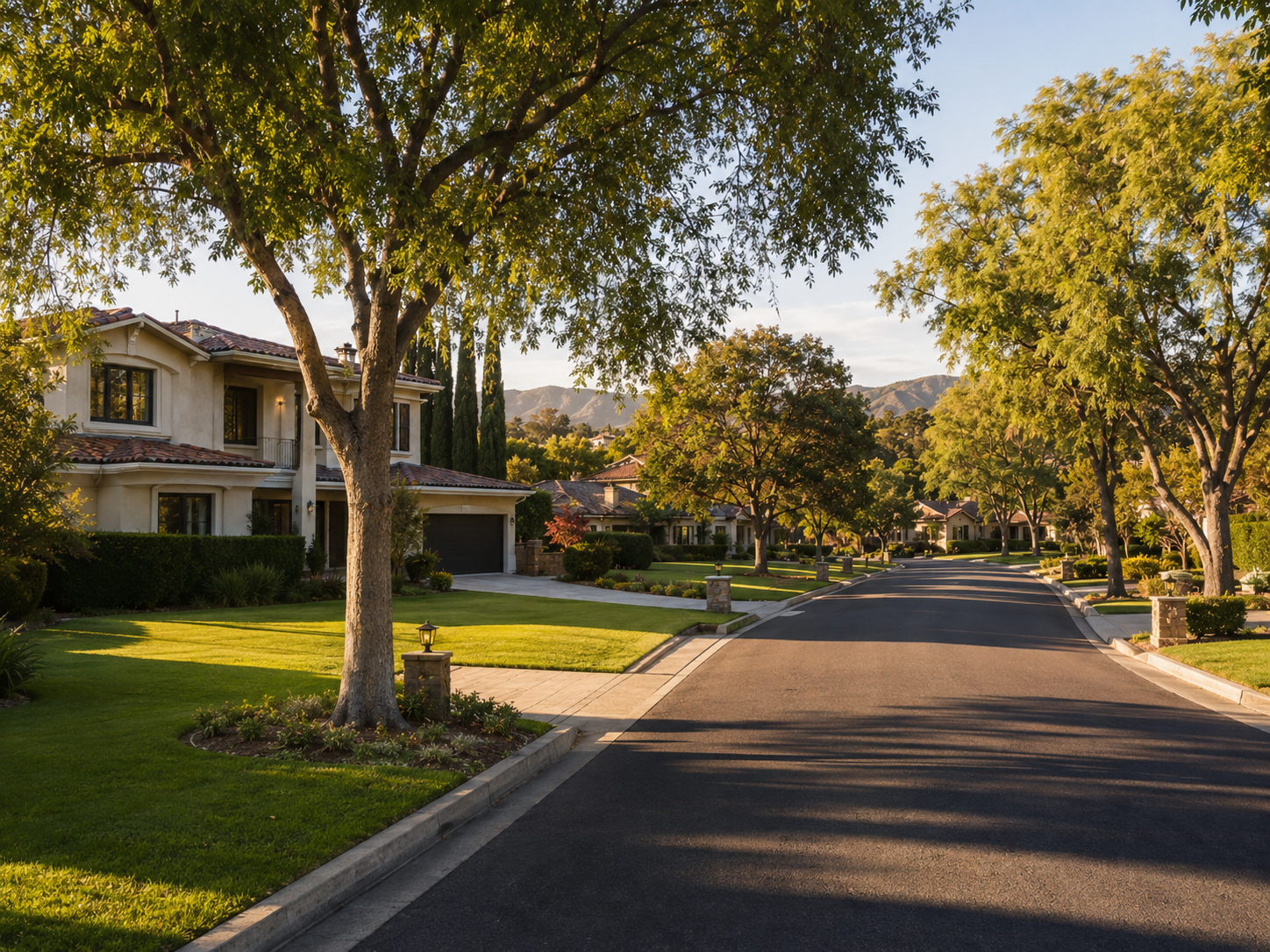 Granada Hills 91344's lot scale — larger than Sherman Oaks 91403, Tarzana 91356, or comparable Northridge 91324/91325 at equivalent price points. The extra lot produces the pool surround, privacy landscaping, and outdoor living space that northern Valley family buyers specifically seek and that smaller-lot SFV alternatives can't deliver at comparable budgets.
What this means for buyers and sellers:
- → 🏡 For sellers: Lot size is undersold in most Granada Hills listings. The listing that leads with "4 bedrooms, 2 baths, updated kitchen" is describing the same features as 40 other SFV listings at the same price. The listing that leads with "12,500 sq ft lot, pool, mature privacy landscaping, and outdoor living scale that Sherman Oaks at this price can't deliver" is describing something distinctive. Market the lot.
- → 🏠 For buyers: When comparing Granada Hills to adjacent northern Valley alternatives at equivalent price points — verify lot sizes in the comp data before concluding that Granada Hills is "expensive." The price-per-square-foot of living space comparison between Granada Hills and Chatsworth 91311 may show Granada Hills at a premium; the price-per-square-foot of total lot area may show Granada Hills at a discount.
3. 📊 The Granada Hills Market Is Two-Speed in 2026
The most important 2026 market intelligence for both buyers and sellers in Granada Hills 91344 is the two-speed market structure — a volume tier and a premium tier that are operating under meaningfully different supply-demand dynamics simultaneously.
The volume tier ($875K–$1.15M):
- → ⏰ DOM: 15–28 days in spring, 28–45 days in summer and fall for correctly priced listings
- → 💰 List-to-close ratio: 98–104% in spring peak — sellers regularly achieving at or above asking
- → 🔄 Market character: Seller-favorable — the move-up family buyer pool, GHCHS enrollment urgency buyers, and first-time buyers at maximum qualification all compete for this inventory tier with genuine purchasing motivation
- → 📊 Inventory: Below equilibrium in spring — 3–5 weeks of supply at current absorption rate; approaching balanced in summer and fall
The premium tier ($1.2M–$1.65M):
- → ⏰ DOM: 38–70 days even in spring — the thinner buyer pool at this tier produces extended market exposure even in favorable seasonal conditions
- → 💰 List-to-close ratio: 92–97% — buyers achieving 3–8% below asking on well-justified comp-based offers
- → 🔄 Market character: Balanced to buyer-favorable — the best buyer conditions in Granada Hills, with motivated sellers and genuine negotiating room
- → 📊 Inventory: Near or above equilibrium — enough supply relative to the thin buyer pool that correctly priced listings take more time and offer more buyer leverage than the volume tier
What this means for buyers and sellers:
- → 🏡 For sellers: Know which tier you're in before setting your list price and DOM expectations. A seller who prices their $1.35M home with the expectation of a 15-day spring spring sale is applying volume-tier DOM expectations to a premium-tier market that doesn't support them. The premium-tier seller who budgets for 45–60 days, prices at the midpoint of the defensible range, and adds proactive buydown marketing outperforms the seller who anchors to volume-tier expectations.
- → 🏠 For buyers: The premium tier is where the 2026 Granada Hills buyer opportunity is concentrated. Volume-tier listings go quickly and offer limited negotiating room; premium-tier listings sit longer and reward patient, well-prepared buyers who bring comp-grounded offers and decisive transaction structure.
4. 🔒 The Golden Handcuff Inventory Constraint Is Granada Hills's Most Powerful Supply Dynamic
Granada Hills 91344 inventory is structurally constrained by the same dynamic operating across premium SFV markets — the mortgage golden handcuff. Long-term Granada Hills homeowners who purchased or refinanced at sub-4% rates between 2019 and 2022 are not selling into a 7%+ rate environment unless they have a compelling reason to do so. The effective cost of giving up a 3.5% mortgage to buy a replacement home at 7.25% on a comparable or more expensive property is $2,500–$4,500/month in additional payment — a barrier that keeps willing sellers in place unless death, divorce, financial necessity, or major life transition overrides the financial disincentive.
The mathematical reality: a Granada Hills homeowner with a $600,000 balance at 3.25% pays approximately $2,610/month in principal and interest. The same balance at 7.25% costs approximately $4,095/month — an additional $1,485/month simply from the rate differential. For the seller who needs to purchase a replacement home with a comparable or larger mortgage, the combined payment shock of selling and buying in the same rate environment suppresses listing activity in a way that direct rate-to-price elasticity analysis doesn't capture.
What this means for buyers and sellers:
- → 🏡 For sellers: The golden handcuff dynamic works in your favor if you're selling without replacing into a comparable Granada Hills or SFV property — moving to a lower-cost market, downsizing significantly, or exiting California. The supply constraint that the golden handcuff produces means your correctly priced listing faces less competing inventory than it would in a rate-neutral environment.
- → 🏠 For buyers: The inventory constraint that the golden handcuff produces is the primary reason Granada Hills prices have not corrected more significantly despite the rate headwind. The supply floor that long-term homeowner retention creates limits the price discovery that buyers in freely supplied markets can achieve. Expect this constraint to persist as long as the rate differential between existing locked-in mortgages and current market rates remains significant.
5. 🌡️ Northern Valley Heat Is a Market Variable, Not Just a Weather Observation
Granada Hills 91344's northern Valley geography produces summer temperatures that regularly reach 95–105°F — higher than Encino 91316, Sherman Oaks 91403, or Tarzana 91356 at equivalent inland distances from the coast. This heat is a market variable with specific, measurable effects on transaction activity, DOM patterns, and buyer behavior.
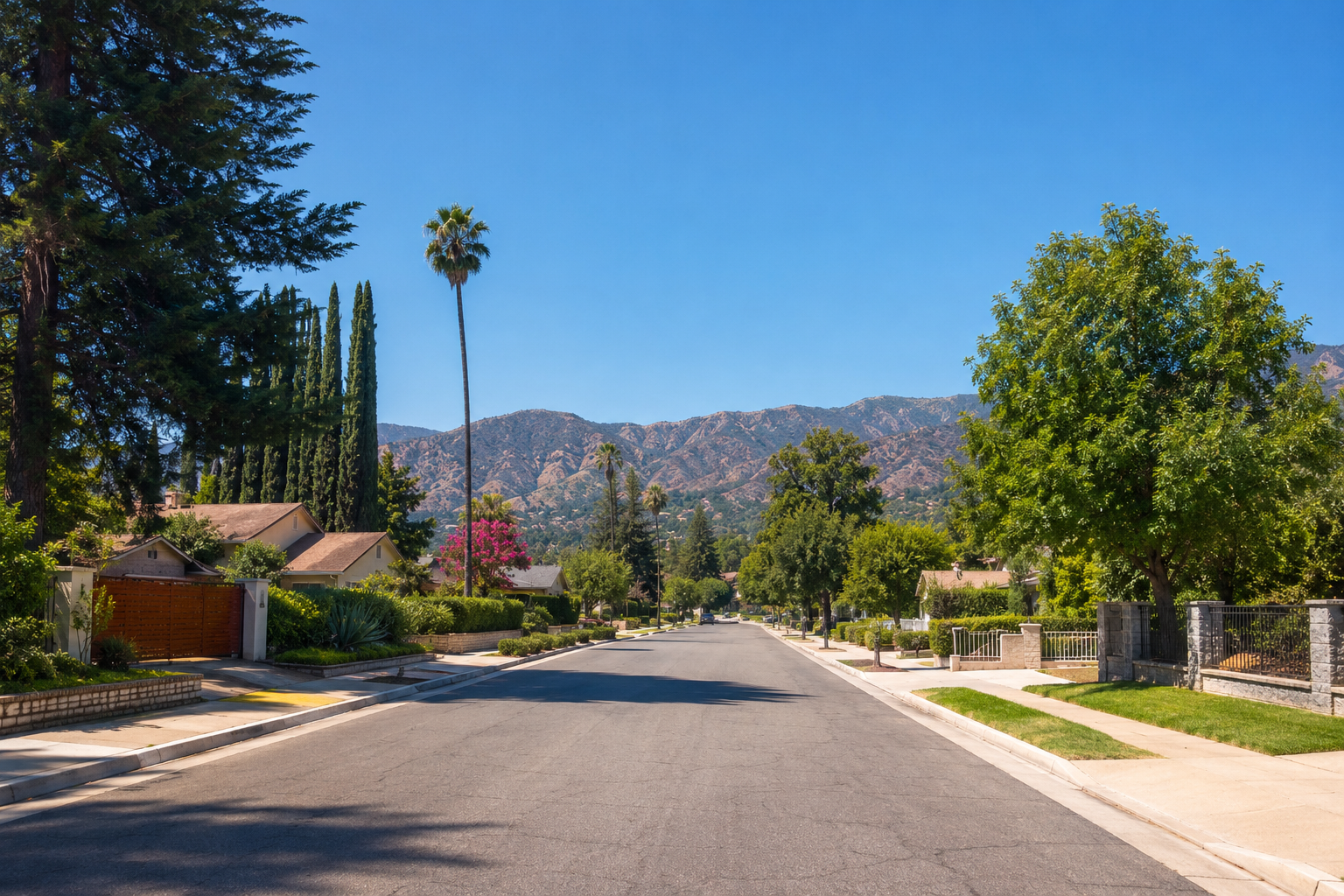 Granada Hills summer heat — regularly 95–105°F in July and August, more intense than comparable western Valley markets, and a real suppressor of showing activity and buyer engagement in the peak summer window. Sellers who launch in the summer without pricing adjustments for the seasonal demand reduction consistently accumulate DOM they wouldn't have in a spring or fall launch.
The specific market effects of Granada Hills heat:
- → 📉 Summer showing reduction: Open house attendance and scheduled showing activity drops approximately 35–45% in July and August versus the spring peak — meaningfully more than comparable western Valley markets experience. Northern Valley heat is more extreme, afternoon shows in unoccupied homes are genuinely uncomfortable, and the competition from summer travel and back-to-school preparation compounds the showing suppression.
- → 🏊 Pool premium amplification: Granada Hills pools command a stronger market premium in summer than in any other season — buyers who are experiencing 100°F afternoons while touring un-pooled homes place immediate, concrete value on pool access. Pool listings launched in May before buyers have felt summer heat get less pool premium than pool listings that are showing to buyers in July who have spent a week in 100°F heat.
- → ❄️ HVAC disclosure criticality: Non-functional or marginal HVAC systems in Granada Hills homes are a more significant transaction risk than in cooler SFV markets — a Granada Hills home with a failing HVAC system during summer showings is not merely an abstract deferred maintenance disclosure. It is a showing that occurs in 85°F interior heat that buyers immediately attribute to the home rather than the failing equipment. Address HVAC before summer listing.
What this means for buyers and sellers:
- → 🏡 For sellers: Launch in March–May or October–early November. Summer launches require pricing at midpoint (not top) of defensible range, morning-only showing windows, and proactive seller-paid buydown marketing to activate the deliberate summer buyer pool.
- → 🏠 For buyers: Summer showing discomfort is real — but it filters the competing buyer pool more than it filters the inventory. The buyer who tours Granada Hills in July with a water bottle and a clear-eyed inspection approach encounters less competition and more negotiating room than the spring buyer who tours in 72°F weather alongside 12 other interested parties.
6. 🏗️ The Granada Hills Housing Stock — Age, Character, and Opportunity
Granada Hills 91344's housing stock is primarily 1960s–1980s construction — a vintage that defines both the neighborhood's established character and the specific deferred maintenance patterns that informed buyers and sellers need to understand.
The stock character:
- → 🏠 Predominant style: Ranch-style single-family homes — single-story and split-level, 3–5 bedroom configurations, attached two-car garages standard on most lots
- → 📐 Size range: 1,400–2,600 sq ft of living space covers most of the Granada Hills volume market; premium luxury homes extend to 3,000–4,000+ sq ft on the largest northern sub-neighborhood lots
- → 🔨 Renovation status: Granada Hills's housing stock spans the full renovation spectrum — original condition with 1970s finishes at one end, fully renovated to current standards at the other, with a meaningful middle tier of partial renovation that creates pricing complexity and buyer opportunity
The deferred maintenance reality:
Granada Hills homes in original or lightly updated condition typically have:
- → ⚠️ HVAC systems approaching or past useful life (20–30 year original equipment common)
- → ⚠️ Composition shingle roofs at end of life on homes that haven't been re-roofed within the last 10–15 years
- → ⚠️ Original 100-amp electrical service insufficient for modern loads
- → ⚠️ Galvanized or original copper plumbing in varying condition
- → ⚠️ Pool equipment approaching end of life on homes with original or once-replaced pool systems
What this means for buyers and sellers:
- → 🏡 For sellers: The pre-listing inspection is the essential first step before any pricing or preparation decision — see the prep guide article for the complete framework. Sellers who skip the inspection and launch at full-renovation pricing on homes with undisclosed deferred maintenance create the transaction failures and post-inspection renegotiations that most damage net proceeds.
- → 🏠 For buyers: The gap between original-condition and renovated comparable Granada Hills homes — typically $80,000–$160,000 in the volume market and $100,000–$200,000 in the premium tier — is the renovation opportunity that informed buyers can systematically target. Roman's renovation expertise across the SFV means Parkway buyers have access to realistic renovation scope estimates before they offer, not after they've closed.
7. 🔄 The Cross-Market Competition — Chatsworth 91311 and Porter Ranch 91326
Granada Hills luxury buyers at $1.1M–$1.6M are not shopping Granada Hills exclusively — they are simultaneously evaluating Chatsworth 91311 and Porter Ranch 91326 as the primary alternatives at comparable budgets. Understanding this cross-market competition is essential for Granada Hills sellers at the premium tier and for buyers who are evaluating all three markets.
The three-market comparison at the $1.2M–$1.5M tier:
Granada Hills 91344:
- → ✅ Larger established lots (10,000–18,000 sq ft common)
- → ✅ GHCHS school quality premium
- → ✅ 60-year established neighborhood character, mature tree canopy
- → ⚠️ 1960s–1980s construction vintage
- → ⚠️ No master-planned commercial amenity
- → ⚠️ Furthest from Westside of the three
Chatsworth 91311:
- → ✅ Comparable lot sizes
- → ✅ Generally lower price per sq ft than Granada Hills at equivalent quality
- → ⚠️ School quality driver less pronounced than GHCHS
- → ⚠️ Deepest northern Valley location — furthest from most employment corridors
- → ✅ More rugged landscape character appeals to specific buyer profiles
Porter Ranch 91326:
- → ✅ Newer construction (2000s–2020s) at the premium tier
- → ✅ Master-planned commercial infrastructure (Vineyards at Porter Ranch)
- → ⚠️ Smaller lots than Granada Hills at comparable prices in newer developments
- → ⚠️ Less established neighborhood character — newer community without Granada Hills's six-decade social fabric
- → ✅ Strong school options including newer LAUSD schools built for the area
What this means for buyers and sellers:
- → 🏡 For sellers: Premium-tier Granada Hills sellers ($1.2M+) are not priced in a vacuum — buyers evaluating your home are cross-shopping Chatsworth and Porter Ranch simultaneously. The Granada Hills listing that doesn't clearly communicate its lot size advantage, its GHCHS access, and its established neighborhood character relative to these alternatives is allowing buyers to default to Porter Ranch's newer construction or Chatsworth's lower price without understanding what Granada Hills specifically delivers. Market the specific advantages.
- → 🏠 For buyers: Tour all three markets before committing to any of them. The right northern Valley luxury answer depends on whether you prioritize established character and school quality (Granada Hills), lower entry price at comparable lot size (Chatsworth), or newer construction and master-planned amenity (Porter Ranch) — and none of these answers is universally correct.
8. 💰 Rate Sensitivity and the Granada Hills Buyer Pool
Granada Hills's buyer pool has a specific rate sensitivity profile that differs meaningfully from comparable SFV markets — because the school-urgency component of 91344 demand moderates the rate-induced buyer deferral that purely discretionary markets experience, while the premium tier ($1.2M+) is more rate-sensitive than the volume tier.
The rate sensitivity breakdown by tier:
$875K–$1.15M (school-urgency dominated tier):
- → Rate sensitivity: Moderate — school-urgency buyers have genuine deadlines that reduce the "I'll wait for better rates" option that purely discretionary buyers exercise
- → Rate impact on this tier: Compressed volume (fewer total transactions) but persistent urgency among the motivated buyer pool that remains active regardless of rate environment
- → Payment at 7.25% on $850,000 loan (20% down on $1.05M): approximately $5,797/month P&I
$1.2M–$1.65M (premium tier):
- → Rate sensitivity: Higher — buyers at this price point have larger loan amounts where rate sensitivity is amplified and where the "wait for rate relief" calculation is more financially compelling
- → Rate impact on this tier: Extended DOM, buyer hesitation, and the negotiating conditions that 2026 premium tier buyers are currently experiencing
- → Payment at 7.25% on $1.1M loan (20% down on $1.375M): approximately $7,508/month P&I
 Rate sensitivity at Granada Hills price points — the $875K–$1.15M school-urgency tier retains persistent demand despite elevated rates because buyers have genuine enrollment deadlines. The $1.2M–$1.65M premium tier is more rate-sensitive, producing the extended DOM and buyer negotiating conditions that define the upper Granada Hills market in 2026.
What this means for buyers and sellers:
- → 🏡 For sellers: The seller-paid 2-1 buydown is the most effective marketing tool available to Granada Hills premium tier sellers in 2026. A $22,000–$32,000 buydown on a $1.3M–$1.5M Granada Hills listing reduces the year-one effective rate from 7.25% to 5.25% — saving the buyer $1,800–$2,400/month in year one. This payment relief is worth more to the rate-sensitive premium buyer than an equivalent price reduction, and it is more likely to generate offers from buyers who have been sitting on the sidelines waiting for rate relief that hasn't materialized.
- → 🏠 For buyers: Rate sensitivity is not a reason to wait indefinitely. Granada Hills's supply constraint means that meaningful price corrections at the volume tier are unlikely regardless of rate environment — the school-urgency demand floor prevents the sort of forced-seller price discovery that rate-correction narratives assume. At the premium tier, the current rate environment and extended DOM have produced genuine negotiating conditions that rate relief would eliminate — buyers who wait for rates to improve may find that improved rates eliminate the negotiating leverage the current environment provides.
9. 🌿 Wildfire and Natural Hazard — The Northern Valley Disclosure Context
Granada Hills 91344's northern Valley location produces natural hazard disclosure requirements that buyers and sellers need to understand — not as a reason to avoid the neighborhood, but as due diligence context that is more pronounced here than in more southerly SFV markets.
The specific Granada Hills natural hazard context:
- → 🔥 Fire Hazard Severity Zone: Some Granada Hills 91344 addresses — particularly those in the northern sub-neighborhoods approaching the Simi Hills and those in hillside sub-neighborhoods — are designated Very High Fire Hazard Severity Zones (VHFHSZ) by Cal Fire. This designation affects insurance availability, insurance cost, and the specific fire defensible space requirements that VHFHSZ-designated properties must maintain. Buyers must verify the specific VHFHSZ status of any Granada Hills address through the Cal Fire Fire Hazard Severity Zone viewer before purchase.
- → 🏠 Insurance implications: California's homeowner insurance market has experienced significant disruption — multiple major insurers have reduced or eliminated California residential coverage, and VHFHSZ-designated properties face the most constrained coverage environment. Buyers of VHFHSZ Granada Hills properties must obtain binding insurance coverage before closing — do not assume insurance is available at acceptable cost without specific quotes in hand during the inspection contingency period.
- → 🌊 Seismic and geological context: Granada Hills's northern Valley location places it within reasonable distance of the San Fernando Fault — the 1971 Sylmar earthquake (6.6 magnitude) and 1994 Northridge earthquake (6.7 magnitude) both produced documented structural effects on northern Valley residential properties. Seismic retrofitting status and foundation condition are specific due diligence items for Granada Hills vintage homes. Hillside sub-neighborhood geological considerations require geotechnical inspection as noted in the luxury buyer's guide.
What this means for buyers and sellers:
- → 🏡 For sellers: Disclose known fire hazard zone status, prior insurance claims, and any retrofitting history proactively in the disclosure package — not because you are legally required to proactively volunteer every item but because buyers who discover VHFHSZ status during their own research mid-escrow are more likely to use it as a transaction leverage point than buyers who received the information upfront and made their offer with full knowledge.
- → 🏠 For buyers: Budget for insurance before you budget for the mortgage. In VHFHSZ-designated Granada Hills sub-neighborhoods, homeowner insurance through the California FAIR Plan (the state insurer of last resort) may be your primary or only option — at significantly higher cost than standard homeowner insurance. Include insurance cost in your total monthly payment calculation before submitting any offer on northern Granada Hills properties.
10. 📈 The Granada Hills 5-Year Price Trajectory and 2026 Outlook
The five-year price history in Granada Hills 91344 and the 2026 outlook together produce the market intelligence that most buyers and sellers in this neighborhood need to make informed decisions — not the SFV-wide averages that include markets with entirely different supply-demand dynamics, but the specific 91344 trajectory shaped by GHCHS demand durability, lot size premium, and northern Valley positioning.
The 5-year trajectory:
Granada Hills 91344 has delivered strong appreciation over the 2020–2025 period — driven by the same forces that produced SFV-wide appreciation (low rates, pandemic-driven space demand, inventory constraint) amplified by the GHCHS demand driver that insulated the neighborhood from the sharper corrections that rate-sensitive markets without comparable school quality drivers experienced.
Key trajectory markers:
- → 📊 2020 median (pre-pandemic baseline): Approximately $680,000–$720,000 for the Granada Hills 91344 volume market
- → 📈 2022 peak: Approximately $1.0M–$1.05M — the rate-fueled peak that produced multiple-offer conditions across the full price spectrum
- → 📉 2023 correction: Approximately $890,000–$940,000 — the rate-adjustment correction that compressed the 2022 peak; GHCHS catchment addresses held value better than non-catchment comparables during the correction
- → 📊 2025 recovery: Approximately $960,000–$1.02M — the measured recovery toward but not yet to 2022 peak levels for the volume market
- → 📈 2026 current: Volume market ($875K–$1.15M) within 3–7% of 2022 peak for renovated homes; premium tier ($1.2M–$1.65M) within 5–12% of 2022 peak depending on sub-neighborhood and condition
The 2026 outlook by scenario:
Base case (7.0%–7.5% rates persist through most of 2026):
- → Volume tier: 2–4% additional appreciation — approaching but not reaching 2022 peak by year-end
- → Premium tier: Flat to modest 1–2% appreciation — continued extended DOM and buyer leverage at the premium tier
- → Transaction volume: 5–8% above 2025 volume — modest recovery driven by sellers who have adapted to rate environment
Positive rate scenario (rates moderate to 6.0%–6.5% by Q4 2026):
- → Volume tier: 4–8% appreciation acceleration — spring 2027 conditions pulling forward into Q4 2026
- → Premium tier: The most significant beneficiary — 6–12% rapid appreciation as the compressed buyer pool at $1.2M+ expands meaningfully with rate relief
- → Transaction volume: 15–20% above 2025 — meaningful volume recovery as move-up sellers re-engage
Negative rate scenario (rates rise above 8.0%):
- → Volume tier: Flat to modest negative — GHCHS demand floor prevents significant correction but transaction volume compresses further
- → Premium tier: 5–8% below current pricing — extended DOM proliferates, buyer leverage increases meaningfully
- → Transaction volume: 10–15% below 2025 — sellers without compelling motivation remain locked in
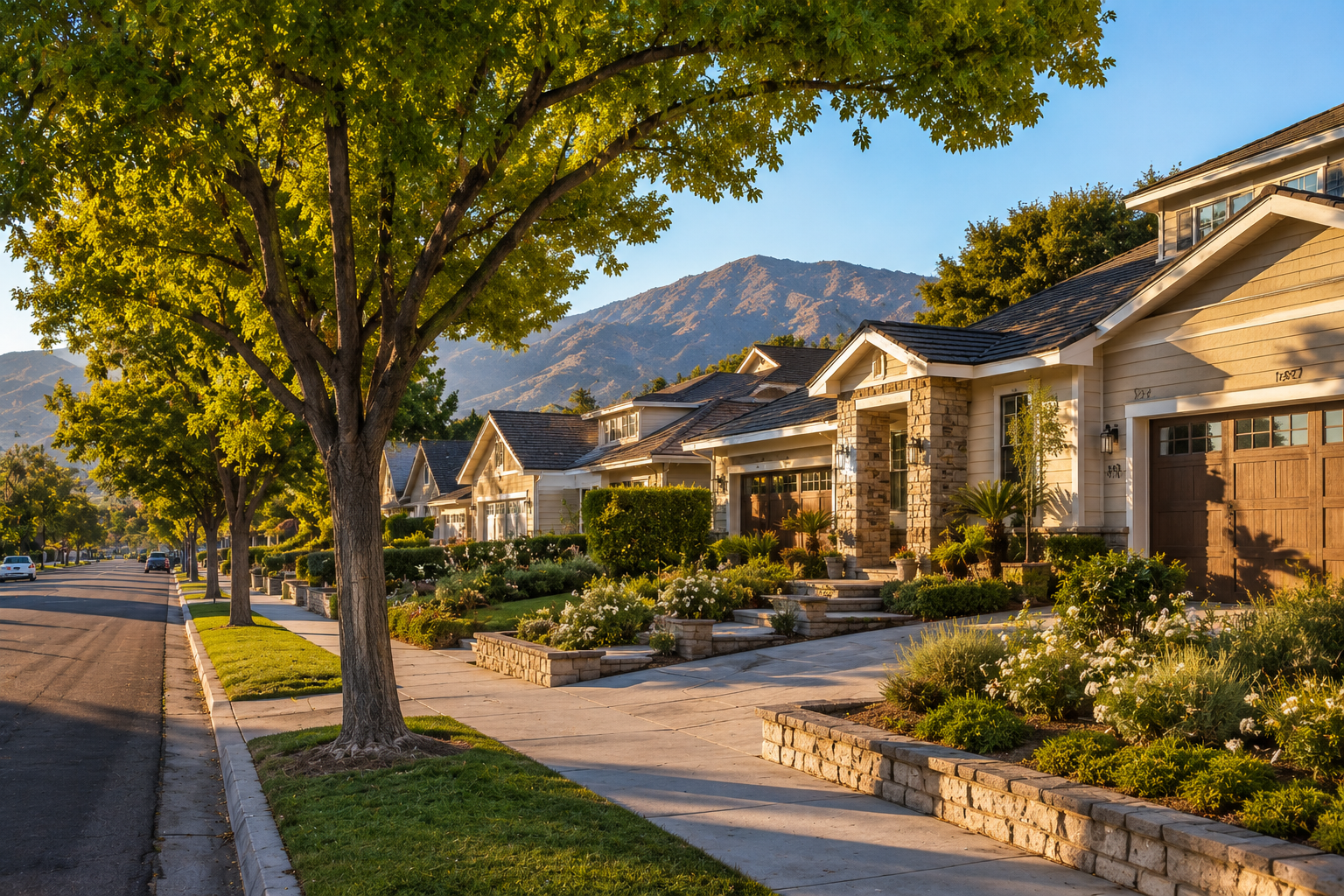 Granada Hills 91344's five-year appreciation trajectory — consistent, GHCHS-anchored appreciation that has proved more durable through rate cycles than comparable northern Valley markets without comparable school quality demand drivers. The 2026 outlook depends primarily on rate trajectory, with the volume tier more insulated from rate headwinds than the premium tier.
What this means for buyers and sellers:
- → 🏡 For sellers: The 5-year appreciation in Granada Hills has produced significant equity gains for long-term owners — sellers who purchased in 2018–2020 at $700K–$800K and who are pricing 2026 transactions in the $980K–$1.12M range are realizing 25–40% equity gains even accounting for the 2022–2023 correction. The question is not whether you've appreciated — you have — but whether the rate environment and market conditions at your specific price tier justify the move now or benefit from a wait.
- → 🏠 For buyers: The GHCHS demand floor and the golden handcuff inventory constraint together mean Granada Hills is not a market where waiting for significant price corrections is a sound strategy — the supply dynamics that prevent large inventory buildups also prevent the forced-seller pricing that meaningful corrections require. The better buyer strategy in Granada Hills is finding the right home at the correct comp-supported price rather than waiting for prices to fall to a lower level that the market's specific supply-demand structure is unlikely to produce.
🚫 What NOT to Overdo
Don't use SFV-wide market averages to make Granada Hills-specific decisions. The San Fernando Valley market aggregate — which includes Reseda 91335, Canoga Park 91304, Van Nuys 91405/91406, and North Hills alongside Granada Hills 91344 — produces statistics that are neither accurate nor actionable for 91344 decisions. The DOM averages, appreciation rates, and list-to-close ratios that appear in SFV-wide market reports may be 20–40% different from the specific 91344 sub-neighborhood data that should anchor your pricing or offer strategy. Always use Granada Hills sub-neighborhood-specific closed comps — not zip-code averages, not SFV-wide data, not recent Chatsworth or Porter Ranch transactions — for any decision where accuracy matters.
Don't treat the GHCHS premium as permanent at any specific price point. The GHCHS demand premium is durable as a directional force — school quality demand doesn't evaporate with rate cycles. But the specific dollar value of the premium at any given time reflects the current buyer pool's urgency, the rate environment's effect on their purchasing power, and the competitive inventory available in the catchment. A premium that justified a specific dollar amount in the spring peak may not justify the same dollar amount in summer or fall — and a premium that justified a specific dollar amount at 5% rates may not justify the same amount at 7.25% rates among buyers whose qualification is constrained by the payment math.
Don't confuse Granada Hills's appreciation trajectory with a guarantee of future returns. The 38–52% cumulative appreciation that Granada Hills delivered from 2020 to 2025 was driven by a specific set of conditions — low rates, pandemic-driven space demand, and supply constraint — that are not all present in 2026. The GHCHS demand driver and inventory constraint persist; the rate environment is meaningfully less favorable. Future Granada Hills appreciation will depend on how those variables evolve, not on an extrapolation of the 2020–2025 trajectory.
❓ FAQ
Is Granada Hills a good place to buy a home in 2026? For buyers whose priorities align with what Granada Hills specifically delivers — lot size, GHCHS school quality, northern Valley established character, and a price point that reaches more home than comparable SFV markets — yes. The volume tier ($875K–$1.15M) is seller-favorable with limited negotiating room; the premium tier ($1.2M–$1.65M) provides buyer conditions with genuine negotiating opportunity. The GHCHS demand floor and golden handcuff inventory constraint together prevent the significant price correction that purely rate-driven market analysis would suggest — buyers waiting for large corrections are likely to wait through an appreciation cycle rather than into a buying opportunity.
What is the average home price in Granada Hills in 2026? Granada Hills 91344 single-family home prices in 2026 span approximately $820,000–$1.8M depending on bedroom count, condition, lot size, and sub-neighborhood. The most active price band is $875,000–$1.15M — the 3–4 bedroom, standard to improved condition range that represents most Granada Hills transaction volume. Premium sub-neighborhoods with larger lots and verified GHCHS catchment push into the $1.15M–$1.8M luxury tier. These are directional estimates based on current market conditions — verify current comp data for your specific address or target sub-neighborhood with a Granada Hills-knowledgeable agent.
Why are Granada Hills homes more expensive than Chatsworth or North Hills? Granada Hills 91344 commands a premium over Chatsworth 91311 and North Hills primarily because of two structural advantages: the Granada Hills Charter High School demand premium — which produces persistent buyer urgency and demand durability that equivalent northern Valley markets without GHCHS don't generate — and the specific lot size and established neighborhood character profile that decades of community investment has produced in 91344. The GHCHS premium alone is estimated at $50,000–$120,000 above comparable non-catchment properties; the combination of school quality, established character, and lot scale justifies the full Granada Hills premium relative to adjacent northern Valley alternatives.
How is the Granada Hills housing market different from the rest of the SFV? Four specific differences distinguish Granada Hills 91344 from the broader SFV market: ✓ The GHCHS school quality demand driver produces more rate-resistant, more cycle-resistant buyer urgency than markets anchored only on price and location. ✓ The larger-than-average lot sizes produce a buyer pool that is specifically seeking the outdoor living scale that Granada Hills delivers — a more deliberate, more committed buyer who has narrowed their search to this product type. ✓ The northern Valley heat produces more pronounced summer DOM expansion than western Valley markets experience, making seasonal timing more important for Granada Hills sellers than for comparable Encino or Tarzana sellers. ✓ The cross-market competition with Chatsworth 91311 and Porter Ranch 91326 at the premium tier produces pricing discipline requirements that Granada Hills sellers at $1.2M+ must account for.
Will Granada Hills home prices go up or down in 2026? The 2026 outlook for Granada Hills 91344 is scenario-dependent on rate trajectory. Under the base case (rates stable at 7.0%–7.5%): volume tier appreciation of 2–4%, premium tier flat to modest 1–2%. Under rate improvement to 6.0%–6.5%: meaningfully stronger appreciation across both tiers, with the premium tier the largest beneficiary. Under rate deterioration above 8.0%: flat to modest price softening at the premium tier while the volume tier holds relatively well due to GHCHS demand durability. The inventory constraint from golden handcuff dynamics prevents significant correction scenarios in any of these rate environments.
🎯 Bottom Line
Granada Hills 91344 is a northern Valley market that rewards buyers and sellers who understand its specific mechanics rather than those who apply generic SFV market narratives to it. The GHCHS demand premium, the lot size advantage, the two-speed market structure, the golden handcuff inventory constraint, the northern Valley heat factor, the housing stock vintage, the cross-market competition with Chatsworth 91311 and Porter Ranch 91326, the rate sensitivity differentiated by tier, the natural hazard disclosure context, and the five-year appreciation trajectory — these ten market facts together produce a picture that is more nuanced and more actionable than any single metric or SFV-wide generalization provides.
The buyers who succeed in Granada Hills in 2026 are the ones who know which tier they're targeting, who understand that volume-tier listings require spring urgency and decisive offers while premium-tier listings reward patience and comp-grounded negotiating, and who have verified GHCHS enrollment eligibility before attributing the school premium to any specific purchase.
The sellers who succeed in Granada Hills in 2026 are the ones who know their sub-neighborhood comp ceiling, who have completed the pre-listing inspection and focused preparation scope before setting any price, who understand the seasonal DOM patterns that determine whether their launch timing works with the market or against it, and who market the lot size and school quality advantages that distinguish their listing from the SFV alternatives their buyers are simultaneously evaluating.
At Parkway Estate Properties, every Granada Hills buyer and seller engagement begins with the ten market facts above — not as abstract market intelligence but as the specific inputs to the pricing, preparation, and strategy decisions that determine outcomes at 91344 price points.
📩 Want a Current Granada Hills Market Analysis for Your Specific Situation?
Whether you're buying, selling, or simply evaluating the market, we'll provide the current sub-neighborhood comp data, seasonal DOM projections, and specific strategy recommendations that the Granada Hills market's specific mechanics require.
Contact Liana Shersher at Parkway Estate Properties: 📧 liana@parkwayestate.com · 📞 (818) 208-5881 · 🌐 parkwayestate.com 15021 Ventura Blvd., Ste. 510, Sherman Oaks, CA 91403
About the Authors
Liana Shersher Liana Shersher is a licensed real estate agent with Parkway Estate Properties Inc. and an Accredited Buyer's Representative (ABR) serving the San Fernando Valley — with a focus on Sherman Oaks, Encino, Tarzana, Woodland Hills, and Northridge (DRE# 02164224). Liana guides first-time homebuyers through every step of the purchase, from the first showing to the keys in hand, and represents move-up and repeat buyers across the Valley. For sellers, she builds the pricing and marketing strategy that positions a home to sell for top dollar, fast. Buyers and sellers work with Liana for clear communication, sharp local knowledge, and an agent who treats their goals like her own.
Roman Shersher Roman Shersher is the broker-owner of Parkway Estate Properties Inc. and a real estate investor with 18 years of experience in the San Fernando Valley (DRE# 01855095). Roman has personally led or co-led renovations on dozens of properties across the Valley, including recent projects in Northridge (91324) and Woodland Hills (91364). That hands-on renovation and investment experience shapes every pricing conversation and days-on-market strategy at Parkway — sellers get a realistic read on what improvements actually return at resale, and buyers get an expert eye on a home's true condition and upside.
Parkway Estate Properties, Inc. 15021 Ventura Blvd., Ste. 510, Sherman Oaks, CA 91403 · (818) 208-5881 · parkwayestate.com · Broker License #: 01873092 Equal Housing Opportunity. Information herein is general and not legal, tax, or financial advice. Consult qualified professionals for your specific situation.
Categories
Recent Posts











Broker | Realtor ® License ID: 01873092
+1(818) 208-5881 | info@parkwayestate.com