
What Have San Fernando Valley Home Prices Done in the Last 5 Years?
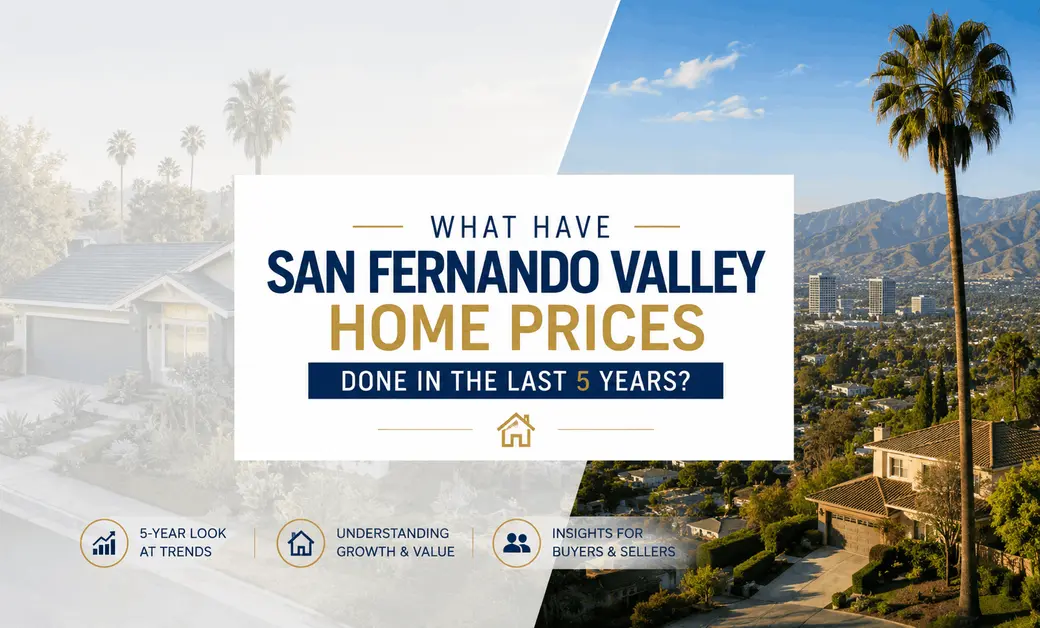
San Fernando Valley home prices have gone through one of the most dramatic five-year cycles in the region's modern history — a pandemic-driven surge, a rate-shock correction, and a stubborn price floor that has held across nearly every SFV city and price band. If you're trying to understand where values stand today in West Hills 91307, Tarzana 91356, Woodland Hills 91364, Northridge 91324/91325, Reseda 91335, Granada Hills 91344, Canoga Park 91304, Chatsworth 91311, or Sherman Oaks 91403/91423 — and where they're likely heading — this is the breakdown.
1. 📈 2021–2022: The Surge — What Drove It and How High It Went
The San Fernando Valley's pandemic-era price surge was not an accident or a bubble in the traditional sense. It was a collision of three forces that hit simultaneously and compounded each other.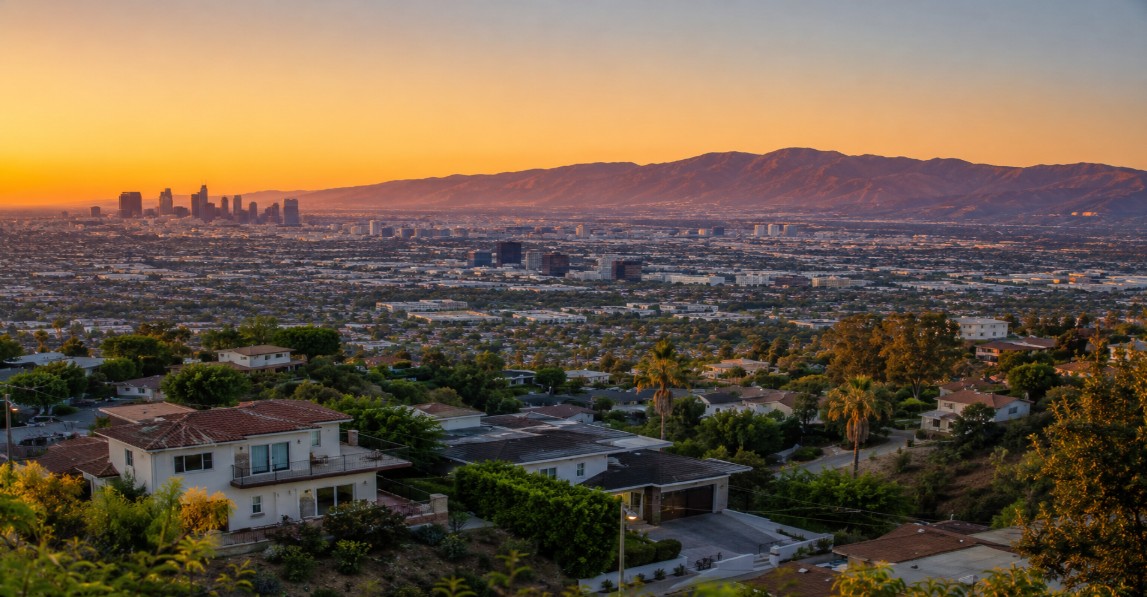
The San Fernando Valley's five-year price arc reflects one of the most dramatic demand cycles in Southern California residential history — understanding it by city and price band is the foundation for every smart 2026 decision.
Force 1 — Historic low rates. Mortgage rates in 2020–2021 dropped to levels most buyers had never seen — at or below 3% for a 30-year fixed. This didn't just make buying affordable; it pulled forward years of latent buyer demand into a compressed 18-month window. Every buyer who had been on the fence entered the market at the same time.
Force 2 — Remote work migration into the Valley. Buyers who had been priced out of the Westside or who were tied to physical offices suddenly had flexibility. The San Fernando Valley — with its larger lots, more square footage per dollar, and lower price-per-square-foot than Santa Monica, Brentwood, or Beverly Hills — became a primary destination for this migration. Cities like Sherman Oaks 91403/91423, Woodland Hills 91364, and Tarzana 91356 absorbed a disproportionate share of this demand.
Force 3 — Compressed inventory. Sellers who might have listed held back during COVID uncertainty. The result was a supply/demand mismatch unlike anything the SFV had seen in decades. In cities like Northridge 91324/91325 and West Hills 91307, months of supply dropped below 1.0 — meaning at the prevailing sales pace, available inventory would have been absorbed in under 30 days.
The combined result across the SFV: median home prices that had been in the $700K–$800K range in many Valley cities in early 2020 were trading at $950K–$1.1M+ by mid-2022. In Sherman Oaks 91403 and Woodland Hills 91364, premium single-family homes that had been priced at $1.2M–$1.4M in 2019 were closing at $1.6M–$1.9M. In Reseda 91335 and Canoga Park 91304, entry-level SFV inventory that had been accessible at $550K–$650K moved to $750K–$850K.
2. 📉 2022–2023: The Rate Shock — What Actually Happened to Prices
In mid-2022, the Federal Reserve began its most aggressive rate-hiking cycle in decades. Mortgage rates, which had been near 3% for most of 2021, crossed 6% by summer 2022 and approached 7–8% by late 2022 and into 2023. The conventional prediction was a housing price correction of 15–25%. In most SFV cities, that prediction did not materialize.
What actually happened was a volume correction, not a price correction.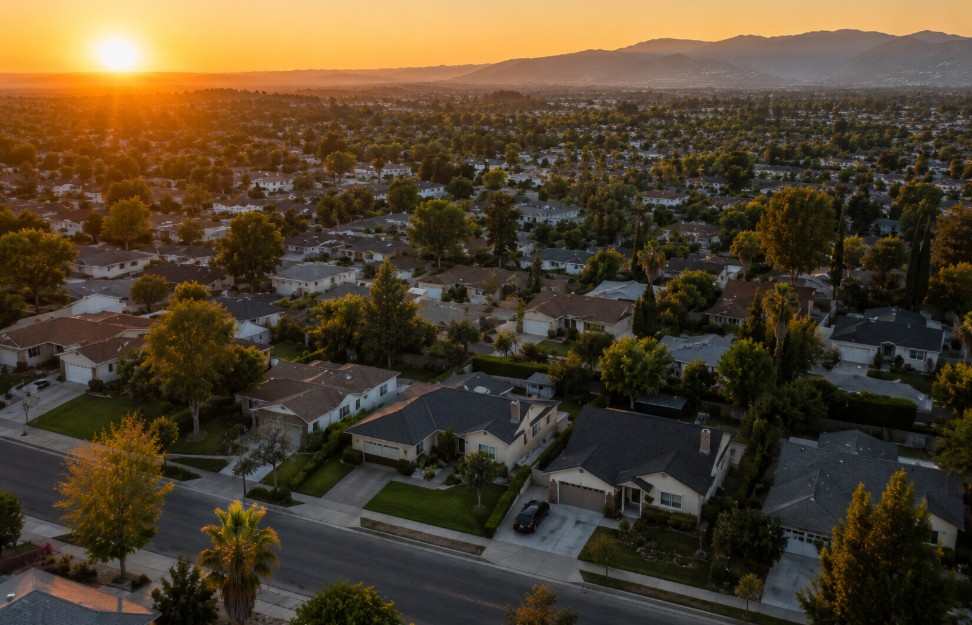
The 2022–2023 rate shock produced a sharp drop in transaction volume across SFV cities like Northridge, Reseda, and Canoga Park — but the price floor held in most neighborhoods, defying the predictions of a broad correction.
Transaction volume across the SFV dropped sharply — in some cities by 30–40% year over year. But prices in most SFV neighborhoods declined only modestly from their 2022 peaks. Here's why:
- → Sellers who didn't have to sell, didn't. Homeowners who had locked in 2–3% mortgages in 2020–2021 had no financial urgency to list. The inventory that would have driven a price correction simply didn't come to market. This "golden handcuff" phenomenon constrained supply just as demand contracted — keeping the price floor elevated.
- → Cash buyers and equity-rich move-up buyers remained active. Not all SFV buyers are rate-sensitive. Cash buyers, buyers using significant equity from prior sales, and buyers using jumbo loan products with portfolio lenders continued to transact through the rate shock.
- → SFV's structural demand drivers didn't change. The employment base, the school quality, the lifestyle infrastructure, and the relative value vs. the Westside that had driven the surge didn't evaporate when rates rose. Demand compressed but did not disappear.
In practical terms: median prices in cities like Sherman Oaks 91403, Woodland Hills 91364, and Tarzana 91356 came off their 2022 peaks by roughly 5–10% by mid-2023. In more price-sensitive markets like Reseda 91335 and Canoga Park 91304, corrections were slightly deeper — 8–12% in some sub-neighborhoods — but nothing approaching the 20–30% drops that were predicted in the national financial press.
3. 📊 2023–2024: Stabilization and the Beginning of Recovery
By late 2023 and into 2024, SFV home prices had found their floor and begun recovering. Several factors drove this:
Inventory remained historically low. The golden handcuff dynamic persisted — owners with sub-4% mortgages continued to hold. New listings across West Hills 91307, Granada Hills 91344, Northridge 91324/91325, and Sherman Oaks 91403 ran well below pre-pandemic historical norms. Low supply placed a floor under prices even as buyer demand remained rate-constrained.
Buyer adaptation. By 2023–2024, buyers had begun accepting the higher-rate reality and adjusting their strategies accordingly — using seller-paid rate buydowns, adjustable-rate products, and recalibrated budgets to re-enter the market. In cities like Tarzana 91356, Woodland Hills 91364, and West Hills 91307, this buyer adaptation drove a meaningful uptick in transaction volume.
Continued in-migration into the Valley. The relative value proposition of the SFV vs. the Westside and vs. other California metros didn't change. Buyers from the Westside, from out of state, and from higher-cost SFV sub-markets continued to find the Valley's price-per-square-foot compelling.
The result across most SFV cities: median prices that had come off their 2022 peaks by 5–10% recovered most of that ground by the end of 2024. In Sherman Oaks 91403 and Woodland Hills 91364, prices in the $1.2M–$1.8M range had returned to near-peak levels. In Northridge 91324/91325 and Granada Hills 91344, the $700K–$1.1M band was trading at or above 2022 peak prices by late 2024.
4. 🏡 Where SFV Prices Stand in 2026 — City by City
The 2026 price landscape across the San Fernando Valley reflects the full five-year arc: a surge, a modest correction, a recovery, and a current market that is trading at or near all-time highs in most cities and price bands.
City-by-city snapshot for 2026:
- → Sherman Oaks 91403/91423: Premium single-family homes south of Ventura are trading at or above 2022 peak levels. The $1.3M–$2M range is tight on inventory and buyer demand from Westside relocators remains persistent.
- → Woodland Hills 91364: The $1.1M–$1.6M range has recovered strongly. South-of-Ventura and Warner Center-adjacent homes are at or near peak pricing. North-of-Ventura homes in the flatter grid sections have slightly more room to negotiate.
- → Tarzana 91356: One of the SFV's most consistent performers over the five-year arc. The $900K–$1.3M range has appreciated steadily and the neighborhood continues to attract buyers priced out of Encino and Sherman Oaks.
- → West Hills 91307: Steady appreciation driven by family demand and constrained lot supply. The $800K–$1.3M range is competitive; above $1.3M there is more inventory and negotiating room.
- → Northridge 91324/91325: The $700K–$1.1M band has recovered fully and is trading at or above 2022 peak pricing in many sub-neighborhoods. Strong school data and lot sizes continue to attract buyers.
- → Granada Hills 91344 and Chatsworth 91311: Solid performers in the $750K–$1.2M range. Above $1.2M, more inventory and longer DOM give buyers more leverage.
- → Reseda 91335 and Canoga Park 91304: The most accessible entry points in the Valley. Prices have recovered from their 2023 dip and the $700K–$900K range is actively traded. Highest upside potential for buyers who can hold 5–7 years.
5. 🔮 Where SFV Prices Are Likely Heading — The Structural Case
Predicting home prices is not something we do with false precision — and anyone who gives you a specific number for 2027 or 2028 without significant caveats is speculating, not analyzing. What we can do is identify the structural factors that have driven SFV appreciation over the past five years and assess whether those factors are still in place.
Factors supporting continued appreciation:
- ✅ Land supply is genuinely constrained. The San Fernando Valley is geographically bounded. There is no meaningful new single-family home construction across cities like Sherman Oaks 91403, Tarzana 91356, or Woodland Hills 91364. You cannot build more of what the SFV offers at the price points it offers them.
- ✅ Relative value vs. the Westside persists. The price-per-square-foot gap between the SFV and comparable Westside neighborhoods has narrowed but not closed. Buyers seeking more space, more land, and a suburban quality of life at a sub-Westside price will continue to find the Valley compelling.
- ✅ Employment anchors remain strong. The entertainment industry in Burbank and Studio City, healthcare employment across the Valley, and the growing tech-adjacent workforce in the Warner Center corridor all support household formation and housing demand in SFV cities.
- ✅ Golden handcuff dynamic continues to constrain supply. Owners who locked in sub-4% mortgages in 2020–2021 are not selling unless they have to. This inventory constraint is likely to persist for years.
Factors that could moderate appreciation:
- ⚠️ Rate environment. If rates remain elevated through 2026–2027, buyer demand stays compressed and transaction volume stays below historical norms. This doesn't drive prices down — the supply constraint prevents that — but it slows appreciation.
- ⚠️ California policy environment. Property tax exposure, insurance availability and cost (a growing concern in parts of the Valley), and state-level economic policy all carry some risk for SFV homeowners and buyers.
- ⚠️ National economic conditions. A meaningful recession would reduce household formation and housing demand across all SFV cities.
The structural case for the San Fernando Valley remains stronger than almost any comparable Los Angeles submarket at the SFV's price points. That doesn't mean prices go up every year in a straight line — the five-year chart proves they don't. It means the floor is real, the demand drivers are durable, and the relative value proposition hasn't changed.
🚫 What NOT to Overdo
Don't overweight short-term rate movement when evaluating SFV market timing. The buyers and sellers who made the best decisions over the past five years — in Northridge 91324, West Hills 91307, Tarzana 91356, and every other SFV city — did so by understanding structural fundamentals, not by timing rates. Rate movements affect monthly payments and transaction volume. They rarely drive the kind of broad price corrections that justify sitting out the market for 12–18 months.
Don't confuse the price correction narrative with SFV reality. National housing market headlines frequently don't apply to specific Los Angeles submarkets. The SFV's supply constraint, relative value proposition, and persistent in-migration mean it behaves differently than Sun Belt markets or over-built secondary cities that saw genuine price corrections of 15–25%. Know the difference before you make a decision based on a national headline.
Don't treat all SFV cities as interchangeable. Reseda 91335 and Sherman Oaks 91403 are both "San Fernando Valley" — but their price trajectory, buyer pool, DOM, and risk/reward profile are meaningfully different. Decisions made with city-level and zip-level specificity consistently outperform decisions made on broad SFV generalizations.
🏠 Real-World Scenario — Northridge 91324
A homeowner in Northridge 91324 purchased in 2019 and watched their home's value surge through the pandemic peak, then fielded advice from friends and family that the "correction was coming" and they should sell before it arrived. They held. The correction that materialized in Northridge 91324 was a modest volume slowdown, not the price decline that was predicted. By 2024, their home had recovered fully from the modest 2023 dip and was trading above the 2022 peak. Their decision to hold — informed by the structural supply and demand analysis rather than the national correction narrative — preserved equity they would have left on the table had they sold in 2022 at what turned out not to be the peak.
🏠 Real-World Scenario — Woodland Hills 91364
A buyer couple considering a purchase in Woodland Hills 91364 in late 2022 paused when rates crossed 6.5% — the monthly payment on their target home had moved up significantly from their initial calculations. They waited 14 months hoping for rate relief. During those 14 months, the home they had wanted in Woodland Hills 91364 appreciated approximately 6–8%. When they re-engaged the market in early 2024, the same quality of home was priced higher than it had been at the point they walked away — and rates were not meaningfully lower. We structured their purchase with a seller-paid rate buydown that addressed the payment concern. They closed in Woodland Hills 91364 and have seen continued appreciation since. The cost of the 14-month wait was real and measurable.
❓ FAQ
Have San Fernando Valley home prices ever dropped significantly? In the SFV's modern history, the most significant price correction was the 2007–2011 post-financial crisis period, when values in cities like Northridge 91324, Reseda 91335, and Canoga Park 91304 declined 25–35% from peak. The 2022–2023 correction following the rate shock was dramatically smaller — 5–12% in most SFV cities — and prices have since recovered. The two periods are not structurally comparable.
Which SFV cities saw the biggest price gains over the past 5 years? Sherman Oaks 91403/91423, Woodland Hills 91364, and Tarzana 91356 saw among the strongest five-year appreciation in the Valley, driven by Westside migration and tight inventory. West Hills 91307 and Granada Hills 91344 also performed strongly. Reseda 91335 and Canoga Park 91304 had the highest percentage gains from lower bases, though they also saw slightly deeper corrections in 2022–2023.
Are SFV home prices expected to keep rising in 2026 and beyond? The structural case for continued appreciation is intact — constrained supply, persistent demand, and strong relative value vs. the Westside. But appreciation is likely to be measured (3–6% annually) rather than the 10–15% annual gains of 2020–2022. Buyers and sellers who plan around modest steady appreciation will make better decisions than those counting on another pandemic-era surge.
Is the SFV more or less affordable than it was 5 years ago? Less affordable on a monthly payment basis — the combination of higher prices and higher rates has increased monthly payments meaningfully. More affordable on a relative basis vs. competing LA submarkets — the SFV's price-per-square-foot advantage over the Westside has widened slightly as Westside prices have been stickier. The affordability equation depends heavily on which cities like West Hills 91307, Reseda 91335, or Northridge 91324 you're targeting and what you're comparing against.
What zip codes in the SFV offer the best value in 2026? ✓ Reseda 91335 and Canoga Park 91304 offer the most accessible entry price points with meaningful upside potential for buyers who can hold 5–7 years. ✓ Northridge 91324/91325 offers strong fundamentals — schools, lot sizes, and proximity to amenities — at prices below Sherman Oaks and Woodland Hills. ✓ Tarzana 91356 is arguably undervalued relative to its lifestyle quality and neighbors Encino and Woodland Hills.
Should I sell my SFV home now or wait for prices to go higher? Timing the market peak is nearly impossible to do accurately. The more useful question is whether your personal timeline, financial situation, and next move align with current market conditions. In cities like Sherman Oaks 91403, Woodland Hills 91364, and Tarzana 91356 where prices are near or at all-time highs, sellers who are ready to move have a strong window. Holding for another 10–15% appreciation while carrying costs accrue is a bet on a specific macro outcome — consult a financial advisor before making that decision.
How do SFV price trends compare to the rest of Los Angeles County? The SFV has generally tracked Los Angeles County's overall trajectory but with two distinguishing features: a stronger relative value floor (the price-per-square-foot gap vs. the Westside acts as a demand backstop) and a more stable correction dynamic (the 2022–2023 correction was shallower in most SFV cities than in some other LA submarkets). Buyers and sellers in the Valley operate in a market with more durable fundamentals than national or county-wide data often suggests.
🎯 Bottom Line
San Fernando Valley home prices have proven more resilient over the past five years than most analysts predicted. The surge was real, the correction was modest, the recovery was steady, and the 2026 landscape across cities like Sherman Oaks 91403, Woodland Hills 91364, Tarzana 91356, West Hills 91307, Northridge 91324/91325, Granada Hills 91344, Reseda 91335, and Canoga Park 91304 reflects a market trading near or at all-time highs with structural demand drivers intact.
What that means practically: sellers who are ready to move are operating in a favorable environment. Buyers who understand the city-level and zip-level nuance can still find strong value plays and build meaningful equity — particularly in Northridge, Tarzana, West Hills, and Reseda. And anyone making decisions based on national correction narratives rather than SFV-specific supply and demand is working from the wrong map.
At Parkway Estate Properties, we track price trends across every SFV city and price band as part of how we advise both sellers and buyers. Roman's direct experience with 30+ SFV renovations gives us a ground-level read on neighborhood trajectory that MLS data alone doesn't capture. If you want to understand what the five-year arc means for your specific home or your target neighborhood, that's exactly the conversation we're built for.
📩 Want to Know What the Price Trends Mean for Your Home or Your Search?
We'll pull the comp trajectory for your specific city and price band and give you an honest read on where values stand and where they're likely heading — no obligation.
Contact Liana Shersher at Parkway Estate Properties: 📧 liana@parkwayestate.com · 📞 (818) 208-5881 · 🌐 parkwayestate.com 15021 Ventura Blvd., Ste. 510, Sherman Oaks, CA 91403
About the Authors
Liana Shersher is a licensed real estate agent with Parkway Estate Properties Inc., serving the San Fernando Valley with a focus on Sherman Oaks, Woodland Hills, and Northridge. DRE# 02164224. She specializes in seller representation and buyer pipeline development for homes in the $700K–$2M range.
Roman Shersher is the broker-owner of Parkway Estate Properties Inc. and a real estate investor with 18 years of experience. DRE# 01855095. He has personally led or co-led renovations on dozens of properties across the San Fernando Valley, including recent projects in Northridge 91324 and Woodland Hills 91364. That hands-on experience across five-plus years of SFV market cycles informs every pricing conversation and market analysis we deliver.
Parkway Estate Properties, Inc. 15021 Ventura Blvd., Ste. 510, Sherman Oaks, CA 91403 (818) 208-5881 · parkwayestate.com · Broker License #: 01873092 Equal Housing Opportunity. Information herein is general and not legal, tax, or financial advice. Consult qualified professionals for your specific situation.
Categories
Recent Posts











Broker | Realtor ® License ID: 01873092
+1(818) 208-5881 | info@parkwayestate.com