
What's the Biggest Mistake Sellers Make in Reseda?

Every Reseda 91335 home sale contains the same set of decisions — pricing, preparation, timing, disclosure — and in each category, there is a specific mistake that Reseda sellers make with enough frequency to qualify as the market's defining pattern. The mistake isn't unique to Reseda. It appears across every SFV working-family market where long-term owners with significant equity are selling into a buyer pool that is more constrained than the seller's expectations. But it has a specific Reseda expression — one shaped by the neighborhood's price band, its buyer pool composition, and the particular dynamic of sellers who have watched adjacent Tarzana 91356 and Northridge 91324/91325 prices and concluded that their Reseda homes should command comparable numbers.
They don't. And the sellers who discover this through accumulated days on market rather than through a pre-launch comp analysis are the Reseda sellers who most consistently leave money on the table — not because the Reseda market is weak but because the strategy mismatch between their expectations and the specific buyer pool that determines their outcome costs them the preparation discipline and pricing accuracy that would have produced stronger results.
This article covers the five most significant seller mistakes in Reseda 91335 — the overpricing trap, the preparation deficit, the disclosure avoidance, the timing error, and the agent selection mistake — with the specific Reseda market context that turns each mistake from an abstract warning into an actionable correction.
1. 🚨 Mistake #1 — Overpricing Based on the Wrong Comp Set
The single most damaging and most common mistake Reseda sellers make is overpricing — not through arbitrary optimism but through a specific analytical error: using the wrong comparable sales as the pricing anchor. In Reseda 91335, this usually means one of three misapplied comp sets.
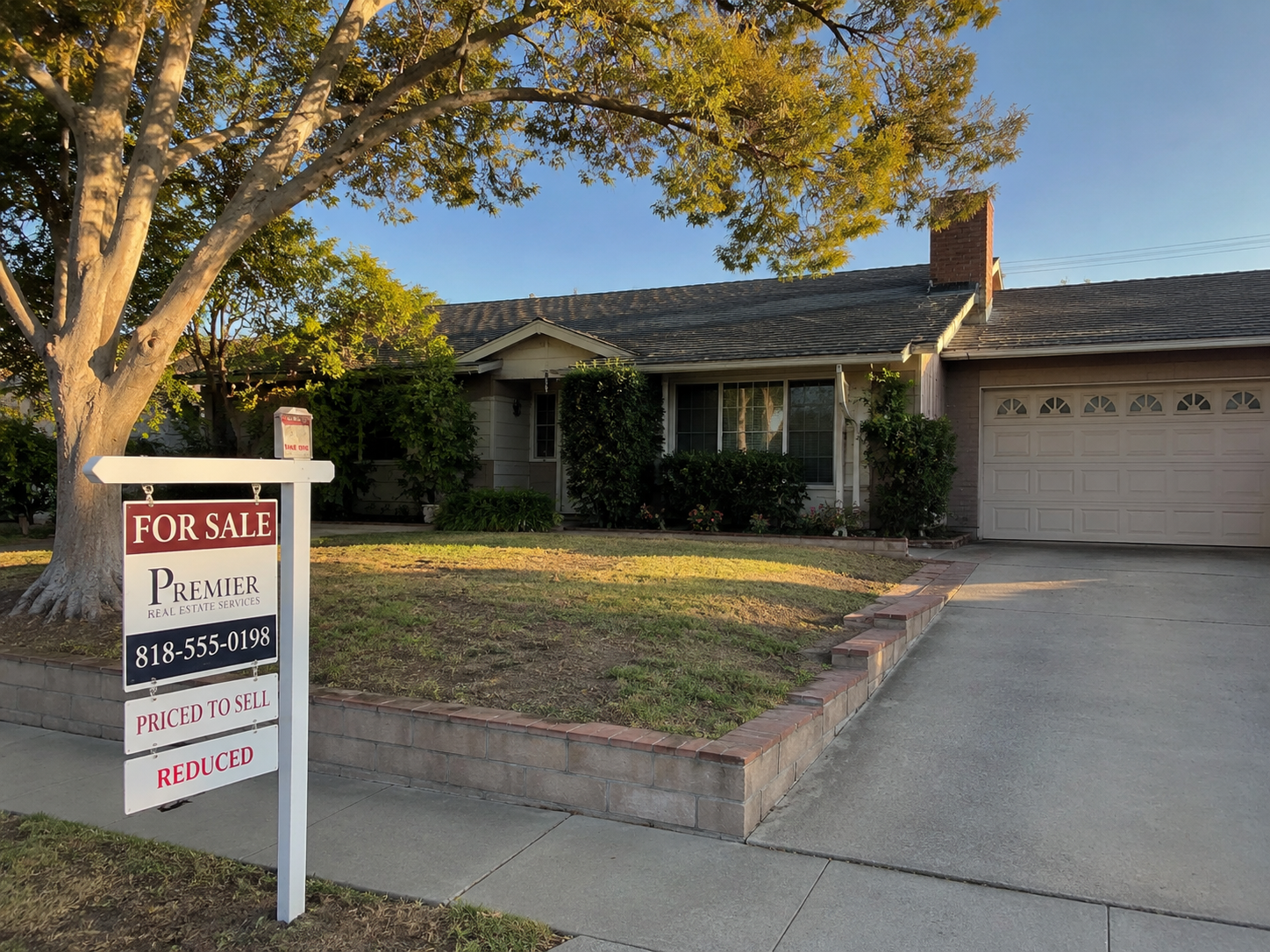 The overpriced Reseda listing — the most common and most costly seller mistake in the 91335 market. Extended DOM accumulates buyer leverage, signals market doubt to every subsequent showing, and consistently produces lower final closes than correct launch pricing would have generated in fewer days with less carrying cost.
The three Reseda overpricing errors:
Error 1 — Using Tarzana 91356 comps for Reseda 91335 homes:
Tarzana 91356 shares a zip code boundary with Reseda — some 91356 addresses are effectively in the Reseda residential fabric, and Tarzana's comp ceiling at the $850K–$1.4M range tempts Reseda sellers whose homes are near the 91356 boundary into pricing that the Reseda buyer pool cannot support.
The specific gap: a comparable 3-bedroom, 1,500 sq ft home in Tarzana 91356 proper — south of Ventura Boulevard or in the premium Tarzana sub-neighborhoods — sells at $950K–$1.1M. A genuinely comparable home in Reseda 91335 sells at $780K–$880K. The gap is real, consistent, and driven by the specific school quality and buyer pool differences that define the two markets.
Reseda sellers who price at Tarzana comp levels generate showing traffic from buyers who are cross-shopping both markets — and who know immediately upon touring that the Reseda home is not priced at Reseda values. These buyers don't offer. They return to the Tarzana home where the price reflects the market premium that Tarzana's specific advantages justify.
Error 2 — Using recent renovated Northridge comps for original-condition Reseda homes:
Northridge 91324/91325 renovated home comps at $875K–$1.1M for well-renovated 3–4 bedroom homes attract Reseda sellers who have a comparable bedroom count and square footage but whose home is in original or minimally updated condition. The comparison fails on two axes: the condition differential and the neighborhood premium differential.
Reseda original-condition 3-bedroom homes have a very different buyer profile than Northridge renovated equivalents. The Northridge renovated home attracts move-up families who want move-in-ready; the Reseda original-condition home attracts first-time buyers who are willing to live in original condition, and investors who will renovate for rental or resale. These buyer pools have different purchasing power ceilings, and pricing for the wrong one produces the showing traffic mismatch — investor buyers who calculate renovation cost and offer accordingly, not at the Northridge renovated comp ceiling the seller priced for.
Error 3 — Using the seller's own renovation cost as a price justification:
Reseda sellers who have spent $45,000–$75,000 on a renovation — a kitchen refresh, a bathroom remodel, new flooring — frequently add that renovation cost to what they perceive as their home's prior value and price accordingly. The market does not reimburse renovation cost dollar-for-dollar. Renovation returns in Reseda 91335 are percentage returns on comp ceiling recovery — a $45,000 focused renovation on a home with a $820K comp ceiling returns $60,000–$80,000 in comp ceiling recovery, not $45,000 added to whatever the seller thought the home was worth pre-renovation.
The correct Reseda comp analysis:
- → ✅ Pull closed comps within 0.4 miles of the specific Reseda address — not zip code averages, not adjacent market comps
- → ✅ Match bedroom count, bathroom count, square footage (±150 sq ft), and lot size (±1,500 sq ft)
- → ✅ Require the same condition tier — renovated comps for renovated homes, original-condition comps for original-condition homes
- → ✅ Use 90-day maximum look-back — Reseda pricing in a rate-sensitive market shifts meaningfully over six-month windows
- → ✅ Pull active and pending listings simultaneously — the competition your home faces at launch shapes its market position
What overpricing costs Reseda sellers:
The financial cost of Reseda overpricing is specific and measurable:
- → 💰 Carrying costs: Monthly carrying costs for a Reseda seller with a $350,000 remaining mortgage: approximately $2,800–$3,400/month (mortgage + taxes + insurance + utilities). Every unnecessary week of DOM accumulation costs $700–$850.
- → 📉 Price reduction necessity: The typical Reseda overpricing pattern produces 2–3 price reductions over 45–90 days before the correct market price is established. Each reduction costs the seller the carrying cost of the DOM between reductions plus the negotiating leverage that the accumulated DOM has transferred to buyers.
- → 💬 The stigma effect: A Reseda listing with 60+ days of DOM and multiple price reductions carries a market stigma that every buyer's agent explains to their client. "Why has this been sitting?" is the question that follows the listing through subsequent showings — even after the price has been corrected to market.
2. 🔨 Mistake #2 — Under-Preparing the Home for the Reseda Buyer Pool
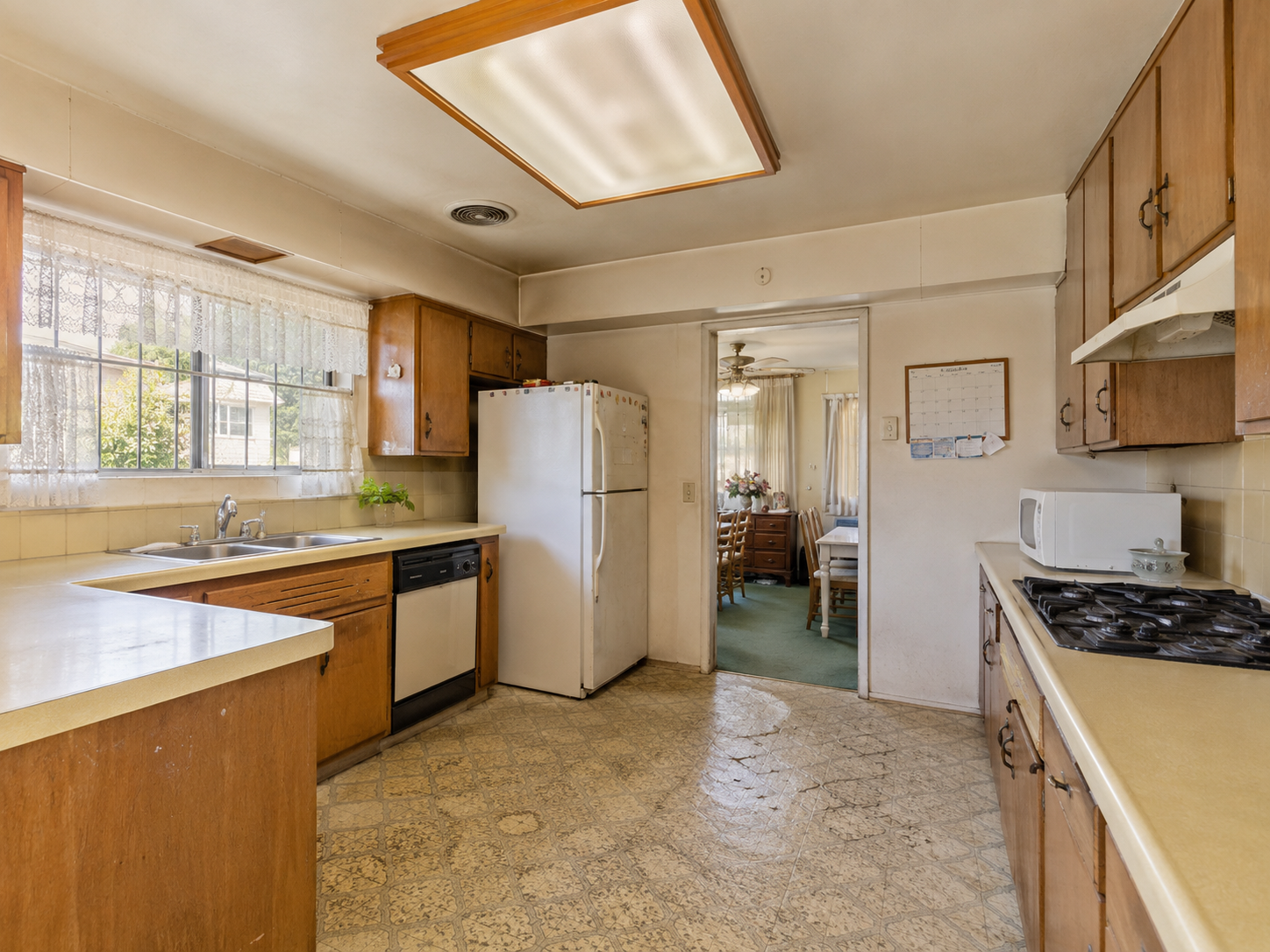 The Reseda 91335 buyer pool is not the Encino 91316 or Studio City 91604 buyer pool. It is composed primarily of first-time buyers who have stretched to reach $700K–$850K pre-approval, move-up families from Van Nuys 91401/91405/91406 and Lake Balboa 91406 who are making their first significant equity step, and the specific rate-sensitive buyer who is evaluating monthly payment math more carefully than premium market buyers do.
This buyer pool is not unsophisticated — but it is less able to look past presentation quality to see underlying value than a higher-income buyer pool with more renovation budget capacity. The Reseda buyer who sees a home with dated paint, original flooring from 1987, overgrown front landscaping, and a kitchen that hasn't been touched in 25 years calculates: "This needs $60,000–$80,000 of work before I can live here comfortably." They don't discount that cost as an exciting renovation opportunity. They subtract it from the asking price and offer accordingly — or they move on to the renovated alternative.
The specific Reseda preparation deficit pattern:
Reseda sellers consistently under-prepare in the same specific categories:
- → ❌ Skipping interior paint: The most commonly skipped and highest-ROI preparation step in Reseda. Original paint — particularly the earth tones, mauve, forest green, and country yellow that defined 1980s–1990s interior design — dates a Reseda home immediately in listing photography and produces the "dated" first impression that suppresses showing requests. A $7,000–$11,000 professional interior repaint in Sherwin-Williams Agreeable Gray or Benjamin Moore White Dove produces $18,000–$30,000 in perceived value lift and generates meaningfully more first-week showing requests.
- → ❌ Launching with original flooring: Reseda homes built in the 1950s–1970s frequently have a patchwork of original materials — carpet in bedrooms that is 15–20 years old, vinyl or linoleum in kitchen and bathroom areas, and possibly original hardwood under the carpet that sellers don't know is there. Listing with this flooring patchwork produces listing photography where the condition is immediately apparent and where buyers calculate replacement cost into their offer. LVP flooring unification across the main floor at $8,000–$15,000 consistently produces $15,000–$28,000 in comp ceiling recovery.
- → ❌ Neglecting curb appeal before photography: Listing photography is shot before curb appeal improvement in the most common Reseda preparation deficit. The first listing photo determines whether a buyer schedules a showing. A Reseda home with overgrown landscaping, a faded or peeling front door, cracked driveway surface, and aged house numbers filters buyers away before they've seen the interior. The Reseda curb appeal package — front door repaint ($150–$250), landscaping refresh ($800–$2,000), pressure-wash ($200–$400), modern house numbers ($50–$90) — costs $1,200–$2,740 and produces a meaningfully different listing photography outcome.
- → ❌ Skipping professional staging on vacant homes: Reseda sellers who vacate the home for sale and then list without staging produce listing photography where the spaces read as institutional rather than livable. Entry-level staging packages for Reseda vacant homes ($1,200–$2,800) produce photography that the vacant alternative cannot match.
The focused Reseda preparation scope:
The preparation investment that produces maximum ROI within Reseda's $650K–$950K comp ceiling:
- → 🎨 Interior repaint: $7,000–$11,000
- → 🏠 Main-floor LVP flooring: $8,000–$15,000
- → 🍳 Kitchen cosmetics (cabinet repaint, hardware, faucet): $4,500–$9,000
- → 🚿 Primary bath refresh (vanity, fixtures, shower enclosure): $4,500–$8,000
- → 🌿 Curb appeal package: $3,500–$7,500
- → 📸 Professional photography + basic staging: $1,800–$3,500
- → Total focused scope: $29,300–$54,000
Against a comp gap of $70,000–$120,000 between original-condition and renovated Reseda values in most 91335 sub-neighborhoods, this investment produces net improvement returns of $40,000–$90,000 — the preparation that transforms a frustrating Reseda sale into an optimized one.
3. 📋 Mistake #3 — Disclosure Avoidance and the Inspection-Period Disaster
Reseda 91335's working-family housing stock — primarily 1950s–1970s construction — has the same predictable deferred maintenance patterns as comparable central Valley neighborhoods: aging HVAC systems, roofs approaching end of life, original electrical panels, galvanized plumbing in varying condition. The mistake Reseda sellers make with this deferred maintenance is not failing to fix it — it is failing to disclose it accurately, either through omission on the Transfer Disclosure Statement and Seller Property Questionnaire, or through minimizing language that experienced buyer inspectors immediately contradict.
 The Reseda inspection-period renegotiation — produced when buyer inspectors discover deferred maintenance that seller disclosure minimized or omitted. The cost of this discovery under buyer contractual leverage consistently exceeds the cost of proactive pre-listing disclosure combined with accurate pricing that reflects known condition.
Why Reseda disclosure avoidance is both illegal and counterproductive:
California requires sellers to disclose all known material defects through the Transfer Disclosure Statement, Seller Property Questionnaire, and any required natural hazard disclosures. Omitting or minimizing known defects — the HVAC that cycles inefficiently, the roof that has had ongoing leak patches in the master bedroom corner, the electrical panel the seller's electrician told them needed replacement — creates both legal exposure and the specific transaction outcome that disclosure avoidance is meant to avoid: buyer renegotiation from a position of contractual strength.
The transaction dynamic when a buyer inspector discovers undisclosed deferred maintenance at day 10 of the inspection contingency:
- → 🔴 The buyer is in contractual control: They can cancel and receive their earnest money back, or they can demand a credit or price reduction. The seller is in escrow, has already emotionally moved on, has likely begun making replacement housing arrangements, and is deeply motivated to save the transaction.
- → 🔴 The buyer's leverage is maximum: They know the seller wants to close. They know the seller has already been on market, has accumulated DOM, and has limited appetite for returning to active listing status with disclosed deferred maintenance now in the public record.
- → 🔴 The requested credit consistently exceeds the disclosure cost: A buyer who discovers an undisclosed HVAC system at end of life during inspection requests a $12,000–$15,000 credit — often more than the replacement cost — because they are now negotiating with leverage, not information. The seller who disclosed the HVAC condition before listing and priced the home with it reflected would have absorbed a $10,000–$12,000 pricing adjustment without the contractual leverage that mid-escrow discovery creates.
The proactive disclosure strategy:
- → ✅ Order a pre-listing inspection ($400–$600) before any price is set or any preparation is committed to — the inspection findings shape the disclosure package, the preparation priority, and the list price simultaneously
- → ✅ Disclose everything the inspection reveals — including items the seller does not intend to fix, with cost estimates for the buyer's planning
- → ✅ Price the home to reflect disclosed condition — the Reseda buyer who receives full disclosure and a price that reflects known deferred maintenance does not use inspection findings as renegotiation leverage; they already knew and priced their offer accordingly
- → ✅ Provide vendor estimates for disclosed items — a disclosure package that includes a roofing contractor's written estimate for the $15,500 roof replacement demonstrates seller good faith and gives the buyer's agent a number they can verify rather than speculate about
4. 📅 Mistake #4 — Seasonal Timing Errors
Reseda 91335 has clear seasonal patterns that experienced sellers use and that inexperienced sellers ignore — producing the December launch that reaches holiday-compressed buyer attention, the August launch that hits northern Valley heat and summer buyer fatigue simultaneously, and the missed spring window that would have generated the multiple-offer dynamics that the rest of the year rarely produces.
The Reseda seasonal map:
- → 🌸 Spring (March–May): The optimal window. First-time buyer pool is activated by tax refunds and pre-summer urgency. Move-up family buyers are motivated by school enrollment timelines. Pre-approved buyer demand peaks. Correctly priced, well-prepared Reseda listings in this window generate 8–15 first-week showings and produce offer conditions that consistently produce close-to or above-asking results.
- → ☀️ Summer (June–August): Moderated conditions. Northern Valley heat reduces showing comfort and weekend open house attendance. School-enrollment urgency has resolved. The Reseda summer market requires pricing at midpoint (not top) of the defensible comp range and morning-only showing windows. Correct summer strategy produces acceptable results; spring-strategy pricing in summer conditions produces extended DOM.
- → 🍂 Fall (October–November): The underutilized second window. Reseda's fall market is meaningfully better than most sellers expect — re-engaged buyers who missed spring, thinner competing inventory, and year-end financial motivation among qualified buyers. October launches with full preparation and correct pricing consistently outperform August launches with equivalent preparation.
- → ❄️ Winter (December–January): Launch only if necessary. Holiday buyer attention compression, reduced inventory that is both a supply and demand reduction, and the specific post-Thanksgiving buyer deactivation that doesn't recover until mid-January produce the year's weakest conditions. Sellers who can control their timeline should not launch in December.
The most common Reseda timing mistakes:
- → ❌ December launches motivated by "let's just get it on the market." The December listing that generates 2–4 showings over three weeks, accumulates stigma DOM, and relaunches in January with a price reduction has produced the worst of both timing and pricing outcomes.
- → ❌ Spring preparation that starts too late. The seller who decides to list "this spring" in late March and schedules photography for mid-April has missed the first four weeks of peak spring buyer activation. Spring preparation should begin in January for a mid-March MLS launch.
- → ❌ Summer pricing at spring levels. The Reseda seller who launched correctly in April at $825,000 and accepted an offer at $831,000, but whose neighbor then listed in July at $845,000 expecting equivalent results, is the seller who accumulates 55 days of DOM before reducing to $812,000 and closing at $808,000 — a worse outcome than a July launch at $815,000 would have produced.
5. 🤝 Mistake #5 — Choosing the Agent Who Quoted the Highest Price
 The final — and frequently the initiating — Reseda seller mistake is selecting a listing agent based on the highest suggested list price rather than on demonstrated sub-neighborhood market knowledge, verified recent Reseda transaction history, and the specific preparation and pricing discipline that the Reseda market rewards.
The "highest price" agent selection dynamic is a well-documented real estate industry pattern — agents who want listings sometimes quote above-market prices to win the listing, knowing that they'll have the price reduction conversation after the seller has committed to the relationship and accumulated some DOM. In Reseda's $650K–$950K market, where the price band is relatively compressed and where accurate pricing matters more than in markets with more negotiating room, this dynamic is particularly costly.
What to evaluate instead of the quoted price:
- → ✅ Recent closed Reseda 91335 transactions in the last 12 months: How many listings has this agent closed in 91335? What was their average list-to-close ratio (above or below asking)? What was their average DOM?
- → ✅ Sub-neighborhood knowledge: Can the agent specifically explain the comp ceiling differences between the Reseda streets north of Saticoy versus south of Saticoy, or between the Reseda-Tarzana boundary streets and core Reseda? This granularity is the knowledge that accurate Reseda pricing requires.
- → ✅ Preparation guidance quality: Does the agent provide a specific, budgeted preparation scope before listing — or do they suggest "cleaning and decluttering" regardless of the home's actual condition? The agent who provides the comp-calibrated improvement scope is the agent who understands what the Reseda buyer pool responds to.
- → ✅ Disclosure philosophy: Does the agent recommend proactive pre-listing inspection and full disclosure, or do they suggest minimizing disclosure to avoid buyer concern? The correct answer is always full disclosure with pricing that reflects condition.
The quoted-price trap in Reseda:
The agent who quotes $875,000 for a Reseda home with a $820,000 comp ceiling wins the listing. The agent who quotes $822,000 and explains the comp analysis precisely loses the listing. Six weeks later, the first agent is having the price reduction conversation with a frustrated seller. The second agent's client, who listed at $822,000 with a different seller, went under contract in 12 days at $827,000.
The difference between these two outcomes is not agent charisma or marketing creativity. It is pricing accuracy grounded in honest sub-neighborhood comp analysis — the foundation of every successful Reseda seller outcome and the primary differentiator between agents who serve their clients' interests and those who serve their own listing inventory interests.
🚫 What NOT to Overdo
Don't over-renovate for the Reseda comp ceiling. Reseda 91335's $650K–$950K transaction band does not absorb a $80,000–$120,000 renovation investment with proportional return. The focused scope — paint, flooring, kitchen cosmetics, curb appeal — at $30,000–$55,000 produces maximum ROI within the comp ceiling. Above that investment level, each additional dollar of renovation produces diminishing returns because the Reseda comp ceiling doesn't rise proportionally with renovation spend. Sellers who invest $90,000 in a full kitchen and bath renovation targeting a $950,000+ price point consistently discover that the Reseda comp ceiling caps their recovery at levels that make the full renovation investment a break-even or negative outcome.
Don't assume that Reseda buyers will do their own renovation. The Reseda first-time buyer at $720K–$820K typically does not have significant post-closing renovation capital — they've used most of their available savings for the down payment and closing costs. Listing an original-condition Reseda home and expecting the buyer to renovate is a valid strategy for the investor-targeting approach — but it requires pricing that reflects the renovation cost the investor will absorb, not pricing that expects a non-investor buyer to pay full renovated comp ceiling for a home they'll need to renovate themselves.
Don't let the offer excitement of a high first offer override the comp analysis. Occasionally a Reseda seller receives a first offer at asking price on an overpriced listing from a buyer who didn't do their comp analysis. This happens. What also happens in this scenario: the buyer's agent does the comp analysis, the appraisal comes back $40,000 below the purchase price, and the transaction falls apart during the financing contingency because the lender won't fund above appraised value. Accepting an over-asking offer that is above the comp ceiling doesn't produce a successful close — it produces an appraisal failure 25 days into escrow, a relisting with accumulated DOM, and the same price correction the seller should have made at launch.
Don't treat Reseda's working-family buyer pool as unsophisticated. First-time buyers in Reseda in 2026 have been pre-approved by lenders who require documentation, have been coached by buyer's agents who know the market, and have often been searching for months — touring 15–25 homes before making an offer. They know the difference between a correctly priced Reseda home and an overpriced one. They know what $45,000 in deferred maintenance looks like. And their buyer's agents brief them specifically on the DOM history and price reduction patterns of any listing that has accumulated market exposure. The Reseda seller who assumes their buyer lacks market knowledge is the seller who gets outmaneuvered in every negotiation.
🏠 Real-World Scenario — Reseda 91335
A long-term Reseda 91335 homeowner — 22 years in the home, significant equity — listed with an agent who quoted $895,000 based on a comp set that included two Tarzana 91356 sales and one Northridge 91324 sale that was fully renovated. The seller's home was original condition — 1979 kitchen, original bathrooms, carpet throughout, exterior paint last done in 2011.
First week: 3 showings, no offers. Second week: 2 showings, no offers. Showing feedback consistent: "Price feels high for the condition." The listing agent attributed the low showing volume to "the market" and recommended patience.
Day 32: first price reduction to $869,000. Second week at $869,000: 4 showings, one offer at $808,000. The seller countered at $850,000. The buyer walked.
Day 52: second price reduction to $839,000. Two showings that week. One investor offer at $790,000 with a 10-day inspection. Seller accepted out of exhaustion and carrying cost pressure. Final close: $790,000 at 64 days on market.
We ran the retrospective analysis. Reseda 91335 original-condition comp ceiling for that sub-neighborhood: $798,000–$812,000. A launch at $809,000 with a $31,000 focused preparation scope (paint, flooring, curb appeal, professional photography) would have produced:
- → Post-preparation comp position: $855,000–$875,000
- → Expected close: $862,000 in approximately 18–22 days
- → Carrying cost during preparation and abbreviated market time: approximately $7,400
- → Net proceeds: approximately $821,000 versus the $790,000 the overpriced-then-investor-sold outcome produced
The $31,000 preparation investment plus correct launch pricing would have netted the seller approximately $31,000 more than the as-is overpriced strategy — after accounting for the preparation cost. The seller who couldn't find the bandwidth for the focused preparation scope and the pricing discipline ended with a worse outcome than if they had done nothing and launched at the accurate as-is price of $805,000.
🏠 Real-World Scenario — Reseda 91335
A Reseda 91335 seller had received a pre-listing inspection that revealed a roof at end of life ($14,500 replacement estimate from a licensed roofing contractor), an HVAC system 19 years old operating marginally ($9,800 replacement estimate), and original galvanized supply plumbing with reduced flow in two fixtures ($6,200 to repipe affected lines). Total known deferred maintenance: $30,500.
Their listing agent at the time advised them to "disclose the roof but not necessarily the HVAC or plumbing unless asked directly" — a disclosure strategy that is both legally questionable and practically counterproductive.
We provided a different approach: disclose all three items in the disclosure package with the written contractor estimates, price the home to reflect the disclosed condition, and let buyers make informed offers with complete information.
Pricing analysis: Reseda comp ceiling for renovated condition in their sub-neighborhood: $845,000. Deferred maintenance buyer discount (what a buyer's offer would reflect knowing about the $30,500 in deferred items): approximately $28,000–$35,000. Correct as-is disclosed price: $812,000.
We launched at $815,000 with full disclosure of all three deferred maintenance items and the corresponding contractor estimates in the disclosure package. First week: 9 showings — the buyers who showed up knew exactly what they were evaluating and came prepared to consider the home at the disclosed condition. Offer at day 8 at $804,000 from a first-time buyer who had budgeted for the deferred maintenance and had a contractor lined up. Counter-accepted at $810,000. Inspection period: the buyer's inspector confirmed the three disclosed items and noted two additional minor items (toilet flapper replacement and garage door spring service). Buyer requested $1,800 credit for the two uninspected items. Seller agreed. Final close: $808,200.
The seller who disclosed fully and priced accurately sold in 8 days at $808,200. The non-disclosure approach their prior agent recommended would have launched at $845,000, discovered the same deferred maintenance at day 12 of escrow, and negotiated a $30,500+ credit from a position of leverage deficiency — likely closing at $800,000 after 45+ days of DOM and the specific carrying and emotional cost that the extended market exposure produced.
❓ FAQ
Why do Reseda homes take so long to sell? Reseda homes that take longer to sell almost universally share one or more of three characteristics: ✓ Overpricing — typically anchored to adjacent Tarzana 91356 or Northridge 91324/91325 comps that the Reseda buyer pool cannot support. ✓ Under-preparation — listing in original or minimally updated condition without the focused improvement scope (paint, flooring, curb appeal) that generates the first-week showing traffic that drives competitive dynamics. ✓ Seasonal timing errors — December or August launches without the pricing adjustments those windows require. Correctly priced, well-prepared Reseda listings in the spring window consistently close in 14–28 days.
What is the biggest mistake Reseda home sellers make? Overpricing — specifically using the wrong comparable sales to anchor the list price. The most common version is using Tarzana 91356 or renovated Northridge 91324/91325 comps for homes that should be priced against Reseda 91335 sub-neighborhood-specific closed sales. The resulting price — typically 8–15% above the Reseda comp ceiling — generates insufficient showing traffic, accumulates DOM that transfers buyer leverage, requires price reductions, and ultimately closes at or below where correct initial pricing would have closed in a fraction of the time.
How do I avoid overpricing my Reseda home? The specific steps that prevent Reseda overpricing: ✓ Pull closed comps within 0.4 miles, same bedroom count, comparable condition, within the last 90 days — using only Reseda 91335 sales, not adjacent market comps. ✓ Hire a listing agent with verified recent Reseda 91335 transaction history — not an agent whose primary market is Tarzana or Northridge who is applying adjacent market pricing logic to your Reseda home. ✓ Get an independent appraisal before listing if there is any uncertainty about the comp ceiling — a $500–$700 pre-listing appraisal is the most cost-effective overpricing prevention tool available.
Should I renovate my Reseda home before selling? The correct answer depends on your specific comp gap and timeline. ✓ Renovate (focused scope) if: the renovated comp ceiling in your sub-neighborhood is $70,000–$120,000 above your as-is baseline, a $30,000–$55,000 focused preparation scope leaves meaningful positive ROI, and you have 6–10 weeks of timeline. ✓ Sell as-is with correct pricing if: the comp gap is under $50,000 above preparation cost, your home has structural deferred maintenance that cosmetic improvement won't address, or your timeline is under 30 days. The pre-listing inspection followed by the comp analysis is the correct sequence — not the renovation decision followed by pricing.
What improvements add the most value when selling in Reseda? In order of ROI within Reseda's $650K–$950K comp ceiling: ✓ Professional interior repaint ($7,000–$11,000, returns $18,000–$30,000). ✓ Main-floor LVP flooring ($8,000–$15,000, returns $15,000–$28,000). ✓ Curb appeal package — front door repaint, landscaping refresh, pressure-wash ($3,500–$7,500, generates the showing traffic that makes all other improvements relevant). ✓ Kitchen cosmetics — cabinet repaint, hardware, faucet ($4,500–$9,000, produces significant listing photography improvement). ✓ Primary bath refresh — vanity, fixtures, shower enclosure update ($4,500–$8,000). The combined focused scope at $28,000–$50,500 produces comp ceiling recovery of $60,000–$100,000 in most Reseda 91335 sub-neighborhoods.
How do I find the right listing agent for my Reseda home? Evaluate listing agents on: ✓ Verified Reseda 91335 closed transactions in the last 12 months — not adjacent market experience applied to Reseda. ✓ Average list-to-close ratio and days on market from their Reseda listings — accessible through the MLS data your agent can pull or through public records. ✓ Specific sub-neighborhood comp knowledge — can they explain the pricing difference between specific Reseda street clusters without looking it up? ✓ Pre-listing preparation guidance quality — do they provide a specific, budgeted improvement scope, or generic advice? ✓ Full disclosure recommendation — do they recommend pre-listing inspection and full disclosure? Avoid agents whose primary value proposition is the highest quoted list price rather than demonstrated market accuracy.
🎯 Bottom Line
The biggest mistake Reseda sellers make is not a single catastrophic error — it is a cascade of smaller decisions that compound into an outcome significantly worse than correct strategy would have produced. The overpricing that produces the first 30 days of DOM. The showing feedback that's reviewed at day 35 instead of day 10. The price reduction that comes too late to preserve spring market momentum. The inspection-period renegotiation that the disclosed deferred maintenance would have avoided. The agent relationship that began with a quoted price that was always going to require a correction.
Every one of these mistakes is avoidable. The Reseda seller who completes the pre-listing inspection before setting a price, who uses only Reseda 91335 sub-neighborhood-specific comps as the pricing anchor, who executes the focused preparation scope before professional photography, who launches in the spring or October windows with full disclosure, and who selects a listing agent based on verified Reseda transaction performance rather than the most optimistic list price quote — that seller consistently produces outcomes in the top quartile of Reseda seller results.
At Parkway Estate Properties, Liana's seller representation experience across Reseda 91335, Tarzana 91356, Northridge 91324/91325, Canoga Park 91304, and the broader central SFV means every Reseda seller conversation we have begins with the specific comp analysis, the honest preparation scope, and the disclosure framework that protects their transaction — not the highest list price that wins the listing and disappoints the seller six weeks later.
📩 Want to Know What Your Reseda Home Is Actually Worth — and What It Would Take to Maximize That Number?
We'll run the sub-neighborhood comp analysis for your specific address, identify the focused preparation scope that produces maximum ROI within your comp ceiling, and give you the honest pricing recommendation before you've committed to any strategy.
Contact Liana Shersher at Parkway Estate Properties: 📧 liana@parkwayestate.com · 📞 (818) 208-5881 · 🌐 parkwayestate.com 15021 Ventura Blvd., Ste. 510, Sherman Oaks, CA 91403
About the Authors
Liana Shersher Liana Shersher is a licensed real estate agent with Parkway Estate Properties Inc. and an Accredited Buyer's Representative (ABR) serving the San Fernando Valley — with a focus on Sherman Oaks, Encino, Tarzana, Woodland Hills, and Northridge (DRE# 02164224). Liana guides first-time homebuyers through every step of the purchase, from the first showing to the keys in hand, and represents move-up and repeat buyers across the Valley. For sellers, she builds the pricing and marketing strategy that positions a home to sell for top dollar, fast. Buyers and sellers work with Liana for clear communication, sharp local knowledge, and an agent who treats their goals like her own.
Roman Shersher Roman Shersher is the broker-owner of Parkway Estate Properties Inc. and a real estate investor with 18 years of experience in the San Fernando Valley (DRE# 01855095). Roman has personally led or co-led renovations on dozens of properties across the Valley, including recent projects in Northridge (91324) and Woodland Hills (91364). That hands-on renovation and investment experience shapes every pricing conversation and days-on-market strategy at Parkway — sellers get a realistic read on what improvements actually return at resale, and buyers get an expert eye on a home's true condition and upside.
Parkway Estate Properties, Inc. 15021 Ventura Blvd., Ste. 510, Sherman Oaks, CA 91403 · (818) 208-5881 · parkwayestate.com · Broker License #: 01873092 Equal Housing Opportunity. Information herein is general and not legal, tax, or financial advice. Consult qualified professionals for your specific situation.
Categories
Recent Posts











Broker | Realtor ® License ID: 01873092
+1(818) 208-5881 | info@parkwayestate.com