
Calabasas Real Estate Market Update — 2026 Q-by-Q outlook
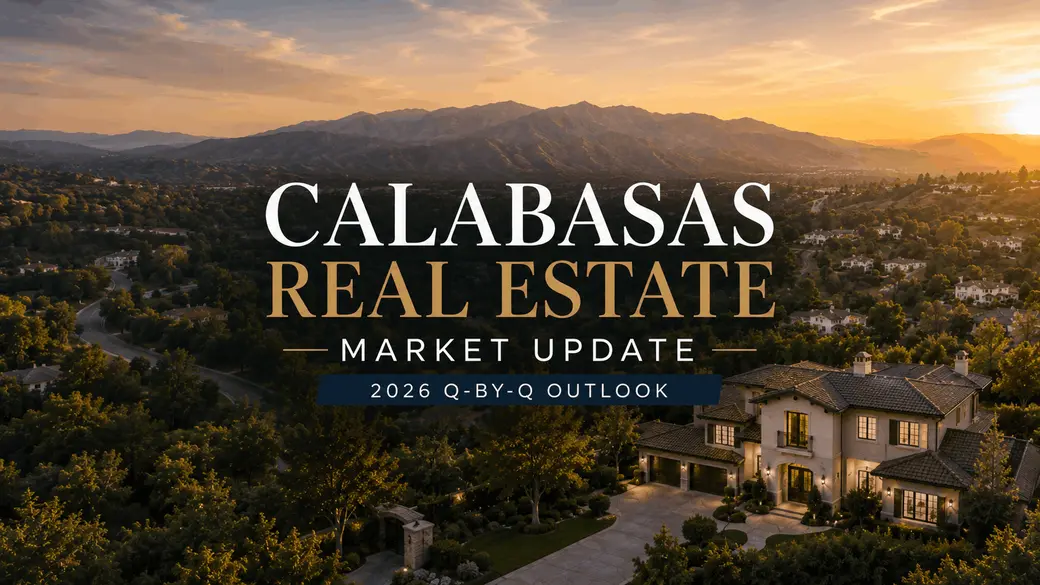
Calabasas is one of the most consistently misread markets in the greater San Fernando Valley — and in 2026, the misreading runs in both directions. Some buyers arrive expecting a correction that never materialized. Some sellers arrive expecting 2022 peak dynamics that are no longer fully present. The reality in Calabasas 91302 and 91372 is more nuanced than either narrative: a market with intact structural demand drivers, constrained inventory, and a specific buyer profile whose motivations — school quality, privacy, outdoor access — are not rate-sensitive in the same way that volume-driven SFV markets are. Understanding that nuance, quarter by quarter, is what separates smart Calabasas decisions from expensive ones in 2026.
This article provides the complete 2026 Calabasas market outlook — what happened in Q1, what is developing in Q2, and what buyers and sellers should expect in Q3 and Q4 — grounded in the structural factors that drive Calabasas pricing rather than the national headlines that consistently misapply to this specific market.
1. 📊 Q1 2026 — What Actually Happened in the Calabasas Market
The first quarter of 2026 in Calabasas 91302 and 91372 followed the pattern that has defined this market through multiple rate cycles: the school-calendar buyer profile activated early, inventory remained constrained, and well-prepared homes that priced correctly moved efficiently despite the broader rate environment.
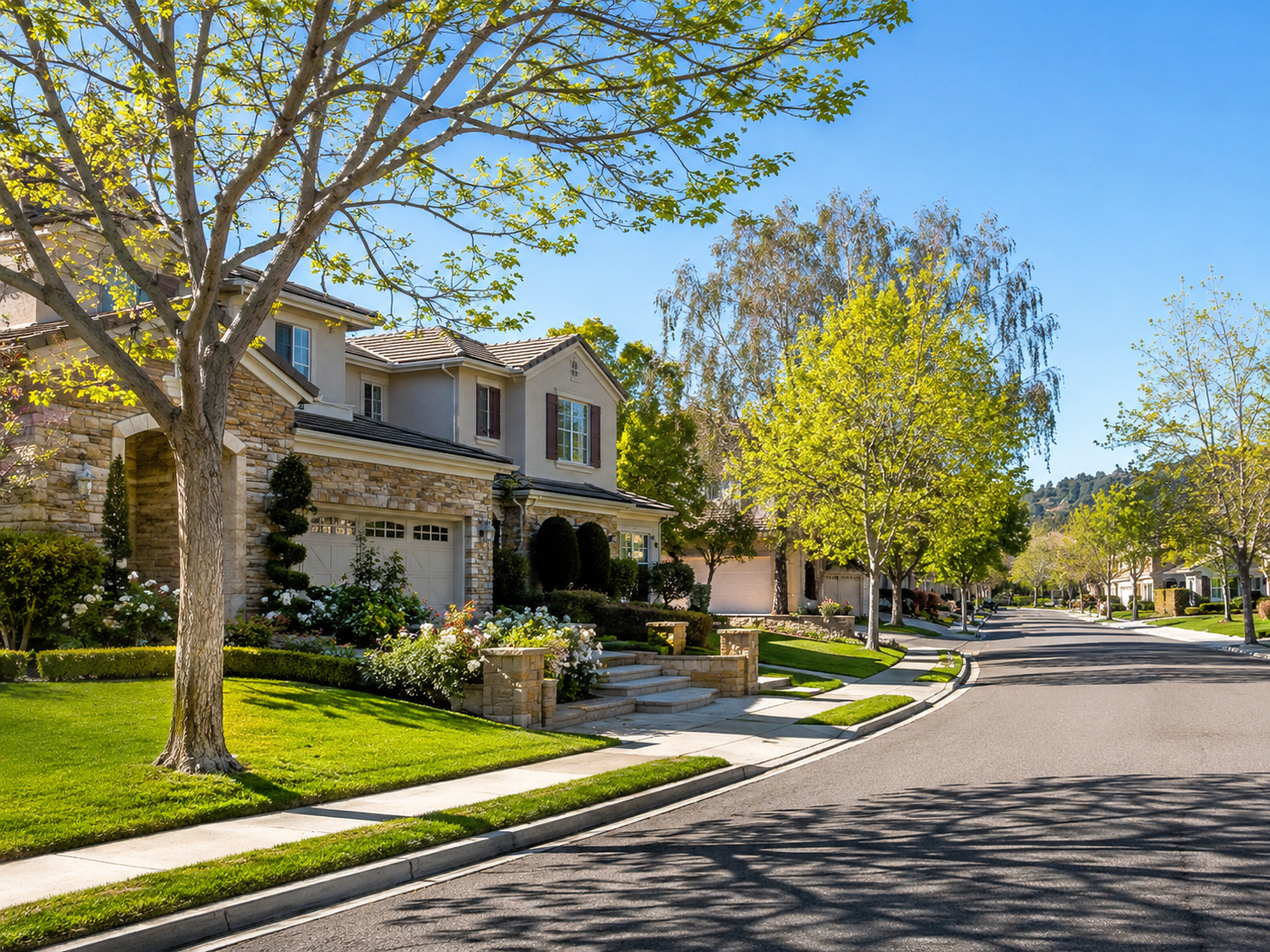 Q1 2026 in Calabasas 91302 and 91372 delivered what this market consistently delivers in the first quarter — school-motivated buyer activation, constrained inventory, and efficient absorption of correctly priced homes in the $1.5M–$2.3M range.
Q1 inventory picture:
Calabasas has structurally lower listing volume than adjacent SFV markets — a function of the neighborhood's demographic composition (longer-tenured homeowners, estate-scale properties with infrequent turnover, and the "golden handcuff" effect of sub-4% mortgages locked in during 2020–2021 that discourages move-up sellers). In Q1 2026, active listing inventory in Calabasas 91302 was estimated at below historical seasonal norms — creating a supply constraint that moderated what might otherwise have been a more buyer-favorable environment given rate levels.
Q1 buyer activity:
The dominant buyer profile in Q1 2026 was consistent with prior years: families with school-age children targeting Las Virgenes Unified District enrollment for the following fall, with an enrollment-driven timeline that creates genuine urgency regardless of the broader rate environment. This buyer profile does not wait for rate drops — their decision is driven by a school calendar deadline, not a financing calculus. The result: qualified buyers making competitive offers on correctly priced 91302 listings in January through March, with DOM averaging 25–40 days for well-prepared homes and 60–90+ days for homes that were overpriced or under-prepared.
Q1 pricing dynamics:
- → ✅ Correctly priced, move-in-ready homes in the $1.5M–$2.2M range: Absorbed efficiently — multiple offers in some cases, clean transactions in most, DOM consistent with spring seasonal norms
- → ⚠️ Original-condition or partially updated homes in the same price range: Longer DOM and more negotiating room — buyers in this price band expect renovated condition at $1.5M+ and applied meaningful inspection-period leverage on deferred maintenance
- → 📉 Homes priced above $2.5M: More inventory and longer DOM — the buyer pool for $2.5M+ Calabasas homes is thinner and more patient, with negotiations that reflect a genuine buyer's market within this price tier
- → 🔄 Seller-paid buydowns: More commonly deployed in Q1 2026 than in prior years — particularly on listings in the $1.5M–$2.0M range where rate sensitivity is highest for move-up buyers from Woodland Hills 91364, Tarzana 91356, and West Hills 91307
2. 📈 Q2 2026 — The Current Market Landscape (April–June)
Q2 2026 represents the peak of the Calabasas selling season — the window where school-motivated buyer urgency is highest, spring weather produces the most compelling property presentations, and inventory remains below summer levels. Understanding the current Q2 dynamics with precision is the most practically useful information for both buyers and sellers operating in Calabasas right now.
What the Q2 market looks like for sellers:
- → 🏡 The $1.5M–$2.2M sweet spot: The most active absorption band in Calabasas 91302. Correctly priced, well-prepared homes in this range are moving in 20–35 days — a healthy but not frenzied pace that reflects genuine buyer competition without the irrational bidding dynamics of 2021–2022. Sellers who price correctly and present well in Q2 are achieving close-price-to-list-price ratios of 97–102%.
- → ⚠️ The $2.2M–$2.8M range: Active but with more inventory and buyer selectivity. DOM stretches to 30–55 days for well-prepared homes. Buyers at this level are sophisticated, comparably aware, and patient — they will not be rushed by spring seasonality the way $1.5M–$2.0M buyers are.
- → 📉 Above $2.8M: The most buyer-favorable conditions in the Calabasas 91302/91372 market. Listings at this tier are experiencing 45–90+ days DOM, meaningful price reductions from initial ask, and significant negotiating room on both price and terms. For buyers targeting premium Calabasas properties above $2.8M, Q2 and Q3 2026 represent the most favorable negotiating conditions since 2019.
- → 🔄 The buydown effect on Q2: Sellers in the $1.5M–$2.2M range who are proactively advertising seller-paid 2-1 buydowns in their listing marketing are consistently generating more first-week showings than comparable listings without the buydown offering. The move-up buyer profile that dominates this price tier — families from Woodland Hills 91364, Tarzana 91356, Sherman Oaks 91403, and West Hills 91307 — is rate-sensitive and responds to buydown-structured payment relief in a way that premium buyers above $2.5M do not.
What the Q2 market looks like for buyers:
- → 📌 In the $1.5M–$2.2M range: Competition is real — be pre-approved with a strong local lender, know your specific school assignment requirements and verify them before offer submission, and be prepared to move in 5–10 days on a correctly priced listing. The school-calendar deadline pressure that creates urgency in sellers also creates urgency in competing buyers.
- → ✅ In the $2.2M–$2.8M range: More evaluation time available — 10–15 days to structure an offer is typical. Negotiating room exists, particularly on homes with 30+ days of DOM. Seller-paid concessions including buydowns and closing cost credits are negotiable.
- → 🎯 Above $2.8M: Best buyer conditions in the current Calabasas market. Patient, well-capitalized buyers who are not school-calendar constrained have genuine leverage on price, terms, and seller concessions. The inventory at this tier includes some of the most significant estate properties in the Calabasas market — the buyers who engage with this tier now are accessing conditions that may not persist if rate relief materializes and demand broadens.
3. 🔮 Q3 2026 Outlook — What to Expect July Through September
Q3 is historically the most challenging quarter in the Calabasas market — and 2026 is not expected to deviate significantly from the pattern. Understanding why Q3 softens and what it means specifically for buyers and sellers is essential for anyone whose transaction timeline falls in this window.
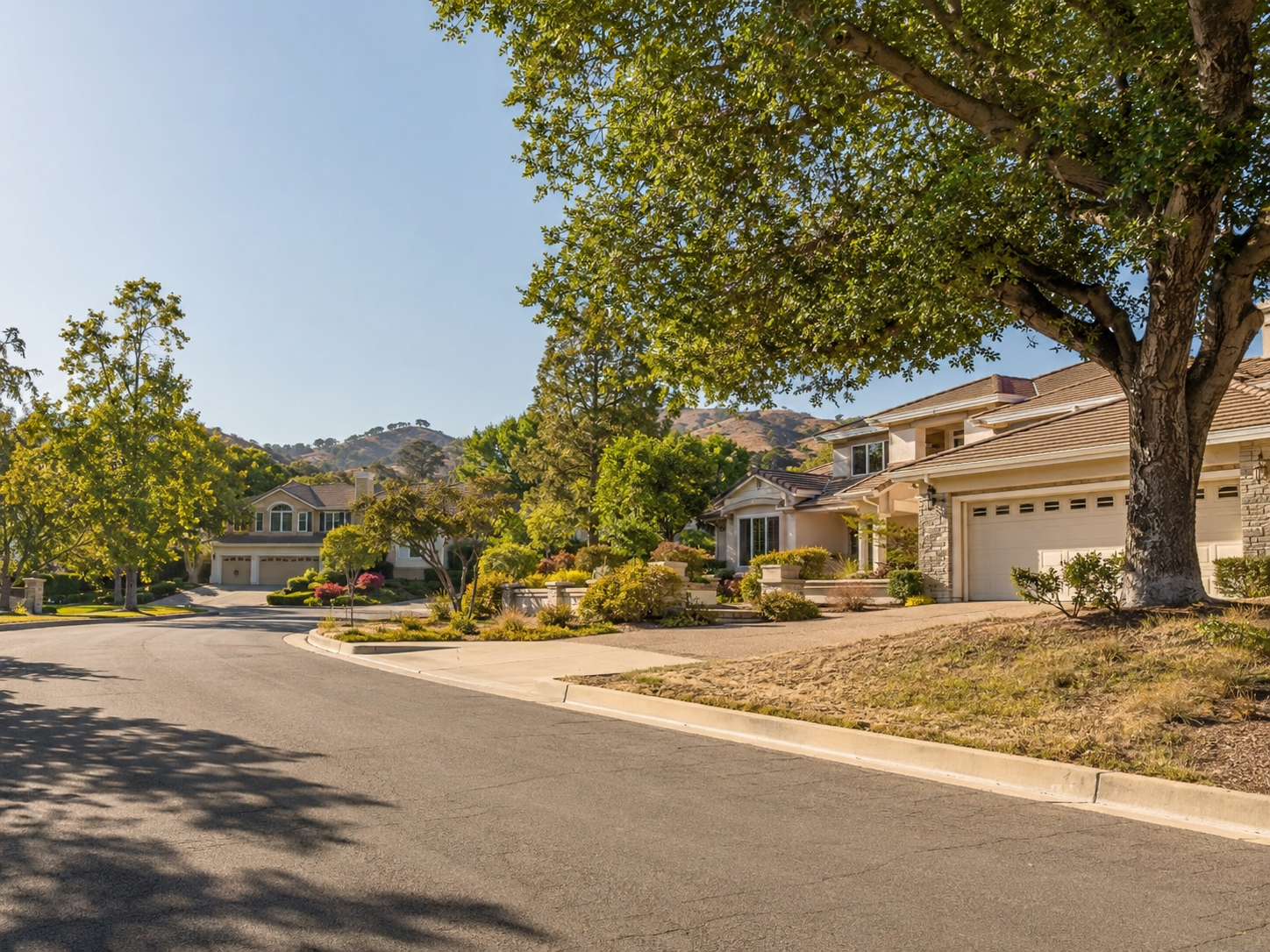 Q3 in Calabasas 91302 and 91372 consistently produces the year's softest buyer conditions — school-calendar urgency has passed, Valley heat reduces showing activity, and buyer fatigue from the spring competition cycle suppresses demand in a way that creates genuine opportunity for the patient buyer.
Why Q3 softens in Calabasas:
- → 🎒 School-calendar deadline has passed: The primary buyer urgency driver in Calabasas — LVUSD enrollment for fall — resolves by late June. Families who needed to close for fall enrollment are either in their homes or have moved on. The buyers who remain active in July and August are not calendar-constrained — they are opportunistic, patient, and looking for value.
- → 🌡️ Valley heat suppresses showing activity: Calabasas summer temperatures — consistently 92–105°F in July and August — reduce open house attendance, suppress casual buyer touring, and make homes show less compellingly in afternoon heat. Sellers who launch in August are starting at a structural showing-activity disadvantage relative to spring.
- → 😴 Buyer fatigue and summer pause: Buyers who competed aggressively in the spring window and lost — or who were actively searching from January through June without finding the right property — frequently take a summer mental pause. This further reduces the active buyer pool in August relative to April.
- → 📈 Inventory uptick: Some sellers who didn't achieve their Q2 target or who are on relocation timelines list in summer, adding inventory at a moment when the buyer pool is thinnest.
Q3 implications for sellers:
- → ❌ Don't launch a standard listing in August without a strategy: A Calabasas home that goes active in August at a spring-appropriate price with no buyer urgency engineering is likely to accumulate 45–60+ days of DOM that carries into fall as a stigma. If your timeline requires August, price below midpoint, offer a proactive seller buydown, and schedule all showings and open houses for morning windows only.
- → ✅ Consider a September pre-marketing launch: Homes that begin pre-marketing in mid-to-late September — coming soon social campaigns, agent outreach — and launch active in early October are positioned to catch the fall re-engagement window buyers without the August heat disadvantage.
- → 💡 Q3 as preparation time: For sellers who have flexibility, Q3 is the optimal preparation window — renovation completion, professional staging, photography, pre-marketing — for a Q4 fall launch that catches the re-engagement buyer demand with a fully prepared product.
Q3 implications for buyers:
- → ✅ Best negotiating conditions of the year: The combination of reduced buyer competition, longer DOM on existing inventory, and motivated sellers who didn't achieve Q2 results creates the most buyer-favorable conditions in the Calabasas annual cycle. Buyers who are patient, pre-approved, and willing to transact in July through September consistently extract price and term concessions that spring competition prevents.
- → 🎯 Target the 45+ day DOM listings: Calabasas homes that have been on market since April or May and haven't sold are carrying meaningful seller motivation — particularly if the seller has already listed a replacement home or relocated. These situations produce the most negotiable transaction outcomes of any Calabasas market window.
- → ⚠️ Don't sacrifice inspection contingencies for leverage: Q3 buyer leverage should be used on price and terms — not by waiving inspection on older Calabasas homes that carry real deferred maintenance and wildfire mitigation requirements. The leverage available in Q3 makes buyer-favorable contingency protection more achievable, not less necessary.
4. 🍂 Q4 2026 Outlook — October Through December
Q4 in Calabasas follows a pattern that is consistent across multiple years: a genuine fall re-engagement window in October and early November, followed by a sharp slowdown after mid-November that extends through January.
The October opportunity:
October in Calabasas 91302 and 91372 produces a specific buyer profile that is among the most motivated in the annual cycle — buyers who have been searching since spring, who didn't find what they needed in the competitive Q2 window, who took a summer mental break, and who are now re-engaged with end-of-year financial motivation. This buyer is:
- → ✓ More decisive than spring buyers — they have toured enough to know exactly what they want and are not making their first offer
- → ✓ Year-end financially motivated — buyers who want to close before December 31 for tax planning, relocation coordination, or financial event reasons add urgency that spring seasonality doesn't replicate
- → ✓ Competing against fewer buyers — October Calabasas inventory attracts a smaller buyer pool than spring, which reduces competition for the buyer who arrives prepared
Q4 market conditions by price tier:
- → 💰 $1.5M–$2.2M range in October: Active absorption continues — not spring-pace, but well-prepared homes priced at midpoint of the defensible range are moving in 25–45 days. Sellers who price to the fall market rather than the spring market ceiling consistently close in October-November.
- → 📊 $2.2M–$2.8M range in October: Moderate activity with continued negotiating room. The buyer who wants a premium Calabasas 91302 home before year-end and is willing to close quickly has leverage — sellers in this range who have been on market since spring are motivated to close before the holiday slowdown.
- → 📉 November 15 – January 15: The sharpest seasonal slowdown in the Calabasas annual cycle. Thanksgiving travel, holiday planning, and year-end distraction suppress buyer activity to its annual low. Sellers who can avoid this window should. Sellers who must transact in this window should price at or below midpoint and position the transaction to close before December 20 or after January 6 — the periods of minimal transaction activity within the broader slowdown.
The January pre-spring positioning opportunity:
For buyers who have been waiting for an optimal Calabasas entry point, January — specifically the second and third week — offers a specific opportunity: the holiday pause has ended, spring-season buyers have not yet fully activated, and sellers who have been on market since Q3 or early Q4 have maximum motivation to close. A well-structured January offer on a Calabasas home with 90+ days of cumulative DOM frequently produces the best price and term combination available in the annual cycle.
5. 🌡️ The Wildfire Insurance Wildcard — 2026's Market-Specific Variable
No 2026 Calabasas market analysis is complete without a direct treatment of the wildfire insurance issue — the market-specific variable that has no equivalent in Woodland Hills 91364, Sherman Oaks 91403, or other SFV markets and that is creating genuine transaction friction in Calabasas 91302 and 91372.
 The Santa Monica Mountains interface that gives Calabasas 91302 and 91372 its outdoor access premium and dramatic backdrop also creates the wildfire exposure that is driving the 2026 insurance availability and cost challenges — a market-specific variable that every buyer and seller in Calabasas must understand and plan for.
What is happening with Calabasas wildfire insurance in 2026:
Several major California homeowner's insurance carriers have reduced or eliminated new policy issuance in high-fire-risk zones — and Calabasas 91302 and 91372 sit squarely within designated high-fire-risk territory. The practical implications for Calabasas real estate transactions:
- → 💸 Insurance cost: Standard homeowner's insurance in Calabasas runs $350–$700/month — meaningfully higher than comparable SFV markets and significantly higher than the $150–$200/month that Sherman Oaks 91403 or Woodland Hills 91364 buyers pay. At $600/month, insurance adds $7,200/year to the carrying cost of Calabasas ownership — a material difference in the monthly cost stack.
- → 🚫 Insurance availability: Some specific Calabasas addresses — particularly those in more rural, less-defended positions at the mountain interface — are encountering difficulty obtaining standard admitted carrier coverage and are being placed in the California FAIR Plan (the state's insurer of last resort) or with non-admitted specialty carriers. FAIR Plan coverage is typically more expensive, less comprehensive, and requires supplemental policies for full dwelling protection.
- → ⏱️ Transaction timeline impact: Buyers who do not begin insurance procurement early in the escrow period regularly encounter delays — sometimes significant ones — when standard carrier declinations require pivoting to specialty markets. Our team now advises every Calabasas buyer to contact an insurance broker specializing in high-fire-risk California properties within the first week of opening escrow, not the week before closing.
- → 📋 Lender requirements: Federally backed loans (conventional conforming, FHA) require hazard insurance coverage at specified minimum levels. Calabasas buyers financing with conventional loans must secure coverage that meets lender requirements — FAIR Plan alone may not be sufficient for all loan products, and documenting acceptable coverage has become more complex and time-consuming than in prior years.
What buyers should do:
- → ✓ Get insurance quotes as part of due diligence — before removing inspection contingencies, not after
- → ✓ Work with a broker who specializes in high-fire-risk California coverage, not a general insurance agent
- → ✓ Budget $350–$700/month for insurance in your monthly cost stack — not the $150–$200 that SFV comparisons might suggest
- → ✓ Verify that the specific property has received hardening improvements (fire-resistant roofing, vents, defensible space compliance) that improve insurability and reduce premium
What sellers should do:
- → ✓ Proactively disclose any prior insurance claims, non-renewal notices, or coverage gaps in the property history
- → ✓ Ensure the property meets current defensible space requirements (100-foot clearance in high-risk zones) before listing — a non-compliant property can fail lender requirements and create escrow problems
- → ✓ Consider providing buyers with the current insurance carrier information and premium as a marketing positive — a home with existing, affordable coverage from a well-rated carrier is a genuine competitive advantage in the current Calabasas market
🚫 What NOT to Overdo
Don't apply broad SFV or LA County market narratives to Calabasas pricing. The Calabasas market behaves differently from Woodland Hills 91364, Sherman Oaks 91403, Tarzana 91356, and most SFV comparables — the school-quality driver, the insurance complexity, the lower transaction volume, and the specific buyer profile create dynamics that national and county-wide housing data consistently misrepresents. Calabasas sellers who price based on "the market is up" or "the market is down" narratives rather than current Calabasas-specific closed comps are making pricing decisions on the wrong foundation.
Don't ignore the Q2–Q3 transition in your selling timeline. The school-calendar motivation that drives Q2 Calabasas buyer urgency evaporates quickly after June. A Calabasas seller who lists in late May expecting spring-market dynamics and doesn't go under contract by late June is entering Q3 with a listing that will accumulate DOM during the valley heat months — and arrive at fall re-engagement with the stigma of 75+ days on market. Timing the launch date correctly within the Q2 window is one of the most important seller decisions in the Calabasas annual cycle.
Don't use distressed or off-market comparable sales to anchor a list price. Calabasas estate and probate sales — which occur at significant discounts to market value due to timeline and condition constraints — occasionally surface as MLS comparables and distort the pricing analysis for standard arm's-length sales. Estate sale closed comps should be adjusted for market value rather than used as direct list price anchors. Similarly, off-market sales — which are not uncommon in Calabasas given the privacy preferences of some buyers and sellers — may not reflect full market value and should be treated as directional data rather than definitive comps.
Don't expect Calabasas market dynamics above $2.5M to mirror the $1.5M–$2.2M dynamics. These are genuinely different sub-markets within the same zip codes. The buyer pool above $2.5M is smaller, less calendar-constrained, and more sophisticated about comparative market conditions. The pricing precision, DOM expectations, and negotiating dynamics that apply to the volume-driven $1.5M–$2.2M tier do not translate directly to the premium tier — and sellers who apply the same urgency-creation strategies find they don't produce equivalent results at higher price points.
🏠 Real-World Scenario — Calabasas 91302 Q1/Q2
A seller in Calabasas 91302 listed their home in February — a well-renovated 3,600 sq ft home on a 14,500 sq ft lot in the Calabasas Country Club area at $2.09M. The list price was supported by a closed comp from the prior September at $2.12M for a comparable renovated home in the same sub-neighborhood.
First two weeks: six showings, no offers. Buyer feedback from agents: the home showed well but buyers were asking about insurance — specifically, whether the current homeowner's insurance carrier would renew and at what premium. The seller's existing carrier had been non-renewing Calabasas policies in the prior 12 months and the home was on the FAIR Plan.
We advised the seller to proactively address the insurance situation as part of the listing marketing. Working with a specialty insurance broker, we secured a quote from a non-admitted carrier at $520/month — not ideal but competitive with market reality. We added the insurance information explicitly to the agent remarks and the listing narrative.
Within 10 days of the update, two new offers arrived. Both buyers cited the insurance clarity as the specific factor that moved them from "interested" to "ready to offer." The home went under contract at $2.07M. The insurance transparency that the seller initially resisted sharing turned out to be the marketing advantage that closed the transaction.
🏠 Real-World Scenario — Calabasas 91302 Q3
A buyer couple had been actively searching Calabasas 91302 since March — they had made two offers in Q2 that were outcompeted by school-calendar-motivated families. By late July, they were frustrated and considering waiting for the following spring.
We recalibrated their timing expectation. The Q3 window — specifically August and early September — was the moment their competition had diminished. The families who needed to close for fall LVUSD enrollment were already in their homes. The buyers remaining in the market were patient and non-urgent — but so were the sellers, many of whom had been on market since April and were carrying 90+ days of DOM.
We identified a Calabasas 91302 home that had listed in April at $1.89M with no accepted offers and a current price of $1.79M after two reductions. The home was well-prepared but had been overpriced at launch and accumulated DOM during the spring competition that buyers could now see. Total market time: 103 days.
We structured an offer at $1.71M with a 21-day close and standard contingencies — no waived inspections, no escalation clause. The seller, who had been carrying the home through a full summer with $14,000+ in monthly costs and two previous price reductions, accepted within 48 hours. The couple who had been outcompeted in Q2 closed in Q3 at $80,000 below the spring-season list price — because they stayed engaged rather than retreating to the following spring.
❓ FAQ
What is the average days on market in Calabasas in 2026? Days on market in Calabasas 91302/91372 vary significantly by price tier and season. In Q1/Q2 2026, well-prepared homes in the $1.5M–$2.2M range averaged 22–38 days on market. Homes in the $2.2M–$2.8M range averaged 35–58 days. Homes above $2.8M averaged 55–90+ days. Overpriced or under-prepared homes at any price point regularly exceeded 90 days. These figures are directional estimates based on observed market activity — verify with current MLS data for your specific sub-neighborhood and price point.
Is now a good time to buy in Calabasas? For buyers who have done the financial preparation and whose lifestyle priorities match what Calabasas delivers — school quality, privacy, outdoor access — the current Calabasas market offers specific advantages over the 2021–2022 peak: more inventory, more evaluation time, more seller openness to concessions including buydowns, and genuine negotiating room above $2.2M. The structural demand drivers that support Calabasas appreciation are intact. Buyers who enter in Q2–Q3 2026 with correct expectations and solid preparation are in a favorable position relative to buyers who wait for the next spring competition cycle.
Are Calabasas home prices dropping in 2026? No broad price decline in Calabasas 91302/91372 is evident in the current data. The $1.5M–$2.2M range has held pricing at or near 2024 levels through Q1/Q2 2026. The $2.5M+ range has seen some price reduction activity on specific listings — primarily homes that were launched at optimistic prices and have accumulated DOM — but this reflects individual listing mispricing rather than a systemic market decline. The structural demand drivers supporting Calabasas values — LVUSD quality, Santa Monica Mountains access, constrained inventory — remain intact.
How does the wildfire insurance situation affect Calabasas property values? The insurance availability and cost challenge is creating transaction friction rather than broad price declines. Properties with confirmed, affordable standard carrier coverage are commanding a relative premium over comparable properties with FAIR Plan or specialty carrier coverage — a new form of within-market differentiation that didn't exist at this scale in prior years. Properties where insurance procurement is complex are experiencing extended escrow timelines and occasional transaction failures that are reflected in longer effective DOM. Our team now includes insurance consultation as a standard part of the Calabasas buyer due diligence process.
What is the best quarter to sell a home in Calabasas? Historically and in 2026, Q2 (April–June) is the strongest selling window in Calabasas — driven by school-calendar family buyers, spring weather, and peak buyer pool size. A mid-March to mid-April launch captures the front of the spring wave with maximum competitive dynamics. Q4 October window is the second-best selling period — motivated re-engaged buyers, thinner competing inventory, and year-end financial urgency. Q3 (July–September) is the most challenging selling window — launch in this period only if timeline requires it, and compensate with aggressive pricing and proactive buydown strategy.
How does Calabasas compare to Westlake Village for buyers in 2026? Westlake Village — immediately west of Calabasas 91302 along the 101 — shares some of Calabasas' premium residential character and serves as a frequent comparison for buyers evaluating the western end of the Valley. Key differences: Westlake Village sits partially in Ventura County (zip 91362) with different school district options; Calabasas 91302 has more direct Malibu Creek State Park and PCH access; Westlake Village has stronger Lake Sherwood and Westlake Lake recreational infrastructure. Both are premium markets — the right choice depends on specific school district preference, commute direction, and recreational priority. We work with buyers across both markets and can provide a specific comparison for your situation.
What should Calabasas sellers expect for 2026 commission structure? Post-NAR settlement, buyer's agent compensation in California is negotiated separately from listing commission rather than being offered through the MLS as a blanket co-broke. In Calabasas, where transaction complexity — insurance, HOA, school verification, estate/probate considerations — benefits from strong buyer's agent representation, sellers who proactively offer buyer's agent compensation as a seller concession in their listing marketing continue to attract broader buyer agent engagement than listings that don't address it. Consult your listing agent about the current competitive practice for your specific price tier.
🎯 Bottom Line
The Calabasas real estate market in 2026 is a study in nuance — and the buyers and sellers who navigate it best are the ones who abandon the national narrative, ignore the broad LA County data, and focus on the Calabasas-specific dynamics that drive outcomes here.
The school-calendar buyer urgency that defines Q1/Q2 is real and creates genuine seller leverage in the $1.5M–$2.2M range during those windows. The Q3 softening is real and creates genuine buyer opportunity for the patient, pre-approved buyer who doesn't retreat to the following spring. The wildfire insurance friction is real and requires active management from both buyers and sellers — not as a reason to avoid Calabasas, but as a due diligence priority that determines whether transactions close efficiently or get derailed in the final weeks of escrow.
The structural case for Calabasas values remains intact. Las Virgenes Unified School District quality, Malibu Creek State Park access, genuine privacy on larger lots, and the specific residential character that Calabasas delivers are not rate-sensitive demand drivers — they are lifestyle and school-quality motivations that produce consistent buyer engagement regardless of where the Federal Reserve sets interest rates. That structural demand floor is why Calabasas held its value better through the 2022–2023 correction than most comparable LA markets, and why it continues to command a premium over adjacent SFV markets in 2026.
At Parkway Estate Properties, we track the Calabasas 91302 and 91372 market alongside our core Woodland Hills 91364/91367, Sherman Oaks 91403/91423, Tarzana 91356, and Northridge 91324/91325 coverage. Liana's buyer work across the western SFV and her understanding of the specific factors that drive Calabasas buyer decisions — school assignments, insurance due diligence, commute reality testing — means every buyer and seller we work with in Calabasas gets market intelligence that is specific to this market, not transplanted from a broader SFV analysis.
📩 Want to Know What the 2026 Calabasas Market Means for Your Specific Situation?
Whether you're buying, selling, or evaluating Calabasas as a long-term hold — let's run the specific analysis for your address, your price point, and your timeline.
Contact Liana Shersher at Parkway Estate Properties: 📧 liana@parkwayestate.com · 📞 (818) 208-5881 · 🌐 parkwayestate.com 15021 Ventura Blvd., Ste. 510, Sherman Oaks, CA 91403
About the Authors
Liana Shersher Liana Shersher is a licensed real estate agent with Parkway Estate Properties Inc. and an Accredited Buyer's Representative (ABR) serving the San Fernando Valley — with a focus on Sherman Oaks, Encino, Tarzana, Woodland Hills, and Northridge (DRE# 02164224). Liana guides first-time homebuyers through every step of the purchase, from the first showing to the keys in hand, and represents move-up and repeat buyers across the Valley. For sellers, she builds the pricing and marketing strategy that positions a home to sell for top dollar, fast. Buyers and sellers work with Liana for clear communication, sharp local knowledge, and an agent who treats their goals like her own.
Roman Shersher Roman Shersher is the broker-owner of Parkway Estate Properties Inc. and a real estate investor with 18 years of experience in the San Fernando Valley (DRE# 01855095). Roman has personally led or co-led renovations on dozens of properties across the Valley, including recent projects in Northridge (91324) and Woodland Hills (91364). That hands-on renovation and investment experience shapes every pricing conversation and days-on-market strategy at Parkway — sellers get a realistic read on what improvements actually return at resale, and buyers get an expert eye on a home's true condition and upside.
Parkway Estate Properties, Inc. 15021 Ventura Blvd., Ste. 510, Sherman Oaks, CA 91403 · (818) 208-5881 · parkwayestate.com · Broker License #: 01873092 Equal Housing Opportunity. Information herein is general and not legal, tax, or financial advice. Consult qualified professionals for your specific situation.
Categories
Recent Posts










Broker | Realtor ® License ID: 01873092
+1(818) 208-5881 | info@parkwayestate.com