
Granada Hills Home Price Trends — Last 5 Years

Granada Hills 91344's price trajectory over the last five years tells a story that is both consistent with the broader San Fernando Valley appreciation narrative and meaningfully different from it in specific ways — ways that matter for buyers deciding whether to enter this market and for sellers deciding when and how to exit. The consistency: Granada Hills experienced the same pandemic-era appreciation surge, the same rate-driven correction, and the same partial recovery that every SFV market went through from 2020 to 2026. The differences: Granada Hills's appreciation was more durable through the correction than comparable northern Valley markets without its school-quality anchor, its recovery has been faster in the volume tier, and its premium and hillside sub-neighborhoods are following a different trajectory than the LVUSD-anchored core that dominates transaction volume in 91344.
Understanding those differences — not just the headline appreciation number but the specific forces that drove each phase of the price cycle and what they mean for the market's behavior going forward — is what separates a well-informed Granada Hills market participant from one applying generic SFV narrative to a market with its own specific mechanics.
1. 📊 2020–2021 — The Pre-Pandemic Baseline and the Appreciation Surge
Understanding where Granada Hills prices were before the pandemic-era surge is essential for contextualizing every subsequent price movement — and for buyers who are wondering whether current prices represent peak, recovery, or genuine value.
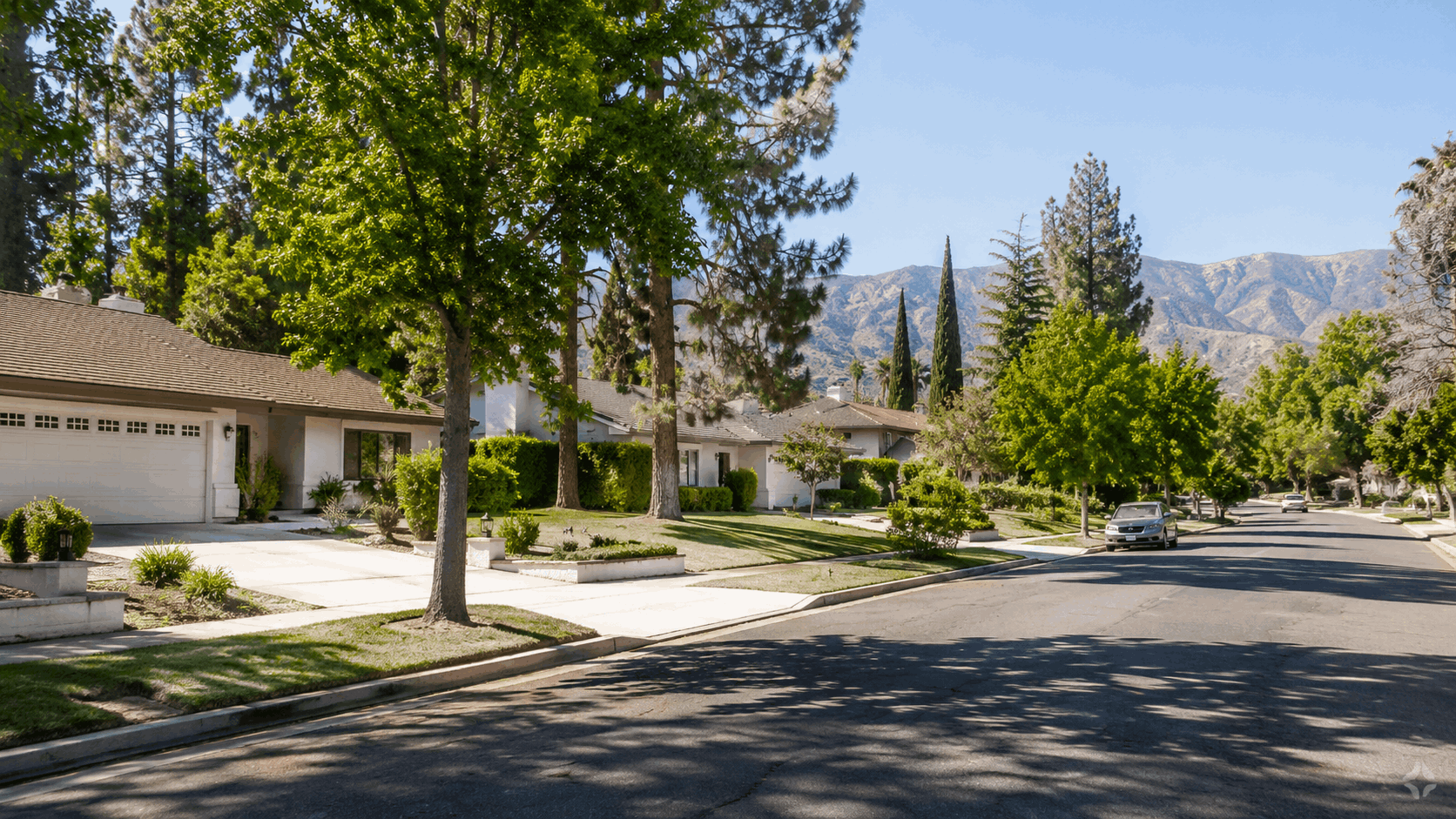 Granada Hills 91344's 2020 starting point — approximately $680,000–$720,000 median for the single-family market that would appreciate 38–46% over the following 24 months. Understanding this baseline is essential for contextualizing current prices and the 5-year wealth-building story for buyers who entered at different points in the cycle.
The 2020 baseline — what was driving pre-pandemic Granada Hills pricing:
By early 2020, Granada Hills 91344 had already been appreciating modestly for several years post the 2008–2012 distressed-market period. The pre-pandemic baseline of $680,000–$720,000 reflected:
- → 🏫 The established GHCHS demand premium: Granada Hills Charter High School had been building its reputation for decades, and the specific school-quality premium that anchors 91344 values was already priced into the market — not at the peak levels that the surge would produce, but as a consistent, established feature of the market's comparative positioning versus Chatsworth 91311 and North Hills
- → 🏡 The lot size value proposition: Granada Hills's larger-than-average northern Valley lots (8,000–14,000+ sq ft common in core sub-neighborhoods) were already commanding a premium over comparable Northridge 91324/91325 and Van Nuys inventory — the land value component that would amplify through the pandemic surge as buyers specifically sought outdoor space
- → 📊 The northern Valley affordability position: At $680,000–$720,000 median, Granada Hills was approximately 12–18% premium over comparable Northridge and 25–30% below the Sherman Oaks 91403/91423 equivalent — the specific affordability-with-quality positioning that defines Granada Hills's market identity
The 2020–2022 surge — the three specific drivers:
Driver 1 — Sub-3% mortgage rates expanding the qualified buyer pool:
At 2.75%–3.25% conventional rates available through 2020–2021, the monthly payment on a $900,000 Granada Hills home was approximately $3,700–$4,100 on a 20%-down loan — a payment accessible to a buyer pool dramatically larger than the 7.25% rate environment allows today. This expanded qualification is what translated GHCHS demand (always present) into a bidding war (present only when the qualified buyer pool exceeds available supply by a significant margin).
Driver 2 — Pandemic-driven outdoor space demand amplifying the lot-size premium:
Granada Hills's larger-lot character — the differentiated feature that always justified a premium over comparable-price northern Valley markets — became the primary buyer motivational driver during the pandemic period, as families working and schooling from home specifically sought backyards, private outdoor space, and the physical separation from density that a 10,000–14,000 sq ft Granada Hills lot provides. This demand amplification was more powerful in Granada Hills than in more dense SFV neighborhoods specifically because the product buyers specifically wanted (private outdoor space at scale) was what Granada Hills already had in abundance.
Driver 3 — Inventory constraint compounding buyer competition:
Granada Hills's golden handcuff dynamic — long-term owners with pre-pandemic mortgages who had no financial incentive to sell into a rising market when their replacement housing cost was also rising — constrained available supply below the level that the expanded, rate-amplified buyer pool was seeking. The resulting competition produced the first-week multiple-offer dynamics and above-asking close rates that characterized 91344's peak market from mid-2021 through early 2022.
The peak — what $950,000–$1,020,000 represented:
By the spring of 2022, Granada Hills core sub-neighborhood 3–4 bedroom homes were regularly closing above $1,000,000 — a threshold that would have been considered aspirational for the neighborhood in 2019. The premium tier (hillside, view, northern sub-neighborhoods) was pushing $1.3M–$1.6M for well-positioned properties. The speed of appreciation — roughly 18–22% per year for 24 consecutive months — was the same story playing out across most supply-constrained California markets, not a Granada Hills-specific phenomenon.
2. 📉 2022–2023 — The Rate-Driven Correction and What Made Granada Hills More Resilient
The Federal Reserve's 2022 rate-hiking cycle produced the correction that compressed Granada Hills prices from their peak — but the correction's magnitude and the specific sub-neighborhood pattern of how prices retraced tells a meaningful story about what was driving Granada Hills values in the first place.
The mechanics of the correction:
As conventional mortgage rates rose from approximately 3.0% in January 2022 to 6.5%–7.0% by the end of 2022, the buyer pool that had been generating Granada Hills's multiple-offer dynamics contracted sharply. The monthly payment on a $980,000 Granada Hills home at 6.75% (20% down, $784,000 loan) was approximately $5,082 — approximately $1,400/month more than the same loan would have carried at 2.85% twelve months earlier. This payment shock removed a substantial share of the qualified buyer pool from active search, reducing competition from 8–12 offers per listing to 1–3, then to occasional weeks of zero offers on some listings.
The Granada Hills correction — more moderate than comparable markets:
Granada Hills 91344's correction from the 2022 peak to the 2023 trough was approximately 11–13% in the core volume sub-neighborhoods — meaningfully less than:
- → The 15–20% correction experienced in purely discretionary luxury markets in the greater LA area
- → The 14–17% correction experienced in some comparable northern Valley markets without GHCHS's specific school-quality demand anchor
- → The 18–22% correction in markets where the pandemic-era demand surge had been primarily investment-driven rather than owner-occupant family-buyer-driven
Why GHCHS moderated the Granada Hills correction:
The school-quality demand floor that the top 10 market facts article identified as Granada Hills's most important structural characteristic is most clearly visible in the correction data — not in the peak or the recovery, but in the correction. Markets where buyer demand is primarily discretionary (lifestyle, investment thesis, brand premium) experienced larger corrections because discretionary demand is more rate-elastic: when monthly payments increase significantly, discretionary buyers have the option to wait. GHCHS-motivated buyers — families with a specific, calendar-constrained need to establish school enrollment residency — do not have the same option. Their demand is rate-moderated but not rate-eliminated, which is why the Granada Hills correction stopped at approximately 11–13% rather than continuing to the 15–20% range that less school-anchored markets reached.
Sub-neighborhood correction variation:
The correction was not uniform across 91344:
- → 📉 Core flatland sub-neighborhoods (GHCHS-anchored volume tier): 9–12% correction from peak — the most resilient areas, sustained by school-motivated family buyer demand throughout the correction period
- → 📉 Premium and hillside sub-neighborhoods ($1.2M+): 13–18% correction — the thinner buyer pool at this tier, with more discretionary motivation and more rate sensitivity on jumbo financing, produced a more pronounced retrace
- → 📉 Northern elevated streets approaching Porter Ranch 91326: 11–15% correction — view premium properties with lower GHCHS demand dependency corrected more than the school-anchored volume tier
3. 📈 2024–2025 — The Recovery and Its Two-Speed Character
The 2024–2025 period in Granada Hills has been a recovery — but a recovery with a specific two-speed character that the top-line median obscures. Understanding which part of Granada Hills has recovered and which part hasn't is the most practically useful insight in this entire price trend analysis.
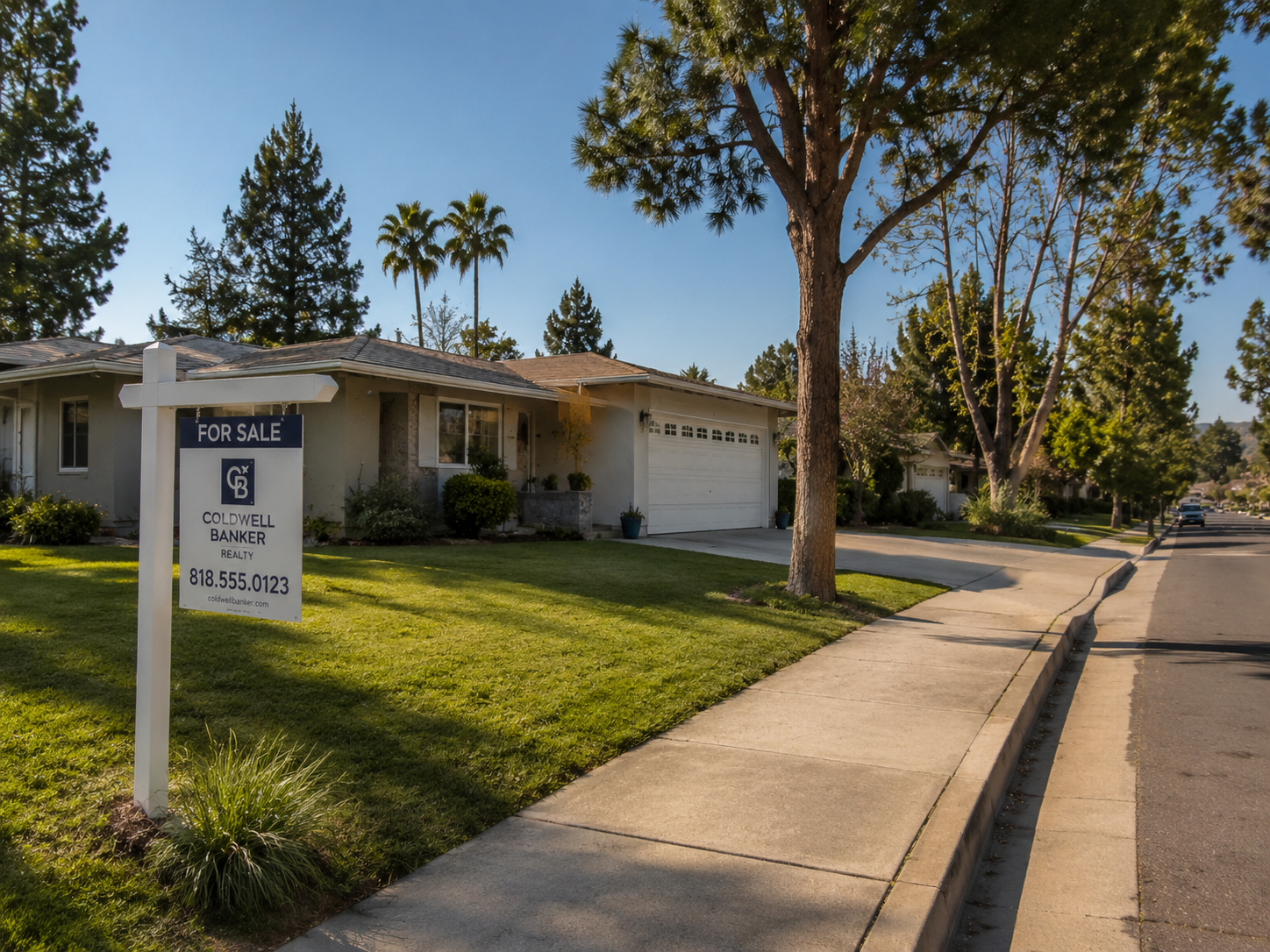 Granada Hills 91344's two-speed recovery — the GHCHS-anchored core volume tier recovering toward 2022 peak pricing, while the premium and hillside tier has lagged the recovery, producing the specific buyer opportunity described throughout the 2026 outlook content in this cluster.
The volume tier recovery ($875K–$1.15M):
The core Granada Hills flatland market — the LVUSD-verified family buyer territory that represents the majority of 91344 transaction volume — has recovered approximately 85–92% of its 2022–2023 correction as of mid-2026, bringing it within 5–8% of the 2022 peak.
Key drivers of the volume tier recovery:
- → 🏫 GHCHS demand persistence: The school enrollment motivation that moderated the correction continued to drive steady buyer activation through the recovery period — families who needed 91344 school access could not indefinitely defer the purchase, and each year's graduating middle schoolers produced a new cohort of families needing to establish high school enrollment residency
- → 📉 Inventory constraint deepening: The golden handcuff dynamic described in the top 10 market facts article intensified through 2023–2024 as the gap between existing locked-in mortgage rates and current market rates widened. Long-term 91344 owners who refinanced at 2.75%–3.25% in 2020–2021 have zero financial incentive to sell into a 7.0%–7.5% market, dramatically constraining available supply below the level that steady GHCHS-motivated demand requires
- → 💰 Buyer adaptation through buydown strategies: The seller-paid 2-1 buydown that became standard in Granada Hills's 2023–2024 market — reducing year-one effective rates by 2 percentage points — brought enough payment-sensitive buyers back into the qualified pool to sustain absorption despite elevated nominal rates
The premium tier lagging recovery ($1.2M+):
The Granada Hills premium and hillside tier has recovered approximately 60–72% of its 2022–2023 correction — meaning properties in this tier are still 8–14% below their 2022 peak as of mid-2026.
Why the premium tier has lagged:
- → 💳 Jumbo financing rate premium: Loans above the conforming limit carry an additional 0.125%–0.375% rate premium over conforming rates — a compounding headwind that makes high-end Granada Hills purchases materially more payment-intensive than the volume tier
- → 👥 Thinner buyer pool at the premium level: The buyer who specifically wants a $1.4M–$1.8M Granada Hills hillside property with mountain views and premium finishes is a thinner pool than the buyer who specifically wants a $950,000–$1.1M GHCHS-verified family home — and a thinner pool produces slower absorption even when motivated buyers exist
- → 🔄 More discretionary motivation at the premium tier: Premium Granada Hills buyers are choosing Granada Hills for lifestyle and view premiums as much as for school access — the more discretionary the motivation, the more rate-sensitive the buyer, and the more slowly the premium tier recovers in an elevated rate environment
4. 🔮 2026 — Where Prices Stand and What the Forward Picture Looks Like
The current market, assembled from the 2020–2025 trajectory, presents specific conditions that buyers and sellers in Granada Hills 91344 should understand as the backdrop for any 2026 transaction decision.
Current pricing by sub-neighborhood and tier (mid-2026):
Core flatland volume tier ($875K–$1.15M, GHCHS-anchored):
- → 💰 3-bedroom improved condition: $890,000–$975,000
- → 💰 4-bedroom improved condition: $960,000–$1,080,000
- → 📊 Vs. 2022 peak: 4–7% below peak for renovated; at or approaching peak for premium renovated in the best catchment addresses
- → ⏰ DOM: 18–32 days for correctly priced listings — meaningfully below the premium tier's extended market exposure
- → 📈 Trajectory: Continuing modest recovery toward the 2022 peak; meaningfully above the 2023 trough; approaching equilibrium
Premium and hillside tier ($1.2M–$1.8M+):
- → 💰 Hillside/view 4–5 bedroom: $1.2M–$1.75M+ depending on sub-neighborhood and condition
- → 📊 Vs. 2022 peak: 8–14% below peak — the largest remaining gap in the Granada Hills market
- → ⏰ DOM: 38–72 days for correctly priced listings; extended DOM is common even for well-prepared premium tier listings
- → 📈 Trajectory: Slow recovery dependent on rate relief; buyers in this tier currently have the most negotiating leverage available in the Granada Hills market
The forward price scenarios:
Base case (rates stable at 7.0%–7.5% through most of 2026):
- → Volume tier: 2–4% additional appreciation through year-end — approaching but not reaching 2022 peak
- → Premium tier: Flat to 1–2% additional recovery — extended DOM persisting, buyer leverage remaining
- → Transaction volume: 5–8% above 2025 — modest improvement as sellers adapt to rate environment
Rate relief scenario (rates moderate to 6.0%–6.5% by Q4 2026):
- → Volume tier: 4–8% appreciation acceleration — potential Q4 2026 conditions approaching 2022 peak
- → Premium tier: The most significant beneficiary — 6–12% rapid appreciation as jumbo buyers re-engage; the negotiating leverage that currently exists in this tier evaporates quickly with rate relief
- → Transaction volume: 15–20% above 2025
Rate deterioration scenario (rates rise above 8.0%):
- → Volume tier: Flat to modest negative — GHCHS demand floor limits downside but transaction volume compresses
- → Premium tier: Additional 4–8% decline — extended DOM proliferates further, buyer leverage increases
5. 💡 What the 5-Year Price Trend Means for Buyers and Sellers Today
The price trajectory data assembled above is most useful when translated into specific, actionable guidance for the buyers and sellers making decisions in Granada Hills right now.
The 5-year price trend in context — Granada Hills buyers and sellers who understand the specific forces driving each phase of the 2020–2026 price cycle are better equipped to evaluate current conditions, identify the specific sub-neighborhood opportunity available to them, and make decisions grounded in how this market actually behaves rather than generic SFV market narrative.
For Granada Hills sellers:
- → ✅ Long-term owners (purchased 2018–2020) have substantial equity: A 2019 purchase at $700,000 is now worth approximately $910,000–$960,000 — a $210,000–$260,000 equity gain. The 5-year appreciation case for selling is strong even after the correction, particularly for sellers who can move to a lower-cost market, downsize significantly, or exit California where the replacement housing math favors them.
- → ✅ Volume tier sellers should price at current comp ceiling, not 2022 peak: The volume tier has nearly recovered to 2022 peak — but "nearly" is not "at." Sellers who price at 2022 peak levels for a 2026 market are anchoring to a past price point rather than the current comp ceiling, producing the extended DOM that the seller mistakes article identifies as the primary Reseda seller mistake. The same pattern applies in Granada Hills.
- → ⚠️ Premium tier sellers face a different reality: Hillside and premium Granada Hills sellers who purchased or refinanced at 2022 peak values and need to sell in 2026 are the most likely to experience a gap between their expectation and the current market — the 8–14% below-peak recovery in their tier is the current price reality, and fighting it with aspirational pricing produces the extended DOM that makes the gap larger, not smaller.
For Granada Hills buyers:
- → ✅ The volume tier is approaching fair value — don't expect a significant price decline: The GHCHS demand floor, the golden handcuff inventory constraint, and the 85–92% correction recovery in the volume tier together mean that waiting for a meaningful price drop in the $875K–$1.15M core Granada Hills market is a weaker strategy than buying when the right home appears at current comp-supported prices. The price decline you're waiting for is unlikely to materialize in this specific tier.
- → 🏆 The premium tier is the 2026 buyer opportunity: The 8–14% gap between current premium tier pricing and the 2022 peak, combined with 38–72 day DOM and motivated sellers who have been watching their listings sit, creates the specific negotiating conditions described in the luxury buyer's guide article in this cluster. This is the sub-market where 2026 offers the most favorable entry conditions in the Granada Hills price trend cycle.
- → 💰 The 2020–2026 appreciation case validates holding: A buyer who entered at the 2020 baseline and has held through the 2022 surge and 2023 correction is sitting on 30–38% net appreciation over 6 years — before principal paydown. This is the 5-year holding return that validates Granada Hills as a long-term equity-building location regardless of the specific purchase timing within the cycle.
🚫 What NOT to Overdo
Don't use the 2022 peak price as the reference point for what Granada Hills homes are "supposed" to cost. The 2022 peak was produced by a temporary and extreme confluence of factors — sub-3% rates, pandemic outdoor-space demand, and the resulting frenzied buyer pool — that is not the normal operating state of the Granada Hills market. Using 2022 prices as the anchor for either seller pricing or buyer expectations produces systematic error in both directions: sellers who price to 2022 peak sit on market, and buyers who wait for 2022 peak prices to return as entry points in a rate-relief scenario will find those conditions gone before they act.
Don't apply the SFV-wide price trend narrative to Granada Hills sub-neighborhood decisions. The San Fernando Valley aggregate price trend data — which includes Reseda 91335, Canoga Park 91304, Van Nuys 91401/91405/91406, and dozens of other zip codes alongside Granada Hills 91344 — produces a narrative that is neither accurate nor useful for 91344-specific decisions. The two-speed recovery within Granada Hills itself (volume tier nearly at peak, premium tier 8–14% below) is masked by the SFV-wide average. Always use 91344 sub-neighborhood-specific comp data rather than SFV-wide averages.
Don't assume the premium tier's current below-peak pricing reflects a structural problem with those properties. Extended DOM and below-peak pricing in the Granada Hills hillside and premium tier is a rate-environment phenomenon, not a quality problem with the properties themselves. The homes that were worth $1.5M in 2022 at 3% rates are not worth $1.5M in 2026 at 7.25% rates for most buyers — but they are likely worth $1.5M+ again in a rate environment where jumbo financing is more accessible. Buyers purchasing premium Granada Hills at current below-peak prices with a 5–10 year hold horizon are acquiring this rate-environment discount.
Don't confuse Granada Hills's GHCHS demand durability with immunity to rate effects. The school-quality floor that has made Granada Hills more resilient than comparable northern Valley markets is a moderating force, not an immunity. It prevented the 15–20% corrections that less school-anchored markets experienced and sustained faster volume tier recovery — but the premium tier is still 8–14% below peak, and transaction volume is still below 2021–2022 levels. GHCHS demand durability means less downside and faster recovery, not no downside and instantaneous recovery.
🏠 Real-World Scenario — Granada Hills 91344
A couple who had purchased a Granada Hills 91344 core flatland 4-bedroom in mid-2020 at $715,000 came to us in early 2026 evaluating whether to sell and move to a larger home in Chatsworth 91311. They were anxious about having "missed the peak" in 2022 and worried they were now selling into a weak market.
We walked through their specific price trajectory. Their 2020 purchase at $715,000 had been at the pre-pandemic baseline. Their home's current value: approximately $945,000–$975,000 based on recent core flatland 91344 comps at their bedroom count and condition tier. Their equity appreciation: approximately $230,000–$260,000 in gross value gain over approximately 6 years, before principal paydown on their mortgage — which had reduced their balance by approximately $42,000 over that period.
Their total equity position: approximately $440,000 (original down payment + appreciation + principal paydown) on a $715,000 investment — a 61% return on invested equity over 6 years, or approximately 8.2% annually. This is an excellent long-term equity position regardless of what happened at the 2022 peak.
Their anxiety about "missing the peak" dissolved when the data was laid out against their actual position. They sold in spring 2026 at $962,000 — correctly priced for the volume tier's current conditions, under contract in 16 days, and into their Chatsworth replacement purchase with the full equity they had built over six years of Granada Hills ownership.
🏠 Real-World Scenario — Granada Hills 91344
A buyer who had been monitoring the Granada Hills market since late 2022 — specifically watching the premium hillside tier where his budget of $1.45M–$1.65M would reach — had been telling himself that prices would fall further from the 2022 peak before he bought. In late 2022, hillside Granada Hills was correcting from $1.55M–$1.75M peak levels. By early 2024, it had corrected to approximately $1.35M–$1.52M — a 10–13% decline. He still didn't act, expecting further decline.
By mid-2026, the premium tier had partially recovered to $1.40M–$1.58M — not at 2022 peak, still 8–14% below, but approximately 5–8% above the 2024 trough where he had been watching without acting. He had waited for a further decline that did not materialize, while the best entry window — early to mid-2024 at the correction trough — passed.
When we engaged with him in mid-2026, the correct framing was not "you missed the bottom" — it was "the current premium tier still offers meaningfully better conditions than the 2022 peak, extended DOM with motivated sellers, and the GHCHS-anchored demand floor that limits further downside from current levels." At $1.48M with a motivated seller at 58 days DOM, a $1.35M offer with a comp-based rationale produced a counter at $1.44M. They settled at $1.41M — still meaningfully below the 2022 equivalent property peak of approximately $1.62M.
The buyer who had been waiting for a further price drop bought 2.5 years after his initial hesitation point, at a price somewhat above the 2024 trough but meaningfully below the 2022 peak. The lesson: in a GHCHS-anchored market, waiting indefinitely for further price deterioration is a weaker strategy than recognizing when current conditions offer genuine value and acting on it.
❓ FAQ
What is the average home price in Granada Hills in 2026? Granada Hills 91344 single-family home prices in mid-2026 range from approximately $840,000 for original-condition 3-bedroom homes in standard sub-neighborhoods to $1.75M+ for premium hillside properties with mountain views. The most active transaction tier — 3–4 bedroom improved-condition homes in core GHCHS-catchment flatland sub-neighborhoods — closes in the $890,000–$1,080,000 range. These are mid-2026 estimates; verify current comp data for your specific target address and sub-neighborhood with a Granada Hills-knowledgeable agent before any pricing or offer decision.
How much have Granada Hills home prices increased in the last 5 years? From the 2020 pre-pandemic baseline to mid-2026, Granada Hills 91344 has delivered approximately 30–38% net appreciation for core volume-tier properties — accounting for the 2022 peak, the 2022–2023 correction, and the partial recovery through 2026. Properties at the premium and hillside tier have delivered somewhat less net appreciation (25–32%) due to the larger correction and slower recovery in that sub-market. The 5-year net appreciation is meaningfully positive for virtually all Granada Hills sub-neighborhoods regardless of the correction that occurred in the middle of the period.
Will Granada Hills home prices go up in 2026? The outlook depends on rate trajectory. Under the base case (rates stable at 7.0%–7.5%): volume tier expects 2–4% additional appreciation through year-end; premium tier expects flat to 1–2% recovery. Under rate relief to 6.0%–6.5%: meaningfully stronger appreciation across both tiers, with the premium tier the largest beneficiary. Under rate deterioration above 8.0%: flat to modest negative in the premium tier while the volume tier holds relatively well due to GHCHS demand durability.
Why did Granada Hills home prices correct less than other SFV markets? Granada Hills Charter High School's reputation as one of the SFV's most consistently strong public high schools produces a specific, non-discretionary buyer demand that persists through rate cycles in a way that purely lifestyle-motivated luxury demand doesn't. Families who need GHCHS enrollment residency cannot indefinitely defer their purchase when rate increases make the payment more challenging — they can compress their timeline or adjust their budget, but they cannot eliminate the school enrollment need. This non-discretionary demand component moderated Granada Hills's correction to approximately 11–13% versus the 15–20% experienced in comparable northern Valley markets without GHCHS's school-quality anchor.
What is the best sub-neighborhood in Granada Hills for appreciation? Core flatland GHCHS-verified addresses — the sub-neighborhoods where school enrollment is most clearly confirmed, lot sizes are strong, and the buyer pool is deepest — have historically delivered the most consistent and most durable appreciation in Granada Hills 91344. The northern elevated sub-neighborhoods approaching Porter Ranch 91326 have delivered strong peak appreciation but larger corrections. The hillside sub-neighborhoods offer view premiums and premium price points but more rate-sensitive appreciation patterns. For buyers whose primary goal is stable, durable long-term appreciation, the GHCHS-anchored core flatland tier has the strongest historical track record.
Is Granada Hills a good investment right now? For buyers purchasing with a 5–10 year hold horizon and an understanding of which tier they're buying in: yes, with differentiated conditions by tier. The volume tier ($875K–$1.15M) is approaching fair value and offering steady appreciation support from GHCHS demand durability — buyers in this tier should look for the right home at the right price rather than trying to time further softening that is unlikely in this specific tier. The premium and hillside tier ($1.2M+) is offering the most favorable entry conditions in several years — 8–14% below 2022 peak, extended DOM with motivated sellers, and a GHCHS demand floor that limits further downside. Patient buyers in this tier have a genuine 2026 window.
🎯 Bottom Line
The five-year Granada Hills price story is ultimately one of durable, school-anchored, geographically constrained residential value — with a pandemic-era surge, a rate-driven correction, and a recovery whose two-speed character reflects exactly what the top 10 market facts article described: the GHCHS-anchored volume tier recovering faster and more completely because the demand that drives it doesn't disappear with rate cycles, and the premium tier recovering more slowly because the more discretionary demand that drives it is more rate-elastic.
For buyers: the 5-year appreciation story validates Granada Hills as a long-term equity location, but the specific entry point within the cycle matters. The volume tier is approaching fair value — buy when you find the right home. The premium tier is below peak — that specific window won't persist indefinitely with any meaningful rate relief.
For sellers: the 5-year appreciation has produced substantial equity for most Granada Hills owners who purchased before 2022. The question isn't whether appreciation has been real — it has been — but whether the current conditions, the replacement housing market, and the specific seller's timeline align with an exit that captures that equity effectively.
At Parkway Estate Properties, every Granada Hills buyer and seller conversation grounds the price discussion in what's actually happened in specific sub-neighborhoods over specific time periods — not in the SFV-wide narrative that obscures the 91344-specific dynamics that determine outcomes here.
📩 Want a Current Price Trend Analysis for Your Specific Granada Hills Address or Target?
We'll pull the sub-neighborhood-specific comp data — not a zip code average — and give you the honest assessment of where prices are relative to the 5-year trajectory for your specific situation.
Contact Liana Shersher at Parkway Estate Properties: 📧 liana@parkwayestate.com · 📞 (818) 208-5881 · 🌐 parkwayestate.com 15021 Ventura Blvd., Ste. 510, Sherman Oaks, CA 91403
About the Authors
Liana Shersher is a licensed real estate agent with Parkway Estate Properties Inc. and an Accredited Buyer's Representative (ABR) serving the San Fernando Valley — with a focus on Sherman Oaks, Encino, Tarzana, Woodland Hills, and Northridge (DRE# 02164224). Liana guides first-time homebuyers through every step of the purchase, from the first showing to the keys in hand, and represents move-up and repeat buyers across the Valley. For sellers, she builds the pricing and marketing strategy that positions a home to sell for top dollar, fast. Buyers and sellers work with Liana for clear communication, sharp local knowledge, and an agent who treats their goals like her own.
Roman Shersher is the broker-owner of Parkway Estate Properties Inc. and a real estate investor with 18 years of experience in the San Fernando Valley (DRE# 01855095). Roman has personally led or co-led renovations on dozens of properties across the Valley, including recent projects in Northridge (91324) and Woodland Hills (91364). That hands-on renovation and investment experience shapes every pricing conversation and days-on-market strategy at Parkway — sellers get a realistic read on what improvements actually return at resale, and buyers get an expert eye on a home's true condition and upside.
Parkway Estate Properties, Inc. · 15021 Ventura Blvd., Ste. 510, Sherman Oaks, CA 91403 · (818) 208-5881 · parkwayestate.com · Broker License #: 01873092 Equal Housing Opportunity. Information herein is general and not legal, tax, or financial advice. Consult qualified professionals for your specific situation.
Categories
Recent Posts











Broker | Realtor ® License ID: 01873092
+1(818) 208-5881 | info@parkwayestate.com