
How Much Income Do I Need to Buy a Home in Woodland Hills?

It is one of the most searched real estate questions in the San Fernando Valley — and one of the most inconsistently answered. Most online calculators give you a number based on a national average that has almost nothing to do with buying a home in Woodland Hills 91364 or 91367 specifically. Most mortgage websites give you a pre-qualification range that reflects lender risk tolerance, not your lifestyle reality. And most of what buyers hear from friends and family is based on what someone paid five years ago in a completely different rate environment.
This article gives you the actual income math for buying a home in Woodland Hills in 2026 — at multiple price points, with realistic down payment assumptions, and with the full carrying cost picture that most income calculators leave out. It also covers the tools — including seller-paid rate buydowns — that are actively changing the income threshold for Woodland Hills buyers in the current rate environment.
1. 📊 The Income Math — How Lenders Calculate What You Can Afford
Before you can understand what income you need to buy in Woodland Hills 91364 or 91367, you need to understand how lenders determine what you can borrow — because the lender's calculation and your lifestyle calculation are often different numbers, and both matter.
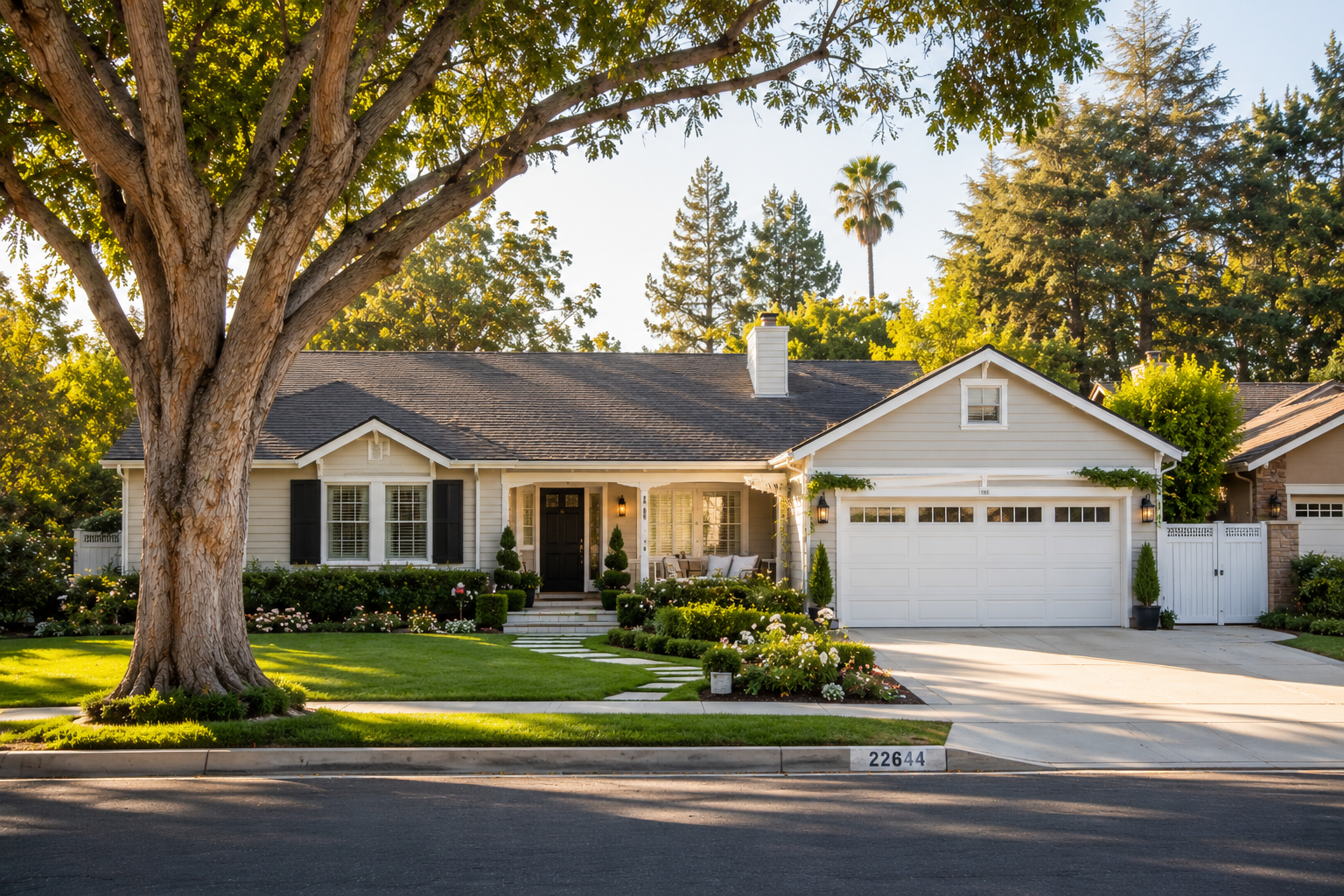 Understanding the income math for Woodland Hills 91364 and 91367 requires knowing both what lenders will approve and what monthly payment is actually sustainable for your life — two numbers that frequently diverge.
The lender's calculation — Debt-to-Income ratio (DTI):
Lenders qualify buyers based primarily on debt-to-income ratio — the percentage of your gross monthly income that goes toward total monthly debt obligations. There are two DTI thresholds that matter:
- → 📋 Front-end DTI (housing ratio): Your total monthly housing payment (mortgage principal + interest + property taxes + homeowner's insurance + HOA if applicable) divided by your gross monthly income. Most conventional lenders prefer this to stay below 28–31%.
- → 📋 Back-end DTI (total debt ratio): Your total monthly debt obligations (housing payment + car loans + student loans + credit card minimums + any other installment debt) divided by your gross monthly income. Most conventional lenders prefer this to stay below 43–45%. Some jumbo loan products in the Woodland Hills price range allow up to 49–50% with strong compensating factors (large reserves, high credit score, strong employment history).
What this means in Woodland Hills dollar terms:
At a 7.0% interest rate with 20% down payment:
$950K purchase price (Woodland Hills 91367):
- → Loan amount: $760,000
- → Monthly principal + interest: approximately $5,059
- → Monthly property taxes (1.25% LA County): approximately $990
- → Monthly homeowner's insurance: approximately $150–$200
- → Total monthly housing payment: approximately $6,199–$6,249
- → Required gross monthly income at 28% front-end DTI: approximately $22,140–$22,318
- → Required gross annual income: approximately $265,000–$268,000
- → At 31% front-end DTI (more flexible): approximately $239,000–$241,000 annual
Note: The Quick Answer ranges above use a blended front-end DTI of 28–31% and account for the fact that most Woodland Hills buyers carry some additional debt (car payment, student loans) that affects the back-end DTI and effectively tightens the front-end room available. The ranges reflect real-world qualification, not theoretical maximum approval.
$1.2M purchase price (Woodland Hills 91364):
- → Loan amount: $960,000
- → Monthly principal + interest: approximately $6,390
- → Monthly property taxes: approximately $1,250
- → Monthly homeowner's insurance: approximately $175–$225
- → Total monthly housing payment: approximately $7,815–$7,865
- → Required gross annual income at 28% front-end DTI: approximately $334,000–$337,000
- → At 31% front-end DTI: approximately $302,000–$304,000 annual
The real-world adjustment: Most Woodland Hills buyers in the $950K–$1.5M range have some additional monthly debt — a car payment of $400–$800, student loan minimums of $200–$600, or credit card minimums of $100–$300. These obligations reduce the monthly housing payment capacity within the back-end DTI ceiling, effectively requiring higher income than the front-end-only calculation suggests. The Quick Answer ranges above are calibrated to reflect typical Woodland Hills buyer debt profiles — not the theoretical zero-debt scenario.
2. 💵 The Full Monthly Payment — What Buyers Consistently Undercount
The mortgage payment is the starting point — not the finish line. Woodland Hills buyers who calculate their income requirement based on the principal and interest payment alone and then experience sticker shock at closing are the ones who haven't run the full monthly cost stack before entering the market.
The complete monthly housing cost for a $1.2M Woodland Hills 91364 home:
- → 🏦 Principal and interest (7.0%, $960K loan, 30-year fixed): $6,390/month
- → 🏛️ LA County property taxes (approximately 1.25% annually): $1,250/month
- → 🏠 Homeowner's insurance: $175–$225/month (higher for older Woodland Hills homes with wood-frame construction; verify with your insurance broker before closing)
- → 🏊 HOA (if applicable): $0 for most Woodland Hills single-family detached homes — HOA fees apply primarily to planned unit developments and some gated communities in 91364/91367. Confirm before offer.
- → 🔧 Maintenance reserve (1% of purchase price annually, set aside monthly): $1,000/month — Woodland Hills homes built in the 1960s–1980s have real maintenance needs. HVAC, roofing, plumbing, and electrical items surface in year one or two on a consistent basis. Buyers who don't budget for maintenance are the ones who face financial stress at the first major repair.
- → 💡 Utilities (gas, electric, water, trash, internet): $400–$600/month depending on home size and energy efficiency. Woodland Hills summer electricity bills can run significantly higher than Westside equivalents due to air conditioning demand during 95–105°F August heat.
Total realistic monthly housing cost for a $1.2M Woodland Hills 91364 home: approximately $9,215–$9,465/month
This is the number that should be stress-tested against your take-home pay — not the mortgage payment alone. At a gross income of $280,000 and a California effective tax rate of approximately 32–35% combined federal/state/FICA, take-home pay runs approximately $15,400–$16,100/month. A $9,400/month total housing cost represents 58–61% of take-home — which is workable but leaves limited room for savings, childcare, travel, and the lifestyle expenses that most Woodland Hills buyers at this income level have already built into their lives.
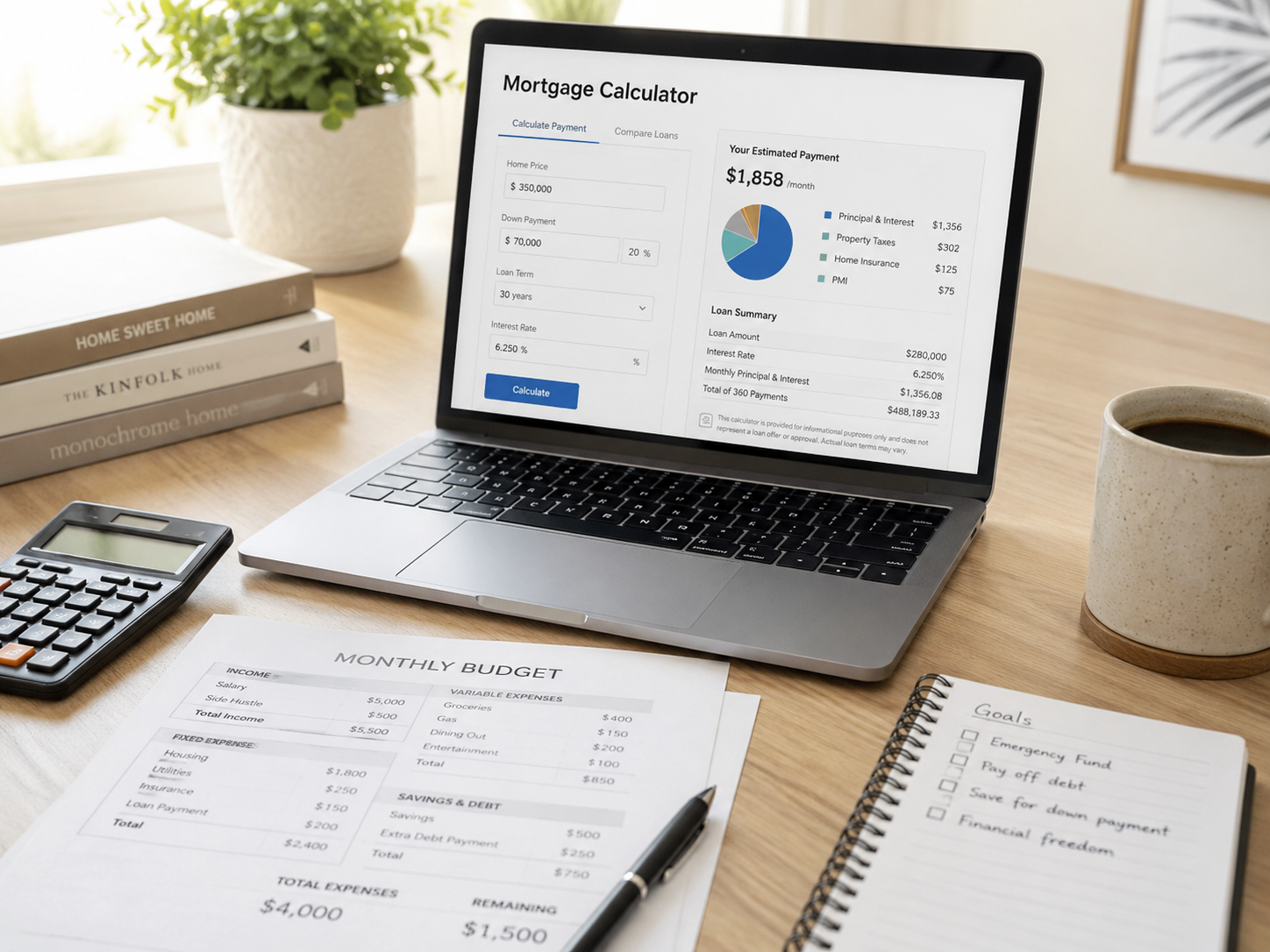 The full monthly housing cost for a Woodland Hills 91364 or 91367 home — mortgage, taxes, insurance, maintenance reserve, and utilities — frequently runs $2,000–$3,000/month above the mortgage payment alone. Building the complete cost stack before setting your search ceiling is the financial planning step most buyers skip.
The "comfortable" income threshold vs. the "qualification" threshold:
There is a meaningful difference between the income required to qualify for a Woodland Hills mortgage and the income required to own in Woodland Hills comfortably. Lenders will approve you up to their DTI ceiling — your lifestyle, savings goals, and family expenses determine your comfortable ceiling, which is often $30,000–$60,000/year lower than the maximum approval amount.
Our team consistently recommends that Woodland Hills buyers set their search ceiling at the price point where total monthly housing costs (the full stack above) represent no more than 35–40% of gross monthly income — not the 45%+ that maximum DTI approval allows. That buffer is what protects you when the HVAC goes out in August, when childcare costs increase, or when the career transition you weren't planning for arrives.
3. 🏦 Down Payment — How Much You Need and Where It Comes From
The income calculation and the down payment calculation are two separate conversations — and both need to be resolved before a Woodland Hills buyer is truly ready to engage the market. High income without sufficient down payment capital doesn't close a Woodland Hills 91364 or 91367 transaction. Sufficient down payment without qualifying income doesn't either.
Down payment requirements by loan type for Woodland Hills price points:
Conventional loans (most common for Woodland Hills buyers):
- → ✓ 20% down: The standard for Woodland Hills 91364/91367 transactions — eliminates PMI (private mortgage insurance), signals financial strength to sellers in competitive situations, and produces the cleanest offer structure. On a $1.2M Woodland Hills home: $240,000 down.
- → ⚠️ 10% down: Workable in less competitive Woodland Hills sub-neighborhoods and price points — adds PMI of approximately $400–$700/month until 20% equity is reached, which affects your qualifying income threshold. On a $1.2M home: $120,000 down plus PMI.
- → ❌ Less than 10% down: Puts Woodland Hills buyers at a structural disadvantage against better-capitalized buyers in most market conditions. Not recommended for the $900K+ Woodland Hills price range.
Jumbo loans (for Woodland Hills purchases above the conforming loan limit): The 2026 conforming loan limit for Los Angeles County is approximately $1,089,300 (verify current limit with your lender — this adjusts periodically). Woodland Hills purchases above this amount require jumbo financing, which carries:
- → Higher credit score requirements (typically 720+ minimum, 740+ preferred)
- → Larger reserve requirements (typically 12–18 months of payments in liquid assets post-closing)
- → Slightly higher interest rates than conforming products — typically 0.25–0.5% above conforming rates
- → Stricter income documentation requirements — self-employed buyers and those with complex income structures face more scrutiny on jumbo products
The reserves requirement: Beyond the down payment, Woodland Hills buyers should have additional liquid reserves post-closing — most lenders require 6–12 months of payments in verified liquid assets for jumbo loans, and we recommend 6+ months as a minimum for any Woodland Hills purchase in the $900K+ range regardless of loan type. On a $1.2M Woodland Hills purchase with a $7,800/month total housing payment, that's $46,800–$93,600 in reserves above and beyond the down payment and closing costs.
Closing costs: Closing costs for Woodland Hills buyers typically run 1.5–3% of the purchase price — covering lender fees, title insurance, escrow fees, prepaid interest, and homeowner's insurance impounds. On a $1.2M purchase: $18,000–$36,000 in closing costs. This comes in addition to the down payment — it is not included in the 20% down calculation.
Total cash needed to close on a $1.2M Woodland Hills 91364 home:
- → Down payment (20%): $240,000
- → Closing costs (2%): $24,000
- → Reserves (6 months): $46,800
- → Total cash required: approximately $310,800
4. 💡 The Rate Buydown Impact — How It Changes the Income Equation
This is the tool that is most actively changing the income threshold for Woodland Hills buyers in 2026 — and the one that most buyers haven't fully incorporated into their affordability calculation.
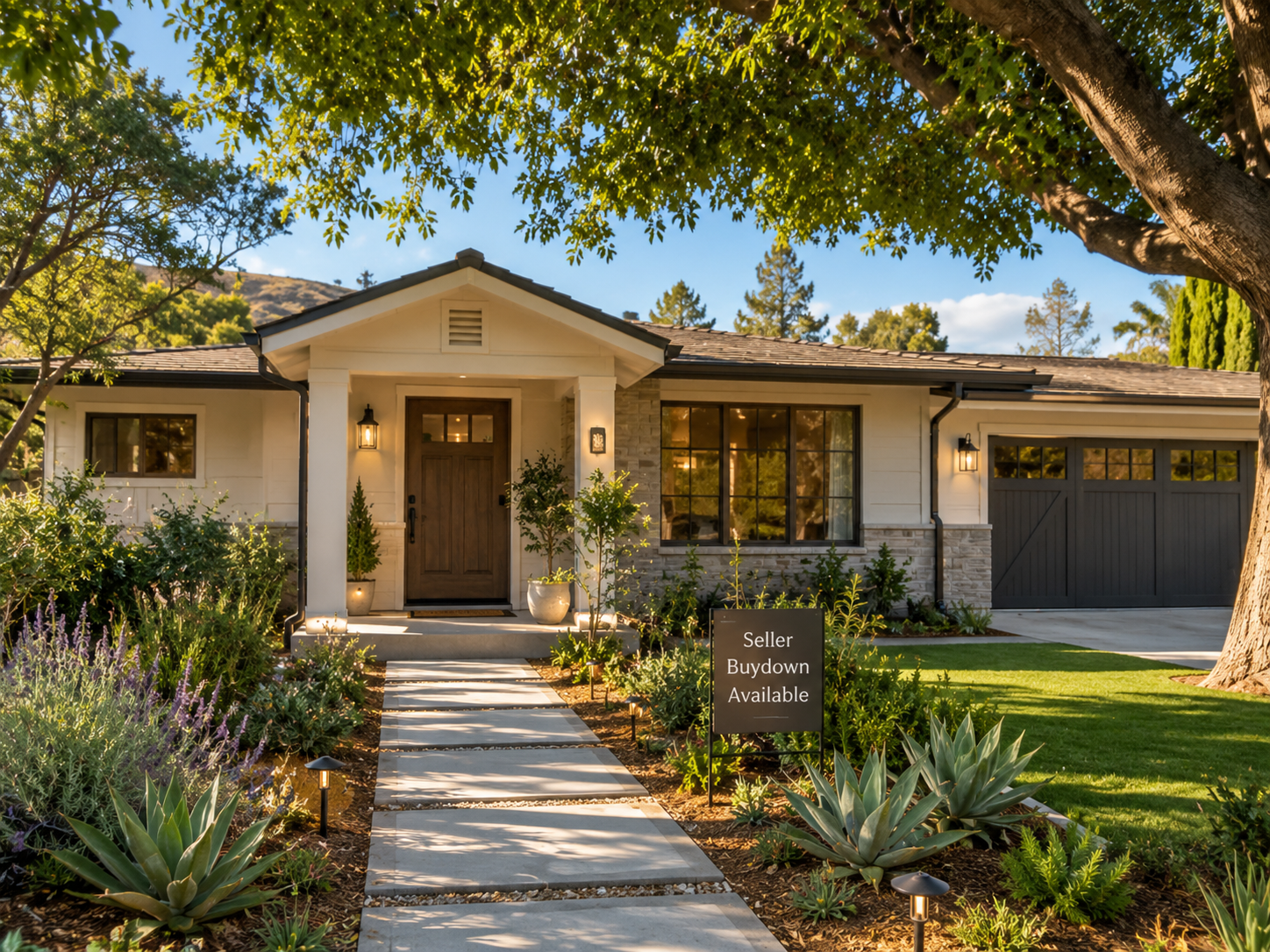 A seller-paid 2-1 buydown on a Woodland Hills 91364 or 91367 home can reduce the year-one monthly payment by $1,200–$1,800 — moving buyers who are slightly below standard qualification thresholds into qualification range and expanding the competitive buyer pool for sellers.
How a seller-paid 2-1 buydown changes the Woodland Hills income math:
On a $1.2M Woodland Hills 91364 home with a $960,000 loan:
Without buydown (7.0% note rate):
- → Monthly P&I: $6,390
- → Total monthly housing cost: approximately $7,815
- → Required gross annual income (28% front-end DTI): approximately $334,000
With 2-1 buydown (5.0% effective rate in year one):
- → Monthly P&I Year 1: approximately $5,152
- → Total monthly housing cost Year 1: approximately $6,577
- → Required gross annual income at 28% DTI for year-one payment: approximately $281,000
- → Income threshold reduction: approximately $53,000/year
With 2-1 buydown (6.0% effective rate in year two):
- → Monthly P&I Year 2: approximately $5,756
- → Total monthly housing cost Year 2: approximately $7,181
- → Required gross annual income at 28% DTI: approximately $307,000
- → Income threshold reduction vs. no buydown: approximately $27,000/year
The practical implication for Woodland Hills buyers: A buyer household earning $290,000/year — below the $334,000 standard qualification threshold for a $1.2M Woodland Hills home at 7.0% — may qualify for that same home with a seller-paid 2-1 buydown, because the lender qualifies the buyer at the buydown rate rather than the note rate (confirm with your specific lender — buydown qualification treatment varies by loan product and lender).
For buyers who have been told they're "just under" the income threshold for their target Woodland Hills price point, a seller-paid buydown is the first tool to explore — before assuming the home is out of reach.
Liana structures buydown negotiations into offers on applicable Woodland Hills 91364 and 91367 listings as standard practice. Most buyer's agents in the Valley don't consistently deploy this tool. The difference it makes to buyers at the edge of their qualification threshold is often the difference between buying now and waiting another 12–18 months.
5. 📍 Income Requirements by Woodland Hills Sub-Neighborhood and Price Point
 The income requirement is not uniform across Woodland Hills — it varies by sub-neighborhood, price band, and the specific buyer profile that each part of 91364 and 91367 attracts. Here's how the income math breaks down across the Woodland Hills market in 2026:
Woodland Hills 91367 — $850K–$1.1M range (Warner Center corridor and north-of-Ventura streets):
- → Typical buyer profile: Move-up families from Northridge 91324, Canoga Park 91304, and West Hills 91307; first-time buyers stretching to Woodland Hills
- → Required gross household income (20% down, standard DTI): approximately $175,000–$225,000
- → With 10% down (adds PMI): income threshold increases approximately $15,000–$20,000
- → With seller-paid 2-1 buydown: income threshold reduces approximately $20,000–$30,000 in year one
- → Down payment + closing costs + reserves required: approximately $130,000–$175,000 total cash
Woodland Hills 91364 — $1.0M–$1.4M range (Ventura Boulevard-adjacent and mid-neighborhood streets):
- → Typical buyer profile: Move-up families from across the SFV, Westside relocators evaluating Valley value, entertainment industry professionals from Burbank and Studio City
- → Required gross household income (20% down, standard DTI): approximately $210,000–$290,000
- → With seller-paid 2-1 buydown: income threshold reduces approximately $30,000–$50,000 in year one
- → Down payment + closing costs + reserves required: approximately $230,000–$290,000 total cash
Woodland Hills 91364 — $1.4M–$1.8M range (Walnut Acres pocket, south of Ventura premium streets):
- → Typical buyer profile: Established dual-income professional households, entertainment industry buyers, Westside relocators specifically targeting the Walnut Acres sub-neighborhood
- → Required gross household income (20% down, jumbo financing): approximately $295,000–$380,000
- → Jumbo loan reserve requirements add approximately $80,000–$120,000 in additional liquidity requirements above the standard down payment and closing costs
- → Down payment + closing costs + reserves required: approximately $380,000–$500,000 total cash
Woodland Hills 91364 — $1.8M–$2.2M range (hillside, view properties, Topanga Canyon-adjacent):
- → Typical buyer profile: High-income dual-income households, executives, investors
- → Required gross household income (20% down, jumbo): approximately $380,000–$480,000
- → Total cash required: approximately $500,000–$650,000+
🚫 What NOT to Overdo
Don't confuse pre-approval amount with your comfortable buying ceiling. Lenders in LA County will approve Woodland Hills buyers for amounts that reflect their institutional risk tolerance — not your lifestyle sustainability. A $1.4M pre-approval does not mean a $1.4M purchase is the right decision for a household with two car payments, childcare costs, and a student loan. Run the full monthly cost stack — mortgage, taxes, insurance, maintenance reserve, utilities — against your actual take-home pay before setting your search ceiling.
Don't underestimate California's tax bite on your gross income. The income thresholds in this article are gross income figures. California's combined state and federal effective tax rate for households earning $200,000–$400,000 in 2026 runs approximately 30–38% depending on filing status, deductions, and specific income composition. Your take-home pay is meaningfully lower than your gross income — and the monthly payment sustainability calculation should be run against take-home, not gross. A $280,000 gross income household in California takes home approximately $15,000–$16,000/month — not $23,300.
Don't max out your down payment at the expense of reserves. Some Woodland Hills buyers drain all available cash into the maximum down payment to reduce their loan amount and monthly payment — then have no reserves for the HVAC replacement or roof repair that arrives in year one. The marginal payment reduction from an extra 5% down payment is real but modest. Having 6+ months of reserves post-closing is more financially protective than a slightly lower payment with no safety net.
Don't ignore the impact of existing debt on your qualification threshold. Student loan payments, car loans, and credit card minimums all reduce the housing payment room within your back-end DTI ceiling. A Woodland Hills buyer with $1,500/month in student loan and car payments at a $280,000 gross income has meaningfully less housing payment capacity than a buyer with $280,000 gross and no other debt. Run the back-end DTI calculation with your actual debt obligations before concluding you qualify for a specific Woodland Hills price point.
Don't assume the income threshold is fixed — it's rate-dependent. Every 0.5% change in the prevailing mortgage rate changes the qualifying income threshold by approximately $8,000–$15,000/year at Woodland Hills price points. The thresholds in this article are calibrated for a 7.0% rate environment. If rates change materially, the income requirements change proportionally. Work with a local lender who can model your specific scenario at current rates before you set your search ceiling.
🏠 Real-World Scenario — Woodland Hills 91364
A dual-income couple — one partner in entertainment production, one in healthcare — had a combined gross income of $265,000/year and a target of Woodland Hills 91364 in the $1.1M–$1.25M range. They had been told by an online calculator they qualified comfortably. They had $220,000 in liquid savings.
When we ran the full picture with their lender, the reality was more nuanced. Their back-end DTI included $1,100/month in car payments and $650/month in student loan minimums — $1,750/month in additional debt that consumed a meaningful portion of their back-end DTI capacity. Their comfortable housing payment, staying within 43% back-end DTI, was approximately $6,950/month — which at 7.0% supported a loan of approximately $875,000 and a purchase price of approximately $1.09M with 20% down.
We identified a Woodland Hills 91364 listing at $1.12M that had been on market for 26 days — the DOM creating negotiating room. We structured an offer at $1.09M with a seller-paid 2-1 buydown contribution of $17,500. The year-one effective rate of 5.0% produced a monthly P&I of $4,670 on their $872,000 loan — bringing their total housing cost to approximately $6,660/month, comfortably within their back-end DTI capacity.
Offer accepted. The couple closed on a Woodland Hills 91364 home that their initial online calculator had placed slightly out of reach — because the buydown restructured the income equation in their favor without requiring them to increase their income or reduce their down payment.
🏠 Real-World Scenario — Woodland Hills 91367
A single-income buyer relocating from out of state had accepted a position in Woodland Hills at $195,000/year and was evaluating whether to buy or rent during the relocation transition. She had $180,000 in liquid savings from a prior home sale and no significant additional debt.
At $195,000 gross income and standard DTI guidelines, her qualification ceiling at 7.0% was approximately $870,000 — which in Woodland Hills 91367 positioned her in the north-of-Ventura and Warner Center-adjacent streets at the $850K–$920K range.
We modeled the rent vs. buy math for her specific situation. Comparable rentals in Woodland Hills 91367 in her target size range were running $3,800–$4,200/month. Owning at $870,000 with 20% down produced a total monthly housing cost of approximately $6,850 — $2,650–$3,050/month more than renting. Over a 5-year hold, the appreciation expectation for Woodland Hills 91367 at her price point — approximately 4–5% annually on $870,000 — produced an equity gain of approximately $192,000–$241,000. Net of the rent differential over 5 years ($159,000–$183,000), the buy decision produced a net positive of approximately $33,000–$82,000 over renting — plus the non-financial benefits of stability, customization, and the school access that mattered for her future family planning.
She bought in Woodland Hills 91367 at $865,000. The total cash required — $173,000 down, $17,300 closing costs, and a $52,000 reserve — came to $242,300, within her $180,000 savings with a modest parental gift of $62,300. She is 18 months into ownership with no major maintenance surprises and a home currently estimated at approximately $905,000.
❓ FAQ
What credit score do I need to buy in Woodland Hills? ✓ Conventional loans: minimum 620, but 740+ is where you access the best rates and the cleanest approval process for Woodland Hills purchase prices. ✓ Jumbo loans (above approximately $1.089M in LA County): minimum 720 typically required, 740–760+ preferred by most jumbo lenders. ✓ Every 20-point credit score improvement in the 680–760 range meaningfully affects your interest rate — and at Woodland Hills loan amounts, a 0.25% rate difference is $200–$300/month. Pull your credit report and address any issues before starting your Woodland Hills home search.
Can two incomes be combined to qualify for a Woodland Hills mortgage? ✓ Yes — co-borrowers (spouses, domestic partners, or any co-signing party) can combine qualifying income for mortgage purposes. Both credit histories are evaluated, and the lower of the two credit scores is often used for rate determination. For dual-income Woodland Hills buyers, combining incomes is the most common path to qualifying in the $1.1M–$1.5M range.
Does self-employment income qualify for a Woodland Hills mortgage? ✓ Yes — but with additional documentation requirements. Self-employed borrowers typically need two years of tax returns, a year-to-date profit and loss statement, and business bank statements. Lenders use net income after business deductions — not gross revenue — which frequently produces a lower qualifying income than self-employed buyers expect. If your business deductions are aggressive, your qualifying income may be significantly lower than your actual cash flow. Discuss this with a lender who has experience with self-employed borrowers before assuming your income qualifies at your target Woodland Hills price point.
How does a seller-paid rate buydown affect my qualification? Lender treatment of buydowns for qualification purposes varies by loan product. On most conventional loans, lenders qualify buyers at the note rate (the rate after the buydown period ends), not the buydown rate — which means the buydown primarily helps with cash flow and lifestyle sustainability rather than technical qualification. However, some lenders and loan products do qualify at the buydown rate, meaningfully reducing the income threshold. Confirm your specific lender's treatment with your loan officer before counting on the buydown for qualification purposes.
What income do I need to buy in Woodland Hills as a first-time buyer? First-time buyers in Woodland Hills 91367 typically start in the $800K–$950K range — requiring approximately $165,000–$195,000 in gross household income with 20% down, or $150,000–$175,000 with 10% down (including PMI in the payment calculation). California first-time buyer assistance programs — including CalHFA — may provide down payment assistance that reduces the cash-to-close requirement, though income limits for these programs are often below Woodland Hills purchase price thresholds. Confirm program eligibility with a HUD-approved housing counselor.
Is Woodland Hills 91364 or 91367 more affordable? Woodland Hills 91367 (north of Ventura, Warner Center corridor) generally offers more accessible price points — $850K–$1.1M for a 3-bedroom single-family home — versus Woodland Hills 91364 south of Ventura where the Walnut Acres pocket and premium streets push into the $1.2M–$1.8M range. For buyers at the income threshold of Woodland Hills, starting the search in 91367 and the north-of-Ventura pockets of 91364 provides more options and more negotiating room than the premium south-of-Ventura sub-neighborhoods.
What happens if I qualify on paper but the payment strains my actual budget? This is the scenario that produces the most buyer regret in the Woodland Hills market. If your lender's maximum approval amount produces a total monthly housing cost above 38–40% of your gross income — or above 50–55% of your take-home — you're in the house-poor zone. The solution is to buy below your maximum approval, not at it. Set your search ceiling at the price point where total housing costs leave room for savings, retirement contributions, childcare, travel, and the life you're already living. A Woodland Hills home that stretches you to the point of financial anxiety is not the upgrade you were planning for.
🎯 Bottom Line
The income required to buy a home in Woodland Hills in 2026 is real, specific, and higher than most buyers initially assume when they run a basic mortgage calculator. At the $950K–$1.5M price points that define the majority of Woodland Hills 91364 and 91367 transactions, qualified buyers need gross household incomes of approximately $185,000–$320,000, liquid assets of $130,000–$500,000+ depending on price point, and the financial stability to sustain total monthly housing costs that run $2,000–$3,000/month above the mortgage payment alone.
The tools that are actively changing the equation — seller-paid rate buydowns, jumbo loan products with competitive terms, and the negotiating room that Woodland Hills 91364/91367's slightly longer DOM creates — mean that buyers who are structured correctly and working with an agent who knows how to deploy these tools are accessing Woodland Hills at income thresholds that the raw rate environment would suggest are out of reach.
At Parkway Estate Properties, we work with first-time buyers, move-up buyers, and relocators across Woodland Hills 91364/91367, Sherman Oaks 91403/91423, Tarzana 91356, Encino, and Northridge 91324/91325. Liana's ABR designation and specific experience with first-time buyers and buyer income qualification means every buyer engagement starts with a realistic income and cash analysis — before you've toured a single home — so your search is calibrated to what actually works for your financial life, not what a calculator says you can technically borrow.
📩 Want to Know Exactly What Income You Need for Your Target Woodland Hills Home?
Tell us your price point and we'll model the complete monthly cost stack, the cash-to-close requirement, and the buydown scenarios that might change your threshold — before you've committed to anything.
Contact Liana Shersher at Parkway Estate Properties: 📧 liana@parkwayestate.com · 📞 (818) 208-5881 · 🌐 parkwayestate.com 15021 Ventura Blvd., Ste. 510, Sherman Oaks, CA 91403
About the Authors
Liana Shersher Liana Shersher is a licensed real estate agent with Parkway Estate Properties Inc. and an Accredited Buyer's Representative (ABR) serving the San Fernando Valley — with a focus on Sherman Oaks, Encino, Tarzana, Woodland Hills, and Northridge (DRE# 02164224). Liana guides first-time homebuyers through every step of the purchase, from the first showing to the keys in hand, and represents move-up and repeat buyers across the Valley. For sellers, she builds the pricing and marketing strategy that positions a home to sell for top dollar, fast. Buyers and sellers work with Liana for clear communication, sharp local knowledge, and an agent who treats their goals like her own.
Roman Shersher Roman Shersher is the broker-owner of Parkway Estate Properties Inc. and a real estate investor with 18 years of experience in the San Fernando Valley (DRE# 01855095). Roman has personally led or co-led renovations on dozens of properties across the Valley, including recent projects in Northridge (91324) and Woodland Hills (91364). That hands-on renovation and investment experience shapes every pricing conversation and days-on-market strategy at Parkway — sellers get a realistic read on what improvements actually return at resale, and buyers get an expert eye on a home's true condition and upside.
Parkway Estate Properties, Inc. 15021 Ventura Blvd., Ste. 510, Sherman Oaks, CA 91403 · (818) 208-5881 · parkwayestate.com · Broker License #: 01873092 Equal Housing Opportunity. Information herein is general and not legal, tax, or financial advice. Consult qualified professionals for your specific situation.
Categories
Recent Posts











Broker | Realtor ® License ID: 01873092
+1(818) 208-5881 | info@parkwayestate.com