
What's it like to live in Woodland Hills?
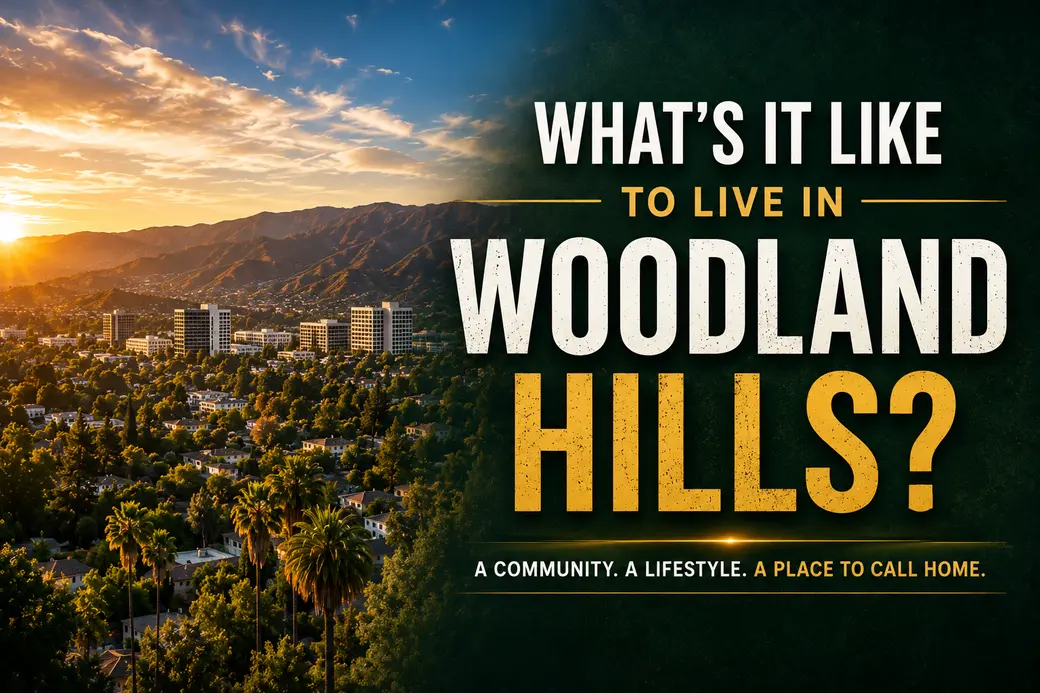
The most honest answer is that Woodland Hills surprises people. Not in a marketing-copy way — genuinely. Buyers who arrive with a San Fernando Valley mental model built on heat, freeways, and strip malls encounter a neighborhood where 15 minutes in the other direction puts them on a Topanga State Park ridgeline with Pacific Ocean views. Renters who crossed the hill skeptically for an open house and ended up buying because the square footage-to-price equation made no sense to ignore. Westsiders who budgeted for Santa Monica and got 800 more square feet, a pool, and a backyard in Woodland Hills 91364 for the same number — and who stopped mentioning the Westside within six months.
Living in Woodland Hills is not the same as living in Sherman Oaks 91403, or Tarzana 91356, or Encino. It has a specific character — more residential and quieter than Sherman Oaks, more established and polished than Tarzana, more family-oriented and less performative than Encino. It has genuine tradeoffs. And it has qualities that no amount of budget can replicate in comparable Los Angeles neighborhoods at comparable price points.
This article gives you the real picture — the daily experience, the seasonal rhythms, the commute reality, the neighborhood character by sub-area, and the honest tradeoffs that people who live in Woodland Hills consistently name when asked what they would tell someone considering a move.
1. 🏡 The Physical Character — What Woodland Hills Actually Looks and Feels Like
Living in Woodland Hills begins with the physical experience of the neighborhood — the streets, the houses, the landscape, and the sensory texture of daily life in 91364 and 91367. And that experience is more varied than the neighborhood's reputation suggests.
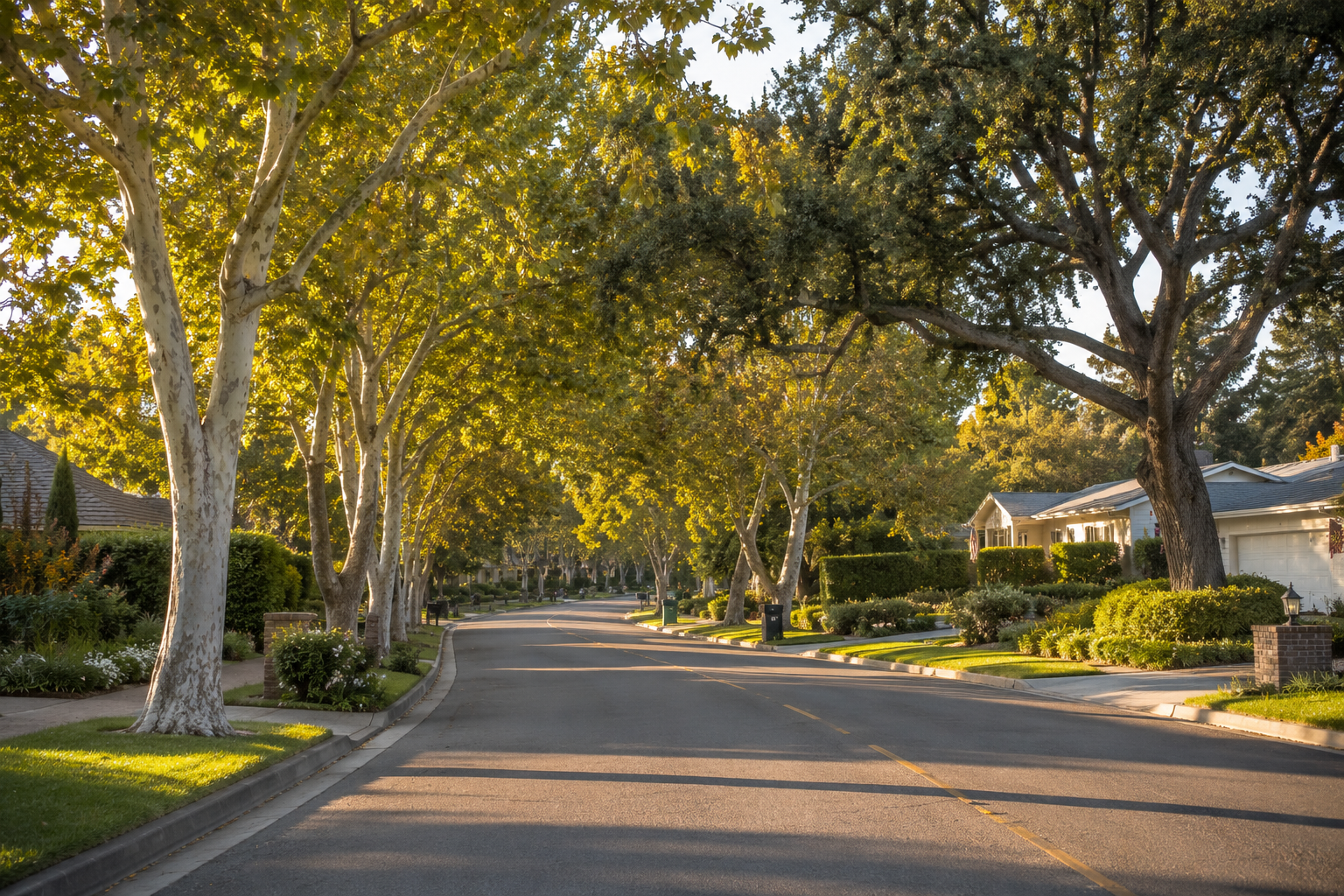 The residential character of south Woodland Hills 91364 — mature tree canopy, generous lots, homes set back from quiet streets — is the physical environment that consistently surprises buyers arriving with a Valley-suburban mental model.
South Woodland Hills 91364 — the premium residential experience:
The streets south of Ventura Boulevard in Woodland Hills 91364 — particularly the Walnut Acres pocket and the hillside streets approaching Mulholland Drive — have a settled, established residential character that more closely resembles Brentwood or Pacific Palisades than the typical SFV grid. Mature oak and sycamore trees canopy the streets. Homes are set back on lots of 8,000–18,000+ sq ft with established landscaping that has had decades to develop the privacy and visual richness that new construction cannot replicate. Weekend mornings in these streets are quiet in a specific way — the background hum of a genuinely residential neighborhood rather than the ambient commercial noise that defines more mixed-use urban areas.
The homes themselves range from impeccably renovated mid-century modern and ranch-style properties to original-condition 1960s–1970s homes that still reflect the construction quality of their era — solid bones, generous proportions, and room to breathe in a way that West Los Angeles lot sizes stopped allowing decades ago.
North Woodland Hills 91367 — the accessible, working neighborhood:
North of Ventura Boulevard, the character shifts. Woodland Hills 91367 has a more mixed residential-commercial texture — the Warner Center commercial corridor creates an urban energy that the south-of-Ventura streets deliberately don't have. The residential streets here are quieter and more traditionally suburban, but the proximity to Warner Center means daily errands, retail, and services are closer at hand. Homes are generally smaller, lots are more standard, and the overall feel is more working-neighborhood than the premium residential character of south 91364.
This is not a lesser version of Woodland Hills — it is a different version, appropriate for a different buyer profile and budget, with genuine quality of life that the 91364 premium reputation sometimes obscures.
The Walnut Acres distinction:
Within south Woodland Hills 91364, the Walnut Acres sub-neighborhood commands a specific physical character that buyers often describe as the closest the San Fernando Valley gets to a Westside estate street. Formal HOA maintenance, tree-lined boulevards within the neighborhood, larger-than-average Woodland Hills lots, and a concentration of fully renovated premium homes create a streetscape that consistently impresses buyers experiencing it for the first time.
2. 🍽️ Daily Life — How People Actually Spend Their Time
Understanding what living in Woodland Hills feels like requires understanding how residents actually spend their time — the daily rhythms, the weekly rituals, and the community infrastructure that makes a neighborhood livable rather than just livable-looking.
Morning rhythms:
A weekday morning in south Woodland Hills 91364 typically involves one of three things: an early Topanga trail run or hike (before 8 AM for serious outdoor enthusiasts), a coffee run to one of the Ventura Boulevard independent cafés or the Erewhon-adjacent options nearby, or a grocery run to the Whole Foods at The Village before the school drop-off window begins. The Woodland Hills morning is characteristically calm — the neighborhood's residential density and relative distance from downtown commute corridors means morning street traffic is manageable in a way that more centrally located SFV neighborhoods aren't.
The Village as the daily anchor:
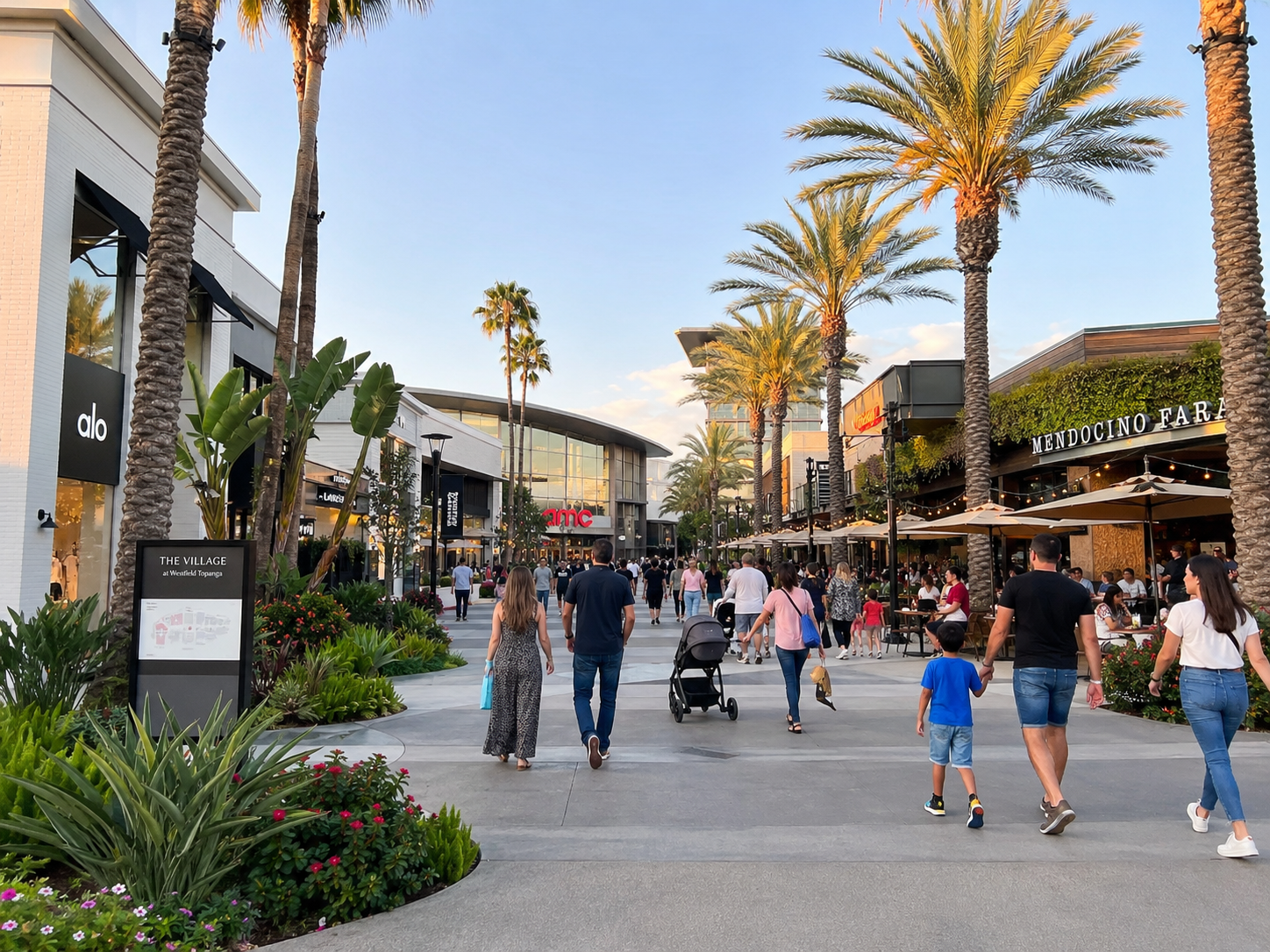 It is impossible to describe daily life in Woodland Hills without centering The Village at Westfield Topanga. For most Woodland Hills 91364 residents, The Village is the organizing principle of the neighborhood's social and commercial life — the place where coffee happens, where birthday dinners are held, where impromptu Sunday morning walks turn into two hours of outdoor sitting and people-watching. It is the closest thing Woodland Hills has to a town square, and it functions as one in a way that feels organic rather than manufactured.
The Village delivers:
- → ☕ Morning coffee culture — multiple café options with outdoor seating that are genuinely pleasant from September through June
- → 🛒 Whole Foods as daily grocery — not a destination shop but an embedded neighborhood grocery that makes high-quality food provisioning part of the daily routine
- → 🍽️ Dinner options — a rotating restaurant roster that serves the range from casual weeknight meals to special occasion dining without requiring a Westside drive
- → 🎬 AMC cinema — a full-service movie theater that makes the "what do you want to do tonight" question answerable without a 30-minute drive
- → 🌿 Outdoor gathering space — wide pedestrian walkways, mature plantings, water features, and seasonal programming that make The Village a destination in itself rather than just a retail vehicle
Ventura Boulevard:
Ventura Boulevard through Woodland Hills is a different Ventura than the Sherman Oaks 91403 stretch — slightly less dense, slightly more suburban in scale, but with a growing concentration of independent restaurants and cafés that reflects the neighborhood's improving lifestyle infrastructure over the past decade. The Tarzana 91356 stretch of Ventura immediately to the east adds additional dining and café options that Woodland Hills residents treat as effectively their own.
3. 🌡️ The Climate — The Most Honest Conversation
Climate is the one aspect of Woodland Hills life that deserves the most honest treatment — because the Valley heat is real, and buyers who haven't experienced a Woodland Hills August before committing to a purchase occasionally experience genuine adjustment shock.
The summer reality:
Woodland Hills runs 8–12 degrees warmer than Santa Monica and West Los Angeles on average during summer months. In practice: July average highs of 88–92°F, August average highs of 90–95°F, with heat events that push 100–108°F occurring multiple times per summer. Air conditioning is not optional — it is infrastructure. Homes without properly sized, well-maintained HVAC systems are not comfortable in August. Electricity bills in summer run $200–$450/month depending on home size and insulation quality.
The heat also restricts outdoor activity to morning windows — before 9:30–10 AM in July and August — in a way that Westside residents accustomed to all-day outdoor comfort have to consciously adapt to. Trail running, cycling, and outdoor exercise in Woodland Hills during the summer require intentional scheduling that the Westside's marine-layer cooling makes unnecessary.
What the heat gives you in return:
The warmth that makes August challenging makes the rest of the year genuinely exceptional:
- → 🌸 Spring (March–May) is spectacular: Woodland Hills spring — warm afternoons, cool mornings, Topanga wildflower bloom, The Village outdoor dining in full swing, pool season beginning in earnest by late April — is among the most pleasant seasonal experiences available in greater Los Angeles. The marine layer that keeps Westside springs cool and overcast through May is absent here.
- → ❄️ Winters are mild and sunny: Woodland Hills winter temperatures rarely drop below 42°F at night. Daytime highs of 60–68°F are the norm from December through February — warm enough for year-round outdoor dining in a light jacket and trail hiking without winter gear.
- → ☀️ Less June Gloom: The coastal June Gloom phenomenon — which keeps Santa Monica, Venice, and Brentwood overcast and cool through much of May and early June — barely reaches Woodland Hills. Residents who moved from the Westside consistently cite this as an unexpected quality-of-life improvement: they get full-sun mornings in May and June that their former neighbors don't.
- → 🏊 Pool season runs 6 months: From May through October, Woodland Hills backyard pool temperatures are consistently swim-appropriate. The pools that dot the south 91364 residential landscape — prevalent in the south-of-Ventura and Walnut Acres pockets — are genuinely active lifestyle assets for the full six-month window, not the 3–4 month use window that coastal marine layer limits Westside pools to.
4. 🚗 The Commute — Tested Honestly
The commute question is the one Woodland Hills buyers obsess over most — and the one that most benefits from specific testing at your actual departure time rather than reliance on reputation or Google Maps estimates.
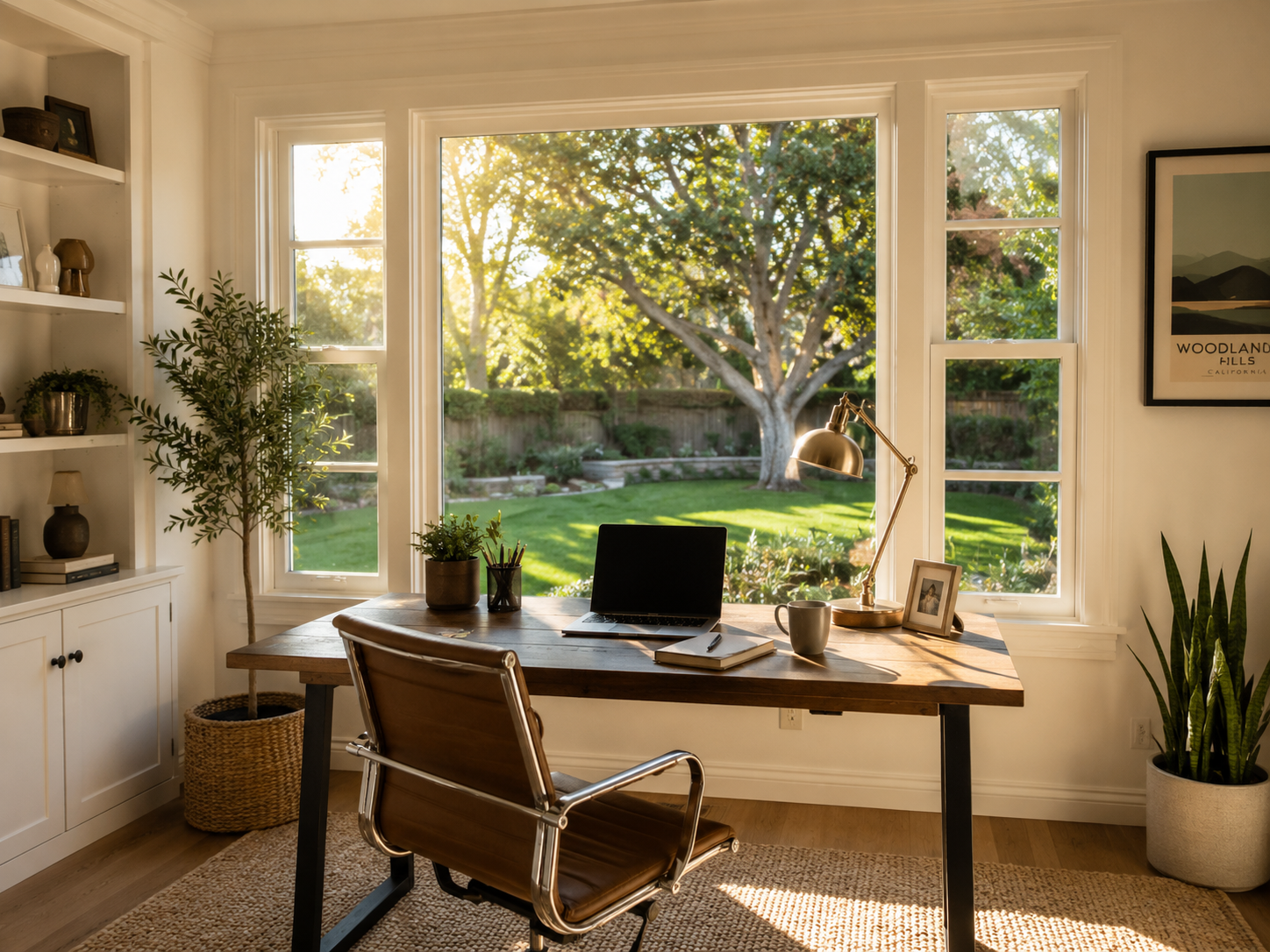 The hybrid work shift has fundamentally reframed the Woodland Hills commute calculation — residents who commute to Westside offices 2–3 days per week rather than 5 report the 405 as entirely manageable, while the daily proximity to Topanga and The Village makes the non-commute days genuinely exceptional.
The commute reality by destination:
To Burbank (Warner Bros., Disney, NBC Universal) and Studio City: This is Woodland Hills' best commute story. The 101 East from Woodland Hills 91364/91367 to Burbank runs 20–30 minutes in most conditions. Studio City is effectively 15–20 minutes at most hours. Entertainment industry buyers for whom Burbank or Studio City proximity is the primary commute consideration — and there are many — find Woodland Hills a genuinely competitive address versus the premium Sherman Oaks and Studio City pricing they might otherwise target.
To the Westside (Santa Monica, Culver City, Brentwood, Century City): This is the honest hard conversation. Peak hour (7:30–9:30 AM southbound, 4:30–7:00 PM northbound) on the 405 through Sepulveda Pass from Woodland Hills runs 45–65 minutes to Santa Monica. Off-peak — before 7:00 AM or after 9:30 AM southbound — the same drive runs 30–38 minutes. The alternative: Topanga Canyon Boulevard to PCH and east — a scenic canyon drive that runs 40–55 minutes in most conditions but bypasses the 405 entirely.
The hybrid work shift has materially changed this calculus. Residents who commute to Westside offices 2–3 days per week rather than 5 consistently report that the 405 is manageable at that frequency — particularly when the non-commute days in Woodland Hills include morning Topanga trail runs, backyard pool mornings, and The Village afternoon coffee that the Westside lifestyle they left behind didn't offer at comparable cost.
To Downtown LA: 101 East to Downtown runs 30–45 minutes off-peak and 45–65 minutes during peak commute windows. More consistent than the 405 — the 101 East through the Cahuenga Pass and into Downtown doesn't have the Sepulveda Pass compression that makes the Westside commute variable.
To Warner Center (Woodland Hills 91367): For buyers who work in the Warner Center corridor — financial services, healthcare, tech-adjacent — the commute is essentially zero. Warner Center is embedded in north Woodland Hills 91367 and accessible from most 91364 addresses in 8–15 minutes. This commute profile makes certain Woodland Hills buyers genuinely car-optional for their work commute.
The remote work position: Woodland Hills has attracted a growing share of fully remote and hybrid professionals — specifically because the neighborhood's outdoor lifestyle, reasonable price-per-square-foot, and genuine quality of life make the days you're not commuting genuinely exceptional. The Topanga morning, the backyard afternoon, the Ventura Boulevard dinner — experienced 4–5 days per week without the commute tax — produce the lifestyle equation that has driven Woodland Hills' Westside-relocator demand story.
5. 🏘️ Community and Neighborhood Character — What It Feels Like to Belong
Every neighborhood promises community. Woodland Hills 91364 and 91367 actually deliver it — through the specific mechanisms of recurring community infrastructure that creates the informal social connections that make a place feel like home rather than just a residential address.
The community infrastructure that works:
- → 🌿 The Woodland Hills Farmers Market: A genuine community institution — the weekly market functions as much as a social gathering as a food shopping destination. Familiar faces, consistent vendors, and the informal connections that form between people who see each other every Sunday morning are the invisible infrastructure of neighborhood belonging.
- → 🏟️ Youth sports leagues: The West Valley Youth Soccer League, Little League baseball, and the Recreation Center's programming create a parallel community calendar for families with school-age children — practices and games and car pools and post-game pizza that build the neighborhood relationships families specifically move to Woodland Hills to find.
- → 🎭 The Village events calendar: Seasonal programming — outdoor movie nights, holiday markets, live music in the courtyard — provides recurring gathering occasions that bring residents together in a way that feels organic rather than organized.
- → 🐕 The trail community: South Woodland Hills 91364 has a genuinely active morning outdoor community centered on Topanga — trail runners, hikers, and dog walkers who see each other regularly at the Trippet Ranch trailhead and on the fire road network develop the kind of casual recurring familiarity that urban neighborhoods rarely produce.
- → 🏫 The school community: For families whose children attend El Camino Real Charter, Taft High School, or the local elementary schools, the school community — parent volunteer networks, booster organizations, sports programs — creates the densest community connections in the neighborhood. The school parking lot is where many Woodland Hills friendships start.
The Woodland Hills neighborhood personality:
Residents consistently describe Woodland Hills with a specific set of adjectives that collectively define its personality: established, unpretentious, outdoorsy, family-oriented, and quietly confident. This is not a neighborhood that performs itself. You won't find the "seen and be seen" energy of WeHo or the conspicuous wealth display of Beverly Hills. What you find is a neighborhood that has been built and lived in by people who chose it deliberately — for the space, the access, the schools, the lifestyle infrastructure — and who are settled in that choice in a way that produces genuine community rather than social performance.
🚫 What NOT to Overdo
Don't move to Woodland Hills expecting urban walkability. Outside of the immediate Ventura Boulevard corridor and The Village footprint, Woodland Hills is car-dependent in the way that most San Fernando Valley residential neighborhoods are. Daily errands — grocery, coffee, pharmacy, hardware — require a car for most residents except those who live within half a mile of Ventura. Buyers who are trading a genuinely walkable neighborhood (Silver Lake, Larchmont, parts of West Hollywood) for Woodland Hills are accepting a meaningful walkability tradeoff. That tradeoff is worth it for many buyers — and not worth it for others. Know which category you're in before you commit.
Don't underestimate August. The first August in Woodland Hills surprises almost every transplant from the Westside or any coastal-adjacent neighborhood. The heat is real, the HVAC runs constantly, outdoor afternoon activity shuts down by 11 AM on the worst days, and the contrast with the spring experience that made the neighborhood so compelling during the buying process can feel jarring. Building the August adjustment into your expectations — rather than discovering it — makes the transition significantly smoother.
Don't assume The Village is everything. The Village at Westfield Topanga is Woodland Hills' most prominent lifestyle amenity — but it is a lifestyle center, not a neighborhood. Residents who rely on it exclusively for their social and dining life can find the selection limited compared to the density of Sherman Oaks 91403's Ventura Boulevard or the breadth of the Westside's restaurant culture. The right framing is The Village plus Ventura Boulevard plus Tarzana 91356's Old Town plus the Calabasas dining scene to the west — a collective lifestyle infrastructure that is strong when used comprehensively, thin when treated as a single source.
Don't skip the commute test. The Woodland Hills-to-Westside commute reputation is partly myth and partly real — and which it is for you depends on your specific departure time, specific destination, and specific tolerance for traffic variability. Do the test: drive from a target Woodland Hills 91364 address to your actual office on a Tuesday morning at your actual departure time. Not a Saturday. Not a Google estimate. The Tuesday morning test is the only data that matters for a 5-day-per-week commute decision.
🏠 Real-World Scenario — Woodland Hills 91364
A couple in their mid-30s with a 4-year-old had been renting in Brentwood for three years — their neighborhood was genuinely excellent but their $5,200/month rent was buying them a 1,400 sq ft apartment with a parking spot and no outdoor space. They had dismissed the Valley reflexively for two years before a friend who had bought in south Woodland Hills 91364 insisted they do one open house visit.
We took them through a 2,900 sq ft renovated 4-bedroom on a 9,800 sq ft lot in south Woodland Hills 91364, listed at $1.42M. Backyard pool. Two-car garage. Guest room. Home office. A lemon tree in the back yard. The monthly payment at 20% down and 7.0% was $8,650 — including taxes and insurance, approximately $10,200 total monthly housing cost. Their Brentwood rent had been $5,200. The gap was real.
Then we drove to Topanga State Park — 17 minutes from the front door. They walked 20 minutes up the fire road and turned around. On the way back, the father said the thing that Woodland Hills buyers say with some regularity: "Why did we wait so long."
They bought in Woodland Hills 91364. The father commutes to Century City 3 days per week — 38 minutes via Topanga Canyon to PCH on good mornings, 52 minutes on bad ones. He works from home the other two. The mother works in Woodland Hills. Their daughter starts kindergarten in the fall at the local elementary school. The lemon tree is producing. They have not mentioned Brentwood in four months.
🏠 Real-World Scenario — Woodland Hills 91367
A recently divorced professional in her early 40s was re-entering the housing market after a decade of homeownership in Thousand Oaks. She wanted to move closer to her work in the Warner Center corridor and her social life, which had migrated toward Woodland Hills and Tarzana 91356 over the prior two years. Her budget was $975,000.
She had been looking at Woodland Hills 91367 with mild interest — the address appealed but she hadn't fully engaged the neighborhood's lifestyle proposition. We showed her three things in one Saturday: a morning walk at the Woodland Hills Recreation Center with coffee at a nearby Ventura Boulevard café, an hour at The Village, and a drive to the Topanga Trippet Ranch trailhead just to see it.
The drive to the Topanga trailhead — 22 minutes from our starting point in north Woodland Hills 91367 — was the turning point. She had never hiked in Los Angeles. Standing at the trailhead looking up at the chaparral hillside, she said she felt like she had been living in the wrong part of the city.
She bought in Woodland Hills 91367 at $965,000. She drives to her Warner Center office in 8 minutes. She hikes Topanga on Sunday mornings. She attends the farmers market most weekends. Her social life has contracted to a 3-mile radius in a way she describes as surprisingly satisfying. She is the person who tells people who are skeptical about Woodland Hills to visit before they dismiss it.
❓ FAQ
Is Woodland Hills a good place to live? ✓ For the right buyer profile — yes, consistently. Woodland Hills 91364/91367 delivers a combination of space, outdoor access, community infrastructure, and relative value that most comparable Los Angeles neighborhoods cannot match at similar price points. It is particularly strong for families with school-age children, outdoor enthusiasts, entertainment industry professionals working in Burbank or at Warner Center, and buyers relocating from the Westside who prioritize space and lifestyle quality over address prestige. It is less ideal for buyers who specifically need urban walkability, quick coastal access, or the social energy of denser LA neighborhoods.
What is the vibe of Woodland Hills? Established, residential, outdoorsy, and unpretentious. Woodland Hills has a settled community quality — long-term residents, active school communities, a strong farmers market culture, and neighborhood events that create genuine social connections — that feels different from the transient, aspirational energy of some more prestigious LA neighborhoods. It is a place people live in, not a place people perform in.
Is Woodland Hills safe? Woodland Hills is generally considered one of the safer neighborhoods in the San Fernando Valley. Residential streets in south Woodland Hills 91364 — particularly the Walnut Acres pocket and south-of-Ventura residential grid — have low crime rates by Los Angeles standards. Check LAPD's public crime mapping at the specific street level for any address you're seriously evaluating — crime rates vary by proximity to commercial corridors and specific streets within both 91364 and 91367.
What is the difference between living in Woodland Hills 91364 vs 91367? 91364 south of Ventura: larger lots, more established tree canopy, Walnut Acres premium character, direct Topanga access, The Village within the sub-neighborhood, $1.1M–$1.9M+ price range. 91367 north of Ventura: more accessible price point ($850K–$1.1M), Warner Center proximity, more standard residential character, slightly longer Topanga drive. Both are Woodland Hills — but they serve different buyer profiles, budgets, and lifestyle priorities. Most buyers for whom the distinction matters should visit both before deciding.
How does Woodland Hills compare to Tarzana 91356 for lifestyle? Tarzana 91356 is Woodland Hills' closest lifestyle equivalent — similar residential character, similar access to Ventura Boulevard, similar outdoor access profile — at a price point typically 8–15% below comparable Woodland Hills 91364 homes. Woodland Hills has The Village advantage (Tarzana has Old Town Tarzana, which is charming but smaller-scale), slightly better Topanga access from south 91364, and a stronger appreciation track record. For buyers who value Old Town Tarzana's intimate neighborhood scale and can be flexible on Topanga proximity, Tarzana 91356 is a legitimate lifestyle alternative at better value. For buyers who specifically want The Village, south-of-Ventura character, and the Topanga adjacency, Woodland Hills 91364 is the right choice.
What do people dislike about living in Woodland Hills? The consistent complaints from Woodland Hills residents: summer heat (specifically August, specifically the afternoon window), the 405 commute to the Westside during peak hours, the car-dependence outside of the immediate Ventura corridor, and the perception that some Westside social and cultural amenities require a 30–40 minute drive. None of these are dealbreakers for the buyer profile Woodland Hills attracts — they are genuine tradeoffs that residents make knowingly and generally without regret.
Does Woodland Hills have good restaurants? The Village at Westfield Topanga anchors the neighborhood's dining scene with a mix of casual and sit-down options. The Ventura Boulevard corridor through Woodland Hills and neighboring Tarzana 91356 adds independent restaurant depth. The overall dining quality and variety is strong by Valley standards — genuinely good food within 10–15 minutes of any Woodland Hills 91364/91367 address. It does not match the density of Sherman Oaks 91403's Ventura corridor or the variety of a Westside dining district — but for most Woodland Hills residents, the combination of The Village and Ventura is sufficient for daily life, with Westside dining as an occasional destination rather than a daily dependency.
🎯 Bottom Line
Living in Woodland Hills is the experience of a neighborhood that rewards people who choose it deliberately. The buyers who thrive here are the ones who arrived knowing the tradeoffs — the summer heat, the 405 commute, the car-dependence — and who made the choice anyway because the combination of space, outdoor access, community infrastructure, and price-per-square-foot value is genuinely compelling at a level that no comparable Los Angeles neighborhood matches at Woodland Hills 91364/91367 price points.
The Topanga trail that is 15 minutes from your door. The pool that is usable 6 months a year because the climate actually produces a real summer. The 2,800 sq ft home on a 9,000 sq ft lot that would be $600,000 more expensive on the other side of the hill. The farmers market where you recognize people within six months of moving. The Village outdoor dinner on a warm Tuesday evening in October when it's still 75 degrees and the Westside is fighting marine layer fog.
These are the things residents describe when asked what living in Woodland Hills is actually like. Not the freeway. The life.
At Parkway Estate Properties, we work with buyers and sellers across both Woodland Hills 91364 and 91367 — and the neighborhood lifestyle conversation is one we have on every buyer engagement, not as a marketing exercise but as a genuine matching process. Liana knows which sub-neighborhoods deliver which lifestyle profiles, which streets have the best Topanga access, which addresses verify into which schools, and how to structure a search that produces the Woodland Hills life you're actually looking for rather than the one that looks best in listing photos.
📩 Curious Whether Woodland Hills Is the Right Neighborhood for Your Life?
Let's have a real conversation — your lifestyle priorities, your commute reality, your family stage, and whether Woodland Hills 91364 or 91367 is actually the right match. No pitch, no pressure.
Contact Liana Shersher at Parkway Estate Properties: 📧 liana@parkwayestate.com · 📞 (818) 208-5881 · 🌐 parkwayestate.com 15021 Ventura Blvd., Ste. 510, Sherman Oaks, CA 91403
About the Authors
Liana Shersher Liana Shersher is a licensed real estate agent with Parkway Estate Properties Inc. and an Accredited Buyer's Representative (ABR) serving the San Fernando Valley — with a focus on Sherman Oaks, Encino, Tarzana, Woodland Hills, and Northridge (DRE# 02164224). Liana guides first-time homebuyers through every step of the purchase, from the first showing to the keys in hand, and represents move-up and repeat buyers across the Valley. For sellers, she builds the pricing and marketing strategy that positions a home to sell for top dollar, fast. Buyers and sellers work with Liana for clear communication, sharp local knowledge, and an agent who treats their goals like her own.
Roman Shersher Roman Shersher is the broker-owner of Parkway Estate Properties Inc. and a real estate investor with 18 years of experience in the San Fernando Valley (DRE# 01855095). Roman has personally led or co-led renovations on dozens of properties across the Valley, including recent projects in Northridge (91324) and Woodland Hills (91364). That hands-on renovation and investment experience shapes every pricing conversation and days-on-market strategy at Parkway — sellers get a realistic read on what improvements actually return at resale, and buyers get an expert eye on a home's true condition and upside.
Parkway Estate Properties, Inc. 15021 Ventura Blvd., Ste. 510, Sherman Oaks, CA 91403 · (818) 208-5881 · parkwayestate.com · Broker License #: 01873092 Equal Housing Opportunity. Information herein is general and not legal, tax, or financial advice. Consult qualified professionals for your specific situation.
Categories
Recent Posts




Broker | Realtor ® License ID: 01873092
+1(818) 208-5881 | info@parkwayestate.com